Choose a temple by destination
Start with Lotus Temple if your trip includes Delhi, Karni Mata Temple in Deshnok if you are visiting the Bikaner area, or the Mahabodhi Temple Complex if Bodh Gaya is on your itinerary. Confirm public visiting hours and entry conditions with the site authority before making travel plans around any of these stops.
Use the destination column first if your accommodation or onward travel is already booked. Delhi is a city-level search. Deshnok is the place to search for Karni Mata Temple, with Bikaner as the nearby city for orientation. Bodh Gaya is the destination to pair with the full UNESCO property name when looking up the Mahabodhi Temple Complex.
| Site | City or locality | State or territory | Tradition or site type | Visitor reference |
|---|---|---|---|---|
| Lotus Temple | New Delhi | Delhi | Bahá’í house of worship | Operator lists Tuesday–Sunday, 08:30–17:00 |
| Karni Mata Temple | Deshnok, Bikaner district | Rajasthan | Hindu shrine | Incredible India lists 04:00–22:00 |
| Mahabodhi Temple | Bodh Gaya | Bihar | Buddhist pilgrimage complex | Incredible India lists 05:00–21:00 |
| Bhitargaon Temple | Bhitargaon, Kanpur Nagar | Uttar Pradesh | Early Hindu brick temple | Kanpur Nagar district visitor page |
| Sri Harmandir Sahib, Golden Temple | Amritsar | Punjab | Sikh gurdwara | SGPC daily routine and visitor information |
| Kailasa Temple, Cave 16 | Ellora | Maharashtra | Hindu rock-cut temple | Ellora World Heritage property record |
| Khajuraho Group of Monuments | Khajuraho | Madhya Pradesh | Hindu and Jain temples | World Heritage record and ASI site guidance |
| Group of Monuments at Pattadakal | Pattadakal | Karnataka | Chalukya monuments | World Heritage property record |
| Brihadisvara Temple | Thanjavur | Tamil Nadu | Living Hindu temple, Chola period | Great Living Chola Temples record |
| Brihadisvara Temple | Gangaikondacholapuram | Tamil Nadu | Living Hindu temple, Chola period | Great Living Chola Temples record |
| Airavatesvara Temple | Darasuram | Tamil Nadu | Living Hindu temple, Chola period | Great Living Chola Temples record |
| Sun Temple | Konark | Odisha | Hindu temple monument | World Heritage property record |
The directory includes active places of worship and protected monuments. The site type will help you choose what to check. At a living shrine, worship and visitor routes may run in parallel. In a group of protected monuments, a place name can refer to several buildings at different gates. Use the individual site names in the table to plan the final approach.
Keep the full name and locality together when saving an itinerary entry or sharing it with a driver. A tourism listing can establish the place you mean while leaving practical questions about arrival unanswered. Once you have the right site, check the public entrance separately from the attraction name, especially if your travel plan depends on a particular drop-off point.
- UNESCO | India's World Heritage properties
- Rajasthan Tourism | Karni Mata Temple
- Incredible India | Delhi
- Bahá’í House of Worship, New Delhi, visitor information
- Ministry of Tourism, Mahabodhi Temple visitor listing
- Ministry of Tourism, Karni Mata Mandir near Bikaner
- Kanpur Nagar district Bhitargaon Temple record
- SGPC Sri Harmandir Sahib and Golden Temple history
- SGPC Sri Harmandir Sahib daily routine
- UNESCO Ellora Caves, including Kailasa Temple
- UNESCO Group of Monuments at Pattadakal
- UNESCO Khajuraho Group of Monuments
- UNESCO Great Living Chola Temples
- UNESCO Sun Temple, Konârak
Lotus Temple in a Delhi itinerary
Incredible India lists Lotus Temple, Red Fort and India Gate as separate Delhi attractions. Its Delhi overview also covers markets and food. If you are building a city day from that directory, give Lotus Temple its own itinerary entry and verify it individually. A city-wide directory helps you discover places, while the site authority is the appropriate source for the visitor schedule.
A visitor with one full day in Delhi wants to see Lotus Temple and Red Fort and spend part of the day at a market. If Lotus Temple is the priority, the visitor can start with its confirmed public visiting window and then see which of the other stops fit around it. The order depends on the date and the starting point. It also depends on whether the visitor wants time inside each attraction or is happy with a shorter stop elsewhere.
When checking the temple schedule, look for terms such as public visiting hours, last admission and advance booking. Each answers a different question. A closing time gives you the end of the published window. Last admission, if stated separately, gives the latest time you can enter. Check whether the operator publishes a separate schedule for a programme you are considering and whether that programme changes ordinary public access.
For a short Delhi stay, check the return journey as well as the outward trip before committing to a slot. Use the actual visitor entrance as the end point for your travel estimate. If you are travelling with luggage between bookings, verify whether you can bring your bags or where you can leave them before choosing to visit on that day.
The Bahá’í House of Worship’s visitor page gives opening hours of 08:30–17:00 from Tuesday to Sunday, with Mondays closed. Published prayer times are 10:00, 12:00, 15:00 and 17:00. The operator warns that crowding or rain can affect access to the prayer hall. It asks groups of ten or more to request a visit at least three days ahead, with group appointments unavailable on weekends or public holidays.
The operator puts Kalkaji Mandir metro station about five minutes away on foot, lists wheelchairs at the main gate on a first-come basis and asks visitors to leave shoes in the shoe room before entering the prayer hall. Check its current photography rules before visiting. It allows personal photographs outside the prayer hall and Information Centre, while professional photography needs permission.
Lotus Temple Delhi: opening hours, prayer times and metro stopsIndia Gate Delhi: the arch, Kartavya Path and National War Memorial
Karni Mata Temple from the Bikaner area
Karni Mata Temple is in Deshnok near Bikaner, according to Rajasthan Tourism. Put Deshnok in accommodation, transport and map searches involving the temple. The reference to Bikaner helps orient a regional itinerary. For the visit itself, use the precise town and check where your chosen transport would leave you in relation to the public entrance.
Rajasthan Tourism describes rats as having a special religious status at the temple and says harming them is considered a serious offense in the temple tradition. Read that context before deciding whether the site suits your group. A person who feels uneasy around rats can make that decision before the journey. Anyone visiting should follow the temple's current guidance and pay attention to where they step.
Two visitors staying in Bikaner are considering a visit to Deshnok before an onward departure. They would check the temple's public admission window, when they can actually reach the entrance, and what return transport is available. If one traveller is unsure about entering because of the rats, the group can agree on a meeting point after checking what waiting options exist near the entrance. This lets them decide together whether the available time is practical.
Rajasthan Tourism attributes completion of construction to Maharaja Ganga Singh of Bikaner in the early twentieth century. Use that statement when describing the building's documented completion. When preparing for the visit, check current instructions on footwear, photography and belongings directly with the site authority. The tourism entry's account of religious practice helps explain the significance of the visit, while those instructions govern what a visitor can do on the day.
Incredible India lists 04:00 to 22:00 for the Deshnok shrine. The tourism ministry’s festival archive describes two fairs connected with Navratri, one in spring and one in September or October. Check the dates and site notices if your visit is around a festival. Deshnok’s shrine has a separate listing from the Karni Mata site in Udaipur.
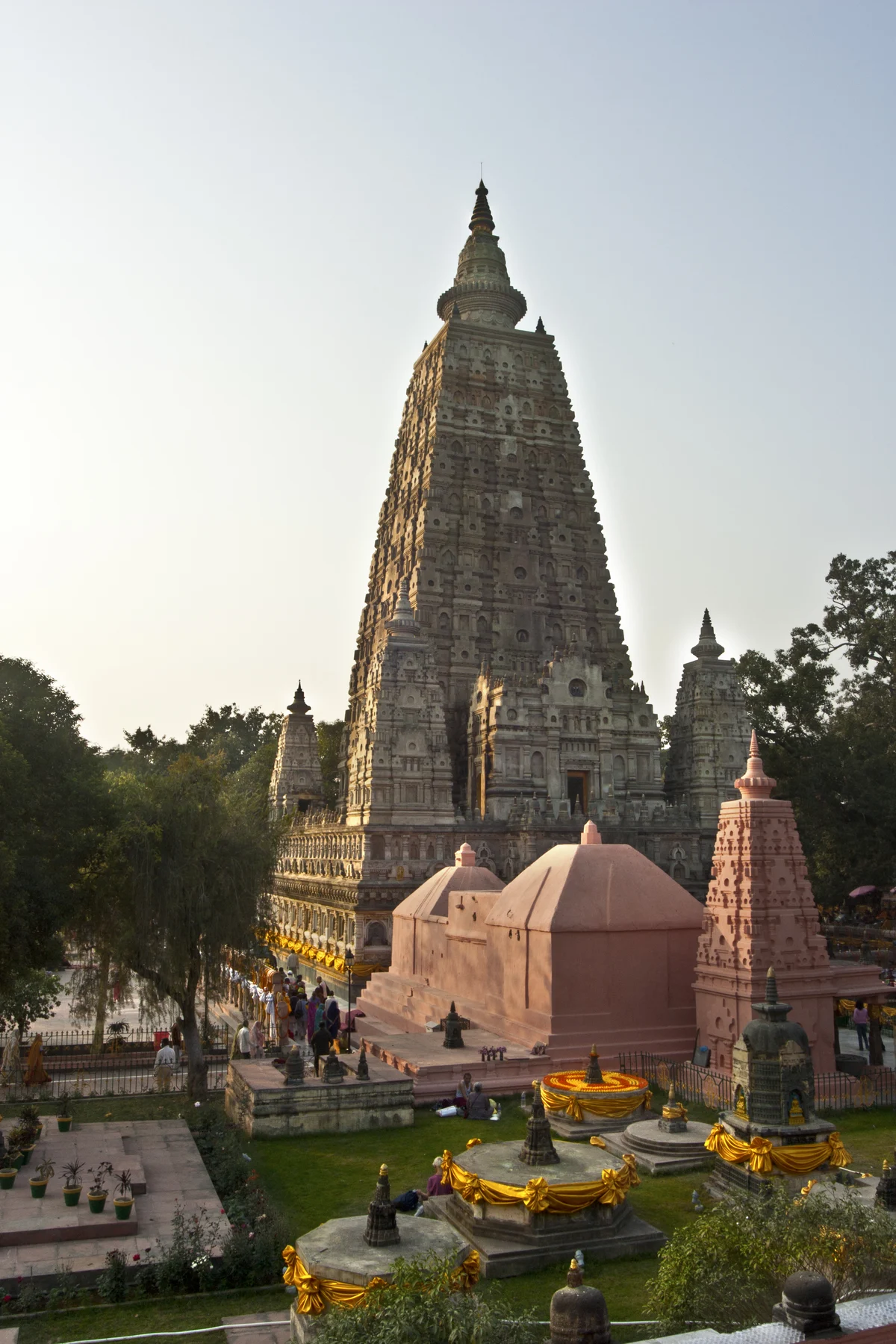
Mahabodhi Temple Complex in Bodh Gaya
UNESCO lists the Mahabodhi Temple Complex at Bodh Gaya among India's World Heritage properties. Use that full name for heritage research and pair it with Bodh Gaya when planning the visit. The word “complex” is worth keeping in your itinerary because an access question may concern the grounds, a particular building or a particular activity. State exactly which one you mean when asking the site authority.
A visitor has chosen Bodh Gaya for the Mahabodhi Temple Complex and has one free morning. They want time at a specific part of the complex and would also like to take photographs if permitted. The questions to resolve are whether that area is publicly accessible during the morning and whether photography is allowed there. An opening window for the overall property alone would leave both questions unresolved.
The UNESCO inventory distinguishes inscribed World Heritage properties from tentative nominations. It also includes places of different kinds, such as Agra Fort and the Churches and Convents of Goa. The property inventory therefore helps confirm the formal status of the Mahabodhi Temple Complex. For building-specific access and visitor conditions at Bodh Gaya, check the responsible local authority's current guidance.
If the complex is the main reason for your trip, confirm access before locking in a narrow arrival window. Use the name of the place you want to reach when checking the final approach, since a destination search for Bodh Gaya covers the wider locality. A companion who plans to spend a different amount of time at the site may also need a meeting point that both people can reach during public hours.
Incredible India lists 05:00 to 21:00 for Mahabodhi Temple. Bihar Tourism asks visitors to remove footwear before entering the shrine and says that electronic devices including phones and cameras are prohibited inside. Ask locally where to leave them before joining the approach. A historic photograph can have been taken from a permitted place or under rules in force on a different date.
UNESCO dates the first temple attributed to Ashoka to the third century BCE and the surviving temple to the fifth or sixth century CE. Those dates answer different age questions. Pair the earlier date with the first temple and the later estimate with the building UNESCO describes. Bodh Gaya is associated in Buddhist tradition with the Buddha’s enlightenment.
What an oldest-temple claim needs to show
To answer which temple is the oldest in India, first define what you want to date. The question can refer to the earliest surviving structure, the oldest dated fabric within a building that has been altered, or the earliest documented use of a site for worship. Each requires its own evidence. An India-wide superlative also needs a comparison across candidates using the same definition.
The Karni Mata Temple entry illustrates a date that can be stated precisely within its limits. Rajasthan Tourism dates completion of construction to the early twentieth century. That identifies a milestone in the history of the building. To date the origin of worship at the site, or a predecessor structure, you would need a source that independently documents that event.
An archaeological account dates masonry in one part of a temple, and a separate account records a later rebuilding. A reader interested in seeing early surviving work would want to know which part contains the dated masonry and whether it is visible to visitors. A reader interested in when the overall building took its present form would use the rebuilding evidence. The dates can both belong in a guide if each is attached to the feature or event it describes.
For ancient-temple research, look for a site-specific archaeological publication, an inscription study or a scholarly account that identifies the structure being dated. Check whether the source gives a date range, cites a datable inscription or explains how it reached an estimate. UNESCO's national inventory can confirm the Mahabodhi Temple Complex's heritage status. An age comparison requires historical evidence beyond that inventory and the other entries available here.
For an early surviving Hindu brick temple, Kanpur Nagar district dates Bhitargaon to the sixth century and identifies its Gupta-period terracotta work. An early archaeological report records differing historical estimates based on stylistic comparisons. State the attribution and date range when weighing its age against Mahabodhi, which represents a Buddhist site with an earlier foundation and a later building.
A visitor researching rock-cut architecture can look up Kailasa Temple as Cave 16 at Ellora. UNESCO places it in the Hindu group of caves excavated over multiple centuries. Pattadakal’s seventh- and eighth-century Chalukya monuments represent another tradition. Khajuraho’s principal building period belongs to the Chandella era around 950–1050, and its clusters include Hindu and Jain monuments. The dates describe comparable historical phases without making the sites interchangeable.
In Tamil Nadu, UNESCO treats the Thanjavur, Gangaikondacholapuram and Darasuram buildings as the Great Living Chola Temples. They are three sites, with separate visitor approaches and living worship traditions. Konark’s thirteenth-century Sun Temple in Odisha is a later monument associated with Surya and gives a different architectural comparison. For any of these heritage sites, use the property record for the date and the relevant operator or authority for visiting details.
Kailasa Temple at Ellora Cave 16, tickets and visit planVisiting Hindu temples in India, dress, darshan and bookingBengaluru temples: Basavanagudi, ISKCON and Metro routes
- UNESCO | India's World Heritage properties
- Rajasthan Tourism | Karni Mata Temple
- UNESCO World Heritage Centre, Mahabodhi Temple Complex at Bodh Gaya
- Kanpur Nagar district Bhitargaon Temple record
- 1908–09 archaeological report and Bhitargaon chronology
- UNESCO Ellora Caves, including Kailasa Temple
- UNESCO Group of Monuments at Pattadakal
- UNESCO Khajuraho Group of Monuments
- UNESCO Great Living Chola Temples
- UNESCO Sun Temple, Konârak
Verify hours and the final approach
Use the operator, temple administration or responsible site authority to check public visiting hours for the exact day you plan to go. Read any weekly schedule alongside notices for that day. Record the last admission time if the authority gives one. If a current notice and a standing schedule appear to disagree, ask the authority which applies before making a detour that depends on admission.
When accessibility matters, ask about the whole path from arrival to the area you want to visit. A general accessibility label may leave out the entrance threshold, the walking surface or steps later in the visit. Describe what your group needs in practical terms. Ask where a vehicle can stop, whether there is a continuous step-free route and which parts of the site that route reaches.
- Confirm public hours, any last admission time and any date-specific closure.
- Identify the visitor gate, a usable drop-off point and the final walking segment.
- Check entry guidance on footwear, bags, cameras, booking and any charges.
- Confirm the return pickup point if you are relying on a hired vehicle or local transport.
One member of a group can walk short distances on level ground and needs to avoid stairs. Before choosing a drop-off, the group asks the authority whether the indicated gate has a step-free path to the part they want to see. If the answer applies only to the gate itself, they ask about the path beyond it. That gives them a concrete basis for deciding whether to include the visit.
For a visit planned from overseas, save the authority's confirmation with the date of your visit in local time. For a domestic day trip, check whether a late arrival still leaves enough time before last admission and allows for the return journey. On either kind of trip, recheck date-specific notices close to departure when a closure would mean losing a substantial part of the day.
Sources
- UNESCO | India's World Heritage properties
- Rajasthan Tourism | Karni Mata Temple
- Incredible India | Delhi
- Bahá’í House of Worship, New Delhi, visitor information
- Ministry of Tourism, Mahabodhi Temple visitor listing
- Bihar Tourism, Mahabodhi Temple visitor rules
- UNESCO World Heritage Centre, Mahabodhi Temple Complex at Bodh Gaya
- Ministry of Tourism, Karni Mata Mandir near Bikaner
- Ministry of Tourism Utsav archive, Karni Mata Fair Deshnok
- Rajasthan heritage authority, Shri Karni Mata Panorama
- Kanpur Nagar district Bhitargaon Temple record
- 1908–09 archaeological report and Bhitargaon chronology
- SGPC Sri Harmandir Sahib and Golden Temple history
- SGPC Sri Harmandir Sahib daily routine
- UNESCO Ellora Caves, including Kailasa Temple
- UNESCO Group of Monuments at Pattadakal
- UNESCO Khajuraho Group of Monuments
- UNESCO Great Living Chola Temples
- UNESCO Sun Temple, Konârak