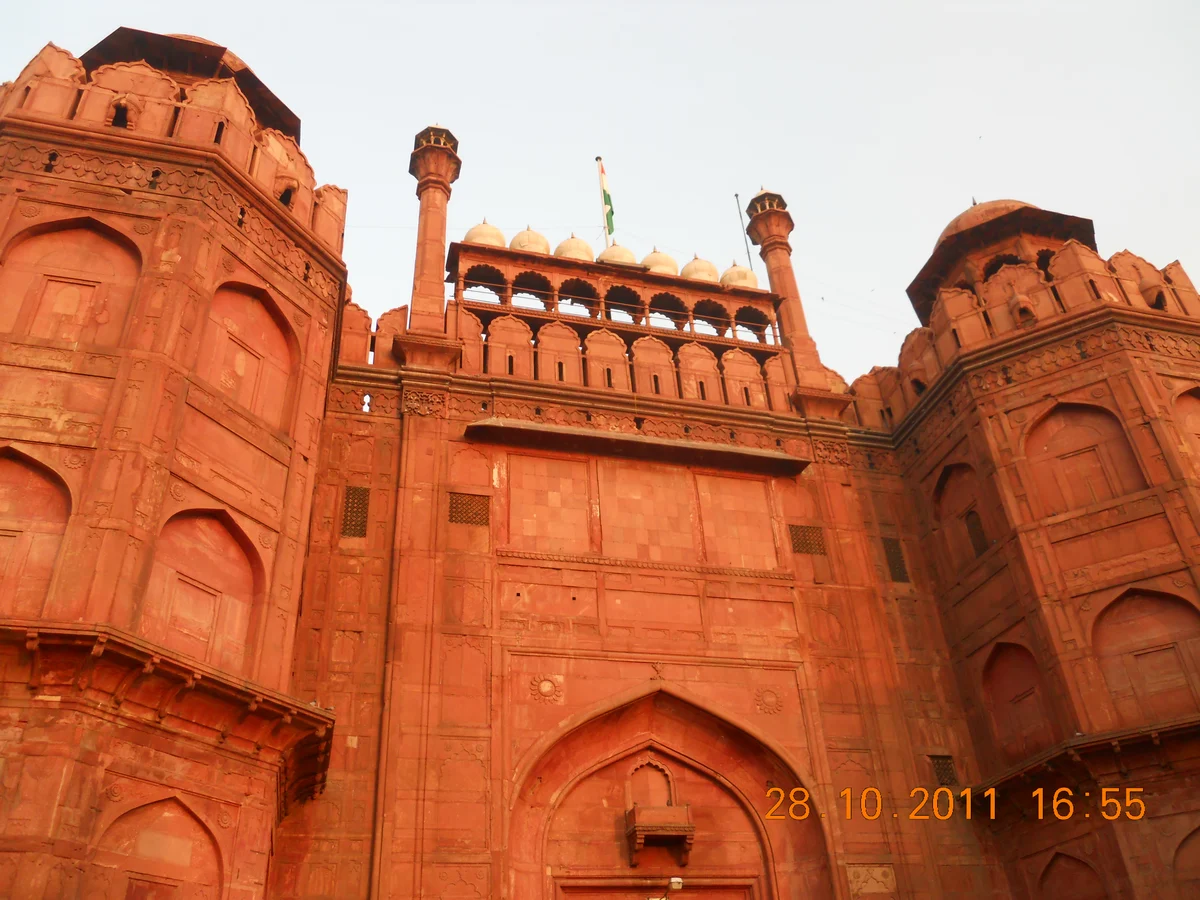
Choose a Delhi outing by time and interest
Give your first Delhi day to the Red Fort and Chandni Chowk, then add India Gate if time and the public approach allow. With two days, pair Humayun’s Tomb and Sunder Nursery on the second. A third day can cover Qutb Minar in Mehrauli, with the Lotus Temple as a distinct Kalkaji visit if the opening and transfer work. This keeps Delhi’s different areas and admissions from competing for one time slot.
Use Lal Quila on the Violet Line if you are starting with the fort side of Old Delhi. Use Chandni Chowk on the Yellow Line for a market-first outing. Kashmere Gate is one connection between those lines. The individual exits and assessed walk depend on your day, so verify the entrance with the Metro journey and site separately. Save the first railway or airport stop accurately if you are arriving by intercity service.
India Gate and the Lotus Temple also work as distinct destinations. A traveler with a free morning before meeting family might choose whichever fits the journey to that appointment. A visitor building a first full day around monuments can choose the fort first, then use a second stop to explore a different kind of architecture or public space.
| Time available | Suggested plan | Check before leaving |
|---|---|---|
| Half day in Old Delhi | One fort or market stop, then one nearby outing | Lal Quila on Violet or Chandni Chowk on Yellow |
| One full day | Red Fort and Chandni Chowk; India Gate if time allows | ASI dated entry and separate Central Secretariat approach |
| Two days | Add Humayun’s Tomb and Sunder Nursery | Two operators, separate tickets and last entry |
| Three days | Add Qutb Minar; optionally Lotus Temple | Qutab Minar station onward leg; Kalkaji and temple hours |
- Incredible India | Delhi
- Delhi Tourism | Metro itinerary
- Archaeological Survey of India | Red Fort, Delhi
- Archaeological Survey of India, Qutb Minar World Heritage visitor listing
- Archaeological Survey of India, Humayun's Tomb World Heritage visitor listing
- Delhi Metro Rail Corporation current network map and journey planner
- Sunder Nursery operator visitor page and dedicated admission hours
Plan a half day around Chandni Chowk
For a fort-first half day, arrive on the Violet Line at Lal Quila and head to the confirmed visitor entrance. For a market-first plan, use Chandni Chowk and choose a food stop, Jama Masjid or the public heritage route. Delhi Tourism’s Old Delhi walk treats the Red Fort as an exterior stop. It takes a separate admission to visit inside the fort. Jama Masjid’s tourist and worship access also has its own timings.
Example for a fort-first half day. Start at Chandni Chowk and follow the current route to the confirmed Red Fort visitor entrance. After the fort, decide between a market walk and Jama Masjid based on the time left and current visitor access. If you have to be back across town for lunch, plan your return from the place where you expect to finish.
Example for a food-first half day. Pick one place you are particularly interested in and check that it serves during your visit window. Use it as the point around which you browse nearby shops or market streets. If a companion wants to visit a religious site, choose one and check its current visitor guidance before adding it to the outing.
For a short visit, give your group a choice between one substantial stop and two shorter ones. Each extra entrance, queue or meal can change the finish time. If members of the group want different things, a meeting spot outside a confirmed entrance or near your return station gives everyone a concrete place to regroup.
Old Delhi railway station, New Delhi railway station and the airport are different starting points. The Government of Delhi’s Red Fort page describes Old Delhi station as closer to the fort than New Delhi station. Connect from your actual reservation or accommodation, identify the Violet or Yellow line option and keep a separate walking block for the market or Jama Masjid.
Give the Red Fort time for the buildings inside
The Archaeological Survey of India identifies red sandstone in the Red Fort's exterior walls and gates and extensive use of marble in its interior palaces. If you are deciding whether to go inside, that change in materials gives the paid or timed portion of the visit a purpose, subject to the entry arrangements and areas open on your date.
On an architecture-focused visit, start by looking at the scale of the walls and gates. Inside, pay attention to the buildings where marble is visible and how their spaces are arranged. Read the signs at the structures you can enter or approach, since the general description of the complex alone gives you little basis for identifying a particular building.
Example for a visitor traveling with someone who tires easily. Look up the visitor entrance, ask which areas can be reached using the available accessible route, and choose a point where both of you are comfortable ending the visit. If the interior approach is impractical that day, decide whether a permitted exterior view is worth keeping in your plan and where you can continue from there.
Check the site operator's notice for admission and any temporary restrictions. Confirm the cutoff for joining the entry queue or using a ticket if one applies. If entry to a specific area matters to you, check that area separately. A listing that shows the complex open gives you only the first piece of information you need.
Inside the fort, ASI’s route description puts Chhatta Chowk between the western gateway and the Naubat Khana, with the Diwan-i-Am further in. It identifies the Mumtaz Mahal as the site of the Delhi Fort Museum. Allow time for each part and check access to the galleries if you are travelling specifically for them. An ordinary gate ticket and the operating hours of a museum or event can describe different visitor products.
The current ASI page advertises sunrise to 21:00, while an Incredible India destination page shows 09:30 to 16:30 and still publishes an older Monday closure. PTI reported ASI’s confirmation that a 13 February 2026 order ended the routine Monday closure. The available record of that change comes from the agency’s confirmation to PTI. Check the dated ASI entry, especially on a Monday, and use a mid-morning slot if you need time in the complex.
Akashvani reported a separate ASI closure starting in July 2026 ahead of the 15 August independence celebrations and the use of passes for the celebration itself. That was a date-specific restriction. For the next visit near a national occasion, check the year’s notice before planning around ordinary visitor access.
- Archaeological Survey of India | Red Fort, Delhi
- ASI confirmation of Red Fort weekly opening change, reported by Press Trust of India
- Akashvani public broadcaster on the separately ordered Red Fort Independence Day closure
- District Old Delhi, Red Fort address and transport approaches
- Incredible India Red Fort listing with different hours
Visit India Gate as a memorial stop
India Gate is a 42-metre war memorial designed by Edwin Lutyens. It commemorates soldiers who died in military campaigns. If you have time for one stop in this part of your day, set aside enough of it to see the monument in context. Where public access permits, you can look for a view that shows the whole arch and then get close enough to take in details.
Example for an outing between appointments. Start with the time you need to reach your next address and work backwards. Check where your ride can drop you, how far you will need to walk and where you can leave afterwards. If you choose public transport, check the complete station-to-memorial walk for the approach you actually plan to use.
For a visit that depends on a particular approach, such as meeting someone at a named point or reaching a specific viewpoint, check local traffic and access notices on the day. If an event changes access, consult the current advisory before taking a detour. Use a meeting point that the whole group can identify from the permitted approach.
If someone in your group has limited walking range, check both ends of the visit. A convenient drop-off only solves the arrival. Choose an onward pickup point or station entrance and check the walk to it independently, especially if you expect to leave in a different direction.
Delhi Tourism associates India Gate with Central Secretariat on the Yellow and Violet lines. Leave a surface leg for the memorial instead of treating the station as its entrance. The memorial is a different kind of visit from an enclosed museum. Confirm public approaches on the day if a ceremony, road closure or managed crowd changes the area.
Decide whether to add the Lotus Temple
The Bahá’í House of Worship lists the Lotus Temple open Tuesday through Sunday, 08:30 to 17:00, with Monday closed. It points to Kalkaji Metro and gives separate prayer service times. Its guidance says the prayer hall can close because of crowding or rain. The site’s brochure attributes the design to Fariburz Sahba and describes its 27 marble-clad petals. Use the temple as its own architecture visit with a confirmed route and access time.
Example for a day built around architecture. Choose the Red Fort for its walls and palaces and the Lotus Temple for a separate visit later in the day. First confirm when you can enter both. Then look up the actual route between the fort exit and the temple visitor entrance. If you need a meal between the two, give it a place in the schedule before deciding whether you can arrive in time.
Example for a family choosing a single outing. If the Lotus Temple is what people most want to see, put it first and make the rest of the day flexible. Check the visitor approach, where you can wait if entry is delayed and which parts of the visit are suitable for everyone in your group.
When you compare two possible orders for the day, pay attention to which visit has the tighter arrival window. If the temple has the less flexible window on your date, starting there may give you a better chance of making both visits. Leave enough room to complete the first stop before relying on the second.
Fit a full-day route to where you are staying
Plan the day from the address where you will actually start, whether that is a Delhi home, a hotel or a place you are staying with family. In a journey planner, compare getting there, traveling between stops and returning at your expected finish time. The middle leg can look straightforward while the last leg makes the day impractical for your group.
Example for a full day of history and food. Use the Red Fort and Chandni Chowk as the first part of the day, leave time for a meal, and add India Gate if the public approach and onward journey suit your plans. Keep the market walk flexible so you can spend longer at the fort if there is more open than you expected or if entry takes time.
Example for a visitor arriving from the US with a partly free day after landing. Choose one outing and check the journey from your accommodation after you know when you can leave. Keep a second stop as an option you can decide on at the first. That gives you a workable plan even if getting to your accommodation or starting the outing takes longer than expected.
If you already know the city and are showing someone around, put their strongest interest first. You might spend the visit looking closely at the fort or exploring the market at a pace that lets them choose where to stop. Use your knowledge of their interests and your starting point to decide when a second landmark would add something to the day.
For a second day, begin with Humayun’s Tomb and its garden setting. ASI’s current listing advertises sunrise to 21:00, and daylight gives time to see the grounds. Sunder Nursery is a separate park run under the Aga Khan Trust for Culture. Its visitor page lists ₹50 for Indian adults and ₹200 for foreign adults. A timing page shows a summer schedule from 07:00 to 22:00 with 21:00 last entry. Check the current date and cutoff with the park before an evening visit.
On a third day, use the Yellow Line’s Qutab Minar station with an onward local leg and check the actual monument gate. The ASI listing gives sunrise to 20:00 for the Qutb Minar complex. The visit can also include the Iron Pillar and the remains of Quwwat-ul-Islam. Any separate Mehrauli garden, religious site or the Lotus Temple needs independent access. Keeping Qutb and Kalkaji as distinct blocks gives the first attraction time of its own.
Best places to visit in India: find a first-trip itineraryFamous monuments and landmarks in India by region
- Incredible India | Delhi
- Delhi Tourism | Metro itinerary
- Archaeological Survey of India | Red Fort, Delhi
- Archaeological Survey of India, Qutb Minar World Heritage visitor listing
- Archaeological Survey of India, Humayun's Tomb World Heritage visitor listing
- Delhi Metro Rail Corporation current network map and journey planner
- Sunder Nursery operator visitor page and dedicated admission hours
- Bahá’í House of Worship visitor information and timing
- Sunder Nursery operator’s separate timing page
Verify openings, metro service and the final approach
Treat Delhi Tourism's metro itinerary as a starting point for grouping attractions. For the day you plan to go, check the metro operator's journey planner or service notices for your exact station pair and any changes that affect it. Look at the walking legs as well. The route from the right station exit can matter as much as choosing the station.
For each site, find the operator's current visitor information and check the day of the week, the opening window and any separate last-entry time. Look for a notice covering your date, particularly if you are going on a holiday or during an event. If a listing and a dated notice give different access details, use the notice that explicitly covers your visit or confirm directly with the operator.
Verify any detail you would change the day over. That could mean step-free access along the station-to-entrance route, whether a particular interior is open, or whether there is a place to leave a bag. Ask about the exact entrance or facility you need. If you cannot verify it and the answer determines whether you can visit, choose an outing with access you can confirm.
Example for a same-day change. If the Red Fort's confirmed last admission is earlier than you can reach it, decide whether you still want a market and food outing from Chandni Chowk. If you switch to India Gate or the Lotus Temple, check access there and recalculate the return trip from the new endpoint before setting out.
- Delhi Tourism | Metro itinerary
- Archaeological Survey of India | Red Fort, Delhi
- ASI confirmation of Red Fort weekly opening change, reported by Press Trust of India
- Akashvani public broadcaster on the separately ordered Red Fort Independence Day closure
- Archaeological Survey of India, Qutb Minar World Heritage visitor listing
- Archaeological Survey of India, Humayun's Tomb World Heritage visitor listing
- Delhi Metro Rail Corporation current network map and journey planner
- Sunder Nursery operator visitor page and dedicated admission hours
- Bahá’í House of Worship visitor information and timing
- Sunder Nursery operator’s separate timing page
- Incredible India Red Fort listing with different hours
Sources
- Incredible India | Delhi
- Delhi Tourism | Metro itinerary
- Delhi Tourism | India Gate
- Archaeological Survey of India | Red Fort, Delhi
- ASI confirmation of Red Fort weekly opening change, reported by Press Trust of India
- Akashvani public broadcaster on the separately ordered Red Fort Independence Day closure
- Archaeological Survey of India, Qutb Minar World Heritage visitor listing
- Archaeological Survey of India, Humayun's Tomb World Heritage visitor listing
- Delhi Metro Rail Corporation current network map and journey planner
- District Old Delhi, Red Fort address and transport approaches
- Delhi Tourism, Old Delhi Shahjahanabad heritage walk and landmarks
- Sunder Nursery operator visitor page and dedicated admission hours
- Bahá’í House of Worship visitor information and timing
- Bahá’í House of Worship October 2026 brochure and architecture
- Sunder Nursery operator’s separate timing page
- Incredible India Red Fort listing with different hours