Check your planned arrival
Uses the temple’s regular schedule in Delhi local time. Confirm closures and last admission on the venue page.
Attraction guide + map
Plan a free visit to the Bahá’í House of Worship in Kalkaji, check the Monday closure and prayer times, and choose a Kalkaji Mandir or Okhla NSIC metro approach.
Open the House of Worship’s visitor informationUses the temple’s regular schedule in Delhi local time. Confirm closures and last admission on the venue page.
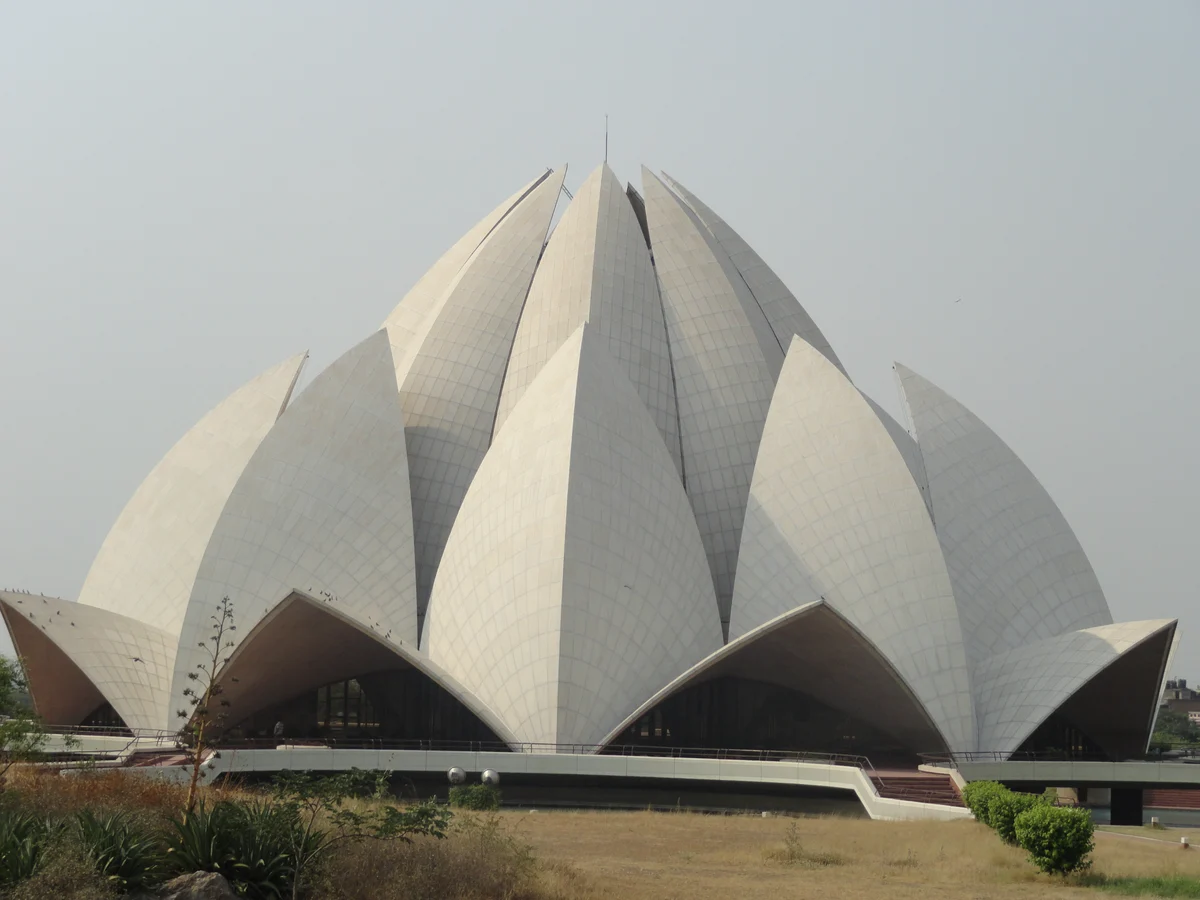
Delhi’s Lotus Temple is the Bahá’í House of Worship in Bahapur, Kalkaji. The venue publishes 08:30 to 17:00 from Tuesday to Sunday, with a Monday closure. Delhi Tourism lists free admission. The House of Worship’s own visitor page is the source to use for operating hours, prayer services, group procedures and hall rules. The prayer hall is part of an active place of worship where people of all backgrounds are welcome.
Plan the visit around either a prayer service or a walk through the grounds and, when available, a short visit inside the prayer hall. The venue lists prayer services at 10:00, 12:00, 15:00 and 17:00. The final service is displayed at the same time as the published end of visiting hours. If you want to attend it, verify when entry closes and arrive early enough for the approach, queue and shoe room.
The venue can close the prayer hall in heavy crowds or rain. A published day’s schedule is therefore a plan for ordinary conditions, with an on-site decision about hall admission. For a short stop, arrive before a midday or mid-afternoon service and leave room to walk the exterior if the hall is temporarily unavailable. A Monday is better used for a different attraction than for waiting at the temple gate.
| Visit type | Published schedule | What to check |
|---|---|---|
| General visit and grounds | Tuesday to Sunday, 08:30–17:00. | Admission free. Confirm latest venue notice for changes. |
| Monday | Closed. | Plan the inside visit on another day. |
| Prayer services | 10:00, 12:00, 15:00 and 17:00. | Services take around 10–15 minutes. Verify last entry for 17:00. |
| Group of 10 or more | Request at least three days ahead, on eligible days. | Advance appointments excluded Saturday, Sunday and public holidays. Wait for confirmation. |
| Prayer hall during crowding or rain | Hall may close. | Check with the venue and allow for an exterior visit. |
| Information Centre | Ask on arrival which exhibitions are open. | The venue prohibits photography inside the Centre. |
The two practical Metro choices are Kalkaji Mandir and Okhla NSIC. Kalkaji Mandir is a Violet and Magenta line interchange. Okhla NSIC is on the Magenta line. Both are short walks from the venue, but approach from different sides. Follow the venue’s main public gate directions. That is a more precise instruction for a vehicle or a friend than asking to meet at the station with the closest-looking point on a map.
From New Delhi Railway Station, the venue’s suggested route takes the Yellow Line to Central Secretariat, then the Violet Line to Kalkaji Mandir. The venue estimates a walk of about 500 metres from Kalkaji, while DMRC’s route guide gives about 700 metres. Distances vary by exit and walking approach. Check the latest station directions on arrival, especially if you need an elevator, a short pavement segment or a place for a vehicle to meet you.
From airport Terminal 1 the venue gives a direct Magenta Line option toward Botanical Garden, leaving the train at Okhla NSIC, then walking about 650 metres. This approach is specific to Terminal 1. If you arrive at Terminal 2 or 3, select a route for your actual terminal rather than assuming an identical station approach. The venue says a DDA parking facility is across from its main gate. Agree on the exact drop-off and pickup points if travelling by car.
If you are already on the Violet Line, Kalkaji Mandir avoids changing trains for the final stop. The same station works for a Magenta Line arrival, but Okhla NSIC gives another Magenta Line choice for a traveller whose onward trip stays on that line. Compare the actual approach to the public gate rather than deciding by number of train stops alone. The route back can use the same station to reduce navigation time.
The House of Worship describes services as prayers and readings from different holy scriptures. It gives a typical service length of 10 to 15 minutes. It asks attendees to remain through the service and says the exit door stays closed during it to preserve the setting. If you have a fixed appointment after the visit, leave sufficient time for the service and the walk back instead of planning to leave partway through.
Members of the public can also come for quiet reflection. The venue asks visitors to remove shoes before entering the prayer hall and provides a shoe room. It suggests clothing that covers shoulders and reaches the knees. Wait for the directions of the attendants at the hall entrance, keep your voice low and allow others to leave before making your way in.
The Information Centre uses photographs, text panels and films to explain the Bahá’í Faith and the place of worship. It can be a useful second stop when you are interested in how the institution describes its own history. If you plan a short visit with children, keep time at the centre optional and allow for the walk to and from the main gate and any queue at the shoe room.
The venue’s public rules permit photography in suitable areas outside the prayer hall and Information Centre. Professional photography requires advance permission. If the trip is mainly to photograph the structure, plan exterior angles from the open paths and respect ropes or attendants’ instructions. The dress and quiet rules still apply when you enter the worship area for a separate visit.
The venue rules exclude large baggage and outside food or drinks. The visitor page lists washrooms and drinking-water facilities on site. If you arrive between a train ride and an airport transfer, store large luggage elsewhere before making the journey. Avoid relying on the shoe room for luggage and ask the venue directly if you need to carry an item for access or health reasons.
Wheelchairs are available at the main gate on a first-come basis according to the venue. Before setting out, a visitor with specific mobility requirements can ask about the usable route between the main gate, hall and Information Centre. The grounds have paths and approach changes that may determine the best way to make the visit. Ask where the vehicle can drop you and where the visitor equipment is collected.
The House of Worship was dedicated in 1986 and opened to the public that December. Its brochure traces building work to 21 April 1980 and attributes the design to architect Fariborz Sahba. The building uses 27 petal-shaped concrete shells clad in Greek marble. Looking from the main approach makes the outward-opening shells easy to recognise. From a different permitted path the layers overlap and alter the outline as you walk.
Nine pools frame the building. The venue’s 2026 brochure describes a diameter of 70 metres and a height of 34.27 metres. The building was intended for public prayer and meditation, which is the reason for the comparatively quiet interior experience. The religious body treats the temple as a space to which people of any background are welcome, grounded in its teaching about the oneness of humanity.
Read the December 1986 opening and the 1986 dedication as related events if you are preparing a school project. State what each authority establishes and use the temple brochure for the material and measurements. The common name Lotus Temple describes the shape. The formal Bahá’í House of Worship name tells a reader what the building is for and distinguishes it from other temples in the Kalkaji area.
The House of Worship publishes a group request form for ten visitors or more. Ask at least three days before the visit and wait for a reply confirming the appointment. The venue does not accept group appointments on Saturdays, Sundays or public holidays. That rule concerns appointments, while the ordinary venue schedule includes Saturdays and Sundays. Keep a group’s transport and itinerary flexible until the request is confirmed.
A visitor who wants a midday service can aim to reach the main gate before noon with time for the approach and shoe room. Someone who comes mainly for the architecture can start earlier, find exterior angles along open paths and decide afterward whether to join the line for the hall. A rain closure can affect hall access even if you reach the site within the ordinary opening window.
For a first south Delhi trip, choose an onward metro route from Kalkaji Mandir or Okhla NSIC based on the actual line you need. Keep meals outside the venue grounds. If your day depends on multiple opening times, put the Lotus Temple first on a Tuesday to Sunday morning and leave later commitments flexible. Separate the time spent inside from the walking time on both sides of the metro journey.
A ten-person school group choosing between Thursday and Sunday can submit an appointment request for Thursday and allow at least three days for the process. Sunday falls within the regular public schedule but outside the group appointment terms. If Sunday is the only travel day, contact the venue about what it can accommodate that day before making coach plans. A confirmation gives the group the exact arrangement to share with accompanying adults.
Check the venue’s own page for your visit date. Delhi Tourism has a broader listing with different hours and a simpler photography note. The House of Worship’s specific rules govern how the visit works. For a visitor who wants an evening photo or the last listed service, the difference is important. Confirm final gate entry rather than extrapolating from old tour brochures or from a photograph made after dusk.
Decide whether you need an individual visit or a group appointment, whether you want a prayer service, and how you will get from the preferred station exit to the public entrance. A few minutes spent naming those points avoids uncertainty on arrival. Check the weather if the hall matters to your plans and verify accessibility arrangements with the venue if you need special assistance.