Choose what you want to attend
For a Hindu temple visit in India, start with the temple operator’s current visitor instructions for the specific darshan or ritual you want to attend. Check entry eligibility, dress, what you may carry and whether you need a booking, then plan your arrival around the instructions for that visit.
Darshan is the opportunity to see the deity. Aarti is a worship ritual involving an offering of light, and a temple may publish a separate time and admission arrangement for it. At Tirumala, Arjitha Seva refers to a ritual service. If you have been invited to join relatives for worship, ask for the exact name of what they plan to attend before looking up times or selecting a booking.
The Sri Lakshmi Narayani Golden Temple, commonly called Sripuram Golden Temple, identifies its location as Thirumalaikodi, Vellore, and publishes general darshan from 08:00 to 20:00. Use that window to start planning a general visit. If you want to attend a particular ceremony or use a separately booked admission, look up that activity by name. Check notices for your intended date before committing to transport, especially if your plan depends on arriving near the end of the published window.
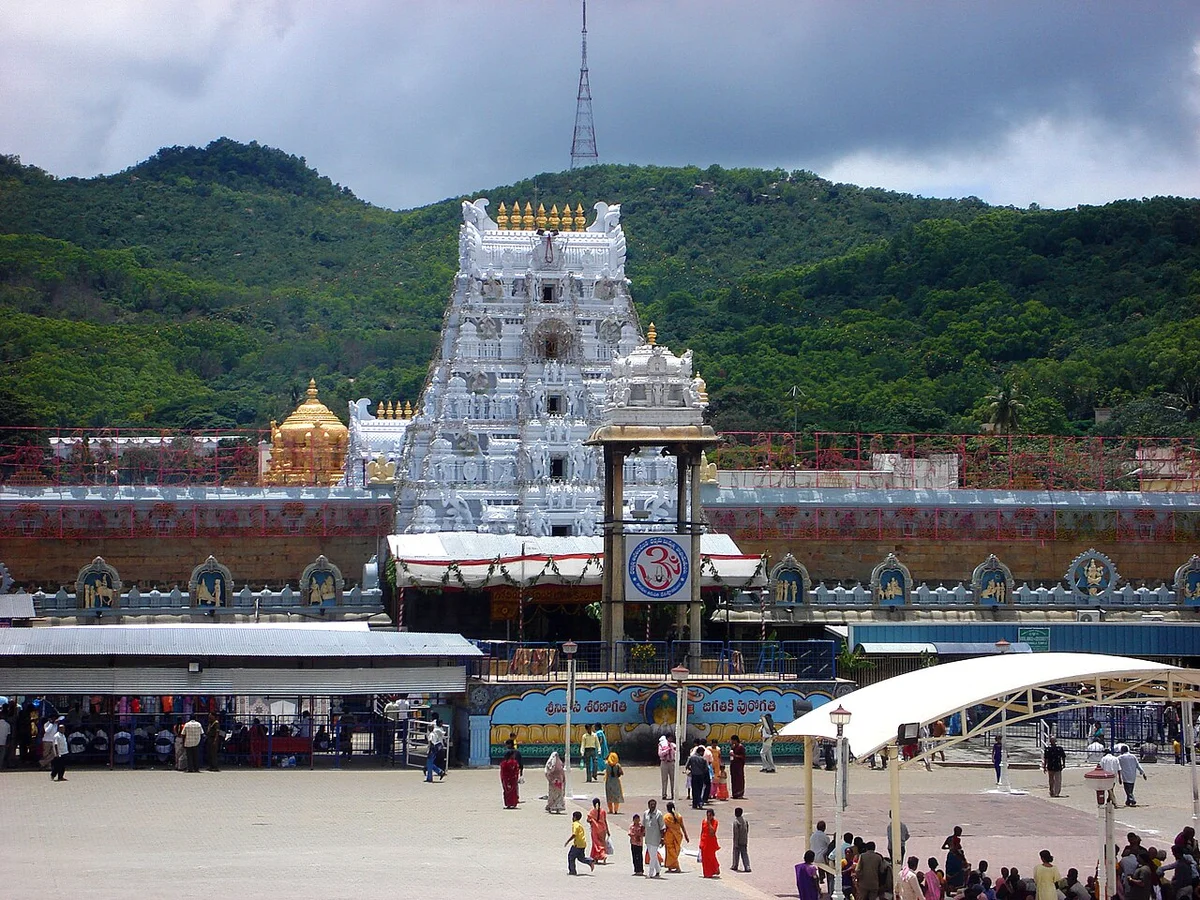
For a visit focused on architecture, identify the part of the complex you want to see and check whether visitors can enter that area and take photographs there. An exterior view, access to an inner area and permission to use a camera are separate questions. The archive photograph of the main Tirumala temple shows the building as it appeared in August 2007. For a present-day visit, use current operator instructions to establish access.
Dress for the temple and the booking
Sripuram publishes a dress code that calls for covered shoulders and clothing that covers the knees. Its examples include saris, salwar kameez and appropriate shirts and trousers. The same page asks visitors to remove headwear indoors. If you wear a head covering for religious or medical reasons, ask the temple how it handles your circumstances before depending on entry. The published instruction establishes what visitors are asked to do on those premises.
| Temple | Location | Visit scope | What the operator says | Source |
|---|---|---|---|---|
| Sripuram Golden Temple | Thirumalaikodi, Vellore | Temple visitor dress page | Shoulders and knees covered. The page gives venue-specific garment examples and footwear instructions. | Sripuram dress code |
| Guruvayur Temple | Guruvayur, Kerala | Temple entry dress | Devaswom lists dhoti and angavastram for men, and sari, churidar or half-sari for women. Check current entry conditions. | Guruvayur Devaswom |
| Tirumala Venkateshwara Temple | Tirumala, Andhra Pradesh | Named seva and ticket paths | The TTD FAQ gives traditional dress requirements for specified Arjitha Seva and advance or ₹300 ticket visits. | TTD visitor FAQs |
Guruvayur Devaswom lists dhoti and angavastram for men entering the temple and sari, churidar or half-sari for women. The distinction matters if you are packing one outfit for several temples. Someone planning to wear a shirt and trousers at Sripuram should check Guruvayur’s list separately and allow time to arrange clothing that meets the published requirements there. Knee and shoulder coverage alone leaves the question of garment type open at Guruvayur.
At Tirumala, the temple operator’s FAQ specifies traditional dress for the Arjitha Seva and ₹300 or advance-ticket visits described in the relevant FAQ entry. Read the instructions on the booking you actually hold, since the visit category determines which guidance to consult and current ticket terms can change. If your group holds different categories, ask each person to check their own confirmation before settling on what to pack.
When a dress page gives named garments, use the list when deciding what to bring. A photograph of someone outside the temple gives little information about which entrance they used, which areas they entered or what conditions applied that day. If your intended outfit is hard to classify, describing the actual garments to the operator will give staff a clearer question to answer than asking whether something is generally considered modest.
Read the worship schedule before choosing a time
The Shri Kashi Vishwanath Temple Trust in Varanasi publishes normal-day hours and prices for several named visits. Read the row for the event you want. The full day’s schedule spans early morning to late evening because it includes several activities with separate windows. Sugam Darshan, for instance, has broad published hours, while its product terms exclude specified aarti and special periods. A time within those broad hours still needs to work for your chosen form of entry.
| Activity | Published local time | Published price | Type |
|---|---|---|---|
| Sugam Darshan | 06:00–18:00 | ₹250 | Darshan product |
| Mangla Aarti | 03:00–04:00 | ₹500 | Aarti |
| Bhog Aarti | 11:15–12:20 | ₹300 | Aarti |
| Saptirishi Aarti | 19:00–20:15 | ₹300 | Aarti |
| Shayan Aarti | 22:30–23:00 | No fee listed | Aarti |
| Visit or ritual | Published time | Listed fee |
|---|---|---|
| Sugam Darshan | 06:00–18:00 | ₹250 |
| Mangla Aarti | 03:00–04:00 | ₹500 |
| Bhog Aarti | 11:15–12:20 | ₹300 |
| Saptirishi Aarti | 19:00–20:15 | ₹300 |
| Shayan Aarti | 22:30–23:00 | No fee listed for attendance |
Suppose your train reaches Varanasi in the afternoon and you want to attend evening worship. Saptirishi Aarti is the relevant evening listing if you are aiming for a ceremony that starts at 19:00. Check the date’s availability and attendance instructions before building your evening around it. Shayan Aarti is listed much later, from 22:30 to 23:00, and the absence of a fee tells you only about the listed price. Confirm how admission works and consider whether a late finish fits your return plans.
Keep the timetable beside the conditions for the visit you select. The schedule gives the published programme hours, while the ticket or booking page may specify when and where you must report. Two listings can also overlap on paper and have different entry conditions during that overlap. For a festival or special ceremony, first look for a dated notice from the trust, then check the bookable options for the day and reconcile them with any confirmation you already hold.
Varanasi itinerary: ghats, Kashi Vishwanath and Sarnath in two days12 Jyotirlingas in India, temple directory and Shivaratri 2027
Check what a darshan ticket includes
At Shri Kashi Vishwanath, the ₹250 product titled Sugam Darshan without Prasad covers a specific kind of darshan. Its terms exclude prasad, a blessed offering, and Sparsh Darshan, which involves touch. The trust also excludes access during specified aarti or special periods. If one of those experiences is the reason for your visit, identify the relevant arrangement before buying. The name and conditions of the exact product tell you what the payment covers.
The trust requests a printed ticket at its Shapuri Mall help desk for this product. It lists timed slots, restricts same-day booking to the counter and says that the booked date and time cannot be rescheduled. That combination matters if your arrival in Varanasi is uncertain. Decide whether you can reach the required desk for the slot and obtain a printed copy in advance. If your plans only firm up on the day, check counter availability before relying on that option.
The same product publishes an exception for children under 12. For a family booking, compare each child’s age with the wording and check any identification or accompaniment instructions on the current product before payment. A child who has already turned 12 falls outside the published under-12 wording. If your family books a different visit, consult that visit’s own terms for any age conditions.
Guruvayur Devaswom posts a free darshan booking route and states that it has no authorized online agents. If a third-party listing describes its offer as an official Guruvayur online reservation, compare that claim with the Devaswom’s own notice and use the operator’s booking route. A free reservation still calls for checking the selected date and reading any conditions attached to the confirmation.
Distinguish quota release, reporting time and queue time at Tirumala
At Tirumala, an advance quota release is the time a batch opens for booking. For December 2026 visits, Tirumala Tirupati Devasthanams listed the ₹300 Special Entry Darshan release at 10:00 on 24 September 2026 and accommodation at 15:00 the same day. It listed the senior and disabled categories separately, at 15:00 on 23 September. Those announced release times have passed. Use the operator’s current booking portal to check remaining availability or find the release notice for the month and category you need.
| Published release date | Time in IST | Quota or service |
|---|---|---|
| 23 September 2026 | 15:00 | Senior and disabled category releases in the notice. |
| 24 September 2026 | 10:00 | ₹300 Special Entry Darshan release. |
| 24 September 2026 | 15:00 | Separate accommodation release. |
Once you have a date, use the reporting time shown on your own confirmation. In its 10 March 2026 announcement, the operator said holders of Slotted Sarva Darshan tokens and ₹300 Special Entry Darshan tickets must report at their allotted time. It expressly ruled out early and late entry for those two routes. Check for newer instructions and use the reporting point and identification requirements on your current booking.
If relatives travelling together receive different reporting slots, arrange the journey so each person can reach their assigned reporting point on time. An earlier slot for one member of the group gives the others no basis to report early. A meeting place for after the visit can be more practical than trying to coordinate the group’s exit around a single clock time.
Reporting time tells you when to present yourself for entry. The queue and the visit itself determine when you finish. If you need onward transport, leave room for that uncertainty or choose a departure that can be changed. A room reservation has its own confirmation and conditions, so check it separately when coordinating where you will stay before and after darshan.
Plan for footwear, phones and photography
Sripuram directs visitors to a designated place for footwear and restricts cameras, mobile phones and certain other items in the complex. Read the venue’s current visitor rules before packing, then follow signs and staff directions at the entrance. If you require particular footwear for mobility, ask where the removal requirement begins and how the venue handles that need. The existence of a designated footwear area leaves details such as step-free access and assistance to be confirmed locally.
If your group expects to coordinate entirely by phone at Sripuram, agree on a meeting point you can find without a device. Before leaving your accommodation, establish whether you may bring the phone as far as your intended entrance, whether storage is available and how you would retrieve it. If an entry instruction or confirmation is stored only on your phone, check what form the operator accepts and whether you need a paper copy.
Photography questions are easier to resolve when you name the area and the equipment. Ask whether you may carry a camera through the entrance you plan to use and where you may take pictures once admitted. Apply the guidance to the specific area you intend to photograph, especially near worship or a queue. Permission to reuse a licensed archive image concerns publication of that image. Permission for visitors to take new pictures depends on the venue’s current rules.
Temple photography in India, compare rules at six named sites
Verify the entrance and any assistance you need
A map pin can locate the temple while leaving the visitor’s starting point unresolved. At Shri Kashi Vishwanath, the published Sugam instructions name the Shapuri Mall help desk. At Tirumala, use the reporting details for the booking you hold. When arranging a drop-off, ask for the nearest approach to the named desk or reporting point. If the venue has several entrances, confirm which one serves your visit before using it as a meeting place.
For a group with someone who has limited mobility, ask about the whole approach from drop-off through the queue to the exit. A step-free entrance answers only part of that question. Ask where footwear must be removed, whether there are steps farther along and where a companion can remain with the visitor. If the operator offers a separate booking category, check its eligibility and reporting conditions as well as the physical route.
Confirm entry eligibility directly with the operator whenever the visitor information leaves it open. For Guruvayur, check eligibility for the part of the temple you want to enter alongside the published clothing and booking instructions. For a date with special worship or a festival, ask whether the ordinary entrance still serves your visit. Give staff the date, the name of the darshan or ritual and any booked slot so they can identify the instructions that apply.
- Sripuram Golden Temple — Dress code at Thirumalaikodi, Vellore
- Shri Kashi Vishwanath Temple Trust — Sugam Darshan without Prasad
- Tirumala Tirupati Devasthanams — March 2026 reporting-time enforcement
- Guruvayur Devaswom — Temple dress and direct booking
- Shri Kashi Vishwanath Temple Trust | Daily worship schedule
- Tirumala Tirupati Devasthanams — Published FAQs
- TTD’s current booking and ticket information portal
Sources
- Sripuram Golden Temple — Dress code at Thirumalaikodi, Vellore
- Sripuram Golden Temple — Visitor information
- Shri Kashi Vishwanath Temple Trust — Daily schedule
- Shri Kashi Vishwanath Temple Trust — Sugam Darshan without Prasad
- Tirumala Tirupati Devasthanams — March 2026 reporting-time enforcement
- Tirumala Tirupati Devasthanams — December 2026 online quota release
- Tirumala Tirupati Devasthanams — Published FAQs
- Guruvayur Devaswom — Temple dress and direct booking
- Image — Venkateshwara Tirupati Temple by daimalu
- Sripuram Sri Lakshmi Narayani Golden Temple | Visitor rules
- Shri Kashi Vishwanath Temple Trust | Daily worship schedule
- TTD’s current booking and ticket information portal
