Which dates count as medieval India?
For a broad timeline of medieval India, use roughly 700–1750 CE, the teaching span in NCERT’s Our Pasts II. For a political timeline centred on Delhi, use 1206–1526 for the Delhi Sultanate, and state the region and subject whenever you use either range.
The NCERT dates frame a study of change across roughly a millennium. Around 700 marks the opening of that study and around 1750 marks its close. Both endpoints are approximate. A chapter about language, a sequence of temple construction and an account of imperial expansion can all fit inside that span, even when they use different dates to mark meaningful changes.
IGNOU’s History of India III uses c. 750–1206 for a course on subjects including economy, society, religious institutions and regional polities. The split at 1206 helps organise the course. It also coincides with the conventional opening of the Delhi Sultanate, a useful marker for north Indian political history whose relevance depends on the place and question under study.
“Early modern” is another label you may encounter for Mughal history. It can apply to developments within NCERT’s longer teaching span, including Mughal expansion in Akbar’s reign. When a question supplies a textbook or syllabus, take its period boundaries from that source. When the question names a dynasty, site or object, use the chronology specific to it.
Timeline across regions
Read across each row for the date, place and event. This timeline covers several political and cultural histories simultaneously. A century may be the most precise supported date for the construction of a temple. A calendar year can identify a military or dynastic event, and the date of a manuscript may come much later than the period described by its text.
| Date or span | Region | Record | Type | What the date measures |
|---|---|---|---|---|
| c.950–1050 | Central India | Khajuraho temples | Building period | Main Chandella building period for temples in present-day Madhya Pradesh. |
| 1009–1010 | South India | Brihadisvara, Thanjavur | Building period | Consecration in Rajaraja I’s 25th regnal year. |
| 1035 | South India | Gangaikondacholisvaram | Building period | Completion of Rajendra I’s temple in the UNESCO record. |
| 1199–1503 | Delhi | Qutb Minar | Building period | Successive phases documented by UNESCO. |
| 1206–1526 | Delhi | Delhi Sultanate | Rule and transition | Conventional span of the named political sequence. |
| 13th century | East India | Konark Sun Temple | Building period | Eastern Ganga building under Narasimha-deva I. |
| 13th–19th centuries | Northeast India | Ahom Moidams, Charaideo | Long site use | The attested span of a mound-burial tradition, distinct from a single mound’s date. |
| 1318 | Delhi | Amir Khusrau’s language list | Text or manuscript | Period source for one writer’s account of language diversity. |
| 1336 | South India | Vijayanagara Sangama phase | Rule and transition | Conventional dynastic beginning used in the IGNOU account. |
| 1347 | Deccan | Bahmani polity | Rule and transition | Emergence of the separate polity, initially centred at Gulbarga. |
| c.1520–1522 | South India | Domingos Paes at Vijayanagara | Text or manuscript | Dated range for the visitor’s observations. |
| 1526 | North India | First Battle of Panipat | Rule and transition | Babur defeated Ibrahim Lodi and began the conventional Mughal sequence. |
| 1565 | Deccan | Battle of Talikota | Rule and transition | Hampi was devastated after the battle and Vijayanagara successors governed from other capitals. |
| 1589 and c.1590–1593 | North India | Baburnama, Or. 3714 | Text or manuscript | Date of Persian translation and date range for the surviving copy, respectively. |
| 1707 | Deccan | Death of Aurangzeb | Rule and transition | A Mughal political transition and a boundary in the IGNOU course. |
The early rows show why a regional comparison can be more informative than a list of dynasties in succession. Thanjavur and Gangaikondacholapuram both fall within the approximate period of major building at Khajuraho. The overlap lets you ask what builders created in two regions during comparable decades. The names of the patrons and the types of buildings give that comparison its historical meaning.
The sixteenth-century rows show how close together major developments in different places could be. Paes visited the Vijayanagara capital only a few years before the first battle of Panipat. The table gives you a common calendar for those events. For territorial questions, consult a map or political history dated to the specific point in time, since the places listed here identify where the evidence belongs.
- UNESCO World Heritage Centre: Great Living Chola Temples
- UNESCO World Heritage Centre: Khajuraho Group of Monuments
- UNESCO World Heritage Centre: Qutb Minar and its Monuments, Delhi
- Metropolitan Museum of Art: South Asia, 1000–1400, north
- UNESCO World Heritage Centre: Sun Temple, Konârak
- UNESCO World Heritage Centre: Moidams, the mound-burial system of the Ahom dynasty
- IGNOU BHIE-144: Vijayanagara through visitor accounts
- UNESCO World Heritage Centre: Group of Monuments at Hampi
- British Library Archives: Baburnama, imperial Persian manuscript Or. 3714
- Metropolitan Museum of Art: The Art of the Mughals before 1600
- Metropolitan Museum of Art: Islamic Art of the Deccan
- Ranjeeta Dutta, IGNOU: Southern Dimension, the Glory of Vijayanagara
- Metropolitan Museum of Art: South Asia 1600–1800 timeline
Date a temple by its building phase
At Thanjavur, UNESCO places the consecration of Brihadisvara Temple in Rajaraja I’s twenty-fifth regnal year, corresponding to 1009–1010 CE. The same account gives 1003–1004 as a possible start of construction. If you need one date for a label or timeline, use 1009–1010 and name the event as consecration. If your question concerns when work began, retain the qualification attached to the earlier range.
The other two members of the Great Living Chola Temples listing require different wording. UNESCO dates completion of Rajendra I’s temple at Gangaikondacholapuram to 1035. At Darasuram, the Airavatesvara Temple belongs to the twelfth century and is attributed to Rajaraja II. Put all three sites on the same timeline and the heritage group becomes a sequence across rulers and generations. Each entry still needs its own date and verb.
For a comparison with central India, use Khajuraho’s principal construction period of roughly 950–1050. That range describes a group of Chandella monuments that includes surviving Hindu and Jain temples. If you were deciding whether Khajuraho or Thanjavur came first, compare like with like by choosing an individual Khajuraho temple and checking its specific date. The group range supports a claim of broad overlap with early Chola building. A statement about which individual temple preceded another needs evidence at the level of the building.
What changed around 1206 in Delhi?
The date 1206 marks the conventional beginning of the Delhi Sultanate. Its ruling houses succeeded one another through 1526, with Delhi as the political centre and territorial extent varying over time. The term is useful for placing a ruler or a transition in a north Indian political sequence. To establish who ruled a particular place in a particular year, you need evidence about that place and year.
The Qutb Minar illustrates the difference between a political boundary and a building history. UNESCO’s detailed account dates successive work on the minaret from 1199 to 1503. The first date records a construction phase that precedes the conventional opening of the Sultanate. The long span accommodates work across rulers. At the associated Quwwatu’l-Islam mosque, reused and carved architectural elements and later additions also make the sequence of work part of the site’s history.
For an eastern comparison within the Sultanate centuries, place the Sun Temple at Konark in thirteenth-century Odisha under Narasimha-deva I of the Eastern Ganga dynasty. Dating it alongside Delhi’s monuments establishes contemporaneity at the scale of a century. Naming its patron and dynasty then tells you whose building project it was. That simple pairing of date and patron keeps a shared period label from obscuring regional political history.
Follow language and burial across period boundaries
Political dates are only one way to organise the evidence. NCERT presents a translated example from Amir Khusrau dated 1318, in which he names several regional languages. The year tells you when one writer described linguistic variety. To identify the places he meant, check how the edition explains the historical names and spellings. A familiar-looking name can encourage a reader to assume that the territory or speech community matched a present-day one.
At Charaideo in Assam, UNESCO describes the Ahom mound-burial tradition represented at the site as extending from the thirteenth into the nineteenth century. This is a date range for a practice represented across a group of monuments. If you are identifying a particular mound, look for an entry specific to that mound. The broad range leaves open where within those centuries an individual burial belongs.
Charaideo also has an administrative date, its 2024 World Heritage inscription. Use that year when discussing when the property joined the World Heritage List. For a timeline of the Ahom burial tradition, the relevant entry is the centuries of historical use. That span continues past the NCERT endpoint around 1750, so a timeline organised around the tradition will naturally extend beyond the textbook’s closing date.
Place Vijayanagara alongside the Mughal transition
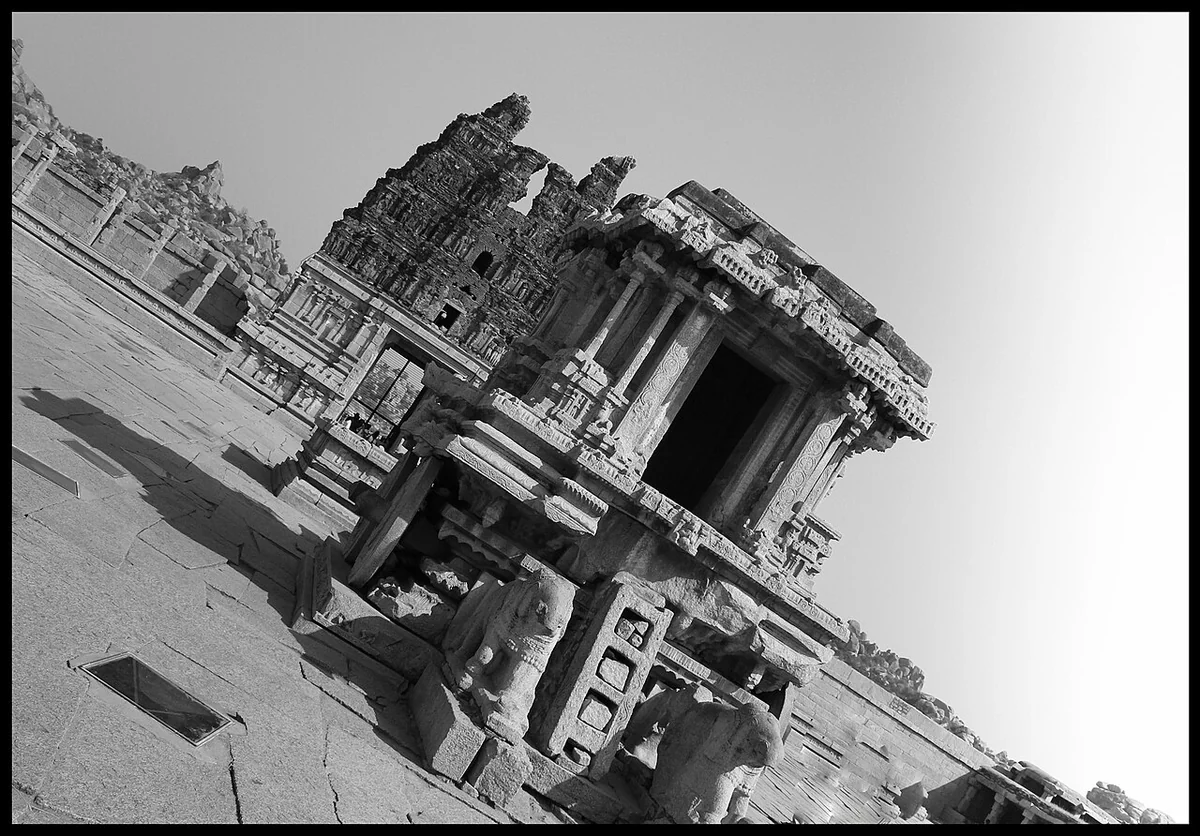
The surviving landscape at Hampi, on the Tungabhadra River in present-day Karnataka, belongs to the fourteenth through sixteenth centuries. It preserves royal, sacred and civil components of the Vijayanagara capital. That span gives a setting for the Portuguese traveller Domingos Paes, whom IGNOU places at Vijayanagara around 1520–1522 during Krishnadevaraya’s reign. His visit is a much narrower date within the history visible at the site.
Use Paes for what a visitor reported about urban life, such as markets, temples or festivals. Keep estimates of size or wealth attributed to their author and seek independent evidence for population figures. Fernão Nunes wrote a later retrospective account, broadly dated to the 1530s. Robert Sewell’s English edition appeared in 1900 and drew on manuscript copies. When checking a quotation or a date, distinguish the traveller’s wording in translation from Sewell’s discussion of the manuscripts and their dating.
At Panipat in 1526, Babur defeated Ibrahim Lodi, opening the conventional Mughal political sequence. That sequence includes the Suri interlude and Humayun’s recovery of Delhi in 1555. At Hampi the local rupture came in 1565, when the battle of Talikota was followed by the capital’s destruction and abandonment. Vijayanagara successors continued from other centres, so describe 1565 as the break in the capital’s history. Placing it alongside Panipat gives each northern and southern event its own place on the calendar.
The Bahmani polity, which the Met dates to 1347, provides a contemporaneous Deccan comparison. Its capitals at Gulbarga and later Bidar give the regional sequence a geographic anchor. The Met’s account also traces connections between the courtly arts of successor sultanates and Iran. For a comparison with Hampi, record which court or site each claim refers to and whether the date refers to political rule, the construction of a building or a particular object.
Mughal India from Babur to Bahadur Shah IIChristianity in India, Census counts and the historical record
- IGNOU BHIE-144: Vijayanagara through visitor accounts
- Domingos Paes and Fernão Nunes, translated by Robert Sewell, A Forgotten Empire (1900)
- UNESCO World Heritage Centre: Group of Monuments at Hampi
- Metropolitan Museum of Art: The Art of the Mughals before 1600
- Metropolitan Museum of Art: Islamic Art of the Deccan
- Ranjeeta Dutta, IGNOU: Southern Dimension, the Glory of Vijayanagara
Check which date a source actually gives
A catalogue entry for the Baburnama shows how several accurate dates can travel with a single source. Babur wrote his memoirs in Chagatai Turkish, and the British Library manuscript includes material covering 1525–1530. The first battle of Panipat belongs to 1526. Mirza Abd al-Rahim completed the Persian translation under Akbar in 1589, and the library dates its surviving manuscript, Or. 3714, to circa 1590–1593.
Choose the date that matches the claim you are making. If you were captioning a painting from that copy of the Baburnama, give the manuscript’s approximate production dates and identify the year of the depicted event separately if it is known. The distance between the two dates helps a reader place the painting in Akbar’s reign, 1556–1605, and understand that its production belongs to a later court than the one described in Babur’s account.
To verify a date when references differ or an institutional description changes, start with the exact object or site name. Look up Or. 3714 in the British Library catalogue for the manuscript. For a monument, open UNESCO’s detailed property description and check whether the wording refers to a construction phase, consecration or completion. For course boundaries, consult the relevant NCERT chapter or IGNOU course entry and record the span it actually uses.
In your notes, keep the source’s qualification next to the date. A possible start at Thanjavur, an approximate manuscript production range and an exact battle year call for different wording. When two references still disagree after you have matched their subjects, record both attributions and check whether either one explains the basis for its dating. A narrower date is only as useful as the evidence behind it.
- NCERT Our Pasts II, Chapter 1, via IIT Kanpur SATHEE
- IGNOU BHIC-105: History of India III, c.750–1206
- UNESCO World Heritage Centre: Great Living Chola Temples
- UNESCO World Heritage Centre: Qutb Minar and its Monuments, Delhi
- British Library Archives: Baburnama, imperial Persian manuscript Or. 3714
- Metropolitan Museum of Art: The Art of the Mughals before 1600
- IGNOU BHIC-133 and programme guide: History of India, c.1206–1707
- Metropolitan Museum of Art: South Asia 1600–1800 timeline
Sources
- NCERT Our Pasts II, Chapter 1, via IIT Kanpur SATHEE
- IGNOU BHIC-105: History of India III, c.750–1206
- UNESCO World Heritage Centre: Great Living Chola Temples
- UNESCO World Heritage Centre: Khajuraho Group of Monuments
- UNESCO World Heritage Centre: Qutb Minar and its Monuments, Delhi
- Metropolitan Museum of Art: South Asia, 1000–1400, north
- UNESCO World Heritage Centre: Sun Temple, Konârak
- UNESCO World Heritage Centre: Moidams, the mound-burial system of the Ahom dynasty
- IGNOU BHIE-144: Vijayanagara through visitor accounts
- Domingos Paes and Fernão Nunes, translated by Robert Sewell, A Forgotten Empire (1900)
- UNESCO World Heritage Centre: Group of Monuments at Hampi
- British Library Archives: Baburnama, imperial Persian manuscript Or. 3714
- Metropolitan Museum of Art: The Art of the Mughals before 1600
- Wikimedia Commons: Stone Chariot of Hampi
- UNESCO World Heritage Centre: Khajuraho Group of Monuments
- IGNOU BHIC-133 and programme guide: History of India, c.1206–1707
- Metropolitan Museum of Art: Islamic Art of the Deccan
- Ranjeeta Dutta, IGNOU: Southern Dimension, the Glory of Vijayanagara
- Metropolitan Museum of Art: South Asia 1600–1800 timeline
