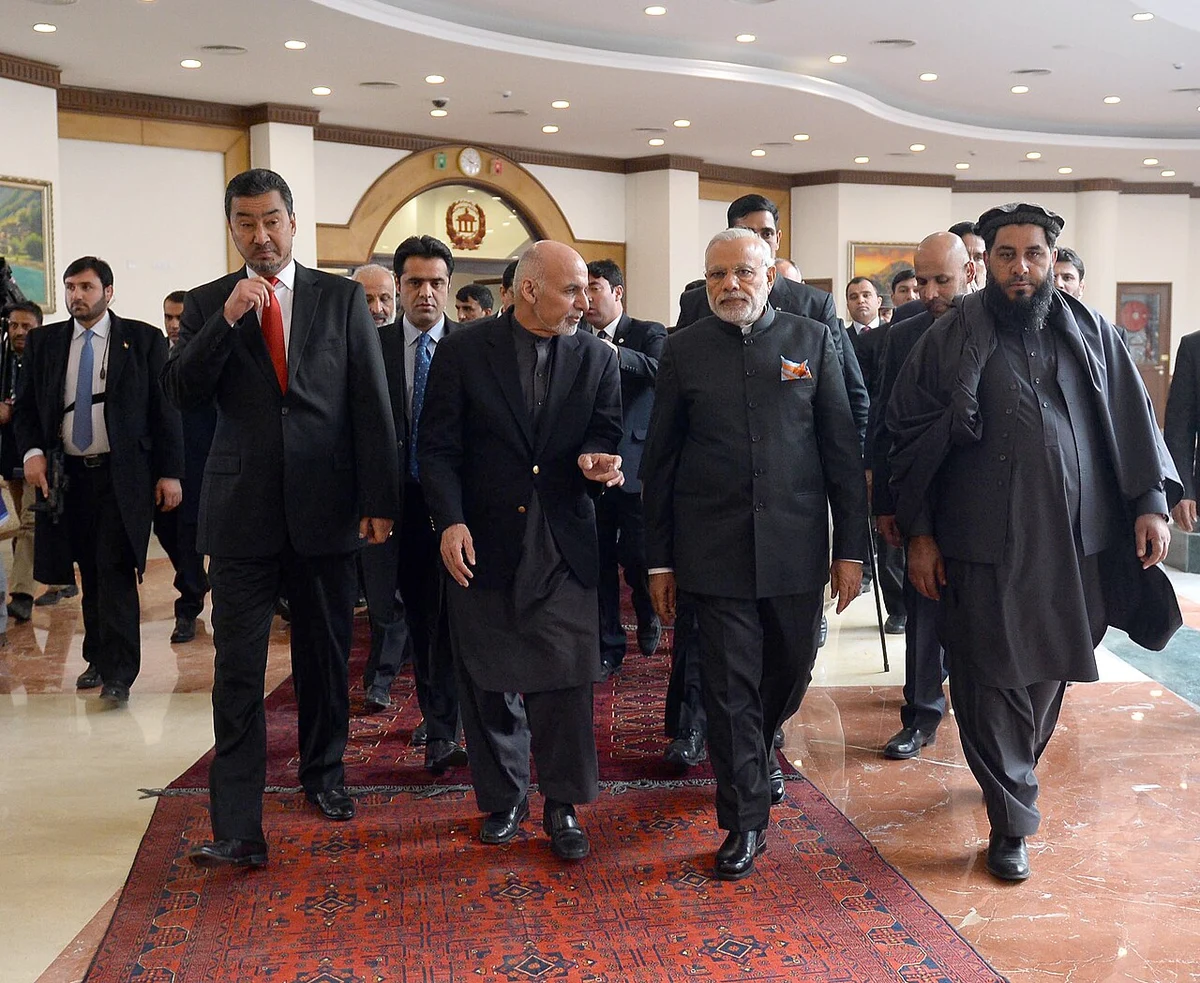
Where India–Afghanistan relations stand
India restored the status of its Kabul mission to the Embassy of India on 21 October 2025, and official records show continued engagement in 2026 through a joint committee, a trade working group and Afghan health officials’ meetings in India. Those records establish diplomatic contact and an upgrade to India’s mission, while leaving formal recognition of Afghanistan’s Taliban authorities and the availability of individual consular services unresolved.
The exchange behind the embassy decision took place in New Delhi. Afghanistan’s Ministry of Foreign Affairs published a joint statement dated 10 October 2025, during Afghan Foreign Minister Amir Khan Muttaqi’s 9–16 October visit. India’s public broadcaster Akashvani subsequently attributed the restoration of embassy status to India’s Ministry of External Affairs, or MEA, and reported that it took effect immediately. The joint statement and the Indian announcement document different actions within the same diplomatic episode.
The 2026 records show that the conversation continued at several levels. The July joint committee discussed a broad bilateral agenda. The September trade working group addressed commercial issues, and the Afghan public health authority separately reported technical meetings. Their published descriptions help identify which part of the relationship moved forward and how far each institution says it got.
| Date | Development | What the record establishes |
|---|---|---|
| October 2011 | Strategic Partnership Agreement | India’s annual report dates the agreement and describes its civilian cooperation context. |
| 25 December 2015 | National Assembly building inaugurated in Kabul | India’s visit archive records the development project and the meeting with then President Ashraf Ghani. |
| From 2022 | Indian technical team in Kabul | India’s 2024 annual report describes the team in its account of policy after August 2021. |
| 10 October 2025 | Joint statement after New Delhi talks | Afghanistan’s foreign ministry records bilateral conversations and public commitments. |
| 21 October 2025 | Indian embassy status restored in Kabul | Akashvani attributes the immediate change in mission status to India’s MEA. |
| 9 July 2026 | Fourth Joint Committee round in New Delhi | Akashvani reports the subjects discussed and continued consultations. |
| 1 September 2026 | Virtual trade working group meeting | India’s Commerce Ministry describes the agenda and follow-up in a release dated 2 September. |
| 13 September 2026 | Afghan health authority publishes delegation notice | The notice describes meetings in India on regulatory cooperation and AYUSH. |
- Afghanistan Ministry of Foreign Affairs: Afghanistan–India Joint Statement, October 2025
- Akashvani government report on October 2025 restoration of Indian embassy status
- Akashvani on fourth India–Afghanistan Joint Committee, 9 July 2026
- India Commerce Ministry September 2026 trade working group
- Afghan public health authority, technical delegation to India
The 2011 agreement and civilian development projects
The October 2011 Strategic Partnership Agreement belongs to an earlier phase of India’s relationship with Afghanistan. India’s 2020–21 MEA annual report places it in a diplomatic context that included civilian development, education, infrastructure and trade. The report provides a dated baseline for reading more recent announcements. Several of the subjects on the 2026 agenda had already appeared in that earlier phase, when the Afghan institutions and officials involved were different.
Two official archives show what civilian development meant in practice. India’s record of the 25 December 2015 visit documents the inauguration of the National Assembly building in Kabul and a meeting with then President Ashraf Ghani. The Indian prime minister’s office also archives the inauguration of the Afghanistan–India Friendship Dam in Herat. One project served a public institution in the capital, and the other was infrastructure in western Afghanistan. Both are identifiable milestones with official records tied to specific places.
Use those archives for questions about the projects and their inauguration. The 2015 visit record, for example, identifies the office Ghani held at the time of the ceremony. An account of present Afghan institutions would need contemporary sources. The same distinction applies to infrastructure. An inauguration records a completed milestone, while present operating conditions or the management of a project require evidence from the organisation responsible for it today.
Humanitarian assistance and education after August 2021
India’s MEA 2024 annual report describes its policies following August 2021 and records an Indian technical team in Kabul from 2022. That presence matters to the chronology of the relationship. It places Indian personnel in Kabul before the October 2025 decision on embassy status and gives a starting point for tracing India’s later institutional presence there. The same report also documents humanitarian assistance and education as areas of engagement during this period.
The report gives cumulative figures since August 2021 of roughly 50,000 metric tonnes of wheat and 300 tonnes of medical supplies. An earlier MEA annual report recorded 75,000 metric tonnes of wheat via Chabahar during its own reporting period. The two wheat figures have different reporting bases, so a comparison needs the full period and scope beside each number. The historical Chabahar entry documents how an earlier delivery was recorded. Anyone checking present freight options needs current information on the shipment and the authorities that would handle it.
For education, the 2024 report records 2,000 online scholarships, including 580 for girls. The word ‘online’ identifies the format of the reported scholarships, a material detail for anyone researching study opportunities. Earlier scholarship rounds can overlap with those reported in 2024, so calculating a total across annual reports requires matching the cohorts first. An applicant would need a current announcement from the administering institution to confirm whether a round is open and which applicants it covers.
ILO India country office address and public labour resourcesIndia–Nepal relations, treaties, trade and the 2026 state visit
What the October 2025 Kabul embassy upgrade established
Akashvani’s 21 October report describes a change from a technical mission to the Embassy of India in Kabul. The sequence matters because the upgrade had already been announced during Muttaqi’s October visit, while the later report attributes immediate restoration of embassy status to the MEA. India’s account of a technical team from 2022 gives the preceding institutional context. For the timeline, 21 October is the date of the report confirming restoration.
Formal recognition concerns India’s position on the Afghan authorities. The joint statement supplies evidence of bilateral conversations, and the embassy report supplies evidence of the status India gave its mission. A definitive claim about India’s recognition position requires a current official statement or instrument that expressly addresses it. The terminology used for a visiting counterpart and the title of India’s own office each answer narrower questions.
Consider a family in Kabul seeking an Indian visa for a student. The embassy announcement helps identify the Indian mission by its official designation. To work out whether they can submit an application in Kabul, the family needs a current official notice that identifies the relevant visa category, the application channel and any in-person service available there. The timing can differ for each service. A valid application channel can also have its own rules about who may use it.
What the July 2026 Joint Committee discussed
The fourth India–Afghanistan Joint Committee round took place in New Delhi on 9 July 2026, according to Akashvani. The report lists food security, healthcare, development, education, sports, trade, visas and connectivity. The breadth of the agenda shows how the committee brought several aspects of the bilateral relationship into one meeting. The published account records views and continued consultations, which is the level of commitment the report supports.
A useful way to follow the committee is to track one subject into the next dated record. Trade appears again in the Commerce Ministry’s account of the September working group, where the agenda is more specific. Health also appears in a separate Afghan public health notice. Each later document has its own issuing authority and scope. Establishing that a particular project came out of the July committee would require a record connecting the two.
The July reference to sports belongs to the committee’s diplomatic agenda. A reader checking a fixture or result would need a competition source, just as a reader checking entry requirements would need a currently applicable immigration or visa notice. For a reported timeline, the agenda can establish when an issue was raised. A later decision should have a date and wording of its own, especially if it changes who qualifies for a service.
September 2026 trade talks and practical questions
India’s Commerce Ministry released its account on 2 September 2026 of a virtual working group meeting held the previous day. The agenda included trade facilitation, customs and data, trader visas, banking, pharmaceuticals, agriculture, tariffs, connectivity and investment. The release records agreement in general terms on follow-up and stronger cooperation. Its specificity lies mainly in the topics the participants addressed, so the date of the meeting and the wording of any subsequent measure both matter.
Suppose an Indian importer is trying to price a shipment of Afghan dried fruit. The discussion of agriculture and tariffs makes the release relevant background. To calculate the duty for that shipment, the importer still needs the applicable customs classification and the official tariff or notification in effect on the relevant date. Any treatment tied to origin would require checking the conditions in that measure. The working group release itself contains no immediately operative duty schedule.
Other points on the agenda lead to different evidence. A trader visa depends on the applicable visa category and current eligibility rules. A banking arrangement calls for evidence from the institutions responsible for handling it. Connectivity is a subject of discussion in both the July and September records, while a proposed shipment requires confirmation that the specific service is operating when needed. The policy release can help locate the right question. The answer may sit in another agency’s notice or with the service provider.
Health cooperation and how to verify later developments
Afghanistan’s public health authority published a notice on 13 September 2026 describing technical meetings in India on food and drug regulatory cooperation and AYUSH. Attribute the description to that authority and use 13 September as the notice date. The record identifies the fields in which officials spoke. It gives no basis for assigning an effective date to a new licensing rule or treating a treatment option as available to individual patients.
For a later regulatory development, look for a dated measure from the authority that administers it. Check which products or activities it covers, where it applies and when it takes effect. The broad phrase ‘food and drug regulatory cooperation’ can cover discussions across several kinds of products and institutions. The scope of any binding change has to come from the new measure. Questions about an individual appointment or admission depend on the provider’s current arrangements.
Check which date a new source actually gives. The trade working group met on 1 September and the ministry published its release on 2 September, while the health record supplies a notice date. A later report can describe an earlier meeting, and an announcement can specify a different effective date. When two official accounts give different levels of detail, attribute the claims individually and keep the chronology tied to the action each source documents.
Sources
- Afghanistan Ministry of Foreign Affairs: Afghanistan–India Joint Statement, October 2025
- Prime Minister of India: Afghanistan–India Friendship Dam Inauguration
- India MEA Annual Report 2020–21 on the 2011 Strategic Partnership Agreement
- MEA archive of the 25 December 2015 Afghanistan visit
- India MEA 2024 Annual Report, Afghanistan chapter
- Akashvani government report on October 2025 restoration of Indian embassy status
- Akashvani on fourth India–Afghanistan Joint Committee, 9 July 2026
- India Commerce Ministry September 2026 trade working group
- Afghan public health authority, technical delegation to India
- PMO photo of the Afghanistan Parliament inauguration in 2015
