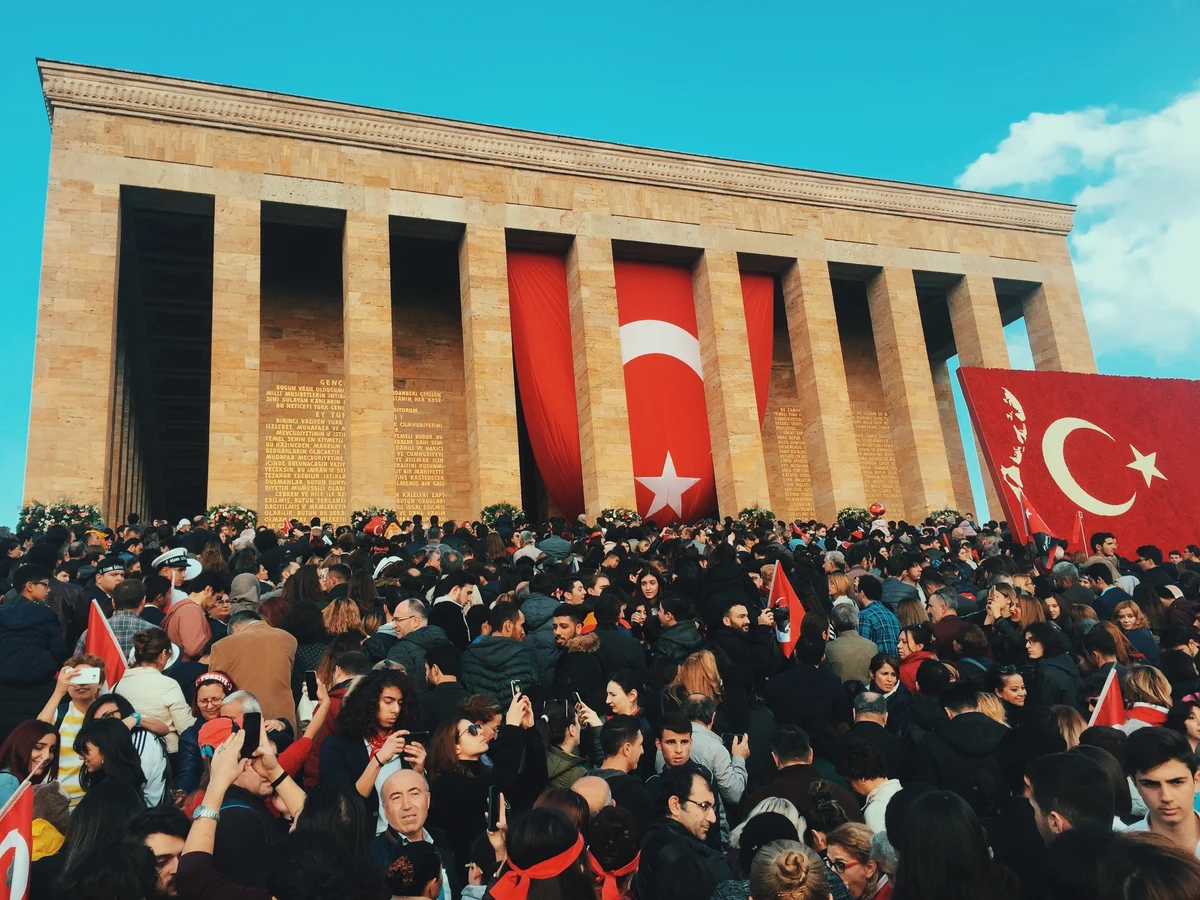
What India and Türkiye discussed in April 2026
India and Türkiye held their 12th Foreign Office Consultations in New Delhi on 8 April 2026, with Sibi George and Berris Ekinci co-chairing. The two sides discussed trade, investment, tourism, technology, energy, education, culture and people-to-people exchange, and intended to hold the next round in Türkiye on dates to be agreed.
The meeting is the latest diplomatic milestone documented in the sources for this timeline. India’s Consulate General in Istanbul recorded it in its weekly issue covering 6–12 April. The date of the meeting matters because a weekly issue can cover several events, and a standing country overview may still list earlier contacts after a new round has taken place.
The record establishes that the two foreign offices kept a channel open across several policy areas. The agenda is broad, and the documented outcome is specific. The readout records the discussion and the intended location of the next round. It gives no date for that round and identifies no new treaty. Any claim about a signed agreement or the implementation of a particular proposal would need a separate announcement identifying the measure.
The numbering identifies the meeting as part of an established series. It gives a reader a precise way to check a subsequent announcement. A release naming a 13th round, giving its date and saying it took place would advance the chronology. A reference to plans for another round would leave the date and occurrence open. Keep the April 2026 meeting as the dated reference point until an official update establishes what happened next.
From recognition to the 2026 consultations
Türkiye’s foreign ministry says it recognised India after independence in August 1947 and that diplomatic relations were established. India’s Ministry of External Affairs describes historical exchanges and later contacts in its bilateral brief. Together, these accounts distinguish the longer history of contact from the formal relationship between the two states. The milestones here concern identifiable official exchanges, with each event described according to its format.
Both foreign ministries’ accounts identify the 2017 state visit to India. India’s brief also records a bilateral leaders’ meeting in September 2023 on the sidelines of the New Delhi G20 summit. Both belong in the diplomatic chronology. The latter was a meeting between the two sides during a multilateral gathering, so the summit provides the setting and the bilateral meeting provides the event. Describing it as a state visit would change what the record says happened.
India’s brief records a ministerial message in August 2024. This is evidence of a communication at ministerial level. The source’s description is enough to place it on the timeline, while any account of an in-person meeting would need a separate record. The April 2026 event has a different format again. It was a numbered round of talks between foreign offices, with identifiable co-chairs and a published list of topics.
The entries mark different points of contact over time. Their spacing reflects the events documented in the material used here. A reader looking for a complete history of diplomatic exchanges would need dated releases for the intervening years, including individual announcements that a country overview may omit. That matters when assessing claims about the frequency of contact or when a particular channel last met.
| Date | Documented event | Type of contact |
|---|---|---|
| After India’s independence in August 1947 | Türkiye recognised India and diplomatic relations were established, according to Türkiye’s foreign ministry | Recognition and diplomatic relations |
| 2017 | State visit to India | State visit |
| September 2023 | Bilateral leaders’ meeting during the New Delhi G20 summit | Summit sidelines meeting |
| August 2024 | Ministerial message recorded by India’s foreign ministry | Ministerial communication |
| 8 April 2026 | 12th Foreign Office Consultations in New Delhi | Foreign office talks |
Bilateral goods trade in Türkiye’s figures
Türkiye’s foreign ministry publishes a bilateral trade table in millions of US dollars. Its export column counts shipments from Türkiye to India, and its import column counts shipments into Türkiye from India. The volume column gives the combined value in both directions. Start with the reporting country whenever a number is described simply as exports or imports. The same direction of trade can carry the opposite label in an Indian table.
In the four calendar years shown below, bilateral goods trade rose from US$5.686 billion in 2020 to US$12.334 billion in 2022, then fell to US$9.575 billion in 2023. Within this sample, 2022 had the largest combined value. The 2023 figure remained above the 2021 figure of US$9.241 billion, even after the decline from the preceding year. These comparisons all use the same published column and the same annual basis.
The direction columns show where the 2023 decline occurred. Turkish imports from India fell from US$10.697 billion in 2022 to US$7.931 billion in 2023, a decrease of US$2.766 billion. Turkish exports to India rose from US$1.637 billion to US$1.644 billion, an increase of US$7 million. Together those changes account for the US$2.759 billion decline in reported volume. Imports from India were the larger component in every year shown.
Annual dollar values measure recorded trade in money terms. The table gives no product-by-product explanation of the decline, so use the arithmetic to identify the direction in which the change occurred. An explanation based on prices, quantities or a shift in the mix of goods would require more detailed data. Later rows in the ministry’s table also need checking for period and formatting before they can extend this four-year comparison.
Trade agreements, product examples and newer figures
India’s embassy in Ankara dates the bilateral trade agreement to 1973. The embassy also records the tenth meeting of the bilateral economic body in New Delhi in January 2014. Türkiye’s foreign ministry calls it the tenth Joint Economic Commission session and gives the dates as 30–31 January 2014. The agreement and the commission meeting are separate landmarks. The agreement establishes the date of a formal trade instrument, while the session records a later institutional contact.
The official sources give examples of goods moving in each direction. Türkiye’s ministry lists marble, sunflower seed oil and steel scrap among Turkish exports to India. India’s embassy lists iron and steel, auto parts and telecommunications instruments among Indian exports in its discussion of FY 2025–26. These examples establish which kinds of goods the sources identify. Comparing their relative importance would require product values from a common period and a consistent classification.
The embassy’s FY 2025–26 paragraph pairs a stated bilateral total with export and import figures that add to a different amount. The discrepancy leaves the latest total unresolved on that evidence. Adding the two components can reveal the inconsistency, but arithmetic alone cannot establish which numbers belong to the same period or whether one was transcribed incorrectly. A calendar-year row from Türkiye’s ministry also covers a different reporting period from an Indian fiscal-year figure.
To verify a newer figure, find the underlying trade release and check the reporting country, period, currency scale and coverage before comparing values. Confirm that exports and imports are for the same bilateral pair and that their sum agrees with the stated total within rounding. A comparison across the two countries’ publications also needs matching date ranges and clear direction labels. For a year-on-year comparison, use two complete periods from the same series where possible.
For a new annual comparison, capture the common period and direction of trade from the same reporting agency. Then compare the two published directions with the annual total. A currency conversion or rounding adjustment needs a documented basis. Where a later row does not reconcile, use the dated comparable series and check a subsequent official revision before citing a refreshed total.
US tariffs on India, current measures and dated proposalsIndia’s allies and strategic partners, treaties and groupings
Tourism, consular presence and cultural ties
Türkiye’s foreign ministry reports 307,000 Indian tourists to Türkiye in 2024. The figure refers to visitors from India going to Türkiye in that year. A claim about growth would require a comparable count for another period, and a claim about tourism in both directions would require a separate count of visitors from Türkiye to India. The number has its own unit and coverage, separate from the dollar values used to track goods trade.
Türkiye’s foreign ministry lists its embassy in New Delhi and consulates in Mumbai and Hyderabad. That directory identifies an official presence across three cities. For a reader trying to verify something practical such as a visa requirement or which office handles an application, the relevant evidence is current consular guidance for the traveller’s passport, purpose and intended travel date. A diplomatic overview or annual visitor count cannot establish the rule for an individual trip.
The Turkish Embassy in New Delhi points to reciprocal commemorations in the two capitals. Delhi has a street named for Mustafa Kemal Atatürk, while Ankara has street names commemorating Mahatma Gandhi and Rabindranath Tagore. The examples give the historical and people-to-people relationship a physical presence in each capital. They belong to the cultural record, and their source is the embassy’s public description of the relationship.
Tourism and cultural contacts are also distinct from the state-to-state chronology. A visitor count describes movement during a reporting year, while a commemorative name records a public recognition that can endure across many years. Official talks can include both tourism and culture on their agenda. Evidence that a policy changed would come from a measure with its own effective date, and evidence that visitor numbers moved would come from a later statistical release.
How to verify a new development
Check the event date and the kind of claim before using a new headline to update the timeline. A country overview is useful for long-running facts such as recognition or a documented state visit. A dated foreign ministry or embassy release is better suited to establishing when a specific meeting took place, who attended and what the participants announced. Türkiye’s standing political overview lists older consultations, while the Indian consulate’s April 2026 issue dates the 12th round.
Suppose a headline says India and Türkiye agreed to hold talks in Türkiye. It could describe the intention already recorded on 8 April 2026. To decide whether the headline adds anything, look for a named round, a confirmed date and wording that establishes whether the meeting is planned or has taken place. A confirmed date would add a scheduling detail. A statement issued after the talks, naming the participants and venue, would support adding a new event.
Use readouts from both sides when available and attribute details that appear in only one account. The Indian publication establishes what India reported about the April meeting. A Turkish release could independently confirm its format or give a different emphasis to the agenda. For claims about consequences, such as a change in an established policy or business practice, look for the implementing authority’s own document and reporting that can corroborate the effect.
Claims that the overall relationship has warmed or cooled need a broader record than the meeting calendar. The April consultations are evidence of official contact and a stated intention to meet again. A stronger assessment would need dated developments across the issues involved, with enough context to tell an announced intention from action already taken. Treat trade figures, consular rules and diplomatic meetings as claims with different evidence and different update dates.
Sources
- Ministry of External Affairs: India–Türkiye Relations
- Türkiye Ministry of Foreign Affairs: Political Relations
- Türkiye Ministry of Foreign Affairs: Economic and Trade Relations
- India’s Consulate General Istanbul, 12th Foreign Office Consultations
- Indian Embassy Ankara economic and commercial brief
- Turkish Embassy New Delhi public mission statement
- Anıtkabir in Ankara, documentary photograph
