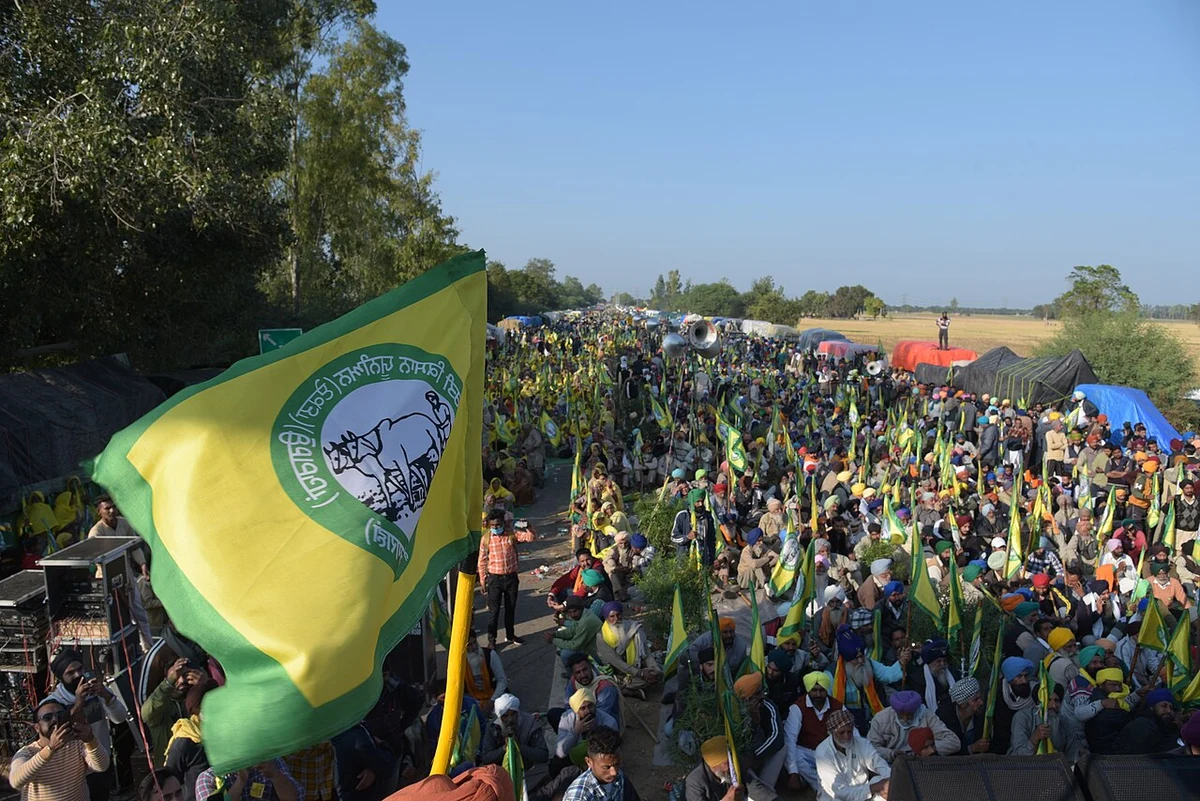
The 26 November farmers’ mobilisation
Start with the Samyukt Kisan Morcha’s planned 26 November 2026 farmers’ mobilisation and check reporting from the district you want to follow. At its 23 November press conference, the SKM projected demonstrations at about 100 locations, and a separate public notice acknowledged the planned event in New Delhi.
The figure of about 100 describes the organisers’ intended geographical reach. The early record confirms the announcement and the existence of the New Delhi notice. The number of gatherings that actually took place, their turnout and the outcome in individual cities still need reporting from after the events. Even verified attendance at one gathering would answer a different question from how many places took part.
The SKM said demonstrators would submit a memorandum of demands addressed to the President through district collectors. That describes the intended submission process. A subsequent report that a collector’s office received a memorandum would establish a local step in that process. Delivery to the President and any response to the demands would each require separate confirmation.
Look at the verbs when the same headline appears in several publications. PTI’s account reports what the organisers said at their press conference. Several publications carrying that wire story still trace back to the same account. For corroboration of an event itself, look for a district-level account that describes what a reporter observed or identifies a local source who can confirm what took place.
A timeline of the announcements and notices
The November mobilisation had a public lead-up that included a statement of demands, a press conference and a district notice. Each marks a different stage. The statement explains why the SKM called for action. The press conference adds the organisers’ projection of its scale. The notice shows how one district authority recorded the planned event. A timeline can preserve all three even after reporting establishes what took place.

| Date | Topic | Record type | What it establishes | Read the record |
|---|---|---|---|---|
| 26 November 2020 | Farmers’ movement | Historical record | Date of the documented historical mobilisation and archive photograph. | Randeep Maddoke archive photograph |
| 30 November 2021 | Farm law repeal | Enacted law | Act 40 of 2021 repealed the three named 2020 laws. | Farm Laws Repeal Act |
| 30 September 2026 | Rabi MSP | Official policy decision | Cabinet decision on six named rabi crops for the 2027–28 marketing season. | PIB statement of the decision |
| 30 October 2026 | Delhi electoral rolls | Official administrative notice | A Delhi claims and objections deadline was extended to 25 November under the named revision. | Gazette notification |
| 1 November 2026 | Delhi opposition protest | Reported event | AP reports a protest about the election chief and voter-roll revision. | Contemporaneous AP report |
| 23 November 2026 | 26 November farmer mobilisation | Organiser announcement | SKM said it planned demonstrations at about 100 locations and intended to submit a charter of demands. | PTI dispatch from the press conference |
| 25 November 2026 | New Delhi planned event | Official administrative notice | District police acknowledged the planned event in a notice reproduced in dated reporting. | Report reproducing the public notice |

Keep the date of the underlying record alongside the date of the story that publishes it. Aaj Tak’s 26 November report embeds a notice dated 25 November. Its appearance in a story on the day of the mobilisation still makes it a notice issued ahead of the event. If a later report has an updated timestamp, look for new reporting in the article itself before treating the timestamp as evidence of a development.
A timeline becomes more useful when it can show a change in status for a named place. Suppose a district newspaper first reports a planned gathering and later reports that participants presented a memorandum there. Record the later report under that district, alongside the earlier plan. This preserves both the evidence that the event was announced and the evidence that a specific action followed, without projecting the district’s outcome onto other locations.
- PTI wires | Samyukt Kisan Morcha’s 23 November press conference
- The Tribune | Firsthand reporting on SKM statements, 13 November 2026
- Aaj Tak | 26 November Delhi report and embedded 25 November public notice
- India Code | Farm Laws Repeal Act, 2021
- Associated Press | 1 November New Delhi protest about the election chief
- Union Cabinet via PIB | 2027–28 rabi minimum support prices
- Delhi Gazette | 30 October Delhi claims and objections amendment
What the organisers mean by a legal MSP guarantee
The SKM’s 13 November statement, as reported by The Tribune, listed seven demands. It called for a legal minimum support price guarantee at C2 plus 50% with assured procurement. In that proposal, C2 is the cost base and the 50% is calculated on that base. Assured procurement is a separate part of the demand. It concerns whether eligible produce will be bought, a question that a price figure by itself leaves open.
The Union government’s announcement on 30 September 2026 answers a narrower question. The Cabinet Committee on Economic Affairs announced minimum support prices for six mandated rabi crops for the 2027–28 marketing season. Its release describes its cost measure and bases its specified floor margin on the all-India weighted average cost of production. The crop list, season and cost measure define how to read the announcement.
When a report quotes a percentage, identify the cost base before comparing it with another percentage. A percentage applied to the cost series described in the Cabinet release and the same percentage applied to the organisers’ proposed C2 base can produce different prices. The two records also address different aspects of policy. One publishes prices for a specified season, while the other sets out what the organisers want guaranteed in law.
The organisers also raised farm policy, trade, loan relief and public insurance. The Tribune’s account specifically identifies their demand to reverse the proposed U.S. trade agreement. Keep that wording tied to the statement. Any claim about the agreement’s subsequent status, or about a change to a loan or insurance programme, would need its own dated record.
Donald Trump and India, trade, tariffs and the November 2026 proposal
Why the farm-law repeal still matters
The Farm Laws Repeal Act, 2021, received assent on 30 November 2021. Act 40 of 2021 repealed three identified farm acts passed in 2020 and separately amended the Essential Commodities Act, 1955. The repeal gives readers a clear legal milestone for the earlier dispute. The SKM’s 2026 anniversary call sets out a further set of policy demands, including the legal MSP guarantee.
The anniversary framing explains why coverage returns to the farm-law protests even when the immediate demands concern prices, procurement and trade. When an article says an issue is still unresolved, identify which issue it means. The repeal act can establish what happened to the three laws. For a claim that the government has acted on a newer demand, look for a document that names the measure and states what changed.
Apply the same distinction to pictures. Randeep Maddoke’s photograph dated 26 November 2020 documents the earlier farmers’ protest. If it appears alongside coverage of the 2026 anniversary, the caption should give the year and describe it as a historical photograph. An anniversary will naturally bring back images from the same calendar day. To use an image as evidence that a specific 2026 gathering happened, look for a caption or original report that identifies the place and full date and connects the picture to that gathering.
What a local notice can tell you
Article 19(1)(b) of the Constitution protects citizens’ right to assemble peaceably and without arms. Article 19(3) permits reasonable restrictions in the interests of the sovereignty and integrity of India or public order. Section 163 of the Bharatiya Nagarik Suraksha Sanhita concerns certain urgent orders by designated magistrates. A claim that an order is in effect for a particular place calls for the order itself.
First identify the document. The New Delhi district police public notice dated 25 November acknowledges information about the planned event. To verify a claim about a Section 163 restriction, find the dated order, identify the issuing authority and read its jurisdiction and operative period. Where later documents refer to the same order, check whether they extend, amend or withdraw it. A screenshot with only a headline or a section number may omit the very terms that determine whether the claim is accurate.
Routine travel has a separate verification question. If a post claims that a particular transport service is suspended, look for a current notice from the operator that identifies the service and the time period affected. A public assembly notice and an operator advisory answer different questions. The early Delhi report establishes the existence of the local event notice. The status of specific services or trips requires a newer source covering the relevant place and time.
Which reports concern voter-roll protests
Look for the organiser, the date and the stated demand before connecting a story about voter rolls to the November farmers’ mobilisation. In an interview on 19 October, All India Kisan Sabha general secretary Vijoo Krishnan distinguished an October 23 action concerning voter rights from the proposed 26 November anniversary mobilisation. That distinction helps explain why both subjects can appear in reporting about farm organisations while referring to actions with different aims.
Associated Press reported a separate opposition demonstration in New Delhi on 1 November. Protesters called for the election chief to resign amid controversy over voter-roll revision. The report establishes that the demonstration occurred and identifies the demand. An allegation made in the course of the dispute needs to stay attributed to whoever made it. A court finding or an administrative determination about the rolls would require the relevant decision.
For the revision procedure itself, the Election Commission’s 26 September note describes Special Intensive Revision procedures, support desks and state-specific periods for claims. Its initial timeline was later amended. A Delhi notification dated 30 October extended one Delhi claims and objections window to 25 November 2026, with reference to the qualifying date of 1 October. That date belongs to the specified Delhi window. To verify a later claim about the process, look for a subsequent notification covering the same jurisdiction and stage, or for a distinct publication that establishes when a final roll appeared.
- The Tribune | Firsthand reporting on SKM statements, 13 November 2026
- Associated Press | 1 November New Delhi protest about the election chief
- Election Commission via PIB | 26 September Special Intensive Revision decisions
- Delhi Gazette | 30 October Delhi claims and objections amendment
- 19 October firsthand interview with AIKS general secretary Vijoo Krishnan
How to verify a fresh update in your district
Search for the district or city name alongside “Samyukt Kisan Morcha” and “26 November 2026”. A local-language report may name the district collector’s office or the organisation that took part, details that can be left out of national coverage. Check the time of publication and read far enough to tell whether the reporter describes something that happened or repeats an expectation from before the event.
For turnout, look for a number tied to a place, a time and a source. If a report gives an organiser’s estimate, keep that attribution when passing it on. Where an official estimate covers a different time or area, preserve the two descriptions so readers can see what each counted. A photograph can help corroborate a gathering at a particular place when its origin is established, but the visible crowd covers only what the camera captured at that moment.
Choose the follow-up source according to the claim. A report from the scene can establish that people gathered. A dated acknowledgement from a collector’s office can establish receipt of a memorandum. A current government order can establish the terms of a restriction in its jurisdiction. When the only newer item restates an earlier announcement, keep the district entry at the status the evidence supports. The timing of the update matters as much as the name of the publication when a planned event is becoming a record of what happened.
Sources
- Legislative Department: Constitution of India, Article 19
- India Code: Bharatiya Nagarik Suraksha Sanhita, Section 163
- PTI wires | Samyukt Kisan Morcha’s 23 November press conference
- The Tribune | Firsthand reporting on SKM statements, 13 November 2026
- Aaj Tak | 26 November Delhi report and embedded 25 November public notice
- India Code | Farm Laws Repeal Act, 2021
- Union Cabinet via PIB | 2027–28 rabi minimum support prices
- Associated Press | 1 November New Delhi protest about the election chief
- Election Commission via PIB | 26 September Special Intensive Revision decisions
- Delhi Gazette | 30 October Delhi claims and objections amendment
- Wikimedia Commons | 26 November 2020 farmers’ protest photograph
- 19 October firsthand interview with AIKS general secretary Vijoo Krishnan