What changed in November 2026
The November 2026 record shows limited India–Pakistan engagement through a multilateral cultural forum and a specific Sikh pilgrimage, while the dispute over India’s decision to hold the Indus Waters Treaty in abeyance continued. Pakistan nominated a minister for the New Delhi forum, and Pakistani authorities reported about 3,000 Indian Sikh pilgrims arriving via Wagah for Guru Nanak Dev Ji’s birth anniversary.
Pakistan’s Foreign Ministry named Federal Minister for Climate Change and Environmental Coordination Musadik Masood Malik as its nominee on 14 November. Prime Minister Narendra Modi opened the first Shanghai Cooperation Organisation Civilisational Dialogue Forum at Purana Qila on 20 November. India’s ministries of Culture and External Affairs co-organised the event with the Indira Gandhi National Centre for the Arts as knowledge partner. The forum closed on 22 November.
The nomination establishes whom Pakistan announced it would send. India’s forum readout establishes that the event took place, and the Indraprastha Communiqué sets out its multilateral cultural and people-to-people scope. A claim about a bilateral meeting would need a separate account identifying who met, when they met and what the two governments said about the exchange. The communiqué supplies no such announcement.
| Date | Track | Event | What the record establishes |
|---|---|---|---|
| 21 May 2008 | Consular contact | Agreement on Consular Access | Regular prisoner-list exchanges on 1 January and 1 July. |
| October 2024 | Pilgrimage | Kartarpur agreement extension | Term extended five years under the agreement record. |
| April 2025 | Indus water treaty | India’s abeyance decision | Indian government position following the Pahalgam attack. |
| 1 July 2026 | Consular contact | Prisoner lists exchanged | Dated custody counts and separate repatriation requests. |
| 31 August 2026 | Indus water treaty | Arbitration award | Tribunal held the treaty remained in force. India disputes the tribunal’s competence. |
| 6 November 2026 | Pilgrimage | Pakistan foreign ministry briefing | Distinguished religious visas from movement through Kartarpur. |
| 20–22 November 2026 | Multilateral culture | SCO Civilisational Dialogue Forum | New Delhi forum held under a multilateral cultural remit. |
| 24 November 2026 | Pilgrimage | Nankana Sahib celebrations | Dated ceremony, following the pilgrim arrivals recorded by ETPB. |
- India Ministry of Culture readout on the first SCO Civilisational Dialogue Forum
- Pakistan Foreign Ministry nomination for New Delhi SCO cultural forum
- Permanent Court of Arbitration case record and 31 August 2026 award
- Pakistan Foreign Ministry distinction between religious visas and the Kartarpur Corridor
- Pakistan ETPB November Guru Nanak anniversary civilian pilgrimage
- Radio Pakistan’s dated Nankana Sahib ceremony report
- India and Pakistan consular lists exchange on 1 July 2026
The diplomatic backdrop after Pahalgam
India’s 1 August 2025 written reply in the Lok Sabha identifies the 22 April Pahalgam attack as the trigger for its diplomatic measures. Pakistan denied involvement, as the Associated Press reported in its 31 August 2026 coverage of the treaty dispute. The parliamentary reply establishes India’s stated reason for acting. Pakistan’s denial is a separate statement about responsibility, and both positions need attribution when the attack is used to explain what followed.
India’s parliamentary record also gives a concrete diplomatic measure. It puts the reduction in High Commission staffing from 55 to 30 posts into effect on 1 May 2025. Those figures describe the measure at the time. A report about staffing today would need a later official count, and any claim that diplomatic representation had been restored would need evidence of a subsequent decision and its effective date.
The 1972 Simla Agreement says the countries should settle their differences through bilateral negotiations or another peaceful method they mutually agree on. That wording gives readers a way to evaluate broad claims about the resumption of talks. An announcement of direct negotiations should identify the participating governments and the business they intend to discuss. Participation in a wider organisation’s meeting establishes a setting for contact. Evidence about the meeting itself determines what can be said about any India–Pakistan exchange there.
What the Indus Waters Treaty covers
The 1960 Indus Waters Treaty divides use of six rivers into two groups, with defined exceptions and permitted uses. The Eastern Rivers are the Ravi, Beas and Sutlej. The Western Rivers are the Indus, Jhelum and Chenab. The river group is a useful first check when a headline describes a project or a water dispute. A story involving one western river can concern the treaty provisions that apply to that project, while a treaty status ruling concerns the framework for all six.
The treaty establishes the Permanent Indus Commission and provides different procedures for questions, differences and disputes. The World Bank describes its role as limited and procedural. It can appoint a Neutral Expert or facilitate the constitution of a Court of Arbitration where requested under the treaty. To identify who made a decision, read the issuing body named on the decision itself. The institution that helps constitute a proceeding and the body that issues a finding have different responsibilities.
Suppose a report describes a disagreement over a project on the Chenab as a new ruling on whether the treaty is in force. Start by identifying the Chenab as a Western River, then check the document title and the issue the decision addresses. If the document concerns how a provision applies to a project, its findings have to be read at that level. A claim about the treaty’s status calls for the status award or a dated government statement on the issue.
What the August 2026 Indus award decided
On 31 August 2026, the Court of Arbitration concluded that the Indus Waters Treaty remained in force and held that India’s April 2025 abeyance decision did not suspend it. The Permanent Court of Arbitration serves as secretariat for the proceeding, Case 2023-01, and its release records both the status award and a separate interim-measures order. India did not participate in the arbitration, objected to the tribunal’s competence and continued to maintain its abeyance decision.
Pakistan had already set out its position in a letter dated 23 April 2026, circulated as UN Security Council document S/2026/356. It argued that the treaty cannot be suspended unilaterally and remains binding. The document identifier lets readers locate Pakistan’s submission in the UN record. A claim that the Security Council itself decided the issue would require a separate Council decision. Pakistan’s Foreign Ministry reiterated support for the arbitration award at its 2 September briefing.
The Neutral Expert proceeding has its own docket, Case 2023-14, and its own September 2026 work programme. Use the case number, issuer and document date to track new developments. A work programme records procedural activity in that proceeding. A status award records a tribunal’s decision, and a foreign ministry statement records a government’s position. For any claim about a change in implementation, look for dated evidence of the specific action, since the award and the parties’ statements address their respective legal or policy positions.
- World Bank: Indus Waters Treaty Fact Sheet
- Permanent Court of Arbitration case record and 31 August 2026 award
- Pakistan's treaty position transmitted to the UN Security Council
- India's 2025 diplomatic policy and parliamentary record
- Permanent Court of Arbitration docket for the separate Neutral Expert proceedings
What the July prisoner lists tell you
India and Pakistan exchanged prisoner lists simultaneously through diplomatic channels in New Delhi and Islamabad on 1 July 2026. The 21 May 2008 Agreement on Consular Access calls for these exchanges on 1 January and 1 July. The scheduled exchange provides a dated custody record even when larger diplomatic issues remain contested. Its nationality wording matters because the lists cover people identified as nationals and people believed to be nationals of the other country.
India reported holding 386 civilians and 53 fishermen who were Pakistani or believed to be Pakistani, a total of 439. Pakistan reported holding 52 civilians and 198 fishermen who were Indian or believed to be Indian, a total of 250. The two governments’ July figures match by category. When checking a figure in a report, first identify the country holding the people and then check whether the figure covers civilians, fishermen or both.
India sought early repatriation of 188 people who had completed their sentences. Pakistan sought early release or repatriation of 97 confirmed Pakistani nationals who had completed theirs. These numbers record requests. To establish how many people actually returned, look for a dated handover or arrival statement. The Indian or believed-to-be-Indian fishermen count in Pakistan was 199 on 1 January and 198 on 1 July. That difference establishes a change in the recorded count. The lists leave individual movements between the two dates unresolved.
| Custody jurisdiction | Civilians | Fishermen | Combined count |
|---|---|---|---|
| India, Pakistani or believed Pakistani nationality | 386 | 53 | 439 |
| Pakistan, Indian or believed Indian nationality | 52 | 198 | 250 |
The 439 and 250 figures are totals of the two recorded custody categories. India’s request for 188 repatriations and Pakistan’s request for 97 releases or repatriations are distinct measures in the ministry accounts. Keep a request date separate from any later release notice when tracking an individual development.
Wagah pilgrimage and Kartarpur access
On 6 November 2026, Pakistan’s Foreign Ministry distinguished visas under the 1974 Protocol on Visits to Religious Shrines from the 2019 Kartarpur Corridor arrangement. Its spokesperson said corridor movement remained suspended from India and that Pakistan was ready to receive pilgrims if movement resumed. India’s annual report records a five-year extension of the Kartarpur agreement in October 2024. The extension establishes the agreement’s term. Actual access depends on the operating position on the intended date.
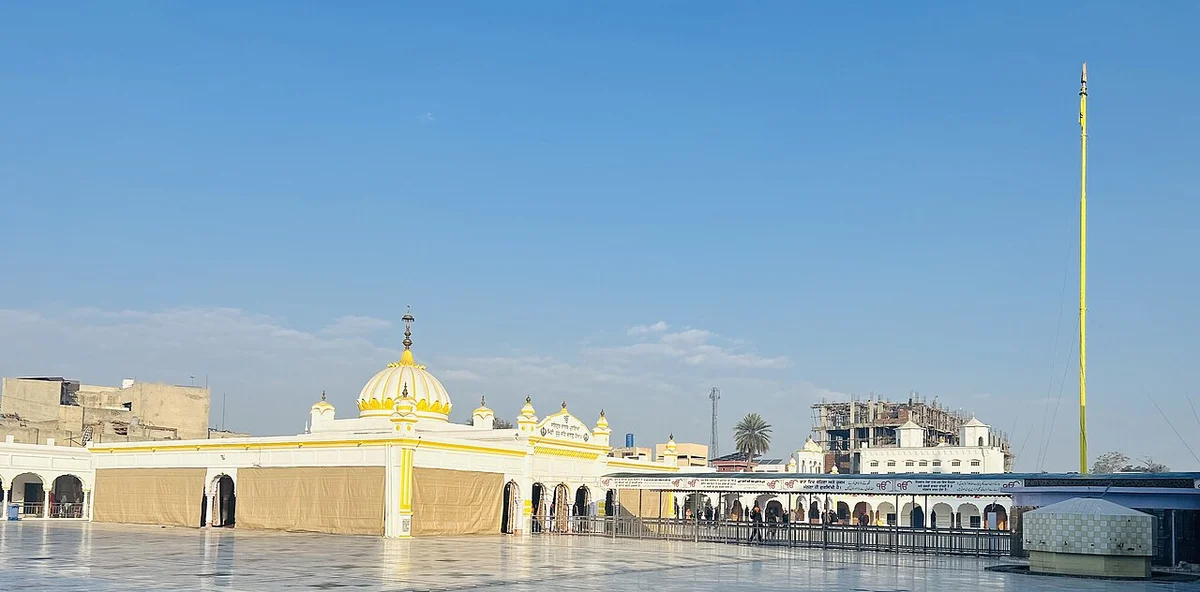
The Guru Nanak anniversary pilgrimage followed the religious-visit arrangements. Pakistan’s Foreign Ministry expected 2,700 pilgrims in its 20 November statement. The Evacuee Trust Property Board subsequently reported about 3,000 Indian Sikh pilgrims arriving via Wagah for the 557th birth anniversary. The board’s October planning notice had named 22 November for arrivals and 24 November for the main ceremony. Radio Pakistan separately confirmed the 24 November ceremony at Nankana Sahib. The expected headcount and the reported arrivals measure different stages.
A reader considering a Kartarpur visit after seeing the Nankana Sahib coverage should check for a dated operating notice specifically naming the corridor and the intended day of travel. The Wagah account establishes passage for the anniversary group under its own arrangements. Visa issuance, arrival at Wagah and corridor access each require evidence about the relevant procedure. Pakistan’s November briefing supplies its account of the suspension, and a current Indian notice would help verify access from India.
How to verify trade figures and restrictions
India’s Commerce Ministry publishes monthly country-wise goods trade figures through TRADESTAT, with separate views for exports and imports. Select Pakistan, specify the reporting period and note the displayed unit. In India’s data, exports refer to goods recorded as leaving India for the selected trading partner, and imports refer to goods recorded as entering India. The monthly exports interface update dated 17 November showed data through September 2026. An interface update date and the latest month covered by its figures answer different questions.
A headline citing a September export figure may describe the recorded value correctly while leaving the scope of trade restrictions unresolved. To evaluate the figure, reproduce the country, direction, month and unit in TRADESTAT. To evaluate a policy claim, identify the dated instrument and read its scope. A figure for one direction tells readers little about the other direction unless both are retrieved for comparable periods and in the same units.
Pakistan’s Commerce Ministry order SRO 750, dated 4 May 2025, contains specific restrictions on the transit of third-country goods. For a claim about a particular category of goods or route, read the order and check the register for amendments that affect it. Direct bilateral goods trade and third-country transit describe different movements. A recorded customs value answers a question about what appears in the trade data. The operative instrument for the relevant movement and date is the evidence needed to assess a claim about what is permitted.
Sources
- Ministry of External Affairs: Simla Agreement
- World Bank: Indus Waters Treaty Fact Sheet
- India Ministry of Culture readout on the first SCO Civilisational Dialogue Forum
- Pakistan Foreign Ministry nomination for New Delhi SCO cultural forum
- India and Pakistan consular lists exchange on 1 July 2026
- Pakistan Foreign Ministry and state broadcaster consular confirmation
- Permanent Court of Arbitration case record and 31 August 2026 award
- Pakistan's treaty position transmitted to the UN Security Council
- India's 2025 diplomatic policy and parliamentary record
- Pakistan Foreign Ministry distinction between religious visas and the Kartarpur Corridor
- Pakistan ETPB November Guru Nanak anniversary civilian pilgrimage
- Goods trade policy and official lookup
- Open photograph of Gurdwara Janam Asthan in Nankana Sahib
- Permanent Court of Arbitration docket for the separate Neutral Expert proceedings
- Radio Pakistan’s dated Nankana Sahib ceremony report
