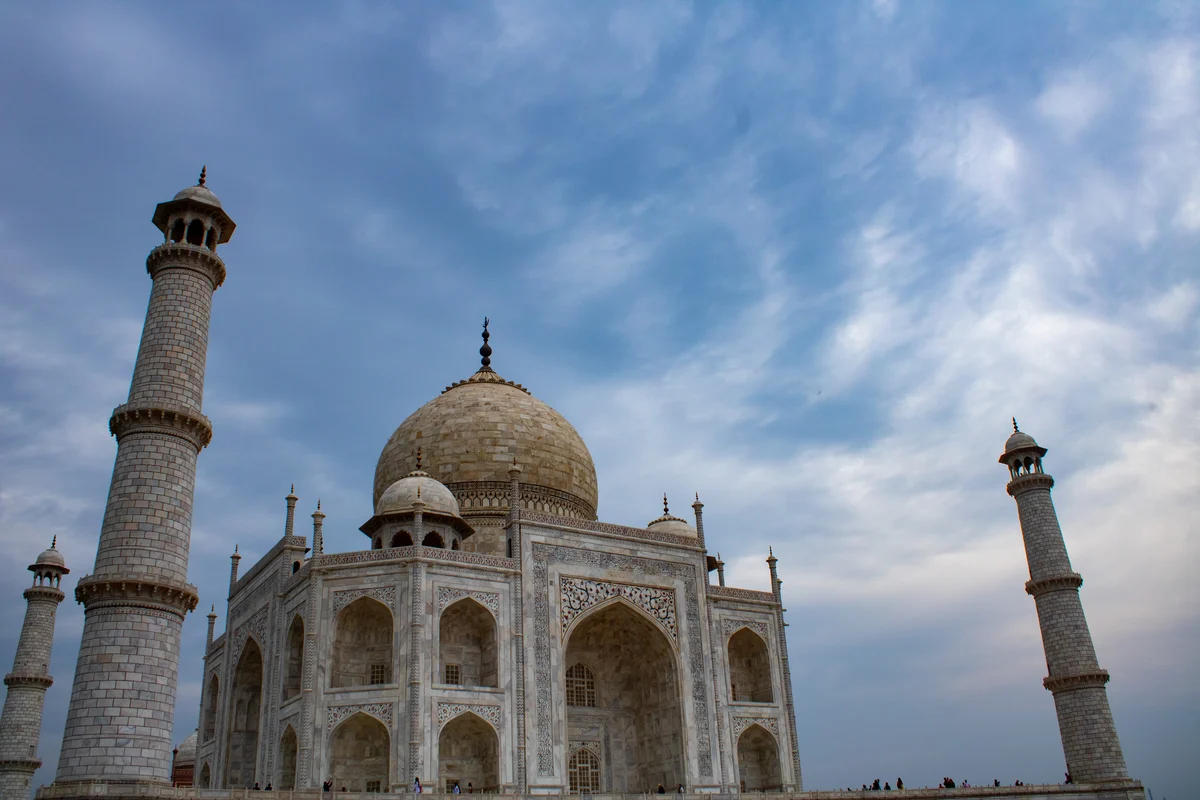
Choose a landmark by region and visit footprint
Start with the Taj Mahal in Agra for a Mughal mausoleum, Qutb Minar or the Red Fort in Delhi for a monument complex, Jaipur for a historic city, Hampi in Karnataka for the remains of a capital, or the Statue of Unity in Gujarat for a modern memorial. Narrow the choice by region and monument type, then check whether your visit involves a single structure, a site with several buildings or a wider area.
Choose the geographic filter at the scale of your trip. Delhi and Agra are useful labels if you already know your overnight stops. If you are still comparing destinations, Rajasthan, Gujarat and Karnataka give you a starting point before you work out the arrival city and the onward journey. Keep the city or locality visible beside the state or territory so that broad regional results can still guide a route decision.
Use the visit footprint column to decide what to check first. For a tower within a complex, look up entry to the grounds and any separate rules for the tower. For an old city, decide which streets, squares or buildings would make up the visit. A footprint describes the shape of the outing. Opening hours, step-free access and how much ground you can cover depend on the specific place and date.
| Landmark | Location | Monument type | Visit footprint |
|---|---|---|---|
| Taj Mahal | Agra, Uttar Pradesh | Mausoleum | One principal monument |
| Agra Fort | Agra, Uttar Pradesh | Fortified Mughal complex | Enclosure with palaces and other structures |
| Qutb Minar | Delhi | Tower | Tower within a larger monument complex |
| Red Fort | Delhi | Fort and palace complex | Fortifications with palace interiors |
| India Gate | Delhi | War memorial | One principal structure |
| Jaipur walled city | Jaipur, Rajasthan | Historic urban area | Gates, squares, markets, streets and monuments |
| Hampi | Hampi, Karnataka | Remains of a capital | Archaeological landscape along a river |
| Statue of Unity | Ekta Nagar, Gujarat | Commemorative statue | One principal structure near a dam |
| Basilica of Bom Jesus | Old Goa, Goa | Church | Living church within the Old Goa heritage area |
| Mahabodhi Temple Complex | Bodh Gaya, Bihar | Buddhist temple complex | Temple and grounds with their own rules for visitors |
- UNESCO World Heritage Centre: Taj Mahal
- UNESCO World Heritage Centre: Hampi
- UNESCO World Heritage Centre: Qutb Minar
- Press Information Bureau | Statue of Unity
- Delhi Tourism | India Gate
- Archaeological Survey of India | Red Fort, Delhi
- UNESCO | Agra Fort
- Incredible India | Jaipur
- UNESCO World Heritage Centre | Jaipur City, Rajasthan
Agra’s Taj Mahal and Agra Fort
The Taj Mahal is a mausoleum commissioned by Mughal emperor Shah Jahan in memory of Mumtaz Mahal. That purpose gives you a focus for reading about the building before visiting. If you are choosing one landmark in Agra and your main interest is the Taj Mahal itself, use its visitor information to plan the day around the site and the parts you hope to see.
Agra Fort is a sixteenth-century fortified Mughal complex. Its red sandstone walls enclose palaces and other structures, making the enclosure itself part of the visit. It stands near the Taj Mahal gardens, which makes the two landmarks natural candidates for an Agra itinerary. When comparing map results, use the designated entrance for each site and account for the approach from your actual drop-off point.
A traveller has one afternoon in Agra and wants time to look closely at a single building. They put the Taj Mahal first, then check whether entry and the return journey leave an adequate margin. A companion whose main interest is Mughal palace architecture might make Agra Fort the anchor. Both could use the same afternoon in different ways, even though both sites belong to the same broad historical interest.
If you want to fit both into one day, check the last admission separately from the closing time for each. Read each site’s bag and photography rules before deciding what to carry between them. If either site has timed entry, build the day around the booking you can secure and leave enough time for security and the transfer. Use separate map pins for your gate, pickup point and next stop.
The Taj Mahal closes to ordinary day visitors on Fridays. Its tourism authority gives sightseeing hours from 30 minutes before sunrise until 30 minutes before sunset and separately lists earlier ticket-window hours. The main mausoleum requires a separate ticket supplement. Agra Fort has its own admission and publishes sunrise-to-sunset visiting hours. Decide whether your Taj plan includes the mausoleum before comparing entry products, and check both official listings for your actual date.
Delhi’s Qutb Minar, Red Fort and India Gate
Qutb Minar is a red sandstone tower within a larger monument complex that also includes the Quwwatu’l-Islam mosque. Search using the complex name when planning entry, then read up on the tower and mosque together. If the height of the tower is what drew you to the listing, check current visitor information for where you can view it and which parts of the complex your group can reach.
At Delhi’s Red Fort, the exterior walls and gates use red sandstone, and the palaces within use marble extensively. A visit focused on architectural materials depends on which interiors you can enter or see on the day. Check current access to the palace areas as well as admission to the fort itself. Use the full name and city when searching, since Agra Fort also has red sandstone fortifications.
India Gate is a 42-metre war memorial designed by Edwin Lutyens. It commemorates soldiers who died in military campaigns and suits a search for a civic landmark with a commemorative purpose. If you mainly want to see the memorial from outside, check public access around the structure and where you can be dropped off or picked up. Use Delhi Tourism for the landmark’s background and look for current local notices for the approach.
A family choosing a single Delhi landmark puts India Gate first for an exterior visit, subject to a suitable approach on the day. If the family prioritises seeing several structures inside one enclosure, Qutb Minar or the Red Fort offers a different plan. They can compare the confirmed entrance, the walking route within the site and the journey back before settling on one.
ASI lists the Qutb Minar complex from sunrise until 20:00 and free entry for visitors under 15. Its Red Fort visitor page publishes sunrise to 21:00, while an older tourism listing gives shorter access. Verify the selected day and available admission with ASI when late entry matters. India Gate and the neighbouring National War Memorial also have different access arrangements. The War Memorial has its own gates and published assistance information.
Jaipur’s walled city, Hawa Mahal and Jantar Mantar
Jaipur is Rajasthan’s capital, and its walled city is a landmark at the scale of a neighbourhood. Sawai Jai Singh II founded it in 1727, and its planned grid allowed bazaars and trade to develop on the plains. The World Heritage area inscribed in 2019 includes historic market fronts, nine gates, main squares, craft streets and monuments. Pick one part of that fabric if you want to see how the city was laid out.
The Ministry of Tourism traces the Pink City name to Maharaja Ram Singh’s decision to have the city painted pink in 1876 ahead of a visit by the Prince of Wales. Hawa Mahal gives you a specific building to focus on within that wider city visit. Its lattice screens allowed royal women inside to observe street festivities, and the ministry’s guide counts 953 windows. Decide whether you want to study the street façade, visit the interior or do both.
Jaipur’s Jantar Mantar is a choice for readers interested in historical astronomical instruments. The national tourism guide dates the instruments to 1728–1734. If the instruments are your priority, check information for the Jaipur site specifically and find out whether on-site interpretation is available in a language your group can use. For a market-focused visit, choose a square or street as your destination so your route has a clear start and end.
A visitor interested in both street life and architecture anchors the outing at Hawa Mahal and chooses one stretch of the old city to explore around it. If someone in the group needs a step-free itinerary, they verify the route and the parts of the building they hope to see before treating the interior as part of the plan.
The Ministry of Tourism lists Hawa Mahal from 09:00 to 16:30 and sends visitors to the rear entrance. The street side is where you see the well-known pink façade. The same ministry lists the Jaipur Jantar Mantar from 09:00 to 17:00. Rajasthan’s archaeology department provides the booking gateway for individual monuments, so check which entry and date the portal is offering before you buy.
Hampi and the remains of the Vijayanagara capital
Hampi preserves remains of the Vijayanagara capital along the Tungabhadra River in present-day Karnataka. Put it high on your shortlist if your interest is how a historic capital sat within its landscape. The river provides a geographic reference for understanding the site, and the surviving remains give you several potential points of interest. Start by deciding which part of Hampi you most want to see.
Once you have specific stops, compare their positions on a map and check local access for each. A map search for Hampi alone gives you too little detail to judge the distances within your outing. Confirm where your transport can leave you, which sections you would cover on foot and how you will leave from your final stop. Base the plan on verified paths and entrances.
Two travellers both want to see Hampi. One is chiefly interested in the relationship between the river and the historic capital, so they identify a reachable stop that serves that interest. The other wants to visit several groups of remains and checks the distances between those stops. They can plan one shared visit and add the other stops only where current access and transport make them practical.
Accessibility is particularly useful to verify at the level of an individual stop. Ask about surface conditions, steps, seating and how close a vehicle can reach the area you want to see. Check the forecast for your travel date and use it to decide how much outdoor walking to plan. If a stop is essential to your trip, look for a current notice from the relevant authority or confirm directly before setting out.
ASI gives sunrise to sunset for the archaeological monuments in its Hampi listing and names the Vitthala Temple and Zenana Enclosure. If you are visiting the living Virupaksha Temple, check its own visitor and worship arrangements. When arranging a driver, give the individual site you want to reach and agree where the return pickup will be. A pin for the group of monuments can cover a much wider area than one day’s route.
The Statue of Unity in Ekta Nagar
The Statue of Unity stands in Ekta Nagar, Gujarat, near the Sardar Sarovar Dam. The 182-metre statue honours Sardar Vallabhbhai Patel and was inaugurated in October 2018. Patel served as independent India’s first Deputy Prime Minister and Home Minister. Choose this landmark if you want to include a modern monument connected with independent India alongside forts, mausoleums or archaeological sites.
Use Ekta Nagar as the locality when checking transport and locate the visitor entrance before estimating the journey. The dam is a geographic reference. If you want to include it in the outing, verify visitor access and the journey between the two places separately. Look up the admission categories currently offered for the statue and read which areas or experiences each category covers before committing to one.
A group wants to see the statue and has a fixed return departure. They first check what access would meet that goal and whether it fits the time available after arrival. If someone wants a specific viewing experience, the group checks whether it requires a particular admission category or arrival window. That decision determines how much flexibility they have for the rest of their visit.
When planning from elsewhere in Gujarat, write the trip down as separate legs from your starting point to Ekta Nagar, onward to the visitor entrance and back from the pickup point. Confirm each leg for the intended day. If you rely on a connection, check the return service before booking admission, especially when the final leg determines whether you can get back to your accommodation.
Statue of Unity tickets, Ekta Nagar trains and gallery entry
Verify heritage status and the details that affect your visit
Use UNESCO’s India inventory to check World Heritage status. It distinguishes inscribed properties from entries on the Tentative List, so read the category and the formal property name. The inventory includes Agra Fort, the Churches and Convents of Goa and the Mahabodhi Temple Complex at Bodh Gaya. Those names can anchor further searches for a fort, a group of religious buildings or a temple complex.
The formal name also tells you what to look up next. A city-scale inscription such as Jaipur’s concerns a defined historic area. If your itinerary includes one building within it, check that building’s visitor information. For a property described as a group or complex, identify the individual stop you want before using a listing’s map pin to estimate the journey.
Use the site operator or managing authority for admission and closures, and the transport operator for the service you plan to take. Check whether an announcement applies to your exact visit date. If a listing and the official booking calendar show different information, check for a dated notice or contact the operator to resolve the discrepancy before buying a ticket or booking an onward journey.
For visitors arranging the trip from the US or another country, check whether the site publishes admission categories or ID requirements that apply to your group, and read timed bookings in local Indian time. For a local outing, an event or holiday can still change the approach or entry arrangements. Save the gate name, booking terms and return details together so you can quickly recheck the parts your plan depends on.
For the Basilica of Bom Jesus, the Government of Goa’s site-specific page lists 09:00–18:30 on weekdays and 10:30–18:30 on Sundays. Confirm visitor access around services. In Bihar, UNESCO identifies the Bodhgaya Temple Management Committee as the operator of the Mahabodhi Temple Complex. Its UNESCO listing establishes the property and its management structure. The committee is the source for the visit rules on your date.
Temples in India: a visitor directory and ancient temple guideGoa map and travel guide: beaches, airports and trains
- UNESCO | India's World Heritage properties
- UNESCO World Heritage Centre | Jaipur City, Rajasthan
- Archaeological Survey of India | Red Fort, Delhi
- Rajasthan Archaeology and Museum monument-ticket gateway
- Goa portal Basilica of Bom Jesus hours
- UNESCO Mahabodhi Temple Complex operator identification
- ASI 23 November 2026 preliminary ticketing notice
Sources
- UNESCO World Heritage Centre: Taj Mahal
- UNESCO World Heritage Centre: Hampi
- UNESCO World Heritage Centre: Qutb Minar
- UNESCO | India's World Heritage properties
- Press Information Bureau | Statue of Unity
- Delhi Tourism | India Gate
- Archaeological Survey of India | Red Fort, Delhi
- UNESCO | Agra Fort
- Incredible India | Jaipur
- UNESCO World Heritage Centre | Jaipur City, Rajasthan
- Uttar Pradesh Tourism Taj Mahal entry and ticket distinction
- Uttar Pradesh Tourism Agra Fort visitor listing
- ASI current Qutb Minar operating hours and children’s entry
- National War Memorial separate visit rules
- Tourism Ministry Hawa Mahal visitor entrance and hours
- Tourism Ministry Jaipur Jantar Mantar visitor schedule
- Rajasthan Archaeology and Museum monument-ticket gateway
- ASI Hampi published archaeological monument hours
- Goa portal Basilica of Bom Jesus hours
- UNESCO Mahabodhi Temple Complex operator identification
- ASI 23 November 2026 preliminary ticketing notice