Choose a city, dish or kind of snack
Start with aloo tikki in Delhi, vada pav in Mumbai, poha and jalebi in Indore, a kathi roll in Kolkata, bun parotta in Madurai or jadoh in Shillong. Choose by city or by the kind of snack you want. The comparison uses documented regional examples, with room for individual stalls to vary the filling and accompaniments.
| City | Dish | What to expect |
|---|---|---|
| Delhi | Aloo tikki | Potato patty served plain or as dressed chaat |
| Delhi | Dahi bhalla | Lentil dumplings served with yoghurt and accompaniments |
| Mumbai | Vada pav | A fried potato filling in a bread roll |
| Mumbai | Pav bhaji | A cooked vegetable mixture served with bread rolls |
| Mumbai | Bhel puri | Puffed rice mixed with crunchy ingredients and chutney |
| Indore | Poha and jalebi | Savoury flattened rice and a separate sweet spiral |
| Indore | Bhutte ka kees | Grated corn in a cooked savoury preparation |
| Kolkata | Kathi roll | Flatbread wrapped around a filling, with egg and meat versions among the options |
| Kolkata | Phuchka | Filled hollow puris with spiced water |
| Madurai | Bun parotta | Layered bread served with a separate gravy or accompaniment |
| Madurai | Jigarthandai | A cold, sweet drink |
| Shillong | Jadoh | Khasi rice dish commonly made with meat |
- Incredible India: A Captivating Journey of Flavours in Delhi
- Mumbai's culinary tapestry — Ministry of Tourism, Incredible India
- Must-try street food in Indore — Ministry of Tourism, Incredible India
- Kolkata street-food examples — Ministry of Tourism, Incredible India
- Must-eat local dishes in Madurai — Ministry of Tourism, Incredible India
- Meghalaya culinary heritage and Shillong street stalls — Meghalaya Tourism and Incredible India
Delhi and Old Delhi chaat
Aloo tikki gives you a choice between a potato patty and a larger dressed chaat. Old Delhi’s market food is a practical place to encounter that distinction. Ask whether yoghurt, sweet chutney and other toppings come with the order, and check the serving size if you are planning several stops in one market.
In Delhi, chaat is a broad menu category, while aloo tikki names a particular item, a potato patty. When you see aloo tikki listed, ask whether it comes dressed as chaat or is served on its own. That distinction matters if you want to taste the patty by itself or are choosing a plate for someone who wants to know which toppings come with it. If the menu also lists golgappa, expect a different format built around hollow puris.
Chhole bhature is a more substantial choice. The name gives you both components, spiced chickpeas and deep-fried bhature. If you and a companion are choosing between that and two tikki orders, ask the vendor how many bhature come with one plate. The answer helps you decide whether to share the chickpeas and bread or order separately. The dish name identifies the pairing, while the stall sets the portion.
The official Delhi guide associates Chandni Chowk with chaat, tikki, samosas, kebabs and parathas, and names Paranthe Wali Gali as a specific Old Delhi example. Use the lane as a reference when parathas are the priority and the wider neighborhood when you want to browse. Dilli Haat serves a different purpose in an itinerary. Its multi-state food and craft market lets you encounter dishes from elsewhere in India during a Delhi visit. Ask which region the stall represents if you want to place the dish in context.
Mumbai’s buns, plates and puffed-rice snacks
Vada pav puts a spiced potato fritter inside a soft roll with chutneys. In pav bhaji, the rolls accompany a cooked vegetable mixture. The repeated word pav gives you a clue about the bread, while the rest of the name tells you what to expect with it. Bhel puri offers a third format, with puffed rice and savory and tangy accompaniments. Mumbai gives you all three within one city, which makes the form of the dish a practical starting point even before you pick a neighborhood.
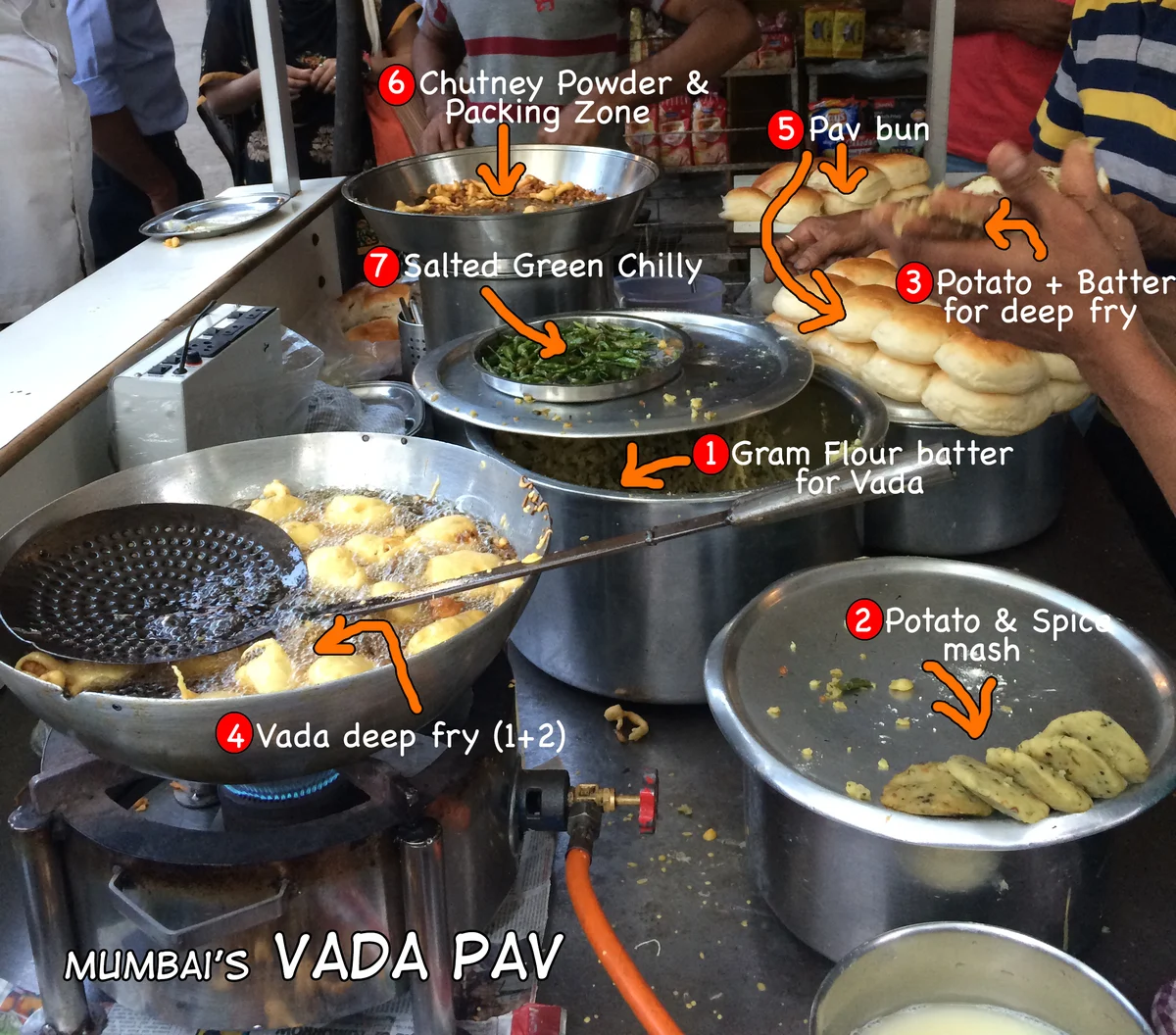

Say you have time for a quick bite before meeting someone for lunch. A vada pav makes sense if you want the bread and filling in one handheld portion. Ask which chutneys come with it if that would affect your choice. If you are meeting a friend specifically to share something, pav bhaji gives you a vegetable mixture you can divide between pieces of bread. Ask how many rolls are served with the plate before deciding whether you need another order.
The official Mumbai guide lists vada pav and pav bhaji around Crawford Market and Ghatkopar Khau Galli. It points to Dadar for several Maharashtrian dishes, including misal pav. A neighborhood reference helps you narrow the search, and a current menu helps you choose the stall. Keep Mumbai’s examples tied to the city or to Maharashtra where the source supports that connection. Western India also includes Gujarat, Rajasthan and Goa in the tourism board’s regional guide, so a Mumbai tasting covers only one part of that geographical range.
Indore’s poha, jalebi and Malwa dishes
The Indore pairing of poha and jalebi brings two separate items together. Poha is the savory flattened rice, which the city guide describes with toppings such as sev and onion. Jalebi is the sweet fried spiral. If you want to sample both but would prefer a full portion of poha and just a taste of jalebi, ask how each is portioned. Ordering the two by name also gives you room to ask which toppings are going on the rice before it is served.
Bhutte ka kees gives you a different way to taste the region. The guide describes this Malwa dish as grated corn cooked with milk and spices and uses Sarafa Bazaar as a place to encounter it. The grated corn is the base of the prepared dish. That matters if you are choosing from a menu that also offers other corn snacks, since the short description “corn” leaves out both the texture of the dish and the role of milk in the preparation.
The guide’s Indori shikanji is a thick milk-based drink with dried fruits. If you see shikanji on a board and are looking for a particular kind of refreshment, check what the stall is serving under that name before ordering. Ask about the base and the dried fruits if either affects your choice. For planning, the destination material mentions poha around Palasia and stalls around Sarafa Bazaar. Use those references to choose a part of town, then verify the vendor’s serving hours if you are going there for a specific item.
Kolkata’s rolls and phuchka
Kolkata’s tourism examples include kathi rolls, jhaalmuri and puchkas. The same guide places kathi-roll outlets around New Market and Park Street, and gives Southern Avenue and Bhawanipore as areas to look for puchka. This distinction can save a trip across town. If you already plan to visit New Market and want one portable order, start by looking at roll fillings there. If puchka is the main reason for going out, check for a current stall listing in one of the areas associated with it.
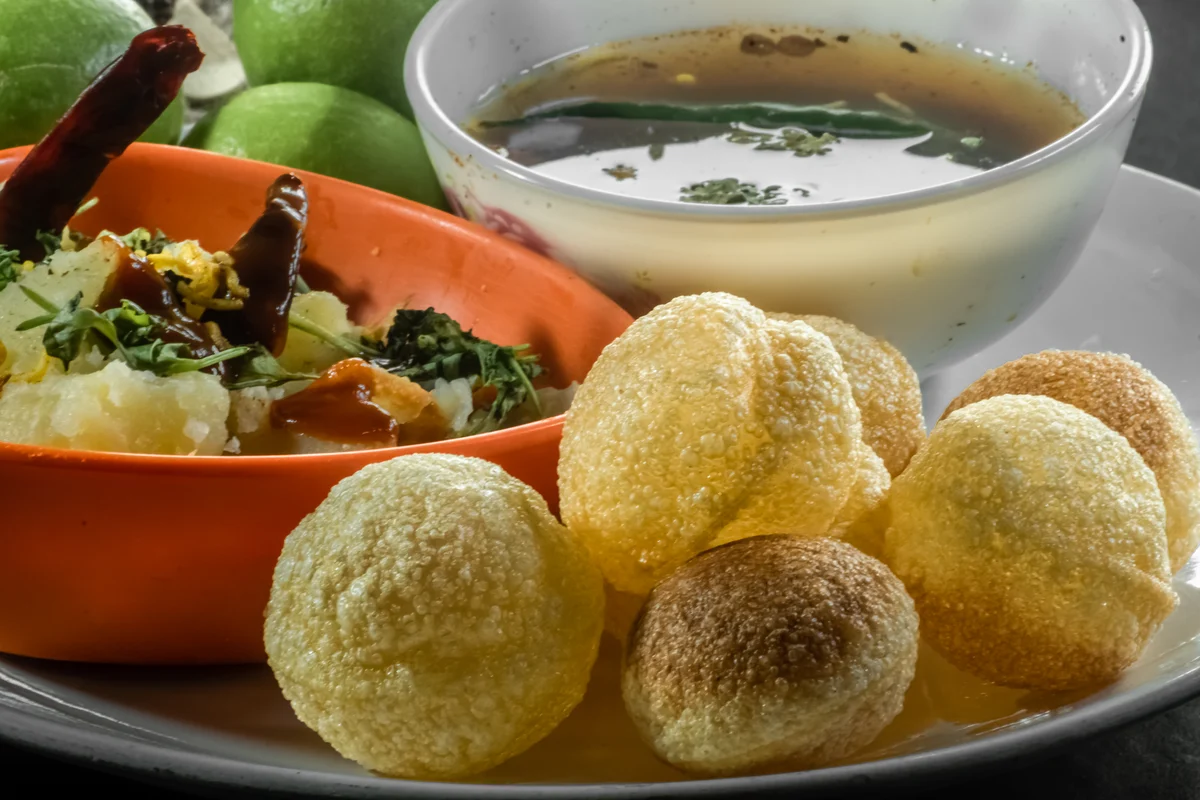
You may see puchka written as phuchka. It belongs to the family of filled hollow puris that includes Delhi’s golgappa and the snack called pani puri elsewhere. The local name is useful when ordering. To compare what you actually eat, pay attention to what goes into the shell and how the spiced water tastes. Both can vary by vendor. If you enjoyed a particular version in Delhi, describe the filling or water you liked when asking what the Kolkata stall serves.
One documented Kolkata serving shows crisp puris with potato stuffing and spiced water. It gives you a concrete picture of how the components can come together. Any ingredient question still belongs with the person preparing the order, especially when the filling and water have been made ahead. If you are choosing between phuchka and a kathi roll because you need to be on your way, ask how the phuchka is served and whether it suits where you plan to eat. A filled shell with spiced water makes for a different eating experience from a wrapped roll.
Kolkata travel guide: museums, Howrah and KumartuliWhat paan is and how its ingredients vary across India
Madurai’s idli, bun parotta and jigarthandai
Madurai’s bun parotta is a layered bread. Ask what side comes with it or what sides are available, since the bread and accompaniment together determine what you will eat. The name is worth learning before you order, particularly if you have just been reading about Mumbai’s pav. In Madurai the word bun is part of the name of a parotta. In the Mumbai dishes above, pav is the roll that holds a fritter or accompanies a vegetable mixture.
The Madurai guide also describes steamed idlis with chutneys and sambar. If you are picking a savory plate and want to know what you will dip or spoon over it, ask which chutneys and sambar come with the idlis. For bun parotta, ask about the separate side. That gives you two concrete orders to compare, including the accompaniments that shape each plate. It also helps when two people want to share the main item and would prefer different sides, since you can ask how the vendor plates them.
Jigarthandai is a cold drink in the same city guide. In the vendor preparation described there, it is milk-based and includes ice cream and sarsaparilla syrup. Ask what the stall puts in its version if you are deciding whether to order it alongside food or on its own. It is worth keeping this drink distinct from Indori shikanji when comparing city menus. The two documented drinks both use milk, and the tourism descriptions name different additions.
Shillong’s jadoh and Khasi dish names
Meghalaya Tourism identifies jadoh as a Khasi rice-and-pork dish. The official Shillong destination guide places it at some stalls and eateries, so it is a dish you can ask for by name when looking for a rice-based meal. The regional description matters when a shorter destination listing identifies it only by its rice. If you avoid pork, ask the vendor what the rice is cooked with. Where a stall offers another rice dish, check its preparation separately.
Two other Khasi names help make sense of a menu. Dohkhleh is a pork salad, and tungrymbai is a fermented soybean dish with black sesame. If a stall lists all three and you want a rice-based plate, jadoh is the name to ask about first. If the soybean preparation is what interests you, ask how tungrymbai is served and whether the stall adds other ingredients. The heritage description identifies its characteristic ingredients, while the person serving it can explain the portion and preparation available that day.
Use Shillong as a place to seek out the Khasi dishes documented here. The city guide helps with the question of where jadoh can be found, while Meghalaya Tourism gives the ingredient detail that changes an ordering decision. That division is especially useful when comparing Shillong with Indore. Both jadoh and poha can appear in a guide under rice dishes, but the name of the grain alone tells you little about the finished plate. Here the meaningful comparison is rice with pork versus flattened rice served with toppings.
Choosing an order and checking current details
Use the table to turn a dish name into a specific question at the counter. Ask about serving format when you are deciding how much to order, and ask about the recipe when an ingredient matters. A useful ingredient question names both the item and the component. Ask what goes into the bun parotta side or the phuchka water, for instance, so the answer covers the part of the order that prompted the question.
| City and order | What the name identifies | Question for the vendor |
|---|---|---|
| Delhi, aloo tikki | Potato patty, sometimes served as chaat | Does this come dressed as chaat? |
| Mumbai, pav bhaji | Bread rolls with a cooked vegetable mixture | How many rolls come with one plate? |
| Indore, poha and jalebi | Savory flattened rice and a separate sweet spiral | Can I order the poha and jalebi in different quantities? |
| Kolkata, phuchka | Filled hollow puris served with spiced water | What filling and water are you serving today? |
| Madurai, bun parotta | Layered bread that can come with a side | Which side comes with this order? |
| Shillong, jadoh | Khasi rice-and-pork dish | How is the rice prepared here? |
Verify opening hours at the level you plan to visit. A market listing can help you establish whether the venue is open. A current stall listing, a recent menu or direct contact with the vendor can help you establish whether the dish is being served. For a trip built around one item, ask about the item’s serving hours as well as the stall’s hours. A vendor may have a broader menu than the dish for which it appears in a guide.
If a venue advertises Clean Street Food Hub certification, search for the exact hub in the Food Safety and Standards Authority of India’s official dashboard and check the validity information shown. The programme describes nomination, assessment, training, audit and certification at hub level, with a two-year certification period. A cluster’s listing answers a venue-level question. For an individual stall, check the conditions you can observe on arrival and ask the vendor directly about ingredients and preparation. If you need to know about shared equipment for an allergy, ask about that equipment specifically. The hub listing does not establish a stall’s allergen controls.
- Incredible India: A Captivating Journey of Flavours in Delhi
- Mumbai's culinary tapestry — Ministry of Tourism, Incredible India
- Must-try street food in Indore — Ministry of Tourism, Incredible India
- Kolkata street-food examples — Ministry of Tourism, Incredible India
- Must-eat local dishes in Madurai — Ministry of Tourism, Incredible India
- Meghalaya culinary heritage and Shillong street stalls — Meghalaya Tourism and Incredible India
- Clean Street Food Hub programme and dashboard — Food Safety and Standards Authority of India
Sources
- Incredible India: A Captivating Journey of Flavours in Delhi
- Incredible India: Food and Cuisine of Western India
- Mumbai's culinary tapestry — Ministry of Tourism, Incredible India
- Must-try street food in Indore — Ministry of Tourism, Incredible India
- Kolkata street-food examples — Ministry of Tourism, Incredible India
- Must-eat local dishes in Madurai — Ministry of Tourism, Incredible India
- Meghalaya culinary heritage and Shillong street stalls — Meghalaya Tourism and Incredible India
- Clean Street Food Hub programme and dashboard — Food Safety and Standards Authority of India
- Phuchka in Kolkata — original photograph by TAPAS KUMAR HALDER
- Mumbai Vada Pav — original photograph by Ask27
