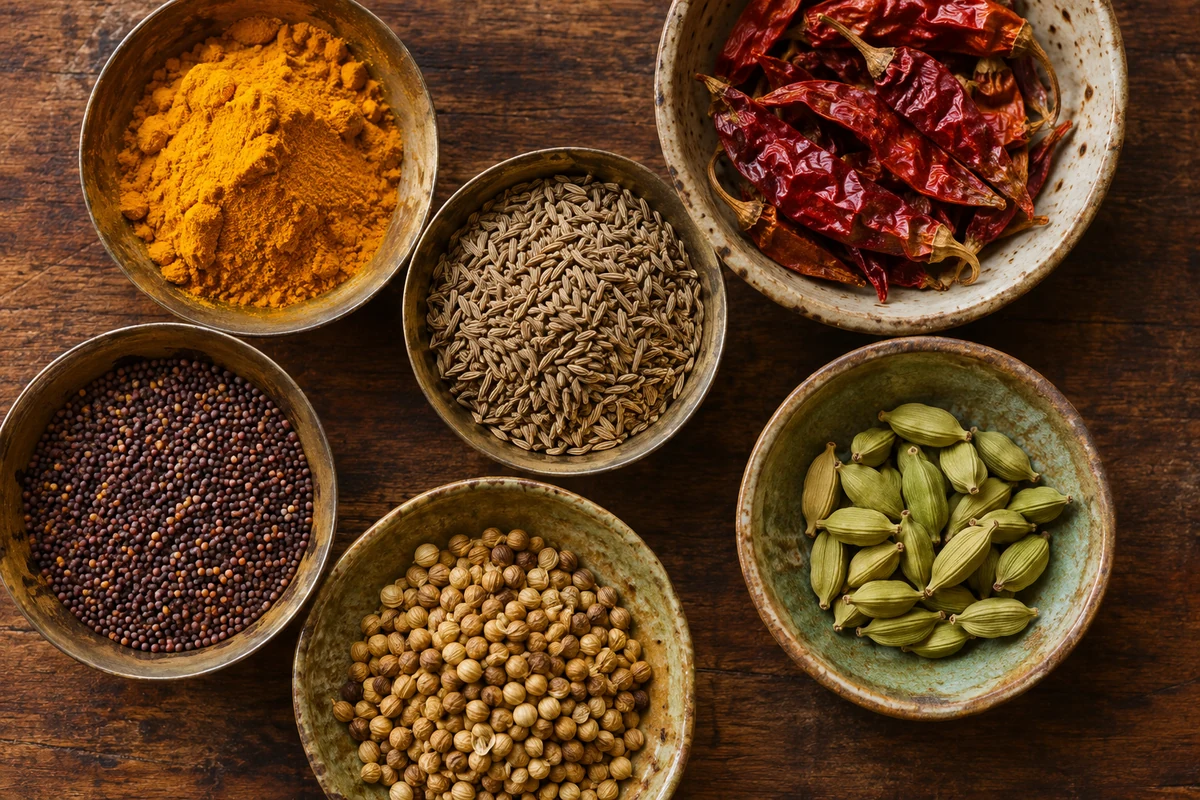
Choose the flavour the dish needs
Start with the dish you want to cook. Cumin lends an earthy aroma, coriander seed brings a mild citrus note, black pepper supplies a sharp heat, and small cardamom contributes a floral scent. Pick the form and timing as well as the spice. A whole seed warmed early in fat changes the dish differently from a powder stirred into a moist sauce.
Think about the bite you want before opening another jar. A thick dal can carry the occasional burst of a whole seed. A smooth tomato gravy gives a ground spice room to spread through every spoonful. In lightly seasoned rice, a single aromatic ingredient can be especially apparent because plain rice offers so little competing flavour. Taste the main ingredient first and pick the change you would most like to notice.
The Spices Board’s list identifies the commodities it covers, including curry leaf, fenugreek and two kinds of cardamom. The FSSAI reference describes whole and ground forms and treats seasoning blends as separate preparations that can contain other ingredients. In the table, each row is a worked example of how a spice could serve one purpose in a dish. Use the dish column to find a starting point, then read across for the effect and the form.
| Dish | Flavour to add | Spice and form | Where to use it |
|---|---|---|---|
| Moong dal | Warm, earthy aroma | Whole cumin seed | Warm in oil or ghee for a tempering and stir into cooked dal |
| Tomato and potato sabzi | Mellow citrus and warmth | Ground coriander seed | Stir into the moist tomato base |
| Rasam | Sharp, fragrant heat | Crushed black pepper | Simmer briefly in the broth and taste before adding more |
| Lemon rice | Distinct savoury fragrance | Curry leaf | Add to the tempering before folding it through cooked rice |
| Vegetable pulao | Sweet floral aroma | Small cardamom pod | Lightly crack the pod and add during cooking |
| Mushroom rice | Deep, smoky aroma | Large cardamom pod | Infuse during cooking and lift out before serving |
| Cauliflower sabzi | Earthiness and yellow colour | Ground turmeric | Stir into the moist seasoning base |
| Tomato gravy | A lightly bitter herbal finish | Dried fenugreek leaf | Crumble in toward the end and taste |
Use whole, crushed or ground spices
Choose whole spices when you want to warm them first in fat or lift out a large piece after it has infused a dish. Small seeds can stay in a tempering, where their texture is part of the bite. A cardamom pod is large enough to retrieve. Lightly cracking it opens the husk and keeps the contents easier to find than if you had ground them into powder.
Crushing gives you a useful middle ground. Coarse black pepper brings little bursts of heat to a broth, especially if you add some close to serving. Finely ground pepper disperses more evenly. Ground coriander works when you want its flavour integrated into a sauce. Give it moisture from tomatoes, onions or a splash of water so it can mix in without sitting as a dry layer against the pan.
You planned to finish a bowl of dal with whole cumin but have only ground cumin. Stir a small pinch into a spoonful of the hot dal, return it to the pot and let it simmer briefly before tasting. The cumin will spread through the lentils and the finish will be smooth. Save the hot-oil treatment for another day when you have seeds. A dry mound of powder in very hot oil can scorch before you have time to stir it through.
See three spice methods in Kerala recipes
Kerala Tourism’s sambar recipe shows three seasoning stages. Ground turmeric goes into the simmering vegetables. A prepared spice mixture goes in separately. Whole mustard seeds, dried chillies and curry leaves are heated in oil for the finish. The powder seasons the liquid and vegetables as they cook. The finishing oil carries the aroma of the whole spices and leaves through the dish just before serving.
The cherupayar thoran uses green gram and a coarse coconut mixture that includes cumin seed, garlic, ground turmeric and ground chilli. Its mustard seeds, dry chillies and curry leaves go into a separate oil preparation. The coconut mixture gives you a place to disperse the powders. The short tempering brings out separate aromas and textures. Check the recipe to see which ingredients belong in each stage before grinding everything together.
In theeyal, Kerala Tourism describes a base made by roasting and grinding coconut and other flavourings. The roast contributes much of the depth of the final dish. In the thoran recipe, the coconut mixture is handled differently to keep its coarser texture. These dishes show why a recipe’s processing instructions tell you as much about the result as the shopping list does.
Build a savoury base with cumin, coriander and turmeric
The Spices Board lists cumin and coriander as seed spices and turmeric as a rhizome. Cumin gives a base an assertive earthy aroma. Coriander seed has a gentler fragrance with a citrus edge and can carry more of the seasoning when you want the vegetables to remain easy to taste. Ground turmeric gives a yellow colour and contributes its own earthy flavour.
For a tomato and potato sabzi, warm whole cumin in oil until it smells fragrant, then add the ingredients for the moist base. Stir ground coriander and a little turmeric into the softened tomatoes before folding in the potatoes. Taste the base again once the potatoes have absorbed some seasoning. If you want a brighter flavour at that point, try a little lemon in a spoonful first. Extra turmeric would deepen the colour and add more of its own flavour.
If you are out of ground coriander but have coriander seeds, crush some as finely as you can and give them time to soften in the tomatoes. A coarse grind can leave noticeable pieces in a smooth gravy. If you have only fresh coriander leaves, add them at serving for a fresh herbal finish and let the sauce keep its existing seasoning. The leaf gives the dish a different aroma from the dried seed.
Adjust heat and aroma with black pepper
Black pepper gives a quick, sharp sensation alongside a fragrance you can smell as soon as you crush the peppercorns. It is useful when the heat itself should have a flavour you can pick out, as in a thin broth or on simply cooked vegetables. In a soup, crushed pepper can leave individual hot bites. A finer grind suits a sauce that you want evenly seasoned.
For a tomato rasam, warm crushed pepper in the broth, then let a spoonful cool enough to taste comfortably. If you want more pepper fragrance, add a fresh grind to one serving before adjusting the pot. That test matters when people at the table want different levels of heat. You can leave the shared broth as it is and season individual bowls.
If pepper is missing and you have ground red chilli, decide whether the dish mainly needs heat. For a potato sabzi with cumin already in the base, a little chilli can supply that heat while the cumin supplies a separate aroma. For a pepper-forward broth, the substitution changes the character more noticeably. Taste a small portion with chilli before committing the whole pot. Powders vary in strength, and a measured spoonful of one ingredient gives you little indication of how much of the other will taste right.
Match small or large cardamom to the dish
The Spices Board gives small and large cardamom separate entries for spices from different plants. In a shop, look for small or green cardamom when you want a sweet, floral note. Large or black cardamom can contribute a heavier, smoky aroma. Choose based on the character you want to taste in the finished dish. The distinction matters especially in milk, tea and lightly seasoned rice, where the cardamom can dominate.
In a vegetable pulao, add a lightly cracked small cardamom pod during cooking for a floral note and take it out when fluffing the rice. In a mushroom rice dish where you want a smoky undertone, try a large cardamom pod instead and remove it before serving. If you have ground small cardamom for the pulao, start with a small pinch. The powder will stay in the rice, so taste before deciding whether to add any more.
If you are making a milk pudding and find only large cardamom in the cupboard, try a little of the pudding plain before choosing another aromatic. The milk and any nuts may already provide enough flavour. If you are curious about the smoky note, steep a fragment of the pod in a separate splash of warm milk, then taste it before adding anything to the pudding.
Pick curry leaf or fenugreek for a specific job
Curry leaf carries a distinctive savoury fragrance into the fat used for a tempering. Dried fenugreek leaf can provide a herbal finish with a little bitterness. Fenugreek seed brings a more concentrated bitterness and firm texture. Read the plant part on the package, especially if the recipe simply says fenugreek.
For lemon rice, use curry leaf in the tempering and add lemon for acidity. If the leaves are missing, finish a spoonful of rice with the remaining seasoning and check whether it tastes complete. You can keep the lemon and whole spices doing the work they were chosen for. Adding a ready-made curry powder would bring in the flavour of every ingredient in that blend and could overwhelm the rice.
For a tomato gravy finished with dried fenugreek leaf, crumble a little into a ladle of the hot gravy and taste after stirring. If your only fenugreek is seed, leave it out of the finishing step. Ground seed would spread bitterness through the gravy, and whole seeds added at serving could stay hard. If you have fresh fenugreek leaves, cook a small quantity in the base as a leafy ingredient and taste as they soften. Expect the extra greens to affect the texture as well as the flavour.
Read a masala label before substituting
Ground describes the physical form. Masala on a packet can refer to a mix prepared for a particular dish or to a more general seasoning blend. The FSSAI reference describes seasoning blends as preparations that may include ingredients in addition to spices. The ingredient list is the useful detail when you want to know what a spoonful will contribute alongside the spice aroma.
Suppose a chana recipe calls for ground coriander, and the only blend in your cupboard is labelled chana masala. Read the list for coriander and for other ingredients, such as chilli, salt or an acidic ingredient. Warm a little of the blend in a spoonful of the chana base and taste it with a chickpea. A pleasant result can work for this pot. Adjust salt and acidity after adding the blend so the other seasonings account for what it already supplies.
When you replace one brand with another, read the label on the packet you are buying. A familiar product name only gets you as far as the shelf. For a dish you cook often, note which ingredient in the blend gave you the effect you liked. If it was coriander’s fragrance, you can test plain ground coriander next time. If you liked the blend’s combination of heat and tartness, check for both before choosing a replacement.
Check shop names, form and freshness
A name in a recipe may identify the plant without specifying the form. The Spices Board’s listing separates common names, botanical identities and plant parts. At the counter, use the words that describe what you will cook with, such as coriander seed, ground coriander seed or fresh coriander leaf. For cardamom sold loose, check whether the shopkeeper is showing you small green pods or large dark pods before buying.
A recipe says to heat coriander with other whole spices and grind them after cooling. If the shop offers coriander powder, look for the whole seed instead so you can follow that sequence. If the recipe calls for coriander scattered just before serving, check the author’s ingredient notes or method for a reference to chopping leaves. Those cues help resolve an ambiguous name before you buy anything.
Check the packet in front of you for the stated form, ingredient list and date information, especially after a packaging change. At home, crush a seed or rub a dried leaf just before cooking and smell it. If the fragrance is faint, test a little in a spoonful of the dish and decide whether the flavour is worth adding before increasing the quantity. Even a mild powder can leave an obvious texture when you use more of it. Buy a pack you can use at your usual cooking pace.