Where India–Japan relations stand in November 2026
India and Japan conduct their ties under a Special Strategic and Global Partnership, with a next-decade agenda agreed at their August 2025 summit in Tokyo. The latest developments in this timeline are two separate meetings in Tokyo on 19 November 2026, when the foreign ministers discussed implementing a July economic security declaration and the two countries also held their fourth joint foreign and defence ministerial meeting.
The July visit connects the August 2025 agenda to the November talks. Japanese Prime Minister Takaichi visited India from 1 to 3 July 2026 and met with India's leadership on 2 July. The visit produced separate documents covering the annual summit, economic security and artificial intelligence. By November, the foreign ministers were discussing implementation of the economic security declaration. That sequence identifies which leaders' document the November discussion followed and which policy areas the ministers put on the agenda.
The meeting titles matter because official accounts record several strands of cooperation at once. A leaders' summit can set direction across the relationship, and a foreign ministers' dialogue can follow a particular declaration through to an implementation discussion. The 19 November foreign and defence ministerial meeting has its own record. Readers following a particular announcement can use the date and the full meeting title together to locate the relevant account.
| Date | Milestone | What the source establishes |
|---|---|---|
| 2006 | Annual summit framework agreed | The countries established a recurring leaders' format. |
| 1 August 2011 | Comprehensive Economic Partnership Agreement entered into force | The trade agreement took effect after the June exchange of diplomatic notes. |
| 2015 | India and Japan Vision 2025 | The countries set a cooperation framework through 2025. |
| August 2025 | 15th annual summit in Tokyo | The leaders set out a broader next-decade agenda. |
| 2 July 2026 | Leaders met in India | The visit produced distinct documents on the summit, economic security and AI. |
| 19 November 2026 | Strategic Dialogue and foreign and defence ministerial meeting in Tokyo | The 19th dialogue took up the July declaration. The fourth joint ministerial meeting was a separate event. |
- Ministry of External Affairs: India and Japan Vision 2025
- Prime Minister of India: 15th India–Japan Annual Summit
- Japan MOFA diplomatic Bluebook for South Asia 2026
- Japan MOFA leaders’ 2 July 2026 meeting in India
- Japan MOFA November 2026 Foreign Ministers’ Strategic Dialogue
- Japan MOFA November 2026 2+2 meeting notice
- Government of India publication of the 19 November 2026 joint 2+2 statement
How the summit framework and trade agreement fit together
Japan's 2026 Diplomatic Bluebook dates the agreement on the annual summit framework to 2006. India and Japan's 2015 Vision 2025 documents their Special Strategic and Global Partnership and gives their cooperation a planning horizon through 2025. The 15th annual summit in Tokyo in August 2025 is a separate event with its own joint statement and next-decade agenda. The Indian Embassy in Tokyo identifies the new vision period as 2025–2035.
The Comprehensive Economic Partnership Agreement, commonly called CEPA, has its own legal timeline. Japan's Ministry of Foreign Affairs records the exchange of diplomatic notes on 30 June 2011 and specifies 1 August 2011 as the date of entry into force. The first date records a formal step by the two governments. The second answers when the agreement took effect. That distinction matters when a timeline includes both dates or when a headline attaches the earlier date to the agreement as a whole.
| Date | Track | Record | What changed |
|---|---|---|---|
| 2006 | Summit diplomacy | Annual summit framework | The governments agreed to hold regular leaders’ meetings. |
| 1 August 2011 | Trade agreement | Comprehensive Economic Partnership Agreement | Trade agreement entered into force. |
| December 2015 | Summit diplomacy | Japan and India Vision 2025 | Leaders set out the partnership priorities through 2025. |
| 21 December 2023 | Rail financing | JICA high-speed rail project loan V | Agency and India signed the fifth loan agreement, for ¥400 billion. |
| 29–30 August 2025 | Summit diplomacy | Tokyo summit and Joint Vision 2025–35 | The leaders set priorities for the next decade. |
| 2 July 2026 | Summit diplomacy | Leaders’ meeting in India | Japanese government reported around ¥2 trillion in investment commitments. |
| 19 November 2026 | Ministerial diplomacy | 19th Strategic Dialogue | Foreign ministers discussed economic security and investment. |
| 19 November 2026 | Ministerial diplomacy | Fourth Foreign and Defence Ministerial meeting | Four ministers met as part of the separate 2+2 process. |
What the Japanese investment figures measure
The India–Japan Joint Vision for the Next Decade sets an ambition of JPY 10 trillion in Japanese private investment in India. It builds on a JPY 5 trillion target for 2022–26 that covered public and private investment and financing. Both amounts are denominated in yen. A comparison also has to account for the different periods and the different categories of money covered. Read each figure with its scope attached, especially when a headline puts the two amounts next to each other.
Japan's account of the 2 July 2026 meeting gives a separate progress indicator. It reports JPY 2 trillion in commitments since the target was set. The operative word is commitments. Calculating JPY 2 trillion as a share of JPY 10 trillion gives one fifth as a comparison between the two headline amounts. A calculation of how much private investment has actually arrived would require recorded inflows that match the target's scope and reporting period.
The same July account says more than 150 Japanese companies attended and approximately 120 cooperation documents were announced. Attendance and document counts show the scale of participation and announcements. To assess a specific deal, look for the parties, the nature of the commitment and any dated follow-up showing which step was completed. A count of documents cannot tell you the amount of capital deployed or how many projects reached operation.
A claim about annual bilateral trade calls for trade statistics with a stated period and coverage. Check which country reports the figure, whether it measures goods or includes services, and whether it refers to exports, imports or their combined value. Those definitions make it possible to compare one year with another. The figures announced at the summit describe investment ambitions and commitments, while official loans have a financing purpose and their own reporting dates.
| Figure | Amount in yen | Period or date | Type of figure |
|---|---|---|---|
| First investment and financing target | ¥5 trillion | 2022–26 | Public and private investment and financing target |
| Joint Vision investment ambition | ¥10 trillion | Next decade, 2025–35 | Japanese private investment ambition in India |
| Reported commitments and projects | Approximately ¥2 trillion | July and November 2026 official accounts | Commitments and publicly announced project value |
| Mumbai–Ahmedabad loan V | ¥400 billion | 21 December 2023 | Signed official development assistance loan for a specific phase |
The July leaders’ account also reported participation by more than 150 Japanese companies and announcements of approximately 120 cooperation documents. In November, the foreign ministers again welcomed projects worth around ¥2 trillion. The two statements provide successive snapshots of progress toward the same private investment goal. Adding their headlines would double-count what the published record describes as progress toward one target.
India–France relations, trade and the 2026 partnershipIndia–U.S. relations and the latest trade developments
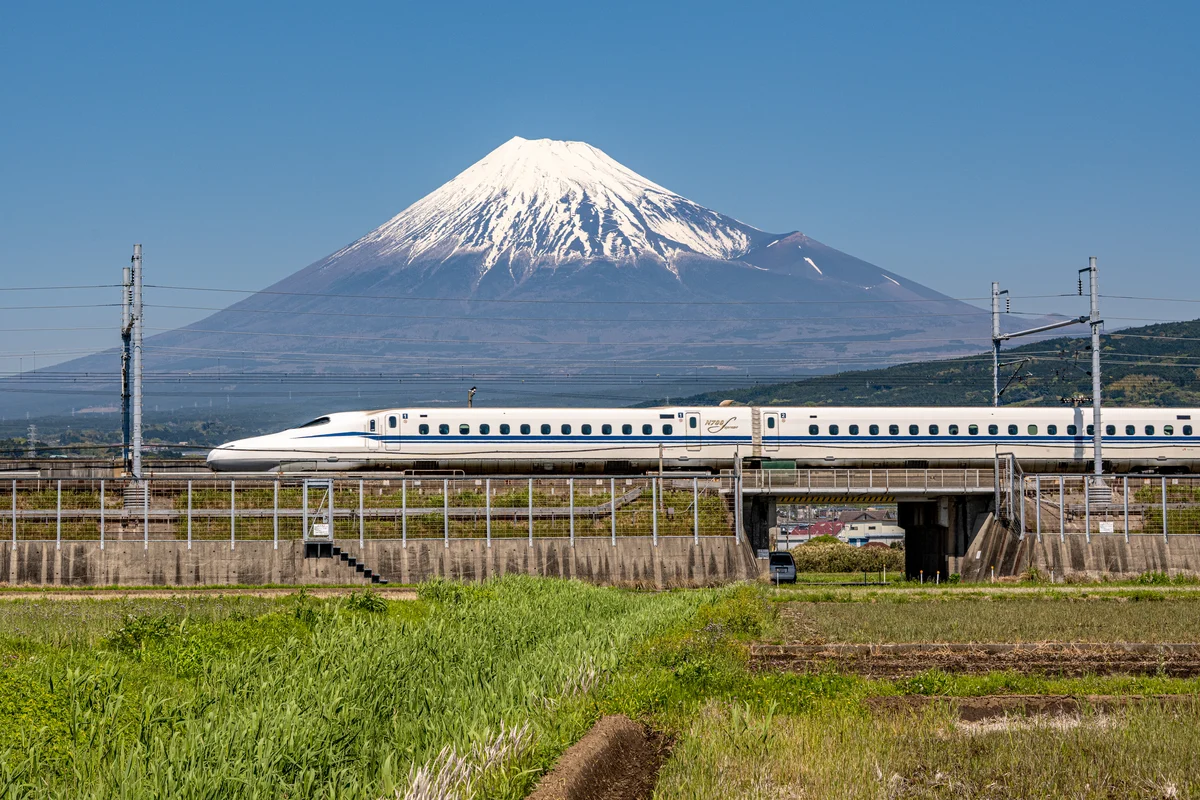
What Japan is financing on the Mumbai–Ahmedabad railway
The Mumbai–Ahmedabad High Speed Rail project gives Japan's development financing a specific date and amount. On 21 December 2023, the Japan International Cooperation Agency signed the phase V loan agreement for JPY 400 billion, about INR 22,627 crore in its release. The agency identifies the loan as official development assistance for a high-speed railway using Japanese Shinkansen technology. The rupee figure belongs to the dated release and can be quoted as its approximate equivalent.
The amount describes a signed loan tranche. Any claim about the total project cost needs a figure for the full project and the date of that estimate. A claim about funds already paid out needs disbursement records. Keeping the phase and signature date with the yen amount also helps prevent a later project update that mentions the same tranche from being counted as fresh financing.
The source to check depends on the milestone. JICA's signed agreement is the record for the phase V loan. A reader checking construction progress needs a dated update from the project authority with enough detail to identify the stretch or work package. For a passenger planning a journey, the relevant confirmation would be an official announcement identifying the section opening for passenger service and its start date. The financing release establishes the loan milestone and the technology named for the project.
What the July and November 2026 meetings covered
The 19th Foreign Ministers' Strategic Dialogue on 19 November 2026 discussed implementation of the economic security declaration from July. Japan's official account names semiconductors, critical minerals, information and communication technology, clean energy and pharmaceuticals. The list identifies which sectors featured in the follow-up. Whether a particular sector produced a funded project, a signed arrangement or a further institutional exchange depends on what the relevant agencies subsequently publish.
The fourth Japan–India Foreign and Defence Ministerial Meeting, also held in Tokyo on 19 November, is often referred to as the 2+2. Its ordinal and the strategic dialogue's ordinal refer to separate meeting series. The titles matter for attribution when reports combine announcements from the same day. Use the strategic dialogue record for the discussion of implementing the July economic security declaration and the 2+2 record for statements attributed to the joint foreign and defence format.
July's artificial intelligence statement is another distinct record. To check a claim about AI cooperation, start with that statement and check for a subsequent release from the institution responsible for the claimed work. For a claim about a semiconductor initiative, establish whether a source is describing the declaration's priorities, the November implementation discussion or a specific follow-up with named participants. A date and an issuing institution help distinguish a new development from another account of an existing commitment.
The two November agendas each produced a dated public account. The strategic dialogue named semiconductors, critical minerals, information and communications technology, clean energy and pharmaceuticals. The four-minister joint statement also recorded plans to mark 75 years of diplomatic relations in 2027 as the Japan–India Year of Shared Horizons. The programme is a useful follow-up point for public exchanges and initiatives scheduled during the anniversary year.
Natural resources of India by mineral, region and measurement
What the five-year people exchange goal means
The Japan–India Action Plan for Human Resource Exchange and Cooperation sets a five-year aspiration of more than 500,000 personnel exchanges across both directions. Within that ambition, it includes 50,000 skilled personnel and potential talent from India to Japan. The direction matters. The larger figure describes exchanges in both directions, and the smaller one concerns movement from India to Japan for the groups named in the plan.
Suppose an engineering graduate in India sees the 50,000 figure in a report and wants to know whether applications are open. The action plan establishes the governments' ambition. The existence of a route the graduate can use depends on a current vacancy or programme notice from an employer or administering institution. That notice should identify who can apply, the application window and any stated language or qualification requirements. Current immigration guidance is the relevant source for the visa conditions attached to that route.
A later report on progress would need a defined count and reporting period. Check how the publisher defines an exchange, whether it counts distinct individuals or instances of participation, and which direction the reported activity covers. An update that gives a figure for one category needs to be compared with the corresponding part of the action plan. The stated goals provide the benchmarks. A dated implementation report with a clear counting method is what makes a progress comparison possible.
How to verify the next development
Start with the document date, the event date and the institution issuing the record. The 2026 Diplomatic Bluebook is useful for historical context, including the origin of the summit framework. For a change reported later in the year, look for a dated release from the relevant ministry or agency. At a summit or ministerial meeting, distinguish a jointly issued text from one government's account of the proceedings. Each can establish what was published, while claims about subsequent outcomes require evidence from the agencies or organisations responsible.
For numbers that can change, record the original wording alongside the value. The July release's JPY 2 trillion has a date and describes commitments. A later figure in a different currency, covering a different period or drawn from a disbursement or inflow series, needs reconciliation before it can be used to describe progress. Where a later official release reports an increase on the same basis, check whether the new figure is cumulative. That determines whether it replaces the earlier figure in the timeline or represents activity over a separate period.
- Japan MOFA diplomatic Bluebook for South Asia 2026
- Indian Embassy in Tokyo economic and investment overview
- Japan MOFA leaders’ 2 July 2026 meeting in India
- Japan MOFA November 2026 Foreign Ministers’ Strategic Dialogue
- Japan MOFA November 2026 2+2 meeting notice
- JICA loan agreement for Mumbai–Ahmedabad High Speed Rail phase V
- Japan–India Action Plan for Human Resource Exchange and Cooperation
Sources
- Ministry of External Affairs: India and Japan Vision 2025
- Prime Minister of India: 15th India–Japan Annual Summit
- Japan MOFA diplomatic Bluebook for South Asia 2026
- Japan MOFA exchange of diplomatic notes for the India–Japan CEPA
- India–Japan Joint Vision for the Next Decade, 29–30 August 2025 visit
- Indian Embassy in Tokyo economic and investment overview
- Japan MOFA leaders’ 2 July 2026 meeting in India
- Japan MOFA November 2026 Foreign Ministers’ Strategic Dialogue
- Japan MOFA November 2026 2+2 meeting notice
- JICA loan agreement for Mumbai–Ahmedabad High Speed Rail phase V
- Japan–India Action Plan for Human Resource Exchange and Cooperation
- Shinkansen context photo in Japan
- Government of India publication of the 19 November 2026 joint 2+2 statement
