Is India an ally of the United States?
India and the United States are strategic partners under a Comprehensive Global Strategic Partnership, a designation that does not imply a formal alliance or a mutual-defense guarantee. The recent record includes a February 2026 framework for an interim trade agreement and a November 2026 counter-narcotics meeting in New Delhi, while India’s trade portal still listed no comprehensive bilateral free trade agreement on 26 November 2026.
When a headline calls India an American ally, the word can mean that the two governments work together on particular issues. The formal description in India’s January 2025 briefing tells readers what relationship the governments have documented. A claim about an obligation to provide military assistance would require a separate instrument that specifies the parties, the circumstances covered and the commitment they have made.
The January briefing establishes that the relationship was already broad before the leaders met in Washington the following month. It describes recurring 2+2 meetings, which bring together foreign affairs and defense officials, alongside links in science, technology and education. This makes it possible to distinguish an existing channel of cooperation from an initiative launched during a particular visit.
That distinction also helps when news in one area appears to send a different signal from news in another. Changes in tariff authority affect the terms of trade, while the November working group shows that officials continued to meet on a separate policy issue. Each development can be significant within its own remit. A judgment about the whole relationship needs evidence across more than one of those areas.
| Date | Record type | Development |
|---|---|---|
| 13 February 2025 | Leaders’ statement | Washington visit, COMPACT and Mission 500 goal, and announced trade negotiations |
| 30 July 2025 | Science milestone | Joint NISAR Earth observation spacecraft launched from Sriharikota |
| 31 October 2025 | Defence framework | Major defence partnership framework signed in Kuala Lumpur |
| 6 February 2026 | Trade framework | Governments announced the interim agreement framework |
| 20 February 2026 | Court decision | U.S. Supreme Court held the invoked IEEPA authority did not authorise tariffs |
| 4 August 2026 | Science milestone | ISRO and NASA marked the first year of NISAR on orbit in Bengaluru |
| 2–3 November 2026 | Bilateral working group | Second Drug Policy Executive Working Group met in New Delhi |
Barack Obama’s India visits in 2010 and 2015Donald Trump and India, trade, tariffs and the November 2026 proposal
- India Ministry of External Affairs: India–U.S. Bilateral Brief, January 2025
- White House: U.S.–India Joint Leaders' Statement, February 2025
- Ministry of External Affairs, January 2025 India–U.S. bilateral brief
- 6 February 2026 White House trade framework announcement
- India Ministry of External Affairs, trade facilitation portal
- White House confirmation of November 2026 bilateral working group
What the leaders announced in February 2025
During the official Washington visit in February 2025, the leaders announced the U.S.–India COMPACT and set a goal of bringing bilateral trade to $500 billion by 2030. They called that goal Mission 500 and announced their intention to negotiate a Bilateral Trade Agreement. The target gives readers a benchmark for the governments’ ambition, while the negotiation announcement identifies the process they intended to pursue.
The joint statement also announced TRUST, short for Transforming the Relationship Utilizing Strategic Technology, and separately addressed energy and people-to-people ties. These announcements sit alongside the science, education and diplomatic links described in the January briefing. Reading the two documents in sequence lets you identify which names and targets were announced in February and which areas of cooperation had an established history.
The $500 billion figure can look like a reported trade total when it appears alone in a headline. The year 2030 and the word “goal” are essential to interpreting it. Any calculation of progress toward Mission 500 needs a measured total whose coverage matches how the target is defined. A national goods table, a one-way export figure and a total that also counts services can answer different questions even when they all carry the same currency label.
The visit also illustrates how to read a joint leaders’ statement. The parts that use verbs such as “launch,” “aim” and “negotiate” describe different stages of work. A named initiative has an official starting point. A numeric goal can be tracked once comparable figures are available. A proposed agreement needs later evidence showing how far negotiations advanced and when any resulting provisions take effect.
One announced proposal reached a documented signing later in the year. India’s Ministry of Defence says the two defence ministers signed a new ten-year framework for the major defence partnership on 31 October 2025 in Kuala Lumpur. The ministry describes it as direction for bilateral defence cooperation. The date provides a signing to cite, separate from the February announcement that the parties planned to sign it.
- India Ministry of External Affairs: India–U.S. Bilateral Brief, January 2025
- White House: U.S.–India Joint Leaders' Statement, February 2025
- Ministry of External Affairs, January 2025 India–U.S. bilateral brief
- Indian Ministry of Defence, signing of the ten-year major defence framework
- India’s publication of the February 2025 joint leaders’ statement
How the February 2026 tariff story changed
On 6 February 2026, the two governments announced a framework for an interim trade agreement. The statement proposed an 18% U.S. reciprocal tariff rate under the International Emergency Economic Powers Act, known as IEEPA. The document is evidence of what the governments proposed on that date. Its tariff figure has to be read in light of the legal developments two weeks later.
On 20 February 2026, the U.S. Supreme Court held in Learning Resources, Inc. v. Trump that IEEPA does not authorize presidential tariffs. An executive order issued the same day ended certain additional duties imposed under that statute, including those under Executive Order 14257. The ruling addressed the scope of IEEPA, and the order identified tariff actions that ended. Measures under separate legal authorities require their own status checks.
Suppose you find a February headline quoting 18% and want to understand a later report about the duty on a particular Indian product. The headline establishes the figure in the framework. For the product, the relevant records are the tariff schedule and current customs guidance. The classification, origin, effective date and any applicable exception determine which provisions to check. The U.S. Trade Representative’s index can help identify the presidential action behind an additional duty.
For a news timeline, the important change is the loss of the statutory authority cited for the proposed reciprocal rate. For a claim about what was payable on a specific date, look for the applicable customs entry rules and the effective dates in the implementing documents. The February sources establish the sequence of the proposal, ruling and executive action. They provide no basis for assigning a single November duty to all Indian goods.
Where the trade agreement stood in November 2026
India’s Ministry of External Affairs trade facilitation portal said on 26 November 2026 that no comprehensive bilateral free trade agreement was in place. That is a dated status check on a comprehensive agreement. The 2025 intention to negotiate a broader Bilateral Trade Agreement and the 2026 framework for an interim agreement are both part of the chronology, with different scopes.
A report that says the countries reached a trade deal can therefore leave an important question open. Find the document and check whether it announces a negotiating framework, publishes agreed text, records a signature or gives an effective date. Those stages tell you how much has been settled and when any commitments start to apply. A framework announcement can be consequential even when the material needed to establish operative terms is still missing.
For example, a reader who sees a claim that the broader agreement is complete can check whether the cited release actually refers to the interim framework. Confirmation would come from a dated statement or published agreement identifying the broader instrument and its status. If the report also says that businesses can already use a particular preference, the effective date and the relevant customs implementation matter as much as the agreement announcement.
The Indian portal is useful for checking how the government describes the bilateral agreement landscape. For later developments, compare newer releases from both governments, using the date and scope of each document. A customs authority’s implementation notice answers a narrower question about entry treatment and may be needed even after the two governments describe an agreement in the same terms.
What the latest supplied goods figures show
The U.S. Census Bureau recorded $45.35 billion in U.S. goods exports to India and $103.78 billion in U.S. goods imports from India in calendar 2025. It printed a U.S. goods balance of minus $58.42 billion. These are nominal dollar amounts for goods, without seasonal adjustment. The balance uses the U.S. perspective, so the negative sign indicates that the United States imported more goods from India than it exported there.
For January through September 2026, the same series recorded $39.26 billion in exports to India, $76.88 billion in imports from India and a U.S. goods balance of minus $37.62 billion. A comparison with the full 2025 balance would put nine months against twelve. To determine whether the deficit narrowed year over year during the first nine months, pull the January through September 2025 observations from the Census series and compare the matching periods.
India’s Commerce Ministry offers a separate view through its revised October quick estimates. It put October 2026 Indian goods exports to the United States at $8.72 billion, up 39.25% from October 2025. For April through October, it estimated $59.52 billion in 2026 against $51.99 billion in 2025, up 14.48%. The October comparison shows a larger increase than the seven-month comparison in the same release.
| Reporting authority and period | Measure | Reported value |
|---|---|---|
| U.S. Census Bureau, calendar 2025 | U.S. goods exports to India | $45.35 billion |
| U.S. Census Bureau, calendar 2025 | U.S. goods imports from India | $103.78 billion |
| U.S. Census Bureau, January–September 2026 | U.S. goods exports to India | $39.26 billion |
| U.S. Census Bureau, January–September 2026 | U.S. goods imports from India | $76.88 billion |
| India Commerce Ministry, October 2026 | Estimated Indian goods exports to the U.S., year-on-year change | 39.25% |
| India Commerce Ministry, April–October 2026 | Estimated Indian goods exports to the U.S., year-on-year change | 14.48% |
Keep the reporting authority attached to each number. The Indian estimates cover a different window from the January–September U.S. figures, and both are goods measures. The October jump by itself cannot tell you whether two-way trade grew at that pace or what caused exports to rise. For a later update, check whether the ministry has revised its estimates again and use one release’s comparable figures for the percentage calculation.
| Month | Calendar year | U.S. goods exports | U.S. goods imports | U.S. goods balance |
|---|---|---|---|---|
| January | 2025 | 3,207.9 | 8,144.6 | −4,936.7 |
| February | 2025 | 3,475.2 | 8,357.0 | −4,881.9 |
| March | 2025 | 3,641.7 | 11,198.5 | −7,556.8 |
| April | 2025 | 4,017.8 | 10,014.8 | −5,997.0 |
| May | 2025 | 3,767.9 | 9,425.7 | −5,657.8 |
| June | 2025 | 3,805.1 | 9,145.8 | −5,340.7 |
| July | 2025 | 3,417.6 | 9,160.8 | −5,743.2 |
| August | 2025 | 3,905.2 | 7,890.3 | −3,985.2 |
| September | 2025 | 4,354.4 | 7,508.9 | −3,154.5 |
| October | 2025 | 4,498.6 | 7,435.5 | −2,936.9 |
| November | 2025 | 3,679.3 | 7,139.3 | −3,460.0 |
| December | 2025 | 3,583.6 | 8,354.9 | −4,771.4 |
| January | 2026 | 4,628.4 | 7,867.9 | −3,239.5 |
| February | 2026 | 3,525.1 | 6,778.7 | −3,253.6 |
| March | 2026 | 4,346.7 | 8,364.5 | −4,017.8 |
| April | 2026 | 4,849.9 | 8,260.1 | −3,410.1 |
| May | 2026 | 4,522.0 | 9,136.4 | −4,614.4 |
| June | 2026 | 4,405.9 | 8,887.3 | −4,481.4 |
| July | 2026 | 4,159.9 | 9,581.5 | −5,421.7 |
| August | 2026 | 4,123.3 | 9,165.1 | −5,041.7 |
| September | 2026 | 4,698.0 | 8,842.5 | −4,144.4 |
The monthly table starts on the available January–September 2026 months. Switch to 2025 for the full twelve months, or clear the year filter to see both series. The CSV includes every row shown across both years. Because the figures are nominal and unadjusted, compare the same calendar months when reading short-term growth, and keep the published balances even if rounding the two flows gives a slightly different number.
Shipping from India to the USA, rates and packed weightIndia’s mixed economy, GDP, income and poverty explained
What the NISAR mission has delivered
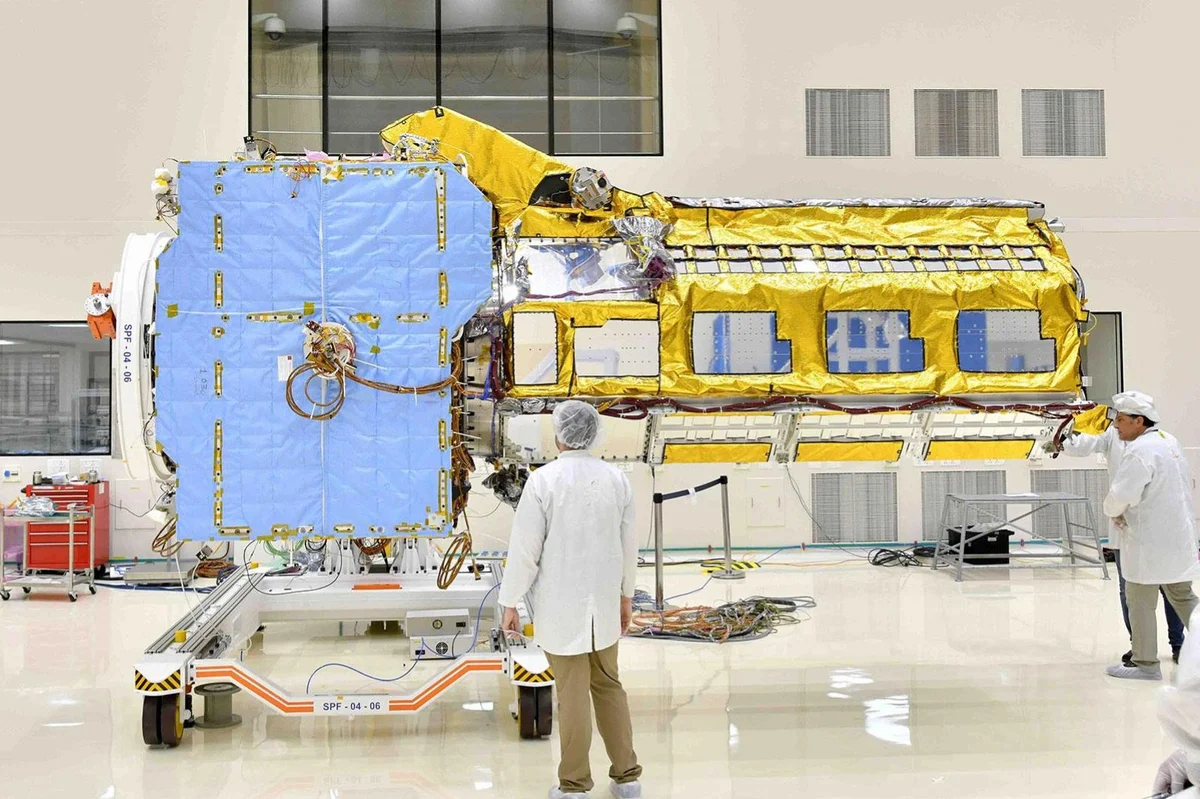
The joint NASA–ISRO Earth observation mission provides a concrete example of science cooperation. NISAR launched on 30 July 2025 aboard India’s GSLV-F16. The satellite combines L-band and S-band radar, giving the joint mission two radar frequency bands for observing Earth. The launch is a dated milestone supported by the mission record and can be placed on the timeline independently of the trade negotiations.
ISRO reported in November 2025 that the spacecraft had entered its science phase following deployment. That update marks a later stage than the launch itself. For a reader following implementation, the distinction matters. A launch report establishes when the spacecraft left Earth aboard its rocket. A science-phase announcement establishes that the mission had progressed to the stage described in the agency’s update.
On 4 August 2026, the agencies marked the mission’s first year in orbit at an anniversary event at ISTRAC in Bengaluru. Use 4 August for the event and 30 July 2025 for the launch when placing both on a timeline. ISRO’s anniversary account documents continued institutional involvement. A claim about newly available science products or later operational performance would need a dated mission update or data release covering that particular development.
What the November New Delhi meeting confirms
India hosted the second bilateral Drug Policy Executive Working Group in New Delhi on 2–3 November 2026. The White House confirmed the meeting as part of bilateral counter-narcotics cooperation. The venue, dates and designation as the second meeting establish a specific instance of continuing government-to-government contact in a policy area distinct from trade or space.
The working group also illustrates the difference between a meeting and a policy outcome. An official account confirming that the meeting took place can support a timeline entry and identify its broad remit. A claim that the governments adopted a new binding measure, changed national policy or completed a coordinated action would need a source that records that outcome. Meeting language about commitments should be read for who made them and what action, if any, was specified.
When checking for a later development, search both governments’ releases for the working group’s full name. Record the meeting date separately from the release date, then check whether the update identifies a new session, a specific decision or progress on earlier work. That keeps a newly published account of an older meeting from being mistaken for fresh activity and gives readers a clear date for any change in policy.
Sources
- India Ministry of External Affairs: India–U.S. Bilateral Brief, January 2025
- White House: U.S.–India Joint Leaders' Statement, February 2025
- Ministry of External Affairs, January 2025 India–U.S. bilateral brief
- 6 February 2026 White House trade framework announcement
- Supreme Court opinion, Learning Resources, Inc. v. Trump, 20 February 2026
- 20 February 2026 executive order ending certain tariff actions
- U.S. Trade Representative, Presidential Tariff Actions
- India Ministry of External Affairs, trade facilitation portal
- U.S. Census Bureau, Trade in Goods with India
- India Commerce Ministry revised quick estimates, October 2026
- White House confirmation of November 2026 bilateral working group
- ISRO, NISAR Mission enters Science Phase
- ISRO, joint NASA–ISRO NISAR one-year review
- NASA/JPL photo of NISAR spacecraft in Bengaluru, via Wikimedia Commons
- Indian Ministry of Defence, signing of the ten-year major defence framework
- India’s publication of the February 2025 joint leaders’ statement
