What changed in India–Germany relations in 2026
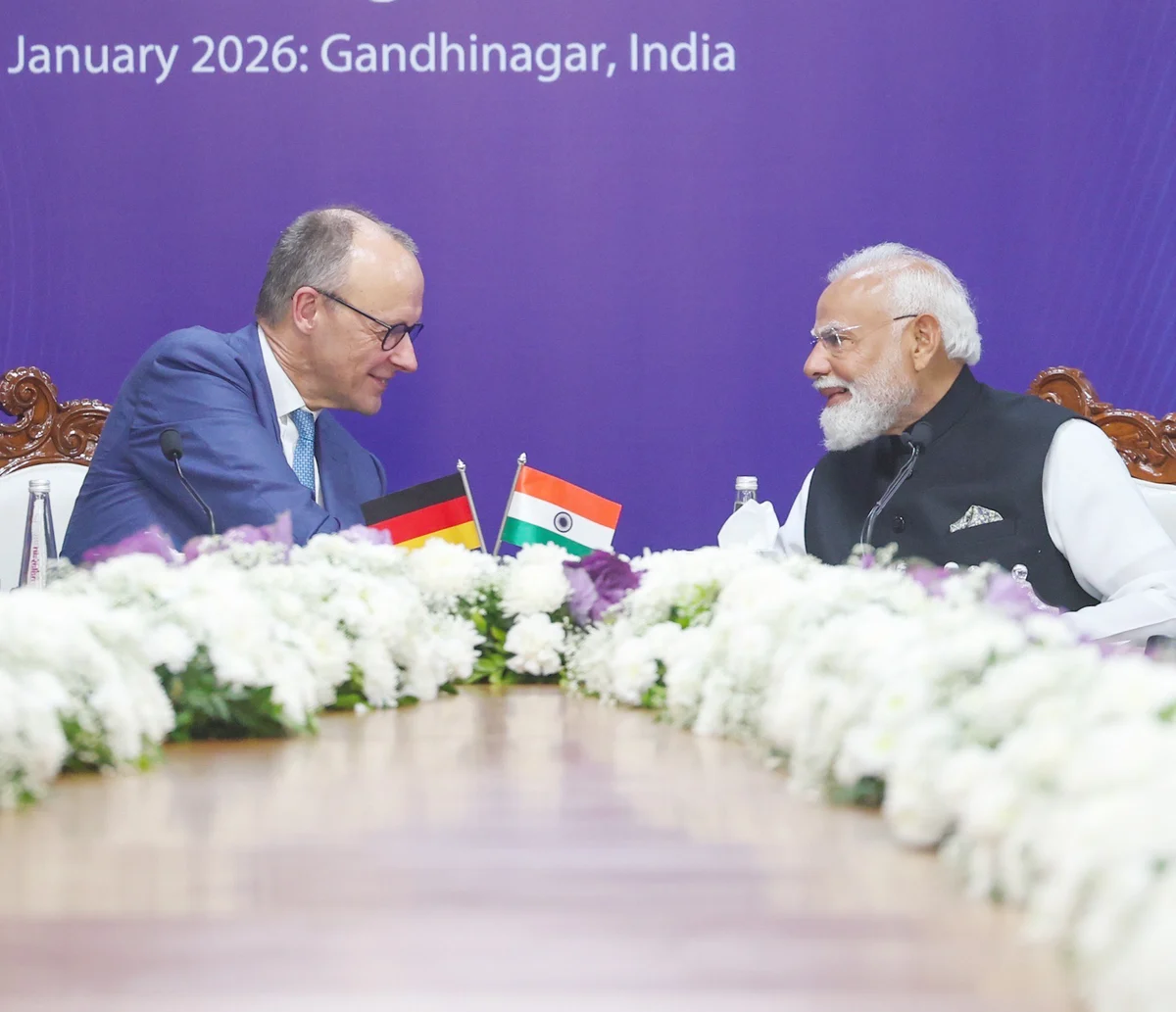
Chancellor Friedrich Merz made his first official visit to India on January 12–13, 2026, and held bilateral talks in Ahmedabad on January 12 covering trade, technology, skills, climate and high-level policy dialogue. Later developments included the conclusion of EU–India trade negotiations on January 27, the 75th anniversary of India–Germany diplomatic relations in March and a German airport-transit visa change for eligible Indian travellers from June 3.
The January visit followed the October 2024 intergovernmental consultations. That sequence matters because the consultations already gave the two governments a way to coordinate policy across ministries. The Ahmedabad talks continued that work at leaders’ level, and the published outcomes covered education, mobility and industry. To understand what the visit produced in a particular field, start with the joint statement for the policy context and then check how the official list describes the specific outcome.
The other 2026 milestones involved different authorities. The European Commission published trade texts after negotiations between the EU and India, while Germany changed its own airport-transit requirement. For a business following tariff policy, the Commission’s records are the place to track legal progress. For an Indian passport holder planning a connection through Germany, the German missions’ guidance and the details of the booking determine which questions to resolve before flying.
| Date | Policy area | Event | Status or result |
|---|---|---|---|
| May 2000 | Diplomacy | Indo-German Partnership Agenda | Adopted as the basis for the strategic partnership. |
| 2011 | Diplomacy | First intergovernmental consultations | Regular cabinet-level format. |
| 2 May 2022 | Climate and development | Green and Sustainable Development Partnership | Joint declaration established the framework. |
| December 2022 | Mobility | Migration and Mobility Partnership Agreement | Bilateral cooperation framework on skills and fair mobility. |
| October 2024 | Diplomacy | Intergovernmental consultations | Previous meeting in the cabinet-level format. |
| 12–13 January 2026 | Diplomacy | Chancellor Merz’s official visit | Official talks and business forum in Ahmedabad on 12 January. |
| 27 January 2026 | EU trade | Trade talks concluded | European Union and India announced the negotiating milestone. |
| March 2026 | Diplomacy | 75 years of diplomatic relations | Anniversary recorded by Germany’s Federal Foreign Office. |
| 3 June 2026 | Mobility | Germany lifts airport transit visa requirement | Applies to eligible airside connections for Indian citizens. |
- Prime Minister of India: Germany Joint Statement, January 2026
- Prime Minister of India: Germany Visit Outcomes
- German Federal Foreign Office bilateral history, 22 September 2026
- India’s official publication of the January 2026 India–Germany joint statement
- German Missions in India current notice on transit
- European Commission EU–India FTA texts after conclusion of negotiations
Diplomatic relations, the partnership agenda and cabinet talks
The 75-year milestone marked in March 2026 refers to diplomatic relations. The German Federal Foreign Office dates the bilateral partnership agenda to May 2000 and the start of cabinet-level intergovernmental consultations to 2011. A reference to the age of the relationship can therefore describe three different things, depending on whether it concerns diplomatic ties, the adoption of a shared agenda or the establishment of a regular cabinet-level process.
The consultations are normally held every two years. They bring government portfolios into a common process and give the two sides an occasion to review work across several policy areas. The October 2024 round is the relevant predecessor named in the January 2026 joint statement. The Ahmedabad meeting belongs to the same wider relationship, and the official record describes it as bilateral talks during the chancellor’s visit.
These dates also help put an individual announcement in context. A policy area may already have a bilateral framework even when a leaders’ meeting gives it fresh attention. For a claim that a visit launched a new area of cooperation, check the later joint statement alongside the earlier agreement or declaration. That comparison can establish whether the latest wording describes a new instrument, a further step under existing arrangements or a statement of shared priorities.
How to read the Ahmedabad visit outcomes
India’s official outcomes list distinguishes signed instruments, joint declarations and announced programmes. Read the verb and the document type together. A signature establishes that the parties signed an instrument, and its text can establish what the parties undertook and when its provisions apply. A declaration records what the governments jointly stated. A programme announcement tells readers what was announced and gives them a name to follow when administrators publish operating details.
The joint statement provides a broader view of the Ahmedabad discussions. Its coverage includes skills, technology, trade, climate and high-level policy dialogue. A subject’s appearance establishes that it forms part of the joint record. To assess a claim that the meeting produced a specific measure, match that subject to an entry in the official outcomes list and check whether the wording and document type support the claim.
Suppose an Indian university is assessing whether an education announcement gives its students a new application route. The visit record can establish the existence and scope of the announcement. An application decision requires a notice from the institution or programme administrator identifying participating institutions, eligibility, dates and how to apply. The two publications answer different stages of the same question, and the administrator’s notice is the one to revisit when an intake changes.
Why the 2025 trade figures differ
The January 2026 joint statement puts bilateral trade in goods and services above US$50 billion in 2024 and describes continued positive momentum through 2025. Destatis gives preliminary 2025 German merchandise turnover of about €31.34 billion. The two records use different years, trade coverage and currencies. Keep all three labels visible on a chart or in a comparison.
In the preliminary Destatis table, German goods exports to India were €16,310,641,000 and German goods imports from India were €15,024,579,000. India ranked 21st among Germany’s export markets for goods, 23rd among its sources of goods imports and 22nd by combined goods turnover. The direction is Germany’s in all three rankings. For an Indian reader, German imports from India are the relevant column when looking up goods India sold to Germany.
Adding the two flows gives €31,335,220,000 of goods turnover. Subtracting German imports from German exports gives a German merchandise surplus of €1,286,062,000. Destatis displays its cells in thousands of euros, so the displayed export figure of 16,310,641 needs to be multiplied by 1,000 for a value in euros. The calculated balance has the same preliminary status and goods-only scope as the figures used to produce it.
To update the figures, reopen the Destatis trading-partner table and check the reporting year, revision status and units before comparing ranks or calculating a balance. For a figure covering both goods and services, retain the joint statement’s scope and attribution or find a statistical release that explicitly measures both. Comparing successive years requires a consistent definition and reporting basis across the figures.
| Measure from Germany’s perspective | Value in euro | India’s rank or calculation |
|---|---|---|
| Exports to India | 16,310,641,000 | 21st export market |
| Imports from India | 15,024,579,000 | 23rd source of imported goods |
| Total goods turnover | 31,335,220,000 | 22nd partner by two-way turnover |
| German goods surplus | 1,286,062,000 | Calculated exports less imports |
Where Germany fits in the EU–India trade agreement
Germany discusses bilateral trade and industrial cooperation directly with India, as the Ahmedabad record shows. The free trade negotiations that concluded on January 27, 2026, were between the EU and India. This matters when following a claim about market access. A bilateral statement can record German and Indian priorities, while the Commission’s agreement texts are the relevant source for provisions negotiated at EU level.
The Commission said the published texts were for information and subject to legal revision. It described the texts as final upon signature and the agreement as binding after completion of internal procedures. Conclusion of negotiations is therefore a dated milestone in the agreement’s progress. A claim that a provision now applies needs a dated record confirming the applicable legal step and the effective date for that provision.
Suppose an Indian manufacturer reads that the trade deal will reduce the duty on a component it ships to Germany. To decide whether that change applies to an upcoming shipment, the manufacturer would need the applicable tariff schedule, the product classification, any relevant origin conditions and the date the measure takes effect. The announcement that negotiations concluded can explain why the measure is under discussion. A current legal text and the applicable customs information are needed to verify treatment for a shipment.
India–France relations, trade and the 2026 partnershipIndia–Japan relations, investment and the November 2026 talks
What mobility cooperation and airport transit mean for travellers
The 2022 India–Germany Migration and Mobility Partnership Agreement sets a framework for migration and fair mobility, including cooperation on skills and qualifications. For someone considering work or study in Germany, the treaty gives the policy background. The responsible German public authority supplies the eligibility rules, visa requirements and any recognition procedure that applies to the intended activity or qualification. Those are separate checks even when the same person needs all three.
A separate June 2026 measure changed airport transit. The German missions in India cite a June 2 Federal Gazette notice that took effect on June 3 and ended Germany’s airport-transit visa requirement for Indian citizens on eligible airside connections to a non-Schengen destination. Airside transit requires staying in the international airport zone. Where an itinerary requires entry into the Schengen Area, the applicable entry rules depend on the itinerary and the traveller’s status.
Consider an Indian passport holder using separate tickets to connect in Germany to a non-Schengen flight. The immediate question is whether the traveller can collect or transfer any checked bag and reach the onward gate while remaining airside. A terminal change, overnight airport hours or the airline’s check-in procedure can affect that. The airline can confirm how it handles the specific booking and baggage. The German Federal Foreign Office and the German missions provide the rules to check against those arrangements.
What the €10 billion climate commitment measures
The 2022 Partnership for Green and Sustainable Development declaration established a framework for India–Germany cooperation on climate and sustainable development. In it, Germany announced at least €10 billion in new and additional commitments to India by 2030. The date belongs to the commitment horizon. The January 2026 joint statement also addressed climate, placing it among the continuing subjects of bilateral policy dialogue.
A commitment is a different measure from a verified project disbursement. When reading a financing announcement, check whether it states an intended commitment, identifies an approved allocation or records money disbursed by a particular date. A funding announcement and a later payment record can refer to the same project at different stages. Counting both as additional financing would overstate the amount recorded.
To track delivery against the declaration, look for dated records from the financing or implementing institution with a project name, amount and financing status. If a project appears in several records, match the project and funding instrument before adding the amounts. A cumulative figure also needs a reporting cutoff and a definition of what qualifies under the partnership. The declaration establishes the scale and timing of the commitment, while those financing records would establish how much had been allocated or paid by the stated date.
The January 2026 joint statement provides an update within the 2030 horizon. It describes around €5 billion as used or earmarked since 2022 and says the €10 billion commitment is mostly in concessional loans. Keep the used-or-earmarked figure together when reporting that progress. The statement gives no stand-alone cash-disbursement total split from earmarks.
Sources
- Prime Minister of India: Germany Joint Statement, January 2026
- Prime Minister of India: Germany Visit Outcomes
- German Federal Foreign Office bilateral history, 22 September 2026
- India’s official publication of the January 2026 India–Germany joint statement
- Destatis preliminary 2025 ranking of Germany’s goods trading partners
- India–Germany Migration and Mobility Partnership Agreement text
- German Missions in India current notice on transit
- Federal Foreign Office detail on Germany airside transit and available airports
- India–Germany Partnership for Green and Sustainable Development declaration
- European Commission EU–India FTA texts after conclusion of negotiations
- Prime Minister’s Office photo of the January 2026 Ahmedabad business event
- German development ministry factsheet on the green partnership commitment
- German federal missions’ dated airport transit announcement
