Choose a temple for the photograph you want
For temple architecture you can photograph on a visit, start with the carved chariot wheels at the Sun Temple in Konarak and the elevated sandstone exterior of Lakshmana Temple in Khajuraho. Check the exact site's camera and phone rules before setting out, because a protected monument, an active shrine and a campus with device screening offer different opportunities.
Choose Konarak if you want one strong detail and a wider view that explains it. Choose Lakshmana if you want to show how the main temple, its platform and the smaller shrines fit together. Both give you a coherent subject from outside. The Archaeological Survey of India, or ASI, generally allows ordinary still photography at protected monuments, subject to site restrictions. Build your plan around handheld exterior stills and check the entrance signs before taking out a camera.
For a visit that centres on worship or a keepsake, the options change. ISKCON Bangalore's Rajajinagar temple allows photos outside the temple and excludes them inside. New Delhi's Swaminarayan Akshardham offers an official portrait, while the Shree Somnath Trust sells high-resolution photos or frames. If your immediate goal is to find an image for an article, identify a file with explicit reuse terms first. A photograph you can buy on a visit and a photograph you can reproduce in print are separate decisions.
- Archaeological Survey of India | Protected monument stills, equipment and filming
- Swaminarayan Akshardham New Delhi | Personal devices, photo service and gate access
- ISKCON Bangalore | Rajajinagar inside and exterior photo guidance
- Shree Somnath Trust | Photography and free device lockers
- Archaeological Survey of India | Khajuraho protected temples and Lakshmana
- UNESCO World Heritage Centre | Sun Temple, Konârak
Compare device, photography and access rules
Start with possession. A temple that excludes phones at the entrance affects everyone carrying one, including visitors who only want to use it for directions or to meet someone later. A temple that permits outside photography sets a different boundary. At Rajajinagar, ask staff where photography should stop if a covered approach or doorway makes the distinction unclear. The operator's wording gives a general outside and inside rule without mapping every part of the campus.
| Site | Place | Rule category | What the published rule says | Visitor source |
|---|---|---|---|---|
| Konark Sun Temple | Konark, Odisha | ASI monument | Use the ASI still-photo baseline and on-site conditions. ASI lists sunrise to sunset. | ASI Konarak visitor page |
| Lakshmana Temple, Western Group | Khajuraho, Madhya Pradesh | ASI monument | Plan exterior photographs in public areas, within site instructions. ASI lists sunrise to sunset. | ASI Khajuraho visitor page |
| Akshardham | New Delhi | Personal devices excluded | No phones or cameras in the complex. Official Photo Memory service. Last entry 18:30, Tuesday–Sunday. | New Delhi Akshardham visitor rules |
| Akshardham | Gandhinagar, Gujarat | Personal devices excluded | No phones or cameras in the complex. Official Photo Memory service. Last entry 19:30, Tuesday–Sunday. | Gandhinagar Akshardham visitor rules |
| ISKCON Bangalore | Rajajinagar, Bengaluru | Exterior photography allowed | The operator allows photography outside the temple and excludes photography inside. Ask where the boundary applies. | ISKCON Bangalore visitor FAQ |
| Somnath Temple | Prabhas Patan, Gujarat | Personal devices excluded | Temple photography and personal devices are prohibited. Free cloakroom and separate souvenir photo sales. | Shree Somnath Trust visitor FAQ |
The table compares named locations and the rules that shape a visit. Use the campus name and city when checking an operator's page, especially for Akshardham. Local notices can give instructions for an individual space or a particular day. For a visit that depends on a photo, check possession and photography first, the gate and deposit arrangements second, and any separate policy for equipment or recording before you pack.
A nearby gallery, a separate museum or a different branch deserves its own entry in your plans. At Konarak, ASI Puri Circle lists separate tickets for the Sun Temple and Archaeological Museum. The museum ticket listing gives no camera policy. At ISKCON Bangalore, the directions also distinguish Rajajinagar from Kanakapura Road. Check the second location individually if your plans include both, even when the names on a map look similar.
- Archaeological Survey of India | Protected monument stills, equipment and filming
- Archaeological Survey of India | Ancient Monuments and Archaeological Sites and Remains Rules, Chapter VII
- Swaminarayan Akshardham New Delhi | Personal devices, photo service and gate access
- Swaminarayan Akshardham Gandhinagar | Branch-specific entry times and photo rules
- ISKCON Bangalore | Rajajinagar inside and exterior photo guidance
- Shree Somnath Trust | Photography and free device lockers
- Archaeological Survey of India | Konarak Sun Temple and visitor-day boundary
- Archaeological Survey of India | Khajuraho protected temples and Lakshmana
- Archaeological Survey of India Kolkata Circle | Visitor photography
- Sripuram Sri Lakshmi Narayani Golden Temple | Visitor rules
- Tirumala Tirupati Devasthanams | Temple video guidance
Frame the chariot and its wheels at Konarak
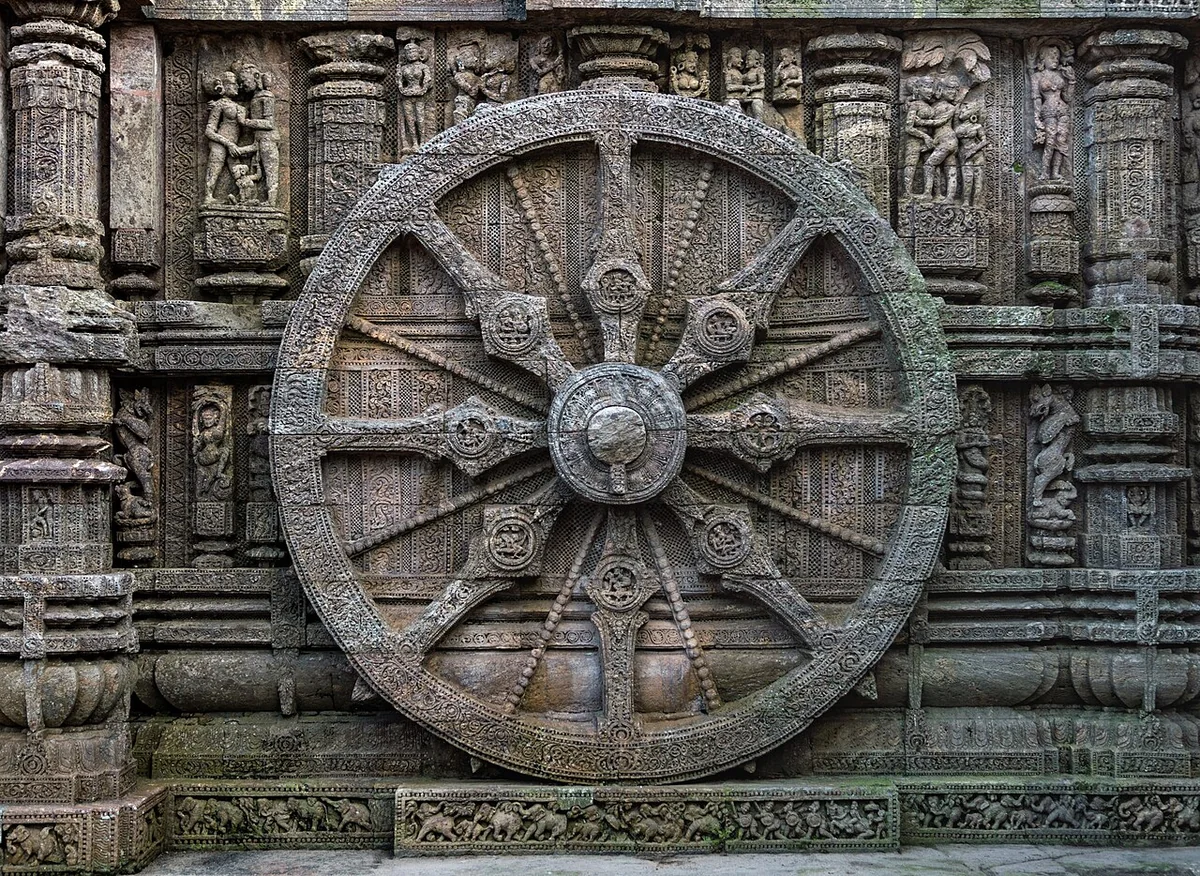
The 13th-century Sun Temple in Odisha takes the form of Surya's chariot. UNESCO describes 24 decorated wheels. Begin with a view wide enough to place a wheel against the plinth, then make a second frame that gives the carving room. Keep the rim and hub together if you want the reader to recognise the whole form. A tighter view of the spokes works once the wider frame has established the scale and position of the wheel.
Use the permitted path to adjust your angle. From an oblique viewpoint, the wheel can remain anchored to the masonry behind it. A more frontal angle gives the circular design prominence. Look for a position where the carving is legible and foot traffic can pass comfortably. Odisha Tourism asks visitors to avoid touching the sculptural details at Konark. Check the edge of the frame for hands, bags and other visitors before making a close composition.
ASI's site listing gives sunrise to sunset. National and state tourism listings give fixed hours of 06:00 to 20:00, and Odisha Tourism lists an evening Light & Sound Show separately. If a late visit is your only option, ask ASI when general monument entry ends that day and whether you will have time to reach the wheel before the grounds close. Use the show listing for the show itself. Confirm its access and any recording terms separately if you plan to attend.
- Archaeological Survey of India | Konarak Sun Temple and visitor-day boundary
- UNESCO World Heritage Centre | Sun Temple, Konârak
- Odisha Tourism | Consent and marked photography restrictions
- Subhrajyoti07 | Carved stone wheel, Konark Sun Temple, Odisha
- Archaeological Survey of India | Protected monument stills, equipment and filming
- Odisha Tourism’s Konark hours and separate light and sound programme
- ASI Puri Circle’s separate temple and museum tickets
Show Lakshmana Temple in its setting
Lakshmana Temple belongs to the Khajuraho Western Group in Madhya Pradesh. ASI describes it as a Vishnu temple commissioned by Yasovarman around 954 CE. Start far enough back to include the raised platform and any subsidiary shrines visible from your position. Including the platform edge gives the viewer a sense of elevation. An angled view can show how the smaller buildings relate to the main temple and give depth to a frame that would otherwise flatten those distances.
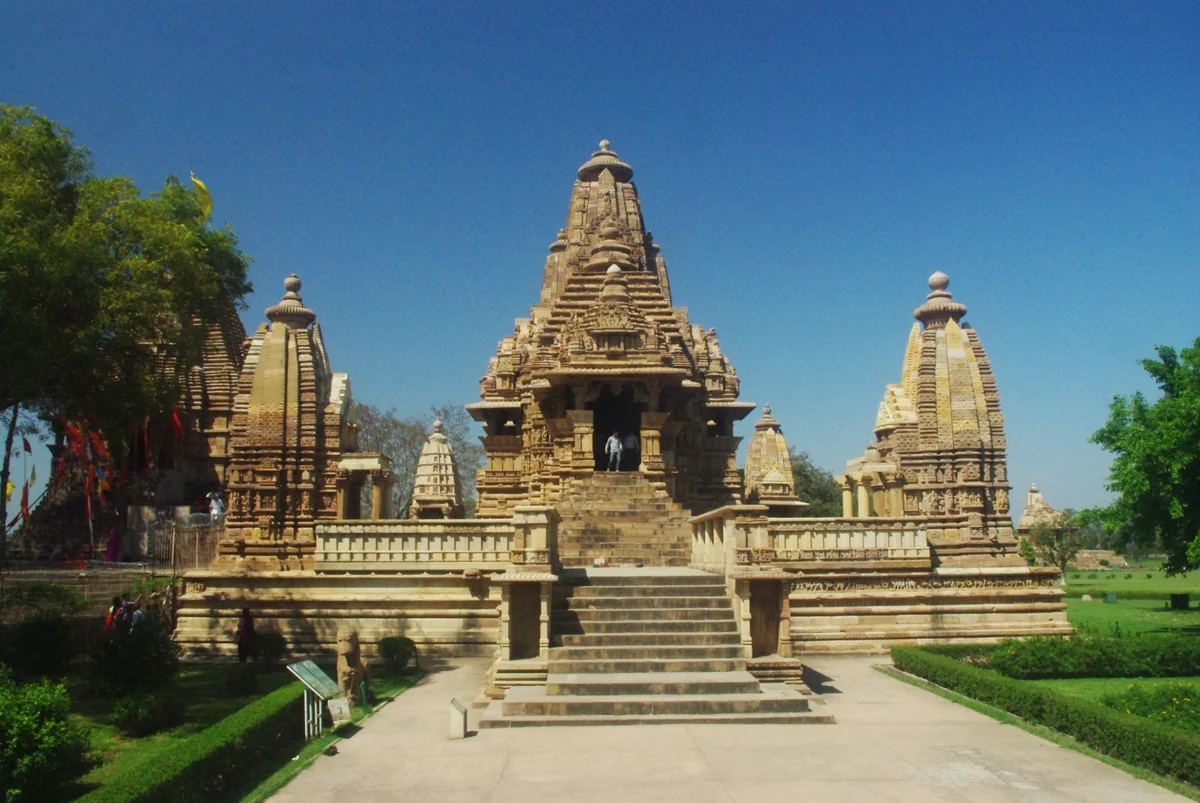

Read the entrance history plaque to orient yourself, then pick a detail you can identify clearly in a caption. One possibility is a section of carved sandstone that shows forms repeated across the exterior. Give the detail an identifiable position in a wider shot so a reader can understand where it sits. If the framing forces a choice between an intact architectural feature and a closer crop, keep the complete feature in the establishing image and use the crop as a separate detail.
ASI lists sunrise to sunset for Khajuraho. Check current entry arrangements if you plan to make the exterior your first or last stop. Allow time to locate Lakshmana within the Western Group, especially if you are trying to match the viewpoint in an existing image. Amitabha Gupta's documented exterior photograph offers a reference for the building and its setting. Access to a specific interior still needs a local check, so a photo plan that depends on one doorway or room remains conditional.
Plan around cloakrooms, gate cutoffs and official portraits
At Akshardham in New Delhi, the operator lists first entry at 10:00 and last entry at 18:30 Tuesday through Sunday, with Monday closure. Mandir darshan runs through 20:00. If you reach the campus at 19:00, the darshan time describes what is available to people already admitted. BAPS puts Gate 1 roughly 350 metres on foot from Akshardham Metro station. Leave time for screening and any cloakroom stop before the entry cutoff, and check for special arrangements on your visit day.
The Delhi visitor page lists a free cloakroom from 10:00 to gate closing and asks visitors to switch off electronics for deposit. Arrange a place to meet companions before handing over a phone. For a portrait, the campus offers Photo Memory from an operator-selected vantage point. The operator lists print preparation within 20 minutes and collection at the Book and Gifts Center before leaving. Fit the collection into your visit and ask about cost before ordering if it affects your plans.
Gandhinagar's Akshardham is at Sector 20 on J Road. Its published first and last entry are 10:00 and 19:30 Tuesday through Sunday, with Monday closure. It has its own cloakroom and Photo Memory service. Keep the Delhi collection arrangements tied to Delhi when planning a visit. At Somnath, the trust provides free lockers for excluded devices and points visitors to the souvenir counter for photos or frames. Ask the trust about the exact location if you want a photograph from outside the temple's controlled area.
12 Jyotirlingas in India, temple directory and Shivaratri 2027Things to do in Delhi: one, two and three-day itineraries
Check equipment, video and worship-area permissions
For ASI monuments, the national FAQ describes ordinary still photography as generally possible and directs visitors to obtain written permission from an archaeological officer for a camera stand or additional lights. Rules 40 and 41 also distinguish monuments subject to a specific copying order from other protected monuments. Ask the administering office about the exact site and setup when planning a tripod, scaffolding or artificial lighting. State which areas you want to use so the office can address the proposed activity.
Check video separately even when you intend to use the same phone for stills and clips. The ASI rules describe a limited provision for non-commercial exterior video without a stand or cast and without interference with customs, worship or repair work. Confirm that it applies at your destination and to your plan. Form IX is identified for filming that requires a licence. The Kolkata Circle also publishes written authorization requirements for drones, tripods and professional or commercial photography or filming at sites it administers.
Government-protected places of worship retain protection for customary use. Ask staff about the particular doorway, hall or ritual you intend to photograph. A clear view from a permitted area still calls for care around people. Ask before making a recognisable portrait, follow posted exclusions, and leave circulation space for people arriving to worship. When a queue or ceremony fills the area you had in mind, move on to an architectural view you can make from an open path without obstructing anyone.
- Archaeological Survey of India | Protected monument stills, equipment and filming
- Archaeological Survey of India | Ancient Monuments and Archaeological Sites and Remains Rules, Chapter VII
- ISKCON Bangalore | Rajajinagar inside and exterior photo guidance
- Odisha Tourism | Consent and marked photography restrictions
- Archaeological Survey of India Kolkata Circle | Visitor photography
- Tirumala Tirupati Devasthanams | Temple video guidance
Select and credit photographs for publication
The two documented architectural photographs serve different editorial purposes. Subhrajyoti07's Konarak photograph shows a carved wheel and gives readers a close look at the stonework. The current file is the 2018 version. An older date in the description refers to a previous photograph. Amitabha Gupta's exterior of Lakshmana Temple, photographed on 17 March 2014, shows the building within its setting and works as an establishing view. Describe the architecture visible in each frame and verify the version if you include a capture date.
Both files carry Creative Commons Attribution-ShareAlike 4.0 terms. Credit the photographer, supply the image source and licence with the published credit, and indicate changes such as resizing or cropping. For a narrow layout, preview the wheel crop to make sure it preserves the part of the carving discussed in the caption. Preview the Lakshmana crop for the platform and smaller structures. A wider placement may preserve more of the information the caption needs.
Treat official portraits and souvenir photographs as separate image sources. The Delhi Photo Memory page gives collection instructions, and Somnath's FAQ says prints or frames are available for purchase. For republication, request terms that cover your intended use and retain the permission with the image record. Use the documented Creative Commons files when their subjects suit the story. For the photo essay, place a caption beside each image that names the temple and location and points out the feature the reader can see.
- Swaminarayan Akshardham New Delhi | Personal devices, photo service and gate access
- Shree Somnath Trust | Photography and free device lockers
- UNESCO World Heritage Centre | Sun Temple, Konârak
- Subhrajyoti07 | Carved stone wheel, Konark Sun Temple, Odisha
- Amitabha Gupta | Lakshmana Temple exterior in the Khajuraho Western Group
- Odisha Tourism | Consent and marked photography restrictions
Sources
- Archaeological Survey of India | Protected monument stills, equipment and filming
- Archaeological Survey of India | Ancient Monuments and Archaeological Sites and Remains Rules, Chapter VII
- Swaminarayan Akshardham New Delhi | Personal devices, photo service and gate access
- Swaminarayan Akshardham Gandhinagar | Branch-specific entry times and photo rules
- ISKCON Bangalore | Rajajinagar inside and exterior photo guidance
- Shree Somnath Trust | Photography and free device lockers
- Archaeological Survey of India | Konarak Sun Temple and visitor-day boundary
- Archaeological Survey of India | Khajuraho protected temples and Lakshmana
- UNESCO World Heritage Centre | Sun Temple, Konârak
- Odisha Tourism | Consent and marked photography restrictions
- Subhrajyoti07 | Carved stone wheel, Konark Sun Temple, Odisha
- Amitabha Gupta | Lakshmana Temple exterior in the Khajuraho Western Group
- Archaeological Survey of India Kolkata Circle | Visitor photography
- Sripuram Sri Lakshmi Narayani Golden Temple | Visitor rules
- Tirumala Tirupati Devasthanams | Temple video guidance
- Odisha Tourism’s Konark hours and separate light and sound programme
- ASI Puri Circle’s separate temple and museum tickets
