The short answer and the documentary detail
The sacred lotus, Nelumbo nucifera, is the flower named as India’s national flower by the Embassy of India in Ashgabat and by the Botanical Survey of India. The official publications are clear about the species. The documentary status has a separate answer. On 10 July 2019, a written reply in the Rajya Sabha said the environment ministry had issued no notification designating a national flower.
For a school activity, the government reference supports the answer sacred lotus, with the scientific name Nelumbo nucifera. If an assignment asks for the date it acquired that status or the serial number of a government notification, cite the embassy and parliamentary answer together. The public records reviewed here supply no confirmed national flower adoption date or signed declaration. The 2011 notification commonly cited in connection with other symbols covers the tiger and peacock.
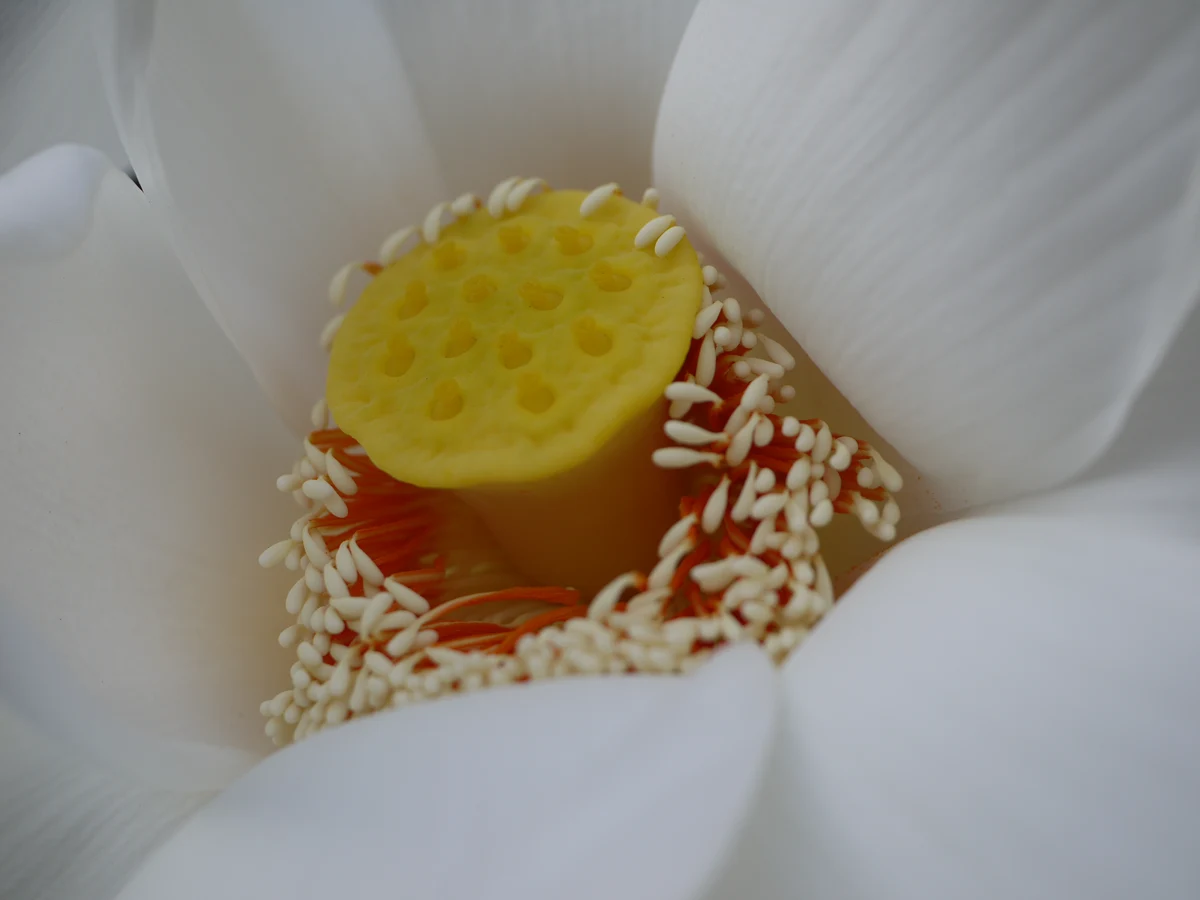
In a garden or field photograph, look for a flower with a conspicuous flat-topped structure in the middle and round leaves that often rise above the water. The structure at the centre becomes easier to recognize after the petals fall. The photograph at the top shows the central receptacle in a white flower. Sacred lotus can also have pink flowers, so colour by itself is a weak clue.
What the official references say
The embassy’s national identity information uses the heading national flower and identifies the lotus by scientific name. It describes the plant’s presence in Indian art and mythology. The Botanical Survey fact sheet also calls it the national flower and gives its family, names, features and habitat. These are direct government references for the conventional label and the species meant when that label is used.
The 2019 Rajya Sabha question specifically asked about documentary support for the national animal, bird and flower. The response named the environment ministry’s 30 May 2011 notification for the tiger and peacock, and separately said that ministry had issued no equivalent notification for a national flower. The response also said information based on publications from bodies such as UGC, NCERT and the Government of India portal was being gathered.
The Lok Sabha revisited national symbols in a written question on 7 August 2023. Parts of the question included flowers, but the answer referred to the 2011 re-notification of the tiger and peacock and supplied no flower date. For a fact check, keep the words and jurisdiction of each answer in view. The 2019 statement specifically concerns the environment ministry’s notification record at that time. The 2023 reply supplies no additional document for a flower.
In a caption or article, a precise formulation is that government information identifies the sacred lotus as India’s national flower. When the subject is legal or documentary status, add the date and scope of the parliamentary response. This retains the evidence for how the symbol is presented and gives readers a direct record for the separate notification question.
| Reference | What it establishes | Document scope |
|---|---|---|
| Embassy of India, Ashgabat | Names the sacred lotus as India’s national flower. | National identity information page. |
| Botanical Survey of India | Names Nelumbo nucifera and describes its characteristics. | Botanical fact sheet. |
| 10 July 2019, Rajya Sabha | Says the environment ministry issued no national flower notification. | Written answer to a specific notification question. |
| 7 August 2023, Lok Sabha | Cites the tiger and peacock re-notification. | Supplies no flower notification or adoption date. |
India’s national bird: the Indian peafowl and the official record
Identify Nelumbo nucifera in the field
Kew’s Plants of the World Online accepts Nelumbo nucifera Gaertn. in the lotus family Nelumbonaceae. Gaertn. is the abbreviated name of the botanist associated with the published scientific name. Kew lists India within a native range that extends through other parts of Asia and into northern Australia. A photograph taken in India may show the native species, and location alone is insufficient to identify an individual plant.
The lotus is an aquatic perennial. Its horizontal underground stem, the rhizome, grows in mud. Long stalks carry the leaf blades up towards the light and many mature blades stand above the water. The stalk attaches near the centre of the roughly round leaf, a form botanists call peltate. Watch how the stalk meets the blade and how the plant grows as a whole before deciding what a close-up shows.
The flower stands on its own stalk. Pink and white forms occur. In the centre, a flattened receptacle is surrounded by numerous stamens. After flowering, the receptacle can be particularly helpful because its characteristic surface has separate openings or depressions around the developing fruitlets. In a plant group with blossoms and older flower heads, compare both stages before relying on petal shape.
The surface of the leaf sheds water readily. Kew describes that effect in its species profile. Water forming beads is a useful observation about the plant’s surface, while a broad identification is stronger when it also includes the leaf attachment and the fruiting structure. For a picture identification, a second photo showing the whole plant is often more helpful than zooming closer into a single petal.
Sacred lotus and water lilies
Both sacred lotus and water lilies can be found in freshwater and produce conspicuous flowers. Kew places sacred lotus in Nelumbonaceae. It places the Asian water lily Nymphaea pubescens in Nymphaeaceae. Common names on plant labels sometimes blur these groups. Use the accepted scientific name when writing an identification, obtaining a labelled plant or searching for a specimen photograph.
Botanical Survey of India’s local flora for Tonk treats the two families separately. The lotus description notes mature leaves well above the water and individual fruitlets in the spongy receptacle. Its nearby account of water lilies also shows why any single leaf shape can be misleading. Some water-lily leaves are rounded or share a peltate form. Look at the habit of mature leaves, the stalk attachment and the fruiting structure together.
If your photo only shows a blossom, use the centre as your first comparison. The later lotus fruiting head gives a much clearer cue because its upper surface and holes remain visible when the petals are gone. If you are at a managed pond, read the full plant label and photograph it with the specimen. Two different plant groups can grow in the same pond, and a distant sign may refer to the opposite side.
| Feature | Sacred lotus | Water-lily comparison |
|---|---|---|
| Family | Nelumbonaceae | Nymphaeaceae. Example: Nymphaea pubescens. |
| Mature leaves | Round, stalk attached near centre, many held above water. | Shape and stalk attachment can vary. Use a second clue. |
| Flower and old flower head | A flat spongy receptacle is prominent at centre. | Compare reproductive structure with the species record. |
| Habitat and colour | Shallow freshwater. Flowers include pink and white forms. | May share freshwater habitat and flower colour. |
Where the lotus grows and when it can be seen
The Botanical Survey account describes shallow freshwater ponds, lakes, marshes and reservoir backwaters among the habitats. Mud beneath the water supports the rhizome. A lotus leaf set can be visible throughout a visit even if no flowers are open. A dry or recently disturbed shore may look very different from the conditions recorded in a survey.
In the Flora of Tonk District the survey records lotus at Bomb Talab in Malpura and gives March through May as its local flowering and fruiting period. That is a named Rajasthan field reference with a specific seasonal scope. Use it to understand the flora of that locality. Access, water levels, permissions and present bloom conditions at the pond are separate visitor questions.
For a visit intended to see a lotus in flower, ask a garden or wetland operator about the precise pond, date and species. A long flowering window in a field guide offers a starting point for planning. Individual flowering plants and water conditions vary. Staying on the bank or the designated route also gives you a view of the growth pattern without needing to disturb leaves or take a specimen.
Lotus in sculpture, language and worship
The embassy associates the lotus with auspiciousness in Indian art and mythology. The Botanical Survey fact sheet includes kamal in Hindi and tamarai in Tamil and records examples of use as a temple offering and in Durga Puja in West Bengal. These are sources for the names and cultural examples they describe. A particular ceremony’s choice of flowers and terminology can vary with the place and tradition.
For a dated artistic example, The Metropolitan Museum of Art catalogues a red sandstone railing fragment from the Bharhut stupa in Madhya Pradesh. The museum dates it to about the first century BCE. Its two carved lotuses formed part of a vine motif. The catalogue interprets the motif as auspicious and connects it with the Buddha’s enlightenment in that setting. This gives a named place, material, date and interpretation for an example of lotus symbolism.
When identifying a carved lotus, start with the museum or inscription record and then compare how its petals or central form have been stylized. The aim in an art reference is to describe the motif and context. For a living specimen, use the botanical description instead. For a question about government symbolism, use the official publications and parliamentary answers. Those three reference paths let the same subject retain its historical, biological and documentary detail.
Record a lotus observation through the season
If you are following the same patch of plants, record at least one wide view and one detail view each time. The wide view can establish which leaves share the water with the blossom and which stalks rise well clear of it. A later visit may replace closed buds or open flowers with bare central receptacles. Record the date for each image. This helps you build a local seasonal record instead of extrapolating the flowering date of a single specimen to an entire region.
Keep the leaves, flowers and fruiting heads in separate lines in your notes. A leaf identification can describe where the stalk meets the blade. A flower identification can describe the raised central receptacle and surrounding stamens. A later fruiting head can reveal the individual openings more clearly. The photo on this page is a close view of one white flower, and the Botanical Survey and Kew profiles describe the remaining traits.
When the observation comes from a planted collection, give the garden name and confirm the specimen label. When it comes from a named survey such as the Tonk flora, keep its locality and reporting period. These contexts make later comparisons meaningful, especially if the garden uses an unnamed cultivar or several species share a pond.
Sources
- Embassy of India, Ashgabat, national identity elements
- Ministry of Home Affairs, Rajya Sabha unstarred question 1942, 10 July 2019
- Ministry of Culture, Lok Sabha unstarred question 2979, 7 August 2023
- Botanical Survey of India, Central National Herbarium, sacred lotus fact sheet
- Kew Plants of the World Online, Nelumbo nucifera Gaertn.
- Kew species profile, sacred lotus appearance and ecology
- Botanical Survey of India, Flora of Tonk District, Rajasthan, printed pages 26–27
- Kew Plants of the World Online, Nymphaea pubescens Willd.
- The Metropolitan Museum of Art, Two Lotuses from the Bharhut Stupa
- Licensed photograph, Sacred Lotus, Dinesh Valke
