What to order and what the khichdi record means
Start with named regional foods such as Rajasthan’s dal baati churma, Kerala’s banana-leaf sadya and Odisha’s baked chhenapoda. If you have heard that khichdi is India’s national dish, that claim circulated around World Food India in 2017. The minister responsible for the event clarified that khichdi had been chosen for a world record attempt.
On November 1, 2017, food processing minister Harsimrat Kaur Badal responded to reports about a national dish by explaining that khichdi had been selected for a record entry at World Food India. The Press Information Bureau’s December recap reported the result, a 918 kg khichdi world record. The minister’s statement explains the selection, and the government recap documents what the event achieved.
The contemporary Indian Express report preserves the dated statement and gives you a way to check its wording if the original social post is inaccessible. Read that statement alongside the recap. The two documents let you pin a widely repeated claim to a specific announcement and see what was actually announced.
For any claim about official status today, look for a dated designation from a central-government source. Search for the wording of the decision and the issuing authority. A later article citing only the 2017 showcase still leads back to the record attempt. That distinction matters when a short menu note or travel guide repeats the claim without a date.
For choosing food, start with the part of the meal you want to explore. Sadya opens up the sequence of a feast, dal baati churma gives you a composed combination, and chhenapoda gives you one sweet to look for. Those names are more useful search terms than a national label when you need to identify what a place actually serves.
Regional dishes and what their names tell you
Use the table to connect a name you see on a menu with the food it describes. The place column gives the area covered by the source. In some rows that is a state, and in others it is a city or a region within a state. A city reference is especially handy for choosing where to read further without turning the dish into a claim about where it originated.
| Place in the source | Name to look for | What it describes |
|---|---|---|
| Kerala | Sadya | A vegetarian feast served on a banana leaf |
| Rajasthan | Dal baati churma | Lentils, round wheat breads and a sweet crumble |
| Delhi | Chhole bhature | Chickpea curry with deep-fried bhature |
| Delhi | Aloo tikki | A potato patty that can be served as part of chaat |
| Odisha | Pakhala | A rice preparation |
| Odisha | Chhenapoda | A baked fresh-cheese sweet |
| Kohima, Nagaland | Smoked pork stew with akhuni or axone | A stew using a soybean ingredient |
| Kohima, Nagaland | Hinkejvu | A preparation with colocasia, greens and beans |
| Malwa, Madhya Pradesh | Bhutte ka Kees | Grated corn cooked with ghee, milk and spices |
Read across a row before deciding whether two options are comparable. Pakhala and chhenapoda both give you a lead for Odisha, but one is a rice preparation and the other is a baked sweet. Aloo tikki and chhole bhature can both turn up in a search for Delhi food, yet their names point to different formats. The first names a patty, while the second already names a pairing.
If you have room for just one order and want to try two components together, chhole bhature gives you a named pairing. For a shorter stop where the focus is a potato preparation, ask how the vendor serves the tikki. A listing that simply says aloo tikki leaves open whether it comes as part of a dressed chaat.
Use the preparation as a second search term when a name gets few results or appears under a different spelling. Grated corn helps identify Bhutte ka Kees, and baked chhena helps identify chhenapoda. Once you find a matching listing, check the establishment’s current menu for the portion and accompaniments. A regional guide can establish what the name refers to while leaving those details to the kitchen.
Delhi street food and the meaning of curry and masala
Incredible India’s Delhi guide associates Chandni Chowk with chaat, tikki, kebabs, parathas and samosas. It is a useful starting point if your search for Indian food really means a walk with a few stops. Choose the preparation first. A search for a potato patty, a filled pastry or a bread will take you toward a more specific order than a search for the market’s food as a whole.
The English word curry is a starting point for reading a description. In chhole bhature it refers to the chickpea preparation, and the rest of the name tells you the bread comes with it. Ask what the main ingredient is and what comes alongside it when the listing says only curry. Those two details will help you decide what to order and whether you need anything with it.
Read masala in the context of the full name. It can refer to a spice mixture or to the seasoning used in a preparation. The word alone gives you little basis for predicting chilli heat or consistency. Bhutte ka Kees illustrates why the cooking method matters. Madhya Pradesh Tourism describes grated corn cooked with milk, ghee and spices, details that tell you more about the food than the presence of seasoning does.
If you are choosing between chhole bhature and aloo tikki chaat and want to avoid a deep-fried bread, the bhature are the deciding detail. You can ask how the tikki is cooked and what goes on top before choosing it. A preference about the bread answers one question, while a preference about frying across the whole order requires a separate answer from the vendor.
For a specific Chandni Chowk stop, check the current address, service hours and whether the item is offered at the time you plan to visit. A description of the neighbourhood’s street food establishes a place to start looking. A current menu or a direct answer from the stall is what can confirm a particular order.
Kerala sadya and the order of a feast
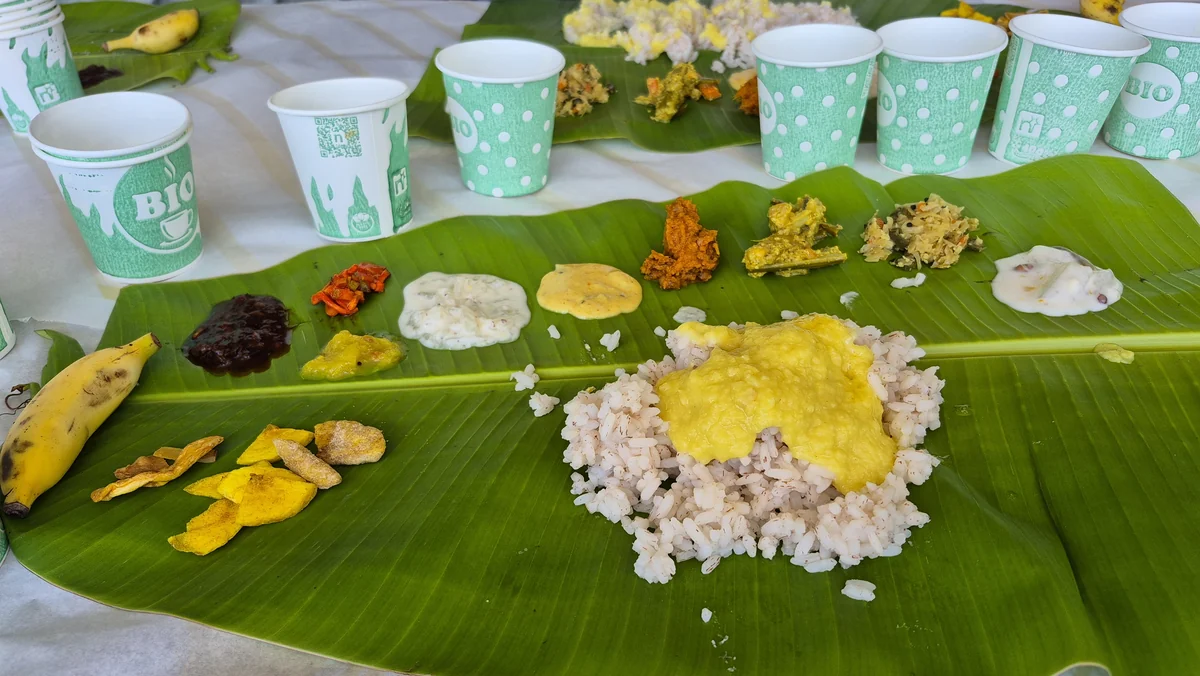
Kerala Tourism describes sadya as a vegetarian feast laid out on a banana leaf and associated with Onam, Vishu and weddings. The name describes the meal and its service. The sequence, accompaniments and variety of tastes belong to the experience, which is why a single vegetable preparation from the feast gives you only one part of the meal.
The occasion helps explain what to check before planning around it. A reference to Onam tells you when sadya has cultural significance. A restaurant notice can tell you whether that kitchen is offering a sadya for a particular service. Read the notice for the date, serving period and any reservation details, especially when an old festival announcement still appears in search results.
Suppose you can fit in either an ordinary lunch or a sadya service on the day you visit. If your aim is to understand how the meal is laid out and served, ask whether the advertised sadya includes the banana-leaf service and its sequence. If your aim is to try a particular preparation you saw mentioned elsewhere, ask for the item by name. The feast label alone does not specify every accompaniment.
At the meal, the person serving can tell you what is already on the leaf and what will arrive next. That is a practical way to follow the sequence when several foods arrive close together. If vegetarian is only part of what you need to know about ingredients, ask about the specific ingredients or preparations that matter to you. The broad description of sadya answers the vegetarian question at the level of the tradition.
A sadya may have a fixed menu at a particular service, while weddings and home meals can have their own arrangements. Ask the organiser how the meal is served and whether it uses dairy ingredients such as ghee or yogurt if that matters to you. The photograph here shows one vegan Onam meal in Kochi in 2026. The specific menu belongs to that event.
Rajasthan’s dal baati churma as a composed meal
Rajasthan Tourism describes dal baati churma through three components. Dal is the lentil preparation, baati are the round wheat breads, and churma is a sweet crumbled cereal preparation. Read the full name as a guide to what is being served. You can use the individual words to identify the parts once the plate arrives.
The tourism department also presents red chilli and garlic chutney as an accompaniment. That is useful to know if you are deciding how to handle the heat of a serving. Ask whether the chutney is served separately and what else is seasoned with chilli. The presence of a chutney in the regional description leaves its use and the seasoning of the rest of the plate up to the kitchen.
If one menu lists dal baati and another lists dal baati churma, confirm whether the first includes churma before deciding between them. Choose the full combination if the point of the meal is to understand how the sweet crumble fits alongside the lentils and wheat breads. If the listing is abbreviated, asking for the sweet by name can save you from comparing two apparently similar plates with different contents.
Check serving size where you order. The regional description identifies the components, but it gives you no basis for judging how many baati a kitchen serves or how much dal comes with them. For a shared order, ask how many breads are included and whether more can be ordered separately. That makes the menu’s unit of sale easier to interpret before you place the order.
Odisha’s rice preparations, sweets and seafood
Odisha Tourism identifies pakhala as a rice preparation and describes temple sweets and coastal seafood among the state’s food traditions. Those references support different outings and different orders. A search for pakhala takes you toward a rice-based meal, while a search for a particular sweet gives you something you can ask for by name even when you have already eaten.
Chhenapoda is a baked sweet made with fresh cheese called chhena. Odisha Tourism describes its caramelised flavour and moist centre. The baking and the fresh cheese give you concrete clues when you are looking through a sweet shop’s selection. The department discusses temple sweets elsewhere in its account of Odia cuisine, so check the individual sweet and its context when the setting matters to your visit.
If you have time for a lunch stop and a brief visit to a sweet shop, check pakhala on the lunch menu first and look for chhenapoda separately. For the rice order, ask what the advertised serving includes. For the sweet, ask whether you can buy an individual portion. The choices hinge on how each place sells the food, and the dish names by themselves settle neither portion question.
For a coastal seafood meal, use the regional guide to identify an area to explore, then check the kitchen’s current selection. Ask which seafood the listed preparation uses and what comes with it. Odisha’s examples document several strands of one state’s food culture. For a meal elsewhere in eastern India, look for examples grounded in that particular locality.
Malwa’s Bhutte ka Kees and Indore food markets
Madhya Pradesh Tourism situates Bhutte ka Kees in Malwa and describes it as grated corn cooked in ghee, milk and spices. The grating and cooking are useful cues when asking about it. A menu that lists only corn can refer to other preparations, so use the full name when looking for the Malwa example described by the department.
The same source covers Indore’s food markets. That makes Indore a practical place to start a search for a market stop, while Malwa is the regional context for the dish. Keep those two facts in view when reading a city guide. A description of a busy market and a description of a regional preparation can support the same outing without establishing that a particular stall serves it.
If you are picking a stall specifically for Bhutte ka Kees, confirm that it is available during the service you plan to attend. Ask about the milk and ghee if either matters to your choice. The name points you toward corn, while the documented preparation gives you concrete ingredients to check with the seller.
A focused market search pairs the full dish name with Indore, then checks a recent listing or asks the vendor directly about the intended day. The question can be as simple as whether the dish will be served when you can get there. If your plans depend on that stop, the answer about service is more useful than another general description of the market.
Sources
- Kerala Tourism: Kerala Sadya
- Rajasthan Tourism: Rajasthani Cuisine
- Incredible India: A Captivating Journey of Flavours in Delhi
- Press Information Bureau: World Food India 2017 Official Recap
- Contemporaneous Archive of the Food Processing Minister's November 2017 Clarification
- Odisha Tourism: Chhenapoda
- Odisha Tourism: Regional Cuisine and Culinary Trails
- Incredible India: Traditional Naga Dishes in Kohima
- Madhya Pradesh Tourism: Malwa Cuisine
- Harsimrat Kaur Badal: November 1, 2017 Public Clarification