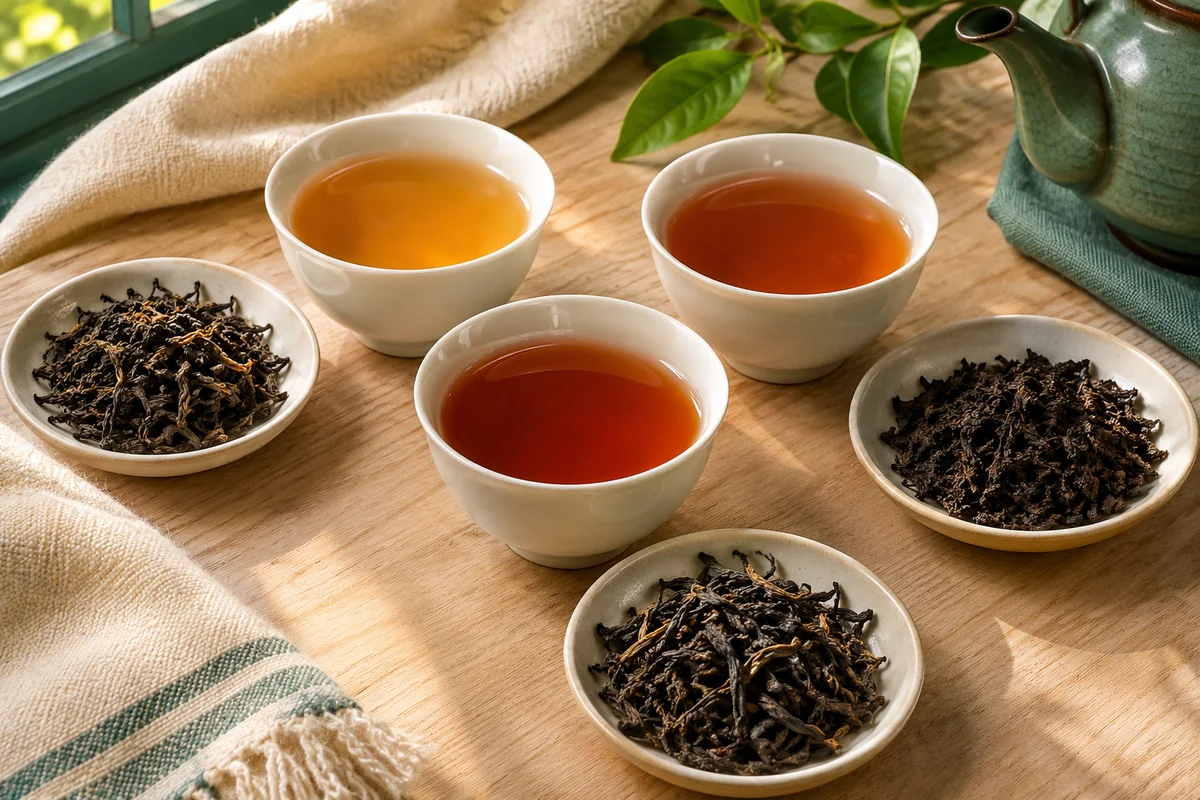
Which Indian tea region should you try first?
Choose Assam for a typically full-bodied, malty cup, Darjeeling to explore the gardens of West Bengal and the protected origin, or Nilgiri for the South Indian hills and a typically brisk, aromatic cup. All three names identify where to start shopping. Read the producer and processing method for the particular leaf you plan to brew.
These choices answer different shopping questions. Assam gives you a broad starting point for body. Darjeeling gives you a reason to examine how the seller identifies origin. Nilgiri gives you a different growing region to explore, with the selection guided by what the seller tells you about the particular tea. If you have room for only one purchase, begin with the question that matters most at your table.
| Region | What Tea Board India supports | What to check before buying |
|---|---|---|
| Assam | A region associated with a full-bodied, malty cup. The board lists both orthodox and CTC production. | Look for a description of body and check whether the product is a blend. |
| Darjeeling | The protected name and logo are tied to origin requirements. | Check the exact product label and consult the current Tea Board rules if the claim is unclear. |
| Nilgiri | A southern hill region with brisk, fragrant teas. The board lists both orthodox and CTC production. | Use the product description to choose the leaf style or cup characteristics you want to try. |
Before comparing two listings, decide what you want to learn. If you want to discover which cup you enjoy, compare teas you can prepare in your usual way. If you want to understand where the leaf came from, look for product-level origin details. An appealing tasting note can guide the first decision, while the second depends on how precisely the producer or seller describes the tea’s source.
The regional comparison covers three starting points. When another Indian region appears on a label, record its exact wording and apply the same questions about origin, blend and preparation. Keep it on your shortlist if those details fit your purpose, and wait for evidence about the particular tea before giving it a place in a flavour comparison.
Assam for a cup with body
Tea Board India describes the tea of the Brahmaputra plains in Assam as brisk, malty and full-bodied. Its regional profile draws attention to second-flush orthodox Assam in particular. Compare that with a breakfast blend containing Assam or a packet marked CTC. Both orthodox and CTC, short for crush, tear and curl, are produced in the region. The process and blend information help explain why two packages from the same broad origin can produce different cups.
Body is the sensation of weight or fullness in your mouth. Bitterness is a taste, and a drying sensation is something else you may notice after swallowing. When a seller calls a tea strong, ask yourself which of these sensations you actually want. A tea that feels substantial can appeal to someone who dislikes a bitter finish. This vocabulary also helps when you ask a seller to recommend one Assam from several.
You usually add milk and want the tea to taste distinct after you pour it in. Suppose one Assam listing describes a full-bodied black tea and another gives only the region. Start with the first if a small pack is available. Taste a spoonful of the plain infusion, then add your usual amount of milk to the rest. Judge how it tastes in the form you plan to drink.
A package that names a tea garden gives you a more specific reference than Assam alone. Keep the garden or lot name alongside the harvest or flush when the seller includes it. That makes a tasting easier to repeat. When you compare two packs for everyday use, begin with your preferred format and price per weight, then decide how much the garden or harvest detail matters for that purchase.
Darjeeling and the protected origin
Tea Board India describes the Darjeeling certification in terms of leaf from registered gardens and processing within the defined area. The board says the logo is for entirely Darjeeling tea and directs buyers to its certification and licensing details. If provenance is central to the purchase, check the seller’s wording for the particular pack and look for the garden or blend information. Check current Tea Board documentation for the market where you shop.
A product page can show a brand address, a packing location and a statement about the leaf. Each describes a different part of the product’s journey. Check which detail the listing attaches to the tea you will receive. If the page has several size or format options, make sure the package photograph and origin statement apply to the option you are selecting.
If a gift tin is labelled Darjeeling but the photograph shows only the front, ask for a legible package photo before placing the order. The board distinguishes a blend of teas from registered Darjeeling gardens from a multi-origin mixture that contains Darjeeling as one component. The rest of the label or the seller’s product notes can tell you which of those you are buying.
Once you have enough information about origin, make a separate decision about taste. Look for the seller’s notes on the specific tea and any brewing guidance that comes with it. If you are buying it as a gift, check the format too. Loose leaf suits a recipient who has a strainer, while bags may be easier for someone whose usual setup is a mug and kettle.
Nilgiri and a first southern Indian tea
Tea Board India describes Nilgiri teas as brisk and fragrant, and its profile identifies both orthodox and CTC manufacturing in the hills. Nilgiri Orthodox is a registered geographical indication. Start with the exact product description if you want a tea made in that style. A pack can name the Nilgiris while leaving the processing style to the producer’s notes or to the small print on the label.
Decide whether you want to compare regions or discover a tea for a particular use. To explore region, look for a Nilgiri and a tea from another growing region with similar product descriptions and the same broad tea style. To find an everyday tea, give more weight to details that affect your routine, such as the pack format, preparation directions and whether you can buy a small quantity first.
You have an Assam black tea at home and want a southern Indian tea for a weekend tasting. Suppose the shop offers a Nilgiri black tea with preparation directions and a flavoured product also labelled Nilgiri. Choose the first if your question is how the two teas taste as plain infusions. Added flavour would give you another variable to account for in the comparison.
If you enjoy that first Nilgiri, save the product name and any producer or lot details that appear on the package. Your notes describe that purchase. They give you something concrete to compare if a second Nilgiri tastes different or if a familiar product returns in a revised pack. Keeping the product information beside the tasting notes makes both observations easier to interpret.
Read the region, blend and format together
Read the region alongside three other details when they are available. Check the type of tea, whether it includes leaf from multiple origins or added ingredients, and how it is sold. A product can suit your daily cup because of its blend or its convenience. If you are building a tasting around place, a product with a clearly stated origin is easier to interpret.
The word blend can describe different combinations. A seller might combine teas from more than one place, or combine lots that share an origin. Look for wording that identifies what has been combined. When a listing mentions a region among several ingredients or origins, use it as information about that component. If the seller supplies no proportions, leave the contribution of each component open.
You want one tea for your weekday routine and one to try with a friend who is curious about growing regions. Suppose you find a breakfast blend that names Assam as one component and a loose tea with a clearly stated single origin. The breakfast blend may fit the routine if it brews the way you like. The loose tea gives your tasting a geographically clearer subject, provided you have a way to strain it.
Product naming can be less precise on a shelf tag or a search results page than on the package itself. If you encounter a regional term you do not recognise, write it down as printed and check whether the producer uses it for the place the leaf was grown. This is especially useful when a familiar place name also appears in a company address or a product range.
Compare two teas with one brewing setup
Set up a side-by-side tasting around the question you want to answer. For a comparison of two similar plain teas, use the same water, similar cups and equal amounts of tea and water. Keep time and temperature consistent if the products have compatible brewing directions. Label the cups underneath if you want to write down an impression before checking which tea you tasted.
If the two packs give quite different directions, brew each as directed for the first tasting. That comparison tells you how the teas perform under their recommended preparations. Record the differences in preparation so you can interpret the result. If you later try a shared brewing method, record that as a separate comparison. You may prefer one tea when prepared its own way and another under your usual routine.
You brew two plain black teas side by side and find the first feels fuller when both cups are warm. After the cups cool a little, you notice that the second leaves a finish you like more. Write down both observations. If you usually take milk or sugar, add the same amount to each cup and see whether your preference carries through to the way you normally drink tea.
Use a few specific observations you would recognise again, such as whether the cup felt light or full, whether it left your mouth dry, and what you could still taste after swallowing. Record the product and preparation next to those notes. A comparison of two packs can tell you which you would buy again and give you better questions for the seller when you explore the next region.
Verify the listing before you buy again
Check changing details against the exact pack on sale. A shop may reuse a product title across batches, or show an image that differs from the pack currently shipping. If the label, origin or ingredients matter to the purchase, compare the current product description with a legible package image or ask the seller to confirm the details for the pack in stock. For Darjeeling origin and logo questions, use Tea Board India’s current publications for the market where the product is sold.
You liked a Nilgiri you bought previously and the seller now shows a redesigned pack under the same name. Compare any origin, producer or lot information you saved with the new listing. If the seller can confirm only the broad region, you can still choose it as a Nilgiri you want to try. Treat the flavour as an open question until you brew the new pack.
When you find a tea worth buying again, keep the identifying details that helped you recognise it and the brewing quantities that worked in your kitchen. A photograph of your pack can help with the next order if the seller’s wording changes. Your own preparation notes also make a repeat purchase easier to evaluate if the new cup seems different.