How much dry basmati do I need?
Four side servings use about 300–400 g of dry rice.
Portion ranges come from the manufacturer’s serving guide. Use your recipe, appetites and accompaniments to choose the amount.
Brand comparison + cook’s guide
Compare nine India Gate basmati lines by grain type and pack size, then calculate how much dry rice to buy for pulao, sides or biryani.
Four side servings use about 300–400 g of dry rice.
Portion ranges come from the manufacturer’s serving guide. Use your recipe, appetites and accompaniments to choose the amount.
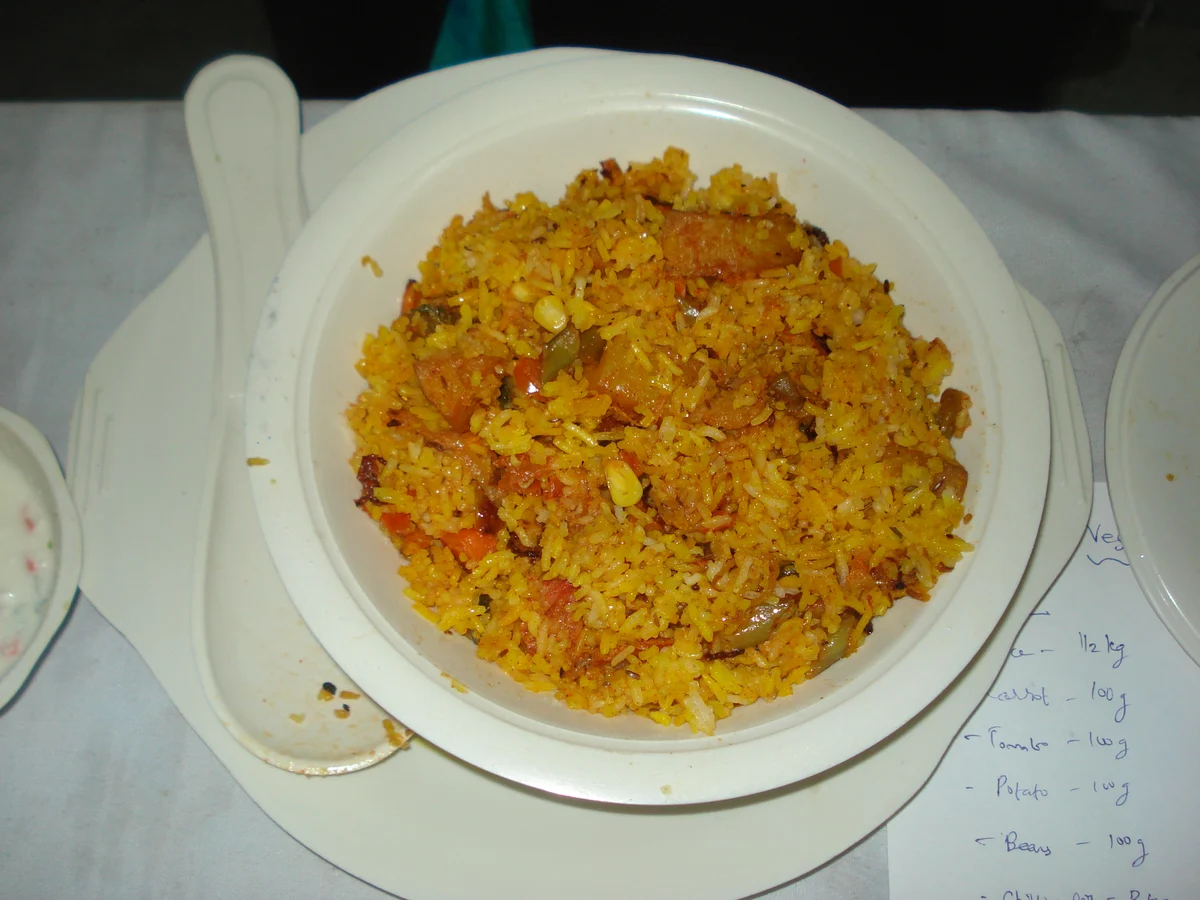
Choose India Gate Classic, Super or Biryani if you want the maker’s extra-long grain designation, and start with Tibar or Select if you want a long, slender grain for pulao. Compare Everyday, Feast Rozzana and Rozzana Choice for a medium-grain option, and choose Classic if a documented two-year ageing claim matters to you.
KRBL, the maker of India Gate, lists these products under distinct retail names. Use the full name when comparing packets or ordering from a grocery app. Dubar Premium, for instance, is described as long, while Tibar and Select are described as long and slender. Those descriptions give you a way to narrow the shelf by appearance without guessing what a word such as Premium means for grain shape.
For a pulao served on a platter where you want the rice to look slender, Tibar and Select are reasonable starting points. They share the same published grain description and expansion figure. If both are available, compare the actual pack weights, cooking directions and prices. The catalogue figures alone leave open whether you would notice a difference between the two at your table.
The table puts the maker’s grain labels and expansion claims side by side. Read bag weights as catalogue listings, since regional packs and the sizes a retailer stocks can vary. Each row refers to a named product. Check the full front label before carrying information from the table over to a packet with similar branding.
| Variety | Maker’s grain description | Maker’s expansion claim | Published packet weights |
|---|---|---|---|
| Classic | Extra-long | 4.5× | 500 g, 1 kg, 2 kg, 6 kg, 10 kg |
| Super | Extra-long | 4.2× | 1.2 kg, 1.5 kg, 5 kg, 10 kg, 30 kg |
| Biryani | Extra-long | 4.0× | No verified pack list |
| Tibar | Long and slender | 3.8× | 1 kg, 5 kg, 10 kg, 30 kg |
| Select | Long and slender | 3.8× | No verified pack list |
| Dubar Premium | Long | 3.6× | 1 kg, 5 kg, 10 kg, 30 kg |
| Everyday | Medium | 3.5× | 1 kg, 5 kg, 10 kg, 30 kg |
| Feast Rozzana | Medium | 3.6× | 1 kg, 5 kg, 10 kg, 30 kg |
| Rozzana Choice | Medium | 4.0× | No verified pack list |
Classic, Super and Biryani share the extra-long description. Classic has the highest published expansion figure of the three at 4.5×, followed by Super at 4.2× and Biryani at 4.0×. Classic is also the one with a verified two-year ageing statement in the material checked for this comparison. Use that statement for Classic and look for a product-specific ageing declaration if age matters when you shop for Super or Biryani.
The evidence gives no standard test for the expansion claims. A figure such as 4.5× therefore gives you no way to calculate how long a cooked Classic grain will be, how much dry rice you need, or how much space the cooked rice will take up. Rozzana Choice illustrates the problem with sorting by that number alone. Its published 4.0× matches Biryani’s even though the two products carry different grain descriptions.
If you are choosing between Classic and Super for a layered biryani and can buy either locally, decide what would settle the choice before paying for a larger bag. Classic gives you the two-year declaration and has a listed 500 g pack. Super has listed 1.2 kg and 1.5 kg packs. If the ageing claim matters little and you already plan to use rice for several meals, compare the total price and the price per kilogram for the sizes actually on sale.
Keep expectations for aroma, firmness and grain separation tied to your recipe and the rice you actually cook. The published comparison does not establish how the three products perform in the same kitchen under the same conditions. For a repeat purchase, the exact packet name and the result you got with your method are more specific than an expectation based on the expansion ranking.
India Gate Tibar and India Gate Feast Rozzana are separate products. The Feast Rozzana description mentions whole kernels and a Tibar grade, while its grain description is medium. The standalone Tibar range entry says long and slender. When a retailer’s title mixes those terms, use the full printed product name and the grain description to decide which item the listing represents.
Dubar Premium is the long-grain option in this part of the range, with a published 3.6× expansion figure. Feast Rozzana carries the same figure with a medium grain description. Everyday is also medium and carries 3.5×. Rozzana Choice is medium with a published 4.0×. The figures leave texture, fragrance and how the grains hold up when mixed into a dish unresolved.
For a weeknight meal where the rice will be served with dal and a vegetable side, Everyday and Feast Rozzana give you two medium-grain choices. If you prefer the appearance of a long grain on that plate, include Dubar in the comparison. All three have a listed 1 kg size, so when those sizes are in stock you can compare the shelf prices directly and buy a quantity you expect to finish.
For online shopping, open the listing for the exact weight you want and look for a legible packet image. A search result headed simply India Gate basmati can group several retail names or weights. If the listing leaves the product unclear, a photo from the seller or a check in store can resolve it before you commit to a bag. The catalogue also treats Sella and Unity entries as another product family, so match their own labels when those names appear beside regular basmati listings.
APEDA dates the grant of India’s Basmati geographical indication to 5 February 2016. A geographical indication concerns a designated place and the production associated with it. APEDA’s account of the traditional cultivation area covers Punjab, Haryana, Himachal Pradesh, Uttarakhand and Delhi, along with 30 districts of western Uttar Pradesh and three districts of Jammu and Kashmir. That gives you regional context for reading a basmati label.
A product name such as Classic or Select tells you which branded product you are looking at. A description such as extra-long tells you the maker’s stated grain category. To identify a cultivar or establish where the contents of a particular bag were grown, you need more specific information. Even within APEDA’s stated cultivation area, its regional profile cannot narrow down the field or district for a retail packet.
Suppose a listing says the rice is from Punjab and the visible packet panel shows only a packing address. Check the remaining panels for an explicit statement about where the rice was grown, and note the full product name and any batch identifier shown. A packing address identifies an address associated with packing. Treat the seller’s cultivation claim as unverified until you find information that actually refers to the rice in the bag.
APEDA administers BasmatiNet as a traceability system. If packet-level provenance is important to your purchase, first check what identifiers and origin information your packet supplies, then ask the maker what it can substantiate for that batch. The existence of BasmatiNet alone supplies no packet record for the varieties in this comparison.
Start with the directions on the exact packet and identify the cooking method in your recipe. In covered absorption cooking, the measured water cooks with the rice and there is no draining step. India Gate’s general guidance for this method uses a 20–30 minute soak and between 1½ and 2 volumes of water for each volume of dry rice. Use the same cup to measure both, and measure the rice before soaking.
For Tibar, the maker’s instructions for the method shown specify a 20–30 minute soak, roughly two volumes of water to one of rice, and a five-minute rest. If you are making plain Tibar with those directions and start with one cup of dry rice, that means about two cups of cooking water and time for the rest after cooking. Record the ratio you used if you want to repeat the result with the same pot and packet.
A biryani recipe that boils the rice and drains it before layering has a different sequence. Use that recipe’s instructions for the boiling stage and its cues for when to drain. The measured water in the covered absorption directions serves a different purpose. The published expansion figure is likewise unrelated to how much water you should measure into the pot.
For a comparison in your own kitchen, use the same dish and take a small note on the grain shape and texture at serving. If you want to see how a change in water affects one rice, keep the dry amount, pot and other steps consistent on the next attempt. When you change the rice and follow different packet directions as well, the result tells you how each preparation worked for your meal. It leaves open which change produced the difference.
Hyderabadi vs Thalassery biryani: rice, dum and two chicken recipes
India Gate’s serving guide suggests 75–100 g of dry rice per person for a side, 100–130 g for pulao and 120–150 g for home biryani served as the main course. At four servings, those ranges work out to 300–400 g for a side, 400–520 g for pulao and 480–600 g for biryani. Choose within the range using your recipe, the appetites at the table and the rest of the menu.
| Dish | Per serving | 4 servings | 10 servings |
|---|---|---|---|
| Side dish | 75–100 g | 300–400 g | 750 g–1 kg |
| Pulao | 100–130 g | 400–520 g | 1–1.3 kg |
| Main-course biryani | 120–150 g | 480–600 g | 1.2–1.5 kg |
If you are making a main-course biryani for four at 125 g of dry rice each, you need exactly 500 g. That fits Classic’s listed 500 g pack if you can find it. If your recipe uses 150 g per person or you want to cook extra for the next day, the recipe alone takes 600 g. A listed 1 kg Classic pack would cover that quantity and leave 400 g for another meal.
For a larger purchase, divide the displayed price by the net weight in kilograms. This makes a Super bag listed at 1.2 kg comparable with a 1 kg bag of another variety even if the shelf tags display only pack prices. Check the arithmetic against the weight on the selected listing. An advertised price attached to a different bag size can change the comparison even when the product name is right.
Catalogue weights help you know what to look for. A confirmed local choice needs the actual variety, net weight and price at the time of purchase. For a meal on a fixed date, verify stock for the selected weight before planning around a particular bag. If the shop substitutes a different variety, check the replacement’s grain description and cooking directions before using the measurements you had planned.
Enter the number of servings and choose the dish in the calculator. The result multiplies the dry rice range by your serving count. Use your recipe’s own quantity when it gives one, especially if you are serving several dishes and your portions will be smaller. The dry-weight estimates belong to shopping and measuring. Use the cooking instructions for water, heat and when to drain or rest the rice.