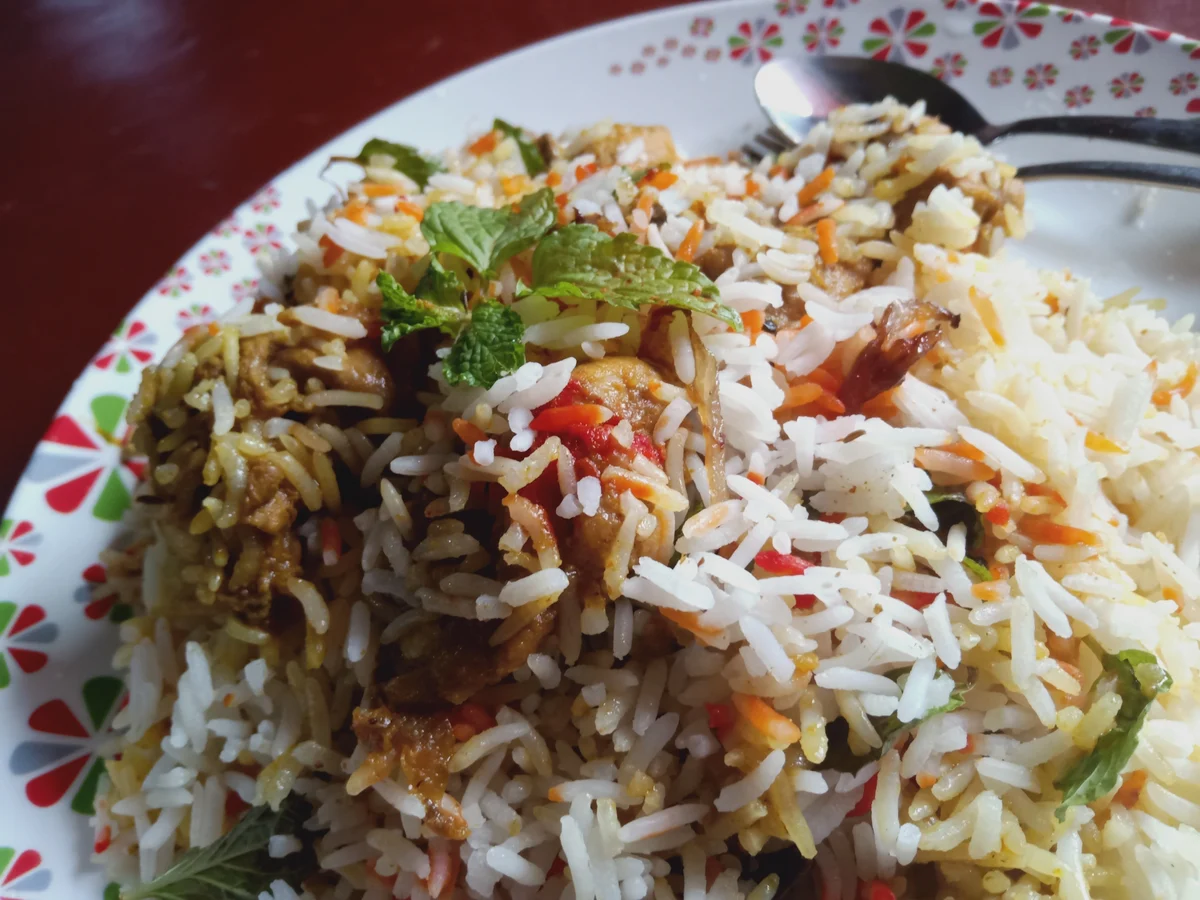
How Thalassery and Hyderabadi biryani differ
Thalassery chicken biryani commonly starts with the small, fragrant rice called Kaima or Jeerakasala in the examples used here. One documented Hyderabadi chicken biryani uses long-grain sella basmati and layers the rice over raw marinated chicken. Both finish in a covered pot. The rice, the point at which the chicken cooks and the garnish explain much of what you will see in the two servings.
Dum is the point of overlap. Both regional examples can finish with rice and meat together under cover, while the rice, aromatics and work done before the pot is closed can differ. A menu that gives you only the word dum leaves those choices open. Separate the label for the cooking stage from the regional name and from the kitchen’s description of the dish.
The two tourism accounts answer different questions. The Thalassery account documents a specific chicken preparation and names its rice and several other ingredients. The Hyderabad account makes the distinction between two ways of preparing meat for layering. Use the first account to recognize a documented combination and the second to ask about a method. For a particular order, the kitchen’s description is what connects either account to the plate.
What to look for in Thalassery chicken biryani
Kerala Tourism’s Thalassery example layers fragrant Jeerakasala rice with chicken and finishes the dish in a sealed pot. Fried onions, cashews and raisins belong to that description. If the rice is what interests you, look for Jeerakasala by name. A menu that says only fragrant rice tells you something about the intended aroma and leaves the variety unspecified. The regional name is a useful search term when the rice is missing from the description.
The fried onions, cashews and raisins are worth asking about individually. They give you a more concrete idea of the documented version than a broad description such as rich or aromatic. The cashews and raisins also make a difference if you care about crunch or sweet bites in the dish. The tourism example gives you grounds to expect those ingredients in the version it presents. Their presence and amount in a restaurant serving need checking with that kitchen.
A menu lists Thalassery chicken dum biryani and mentions fried onions but gives no rice variety. If you are choosing the dish to try Jeerakasala, ask which rice the kitchen used for that batch. If the answer is Jeerakasala, you have confirmed the part that matters to your order. You can leave the questions about garnishes for a comparison where those ingredients matter.
Chef Regi Mathew’s four-serving Thalassery chicken biryani uses 500 g each of Kaima rice and chicken. He cooks the rice separately with 800 mL water and prepares the chicken masala before assembling the pot. Cooked rice and chicken then spend a covered finish together with fried cashews and raisins. The small-grain rice is a reason to follow Mathew’s measured amount and water step for his recipe. The note on the restaurant or packet should identify the variety when that detail matters.
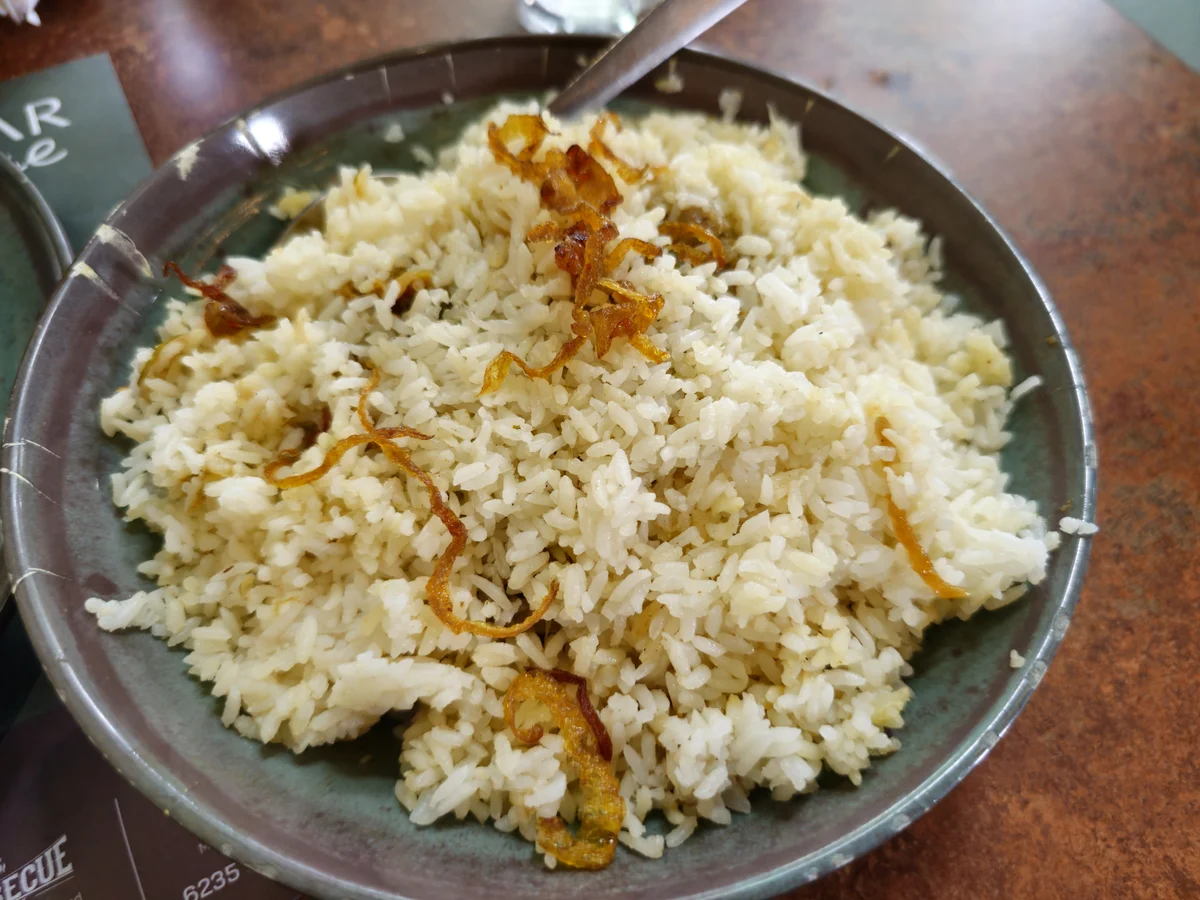

South India travel guide: coastal Tamil Nadu, Karnataka and Kerala
What changes when the meat is prepared separately
The Hyderabad tourism guide distinguishes two starting points for layering. In one preparation the meat goes into the layers raw and marinated. In the other it is prepared separately before it joins the rice. Both descriptions refer to the assembly of a dish that goes on to cook on dum. Raw describes the state of the meat at the layering stage. Reading the distinction in that order keeps a detail about preparation from being mistaken for a description of what arrives at the table.
For chicken biryani, make the question specific to the chicken in the dish you can order. A kitchen may be able to describe when it brings chicken and rice together even if the menu gives the method only as dum. If the answer is that the chicken is marinated, one detail still needs clearing up. Both marinating and separate preparation can happen before layering, so ask whether the marinated chicken goes into the pot raw or is cooked first.
Two Hyderabad menus offer chicken dum biryani. One kitchen says it layers the rice with raw marinated chicken. The other says it prepares the chicken separately, then layers it with rice for the finish. Record those as two different assembly methods. If your decision depends on a certain rice or a less hot serving, ask about that separately because the method alone leaves both details open.
Chef Ranveer Brar gives 700 g chicken thighs and drumsticks and three cups of sella basmati for a published yield of two to four. His chicken is raw when it goes into the final pot, below partially cooked rice. The layers include fried onions and saffron water. This is an example of kachchi layering. The Thalassery example cooks the chicken before assembly and illustrates pakki layering. A word like dum describes the covered finish and does not tell you which layering sequence the cook used.
How to compare two servings side by side
Taste some rice on its own before mixing the serving or adding an accompaniment. Then taste a bite from where the rice and chicken meet and a bite that includes any visible additions. This gives you three useful observations from each plate. You can describe the aroma of the rice, how the rice and chicken taste together and what the additions contribute to a bite. Use the same sequence for the second serving so a generous spoonful of topping on one plate has less influence on the comparison.
You order one Thalassery chicken dum biryani whose kitchen confirms Jeerakasala and one Hyderabadi chicken dum biryani whose kitchen confirms the chicken was prepared separately. The first serving contains raisins, and you notice a sweet bite when you include one. That is a useful description of the portion you ate. If the rice from the second serving smells different, record the observation and ask the kitchen about its rice and aromatics if you want to explain the difference.
Keep the observations you can make at the table distinct from the preparation details that require a kitchen answer. A spoonful can tell you whether you enjoy the combination of rice and chicken. It gives you little basis for reconstructing the state of the chicken at assembly. The two servings may also differ in how many of the toppings reach your portion. If you share an order, that detail matters when two people come away with different impressions of the same biryani.
A field-trial paper from Kerala Agricultural University classifies Jeerakasala as short and bold and the tested Pusa Basmati-1 as long and slender. That supports what to look for in the photographs. It measured particular rice varieties. The two chefs used specified rice in their own methods, so cooked texture also depends on soaking, water and how far the rice is cooked before assembly.
What a regional name can tell you
Use a regional name to narrow a search and a description of the actual dish to make the choice. Thalassery gives you a reference point for Jeerakasala, chicken, fried onions, cashews and raisins in a sealed-pot preparation. Hyderabad gives you a reference point for different ways of starting a dum preparation. The evidence is more specific about ingredients in the first case and about the timing of meat preparation in the second. Expect the most useful follow-up question to differ accordingly.
A comparison can go wrong when an ingredient missing from one description is treated as absent from every serving under that name. The Hyderabad account documents a distinction in meat preparation, so it leaves the rice variety and additions in an individual chicken order for the kitchen to specify. Likewise, the Thalassery account describes a finished combination and a sealed-pot stage. It leaves room for additional questions about exactly how an individual restaurant prepares the chicken before layering.
A menu shows a photo of a chicken biryani next to the word Hyderabadi, with fried onions visible on top. You can use the image to decide whether the pictured serving appeals to you. If the onions are important to your choice, confirm that they come with your order. To compare how it is prepared with a Thalassery serving you have tried, use the kitchen’s answer about layering. The photo supplies a clue about presentation and the staff answer can supply a detail about assembly.
For a documented place in Thalassery’s restaurant history, Kerala Tourism’s heritage route identifies Paris Restaurant, founded in 1942 by M. K. Mohammed Haji. Its account links the restaurant with sealed-pot cooking and its own spice mix. It establishes one place associated with the regional dish. For an individual order, ask about the restaurant’s current rice and toppings, especially if the cashews or dairy affect the choice.
How to verify a detail before ordering
Match the source to the detail you need. Kerala Tourism is a reference for the Thalassery example and its named ingredients. The Hyderabad food guide is a reference for the distinction between starting with raw marinated meat and preparing it separately. To verify how a restaurant is making a dish today, use its current menu for the exact location and ask staff about the item if the menu leaves the detail open. Keep the words chicken and the regional name in the question when the restaurant serves several biryanis.
You are returning to a branch because a previous serving used Jeerakasala, and its current menu says only Thalassery chicken biryani. Ask which rice is in the current batch, and mention Jeerakasala if the first answer gives only a broad description. If staff cannot confirm the variety, you can still choose the biryani for the flavor you remember. Treat the rice variety for this order as unconfirmed.
If you are saving a recommendation for someone else, include the location, the menu item and the detail you were able to check. A note that the kitchen confirmed the rice for your serving is easier to use on a return visit than a general statement about the whole restaurant. For a dish you tried elsewhere in India, apply the same questions to its own menu and local descriptions. These two tourism accounts cover two regional examples, and a comparison involving another style needs a source that actually describes that style.
Use the chefs’ full instructions for timing and order of operations. These quantities and yields are the chefs’ published figures. For poultry, USDA’s Food Safety and Inspection Service gives a minimum internal temperature of 165 °F, approximately 74 °C, measured with a food thermometer. Check the chicken in the batch being cooked, especially when it started raw at the bottom of the assembled pot.
Sources
- Kerala Tourism: Thalassery Dum Biryani
- Incredible India: Hyderabad Food and Cuisine
- Ranveer Brar — Hyderabadi Chicken Biryani
- Chef Regi Mathew — Thalassery Chicken Biryani, Scroll Food
- Kerala Tourism — Thalassery heritage route at Paris Hotel Street
- Wayanad Regional Agricultural Research Station — comparison of rice grain traits
- USDA Food Safety and Inspection Service — poultry temperature