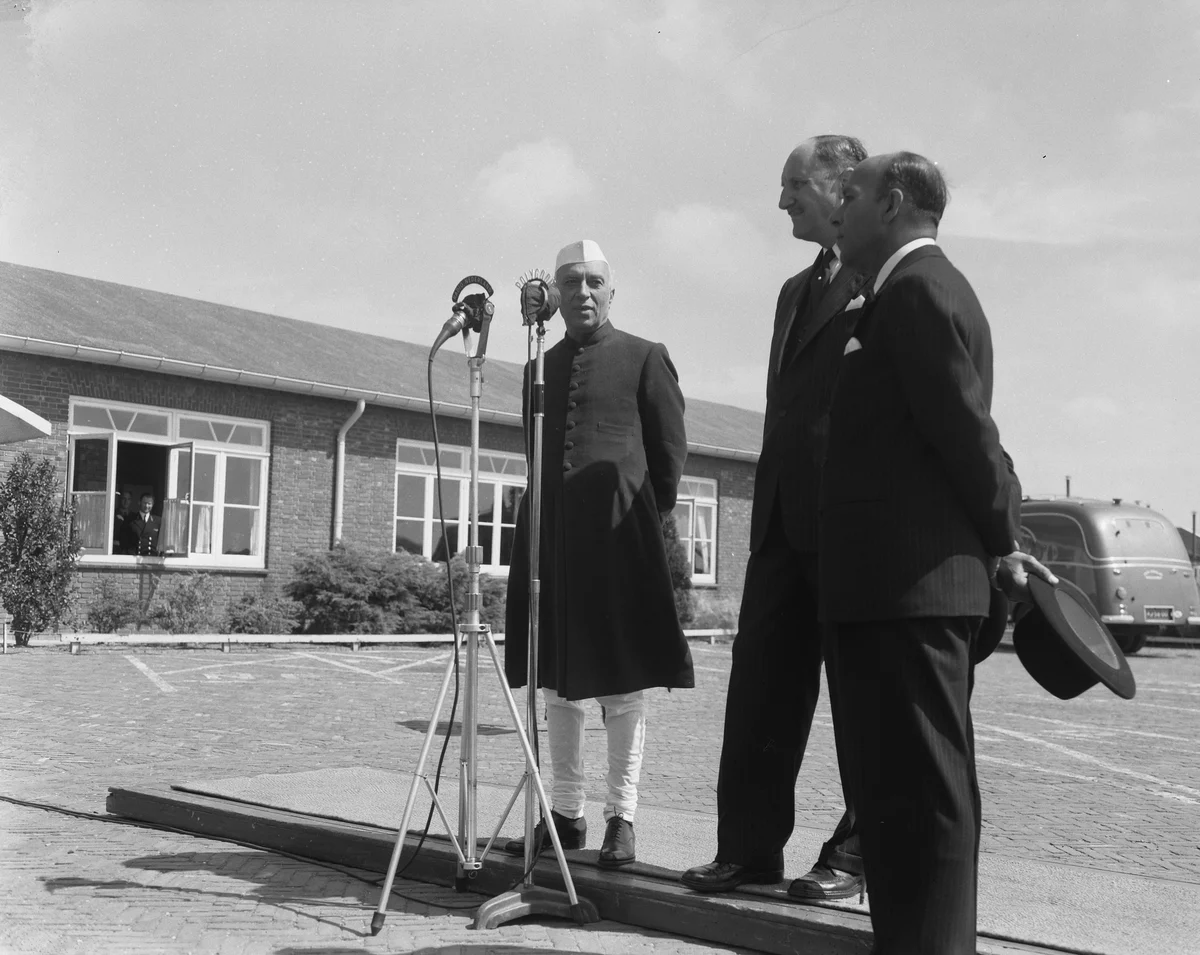
The role of the official residence
India’s prime minister has an official residence in New Delhi. It serves as an official setting for some documented engagements, including a meeting with a Sikh delegation in 2022. The Prime Minister’s Office is the administrative office that supports the role. Teen Murti House, closely associated with Jawaharlal Nehru, is a former official residence that became a memorial and museum institution.
Historical coverage of the residence often appears in official releases about a particular public duty. Those records identify the event and date and supply the official wording used at the time. Municipal minutes answer a separate question about civic names. The museum and library archives preserve the history of an earlier residence. Each of those records helps explain a term readers may encounter in news or historical accounts.
The Prime Minister’s Office gives a concrete example in its account of a Sikh delegation received on 29 April 2022. The release identifies the venue as the prime minister’s official residence in New Delhi. That wording matters because the PMO publishes the account in its capacity as the office responsible for official communications about the event, while the text names the residence as the setting. When a release uses a broad headline such as “at his residence,” the description in the body gives the more precise institutional wording to use when citing it.
- Prime Minister's Office: Official Residence Event Record
- Prime Minister of India: Seva Teerth and Kartavya Bhavan Inauguration
- New Delhi Municipal Council — council minutes, 21 September 2016
- Prime Minister of India — 25 September 2016 broadcast archive
- Prime Ministers' Museum and Library archives — history of Teen Murti House
- Prime Ministers' Museum and Library — public museum descriptions
How Race Course Road became Lok Kalyan Marg
On 21 September 2016, the New Delhi Municipal Council recorded its decision to rename Race Course Road as Lok Kalyan Marg. The council minutes establish the date and the names on either side of the change. Four days later, the 25 September edition of Mann Ki Baat acknowledged the new name. Together, the two records show the municipal decision and how quickly the new terminology appeared in a public prime ministerial broadcast.
If a family scrapbook contains a clipping that calls a reception venue Race Course Road, the clipping’s original date helps you decide how to describe it. In a caption for a pre-rename clipping, preserve Race Course Road and add that the street was renamed Lok Kalyan Marg in September 2016. If the original issue date is missing, the name alone gives you a lead. A later retrospective can use the old name because it is describing an earlier event, and older wording can survive in quotations and archive indexes.
September 2016 belongs on a timeline of Delhi’s civic names. The council decided the name the street would carry, and a later broadcast discussed that change. The scope of each record is visible in the action it describes. Put the decision and broadcast on separate dates in a historical caption. The names in the documents then make sense without implying that a municipal decision changed the function of a government institution.
Where the Prime Minister’s Office fits
The Prime Minister’s Office is the administrative institution that provides secretarial assistance to the prime minister under the Allocation of Business Rules, 1961. Its proactive disclosure traces the institution to the Prime Minister’s Secretariat, established on 15 August 1947. The Secretariat took the name Prime Minister’s Office on 28 March 1977. Those dates describe the institution’s origins and its change of name, which is useful when reading records that use the older term.
The dedication of Seva Teerth on 13 February 2026 belongs to the history of the office’s premises. The official inauguration account identifies it as the newly named PMO complex. A cabinet release puts that dedication in the context of a wider administrative transition from North and South Blocks to Seva Teerth and the Kartavya Bhavans. South Block therefore makes sense in an older account of the PMO, while Kartavya Bhavans belongs to the wider transition described by the cabinet.
The institution’s old and new names are useful search terms for different time periods. A post-independence document can refer to the Secretariat. A later record can identify the Prime Minister’s Office even when it describes different premises. Cite the name used in a document’s own period, and use the original institutional history when explaining how the names relate.
What happens at an official residence
The 29 April 2022 reception shows how an official residence can serve as a setting for public duties. The prime minister received a Sikh delegation there, and the published account records remarks on service and the Indian diaspora. Those subjects give the meeting a public context. They also explain why a government release about a discussion with an invited group might name a residence as the venue.
The useful distinction is between the people named as participants and the people able to read the account. The release makes the event and remarks accessible to a wider audience after the fact. Its description of the delegation identifies who was received on that occasion. A publication date and a venue can make a release look practical at first glance, so check the tense and the action. An account saying the prime minister hosted a group documents a completed engagement.
Suppose you are choosing an example for a school project on how the prime minister carries out public duties. This event supports a specific sentence about receiving a Sikh delegation at the official residence and addressing themes of service and the diaspora. It is also enough to illustrate why an official residence can appear in government news. To describe a recurring practice, you would need a series of dated examples or an official statement explaining that practice. This single release supports the example on its own terms.
Teen Murti House in Nehru’s time
Teen Murti House is a documented example of an earlier official residence. The archives of the Prime Ministers’ Museum and Library identify it as the home of India’s first prime minister, Jawaharlal Nehru, during his time in office. It was converted for use as his official residence after independence. He lived there until his death on 27 May 1964, a date that anchors the end of its use as his home.
President S. Radhakrishnan dedicated Teen Murti House to Nehru’s memory on 14 November 1964. The archival account connects that dedication with the idea of a museum and library. The museum operator traces the institution at Teen Murti House to 1964 and identifies Nehru Memorial Museum and Library as its earlier name. In a timeline, the November date is best attached to the dedication. A date for the later formal registration of the society would need its own record.
The building’s documented change of use explains why a history of Nehru and a description of a museum can both refer to Teen Murti House. The year helps identify whether a caption describes the residential period or the memorial period. The archives connect the former house and a national memorial institution. The museum’s later opening adds a separate milestone in how the story of India’s prime ministers has been presented to the public.
The public museum and its two historical dates
For a public exhibition about India’s prime ministers, look for the Pradhanmantri Sangrahalaya in New Delhi. The Prime Ministers’ Museum and Library describes it as an institution interpreting India’s prime ministers for the public. The official inauguration record dates its opening to 14 April 2022. You may encounter variant English transliterations of the museum’s name in archive titles, so use the museum operator’s wording when identifying the exhibition.
Two dates can appear in an account of the museum because it has two relevant historical milestones. The dedication of Teen Murti House to Nehru’s memory took place in November 1964. The inauguration of the Pradhanmantri Sangrahalaya took place in April 2022. If you are labelling a timeline entry about the broader museum on India’s prime ministers, attach the 2022 date to its inauguration. Use 1964 for the memorial dedication and the beginnings of the institution at Teen Murti House.
For a planned visit, start with the museum operator’s current listing and then check its visitor information for the day you intend to go. Opening hours, holidays, ticket arrangements and any temporary closure are questions for current museum notices. The 2022 announcement answers when the museum was inaugurated. A current operator notice answers whether the exhibition you want to see is available on your intended day. If the operator lists multiple exhibitions or buildings, match the name in the notice to the one you intend to visit before relying on the details.
Things to do in Delhi: one, two and three-day itinerariesHow India’s government works: President, Parliament and courts
Which official record answers which question
| Name in a source | What it identifies | Record to check |
|---|---|---|
| Lok Kalyan Marg | Civic name adopted in a 2016 municipal decision | New Delhi Municipal Council minutes of 21 September 2016 and the Mann Ki Baat archive of 25 September 2016 |
| Race Course Road | Name replaced in the 2016 municipal decision | New Delhi Municipal Council minutes of 21 September 2016 |
| Prime minister’s official residence | The venue for engagements such as the Sikh delegation reception | PMO reception release of 29 April 2022 |
| Prime Minister’s Secretariat | The earlier name of the administrative institution | PMO proactive disclosure |
| South Block | A location in the PMO’s administrative history | Union Cabinet release on the February 2026 transition |
| Seva Teerth | The PMO complex dedicated on 13 February 2026 | Official Seva Teerth inauguration release |
| Teen Murti House | Nehru’s former official residence and the site of his memorial dedication | Prime Ministers’ Museum and Library archival introduction |
| Pradhanmantri Sangrahalaya | The public museum on India’s prime ministers inaugurated on 14 April 2022 | Museum operator’s listing and the official inauguration release |
When records seem to disagree, compare the event date, the publication date and the action each document records. A council minute can establish that the authority adopted a street name. A broadcast can establish that the name was in public use by the date of transmission. A release about a completed engagement can identify its venue. Writing the action next to the date usually shows whether the documents address different questions.
When an official publication uses a broad phrase such as a prime minister’s house, copy the institution or venue name from the body of that dated record. The archive can show how an author used a particular phrase. In an explanatory timeline, the 1947 establishment of the Secretariat, the 1977 office name change and the 2026 dedication are entries about the institution. The 1964 dedication at Teen Murti House is an entry about the former home and its memorial role.
The same care applies to official images and captions. A photograph of a prime minister can illustrate who held office, while a dated photograph identified as Teen Murti House can illustrate the former residence. If a caption makes a claim about what happened inside a building or when it came into official use, verify that detail against the relevant archival or event record. The image credit establishes who made the photograph and how it can be used. The historical source supplies the facts that belong in the caption.
- Prime Minister's Office: Official Residence Event Record
- Prime Minister of India: Seva Teerth and Kartavya Bhavan Inauguration
- New Delhi Municipal Council — council minutes, 21 September 2016
- Prime Minister of India — 25 September 2016 broadcast archive
- PMO proactive disclosure — historical name and official administrative role
- Union Cabinet — public administrative transition from North and South Blocks, February 2026
- Prime Ministers' Museum and Library archives — history of Teen Murti House
- Prime Ministers' Museum and Library — public museum descriptions
- Prime Minister of India — completed Pradhanmantri Sangrahalaya inauguration, 14 April 2022
Sources
- Prime Minister's Office: Official Residence Event Record
- Prime Minister of India: Seva Teerth and Kartavya Bhavan Inauguration
- New Delhi Municipal Council — council minutes, 21 September 2016
- Prime Minister of India — 25 September 2016 broadcast archive
- PMO proactive disclosure — historical name and official administrative role
- Union Cabinet — public administrative transition from North and South Blocks, February 2026
- Prime Ministers' Museum and Library archives — history of Teen Murti House
- Prime Ministers' Museum and Library — public museum descriptions
- Prime Minister of India — completed Pradhanmantri Sangrahalaya inauguration, 14 April 2022
- Existing India IRL visual — archival Jawaharlal Nehru documentary photograph, 1957
- Wikimedia Commons — alternative view of Teen Murti House, July 2008

