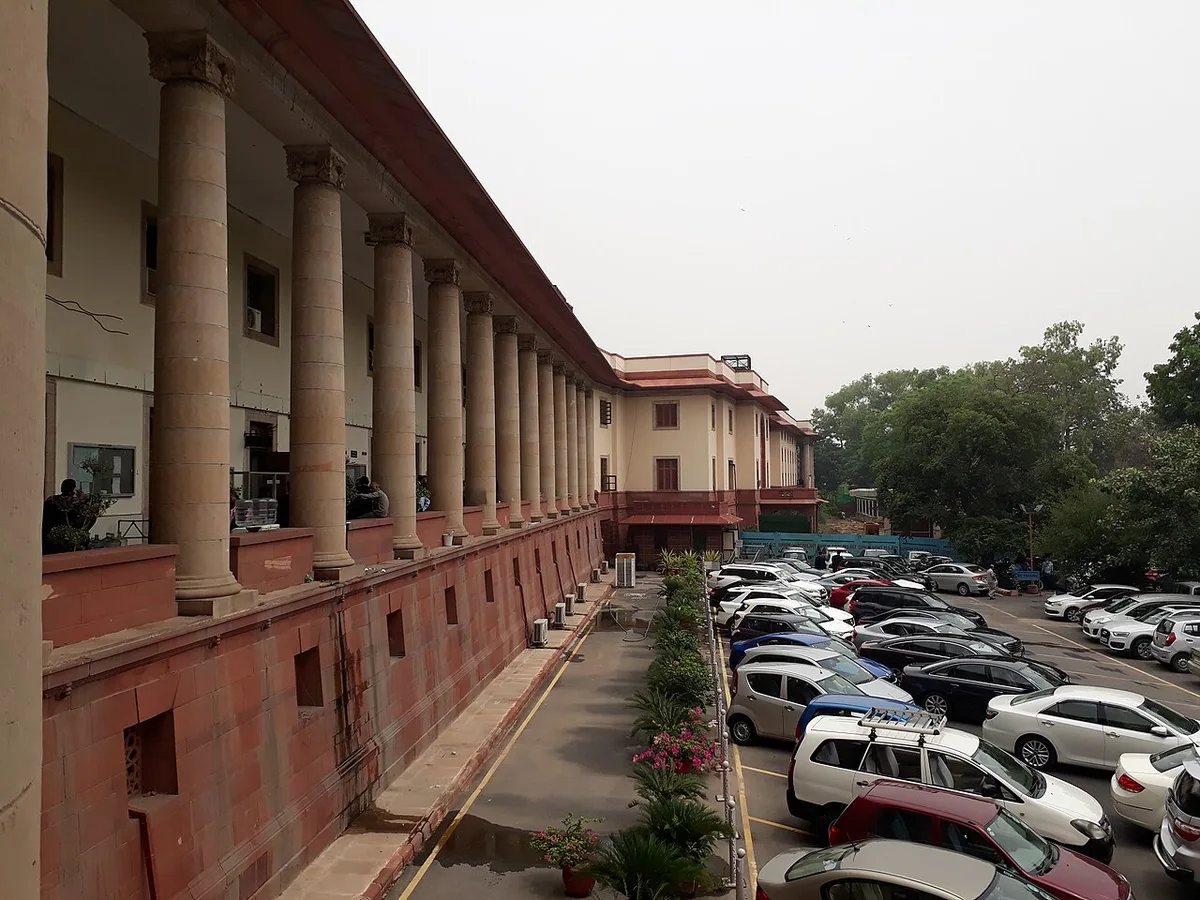
Where the 2026 FCRA Bill stands
India’s Foreign Contribution (Regulation) Amendment Bill, 2026 was introduced on 25 March and referred to a Joint Committee on 12 August, and the records reviewed show no enacted 2026 amendment or commencement notification for the Bill. The separate rules published and brought into force on 22 June 2026 operate under the Foreign Contribution (Regulation) Act, 2010, which governs acceptance and use of foreign contribution alongside its enacted amendments.
The March Gazette identifies Bill No. 97 of 2026 as the text introduced in Lok Sabha. Its wording shows what the government proposed at introduction. The August referral appears in the Digital Sansad register and in the official Monsoon Session account. PRS Legislative Research records a 19 November committee deliberation with representatives of the Ministry of Home Affairs and the Ministry of Law and Justice, adding a later marker of committee activity.
For a dated reference in a grant agreement, board paper or news report, record the instrument’s full name and the event the date represents. The 2020 amendment illustrates why this matters. Presidential assent and Gazette publication came on 28 September, and a separate notification appointed 29 September for commencement. The June 2026 rules commenced on publication. Each date answers a different question about what was available to read and when provisions took effect.
| Date | Document or event | What it establishes |
|---|---|---|
| 26 September 2010 | Foreign Contribution (Regulation) Act, 2010, Act 42 of 2010 | Date of the parent Act |
| 1 May 2011 | Commencement under S.O. 909(E) | Parent Act takes effect |
| 28 September 2020 | Amendment Act, Act 33 of 2020 | Presidential assent and Gazette publication |
| 29 September 2020 | Commencement under S.O. 3395(E) | 2020 amendment takes effect |
| 8 April 2022 | Supreme Court judgment in Noel Harper | Disposition of challenges to specified 2020 provisions |
| 25 March 2026 | Bill No. 97 of 2026 | Amendment Bill introduced in Lok Sabha |
| 22 June 2026 | S.O. 3272(E) and S.O. 3287(E) | Amendment Rules commence on publication and a separate compounding instrument is published |
| 12 August 2026 | Digital Sansad referral record | Bill referred to a Joint Committee |
| 19 November 2026 | Committee deliberation recorded by PRS | Later evidence of committee examination |
- India Code — Foreign Contribution (Regulation) Act, 2010, Act 42 of 2010
- Gazette of India — Foreign Contribution (Regulation) Amendment Act, 2020, Act 33 of 2020
- Gazette of India — S.O. 3395(E), commencement of the 2020 amendment
- Supreme Court of India — Noel Harper and Others v Union of India and Another, 8 April 2022
- Gazette of India — Bill No. 97 of 2026 as introduced in Lok Sabha
- Gazette of India — 2026 Amendment Rules, S.O. 3272(E), 22 June 2026
- Gazette of India — 22 June 2026 compounding notification, S.O. 3287(E)
- Digital Sansad — committee referral register
- Ministry of Parliamentary Affairs — official 2026 Monsoon Session summary
- PRS Legislative Research — committee proceedings tracker, corroborating November status
What counts as foreign contribution
Section 2(1)(h) starts with a donation, delivery or transfer from a foreign source and specifies articles, currency and foreign securities. Section 2(1)(j) supplies the statutory definition of a foreign source. Currency can be Indian or foreign, so a rupee amount tells you how the sum is denominated. The source definition and the nature of the transaction determine how to analyse it. The Act also has a personal-use exception for articles subject to a prescribed value threshold.
Consider two documents a training organisation might receive from the same overseas institution. One offers financial support for a public workshop, and the other sets out a fee for delivering a course to the institution’s staff. Both amounts could be stated in rupees. The first document raises the donation question. The second calls for checking the statutory exclusion for specified ordinary-course fees or consideration for goods or services. The terms and the actual transaction matter even where the payer and denomination are identical.
The definition also reaches qualifying indirect transfers and covers interest or other income derived from foreign contribution. That makes the history of funds relevant when an intermediary appears in the paperwork or a bank credits interest. The Ministry of Home Affairs’ October 2022 FAQ is useful for seeing how the administration explains donations, ordinary-course consideration and foreign sources. For a particular receipt, the operative wording is in the Act and applicable current rules, with the underlying documents supplying the facts.
Who can accept funds and what permission covers
Classification of the receipt is one part of the analysis. The Act separately regulates who may accept it. Section 3 specifies restricted classes and section 4 sets out exceptions. Sections 11 and 12 address registration or prior permission for persons with a definite cultural, economic, educational, religious or social programme. Read those provisions together where a recipient’s role or activities raise a restriction. A general description such as trust, association or educational body supplies only part of the information needed.
Section 12(6) of the enacted framework distinguishes a registration certificate valid for five years from prior permission for a specific purpose and amount. Section 16 addresses renewal. The five-year period answers a question about the duration of registration. The purpose and amount answer questions about the boundaries of a particular prior permission. For a document review, identify which instrument was issued and read the terms on it before relying on a date or amount copied into an internal record.
Scope is also a separate question from duration. The June rules provide for registration certificates specifying purposes and states or union territories, and they have a separate provision for changing that scope. The March Bill proposes replacing section 12(6) and adding a prescribed period for receipt and use under prior permission. A reader looking into timelines should distinguish the existing statute, the terms of the actual permission and any later text that gives the proposed statutory change effect.
Transfers, administrative expenses and receipt accounts
The enacted 2020 amendment substituted section 7, which prohibits onward transfer of foreign contribution by a recipient covered by that section. It also changed section 8’s ordinary limit on administrative expenses from 50% to 20%. Section 8 ties use to the purpose for which the contribution was received, measures the ordinary ceiling against foreign contribution received in the financial year, and provides for prior approval to exceed it.
Suppose a finance team is checking a schedule that shows ₹25 lakh of foreign contribution received in the financial year and ₹6 lakh of expenses already classified as administrative. Twenty percent of receipts is ₹5 lakh, so the schedule shows ₹1 lakh above the ordinary ceiling. The calculation isolates the question for review. Its usefulness still depends on the expense classification being sound and on whether prior approval applies. The size of the overall project budget does not determine this statutory denominator.
Section 17 distinguishes the designated State Bank of India account for receiving foreign contribution from permitted accounts for keeping or using funds. That distinction matters when comparing the account on incoming grant paperwork with those in a spending ledger. In Noel Harper on 8 April 2022, the Supreme Court upheld sections 7, 12(1A), 12A and 17 as amended in 2020. Paragraph 87 reads down section 12A so relevant Indian-national office bearers or key functionaries can furnish an Indian passport as substantial compliance with identification. The judgment concerns the 2020 changes.
- India Code — Foreign Contribution (Regulation) Act, 2010, Act 42 of 2010
- Gazette of India — Foreign Contribution (Regulation) Amendment Act, 2020, Act 33 of 2020
- Gazette of India — S.O. 3395(E), commencement of the 2020 amendment
- Supreme Court of India — Noel Harper and Others v Union of India and Another, 8 April 2022
- Supreme Court of India — issued Noel Harper judgment, archived PDF copy
What the June 2026 rules changed
S.O. 3272(E) was made under section 48 of the existing Act and commenced on Gazette publication on 22 June 2026. New rule 9(1B) provides for certificates that specify purposes and states or union territories. It gives associations registered before commencement a one-year window to submit an FC-6F intimation identifying the purposes and territories for which they seek to retain registration. The window concerns that intimation. Rule 17B separately provides for changes to certificate scope, with the decision resting with the Central Government.
Consider an association registered before commencement that wants to retain a programme in its existing territory and develops plans for a different state. The filing question for retaining scope starts with rule 9(1B) and the transitional intimation. The question of adding territory calls for checking the scope specified on the certificate and rule 17B. If the team also needs to establish how long its registration runs, the certificate and renewal provisions supply the relevant information. Each question requires its own record.
Rule 9A makes release of a second or later prior-permission instalment conditional on use of 75% of the preceding instalment and on field inquiry. Rule 14A gives a deemed reasonable-activity criterion for sections 14 and 16 where at least ₹10 lakh of foreign contribution has been used in the last two financial years for the stated purpose. That figure addresses reasonable activity for those provisions. The rules also define key functionary and include qualified provisions on foreign-national key functionaries and India-only use for relevant activities.
A board or donor tracking these changes can put the precise operative paragraph next to each task. The registration-scope field belongs with rule 9(1B), while evidence for an instalment belongs with rule 9A and the conditions in the prior permission. The compounding notification changes a separate list of specified contraventions and amounts. Its publication neither supplies a renewal date nor creates a general right to resolve every possible contravention by payment. Use the instrument and version named on the case document when checking whether a specific provision applies.
What the March Bill proposes
The introduced Bill proposes a statutory definition of key functionary, a replacement for section 12(6), and a prescribed period for receiving and using foreign contribution under prior permission. The June rules also define key functionary within the rules. If the expression appears in a form or a policy note, identify where the wording came from before attributing it to Parliament. The source determines whether the passage describes an operative rule or wording contained in the introduced Bill.
The Bill also proposes a new section 14B on cessation and a new Chapter IIIA dealing with provisional and permanent vesting after cancellation, surrender or cessation. The proposed administrator and designated authority framework belongs to that part of the reform. Other proposed changes concern offences and oversight. When reading a description of what could happen following cessation, look for the clause cited and the event that triggers it. These details matter because the Bill describes several triggers and stages.
Clause 1(2) of the introduced text anticipates commencement by Gazette notification and allows for different dates for different provisions. If Parliament later passes an amendment and it receives assent, check the published Act to establish which clauses survived and what commencement mechanism it actually uses. A clause number in the introduced Bill is a good reference for tracing a proposal through debate. The final Act and any applicable notification supply the wording and operative date for an enacted provision.
How to verify the next change
Search Digital Sansad by the Bill’s full name and number and check both the committee record and the parliamentary record. A committee hearing or report records progress in examination. To verify passage, look for the relevant proceedings of the Houses. To verify assent and the final wording, look for the published Act in the Gazette. Check its commencement clause and any notification covering the provision in question. This sequence is particularly important when a news item says only that a measure was cleared.
For rule or form changes, start with the Ministry of Home Affairs’ FCRA Online legislation and notices index and open the named Gazette instrument. The two June documents offer a practical test. S.O. 3272(E) contains the Amendment Rules, while S.O. 3287(E) amends a separate compounding notice and its tables. Both documents are dated 22 June despite later-looking portal filenames. Record the notification number, printed Gazette date and operative clause alongside the form or rule being checked, so another reader can reproduce the verification.
Corruption in India, the latest index, cases and surveys
- Gazette of India — Bill No. 97 of 2026 as introduced in Lok Sabha
- Gazette of India — 2026 Amendment Rules, S.O. 3272(E), 22 June 2026
- Gazette of India — 22 June 2026 compounding notification, S.O. 3287(E)
- Press Information Bureau — government factsheet on the 2026 FCRA Bill and Rules
- Digital Sansad — committee referral register
- Ministry of Parliamentary Affairs — official 2026 Monsoon Session summary
- PRS Legislative Research — committee proceedings tracker, corroborating November status
- Ministry of Home Affairs — FCRA Online legislation and notices index
Sources
- India Code — Foreign Contribution (Regulation) Act, 2010, Act 42 of 2010
- Ministry of Home Affairs — official FCRA FAQ, October 2022
- Gazette of India — Foreign Contribution (Regulation) Amendment Act, 2020, Act 33 of 2020
- Gazette of India — S.O. 3395(E), commencement of the 2020 amendment
- Supreme Court of India — Noel Harper and Others v Union of India and Another, 8 April 2022
- Supreme Court of India — issued Noel Harper judgment, archived PDF copy
- Gazette of India — Bill No. 97 of 2026 as introduced in Lok Sabha
- Gazette of India — 2026 Amendment Rules, S.O. 3272(E), 22 June 2026
- Gazette of India — 22 June 2026 compounding notification, S.O. 3287(E)
- Press Information Bureau — government factsheet on the 2026 FCRA Bill and Rules
- Digital Sansad — committee referral register
- Ministry of Parliamentary Affairs — official 2026 Monsoon Session summary
- PRS Legislative Research — committee proceedings tracker, corroborating November status
- Ministry of Home Affairs — FCRA Online legislation and notices index
- Existing India IRL visual — Parliament building, legislative context
