What India’s government publications say
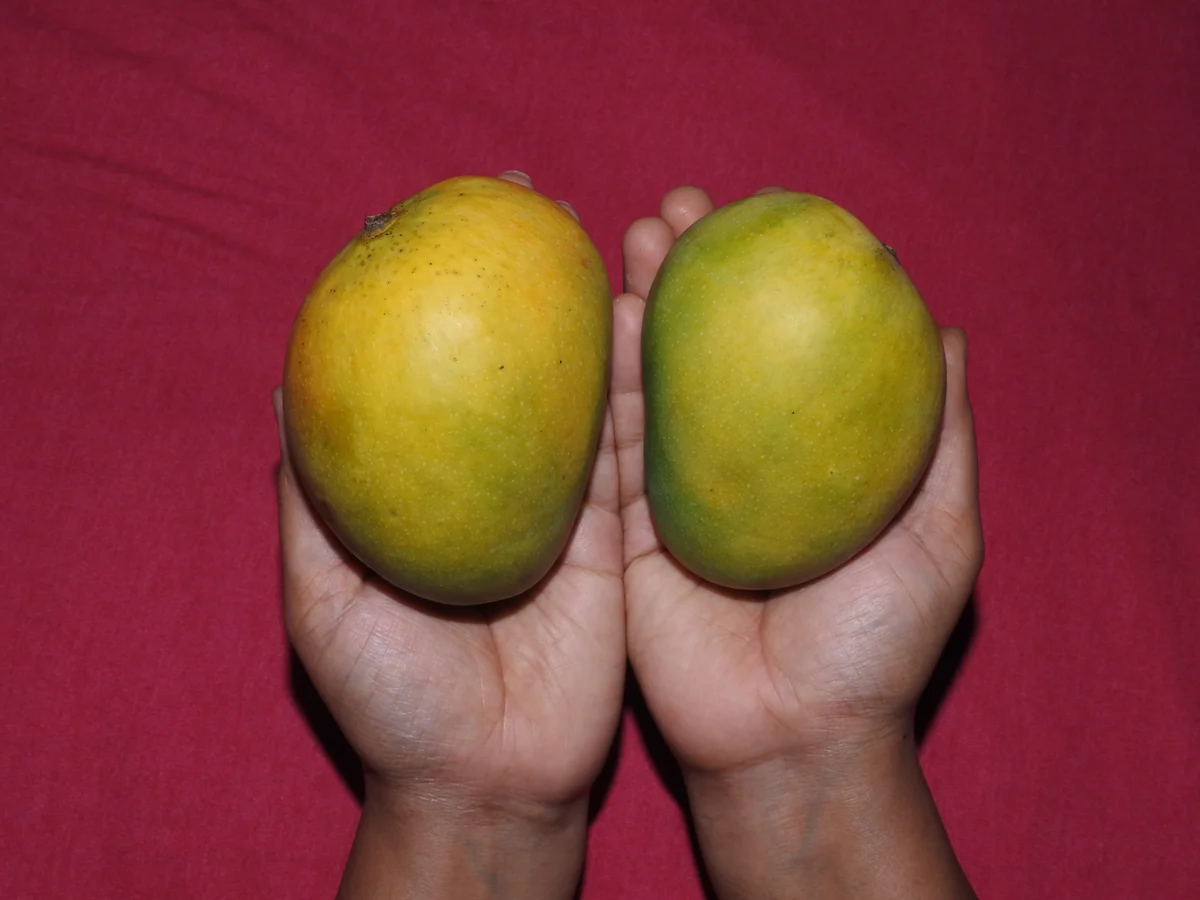
Mango is India’s national fruit in official public descriptions. The Ministry of Agriculture named it in an April 2013 backgrounder and the Embassy of India in Zagreb identifies it as Mangifera indica on its national symbols page. The original legal or administrative designation instrument and its date could not be verified in the public records reviewed through 26 November 2026. The official descriptions give a clear answer for a quiz or a basic reference.
The Ministry of Agriculture’s backgrounder of 16 April 2013 gives a direct, dated answer. Published through the Press Information Bureau, it explicitly identifies mango as India’s national fruit in the heading of its account of the crop. That makes the backgrounder a source a reader can cite for official government usage by that date. Its description as a backgrounder also tells you what kind of document you are reading and what weight to give its date.
Two Indian diplomatic missions give the same answer in reference material about the country. The Embassy of India in Budapest lists mango as the national fruit on its India Facts page. The Embassy of India in Zagreb lists mango on its National Symbols page, marked updated 11 June 2026, and associates it with the scientific name Mangifera indica. These are direct statements from Indian government institutions, suitable for answering the everyday national-symbol question.
The wording of a question determines how much proof you need. In a school quiz asking for India’s national fruit, the answer is mango, and the agriculture backgrounder is a suitable reference. If an editor asks for the date mango officially became the national fruit, the request is for evidence of an act of designation. The reference pages and the backgrounder identify the symbol, while the backgrounder’s date establishes when that particular statement was published.
- Embassy of India in Budapest: India Facts
- Ministry of Agriculture & Farmers Welfare — PIB backgrounder, 16 April 2013
- Parliamentary Research and Training Institute for Democracies — Lok Sabha Secretariat, Gaurav April–June 2022
- Embassy of India, Zagreb — National Symbols
- CSIR–National Environmental Engineering Research Institute — Mango profile
- Royal Botanic Gardens, Kew — Plants of the World Online, Mangifera indica L.
Which dates belong in the record?
The earliest dated institutional publication in this set that expressly uses the designation is the agriculture backgrounder from 16 April 2013. That gives you a firm date for documented usage in the material at hand. The ministry’s text supplies neither an adoption date nor a reference to an instrument conferring the designation. A timeline entry can safely say that the Ministry of Agriculture described mango as the national fruit in April 2013.
On 18 July 2019, an individual member of Parliament used the same description in a Lok Sabha debate. The debate record attributes the words to a speaker and places them on a particular day. To use that record for a claim about a decision by the House, a reader would need the text of the relevant motion or resolution and evidence of its disposition. The quoted usage establishes what the member said.
The April–June 2022 edition of Gaurav, the quarterly newsletter of the Parliamentary Research and Training Institute for Democracies in the Lok Sabha Secretariat, calls mango the national fruit on its cover in English and Hindi. The quarter identifies the edition of an educational publication. The Zagreb mission’s June 2026 update date serves a similar source-identification purpose. In both cases, carry the date alongside the name of the publication so readers can see exactly what event it describes.
| Date | Record | What the date establishes |
|---|---|---|
| 16 April 2013 | Agriculture ministry backgrounder published by PIB | Publication of an explicit statement identifying mango as the national fruit |
| 18 July 2019 | Lok Sabha debate | Use of the description by an individual MP |
| April–June 2022 | Gaurav, sixth edition | Use of the description in a parliamentary institute’s educational publication |
| 11 June 2026 | Embassy of India in Zagreb, National Symbols | The update date displayed on a page listing mango as the national fruit |
How to check a claim about formal designation
The review of the public e-Gazette, India Code and Parliament records did not locate a distinct national designation statute, Gazette notification or authenticated adoption date for mango. That result describes the records examined. An official reference page can affirm the name of the national fruit without carrying the administrative history behind the entry. The available documents therefore support the national-symbol answer and leave the mechanism of designation open.
If you encounter a specific year such as 1950, ask for a document title, issuing authority and identifying details before carrying the year into a timeline. A Gazette claim needs an issue or notification reference that can be checked against the original text. A statutory or constitutional claim needs the relevant provision. For a parliamentary decision, look for the adopted text and the record of passage. An official record that merely uses the words “national fruit” answers a different question from a record whose operative text designates it.
A practical follow-up search starts with “national fruit” and “राष्ट्रीय फल” alongside “mango” or “आम”. Search the public e-Gazette for notifications, India Code for a claimed legal provision and Parliament’s records for any claimed resolution. When a result gives a reference to an older document, follow that reference and read the relevant passage in full. Check whose authority the document invokes, the wording of the act it records and whether any displayed date belongs to issue, publication or commencement.
For a fresh check of current official usage, open the Zagreb mission’s National Symbols page and look for the fruit entry itself. Record the update date as the page displays it, and use the dated agriculture backgrounder for an earlier point of reference. If a page is revised or moved, search the institution’s own site by the publication title. The institution, document type and relevant wording are the details worth preserving in a citation.
Which mango does the designation refer to?
The Zagreb embassy associates the national fruit with Mangifera indica, the common cultivated mango. The CSIR–National Environmental Engineering Research Institute also uses Mangifera indica L. in its mango profile. Royal Botanic Gardens, Kew accepts that scientific name and places the species in the family Anacardiaceae. This gives a reference writer a precise species name to use alongside the ordinary word mango.
Alphonso, Kesar and Banganapalli are named cultivated varieties of the common mango. The official descriptions refer to mango at the level of the fruit or species. If an illustrated quiz shows an Alphonso, “mango” answers the question about the national fruit, and “Alphonso” can identify the particular variety in the picture if the image record establishes it. Giving the variety in a caption and the fruit in the answer lets each label do its own job.
Kew cites the publication of the scientific name in Species Plantarum in 1753. In a botanical note, that date belongs with the name and its publication. For a national-symbol history, the relevant dates come from Indian institutional records. Keeping the date next to the document or event it belongs to prevents a botanical reference from being mistaken for a historical source on the designation.
Kew’s checklist places Assam, the East Himalaya, Myanmar, Thailand and south-central China within the species’ native range and records introductions across a much wider area. The checklist’s distribution describes the plant, and the Indian sources describe its status as a national symbol. If a reference page discusses both, it can name the native range as Kew records it and reserve the national claim for the designation documented by Indian institutions.
- Embassy of India, Zagreb — National Symbols
- CSIR–National Environmental Engineering Research Institute — Mango profile
- Royal Botanic Gardens, Kew — Plants of the World Online, Mangifera indica L.
- Botanical Survey of India — Flora of India, volume 5, Mangifera indica and related species
- APEDA FarmerConnect — regional mango varieties and indicative peak harvest periods
- Intellectual Property India — Gir Kesar Mango GI registry record
What a fruit or tree photograph can establish
The Botanical Survey of India describes the common mango as an evergreen tree with long, narrow, leathery leaves with smooth margins. Its flowers grow in branched clusters at the ends of shoots, and the fruit varies in size and outline. The CSIR institute’s account adds that the fruit hangs from a stalk and can be irregular and slightly flattened. These descriptions are useful when a photograph shows a branch and its fruit together.
A cut fruit shows a different set of features. Mango is a fleshy drupe with a hard stone enclosing one seed. Its skin can be green, yellowish or red, and the flesh varies in fibre and firmness. A green peel alone gives too little information to identify the cultivar or determine ripeness. In an illustration, a description of the visible colour or shape is sound when paired with the species or cultivar identification supplied by the image record.
A market photograph captioned only “mango” can illustrate the fruit without specifying a cultivar. A photograph of an unfamiliar tree raises a different identification problem because the Botanical Survey of India treats several other Mangifera species separately, including M. sylvatica and M. khasiana. Its key draws on flowers, leaves and fruit shape together. For that kind of identification, consult the descriptions and figure on printed pages 465–468 of Flora of India, volume 5, and check which features the available specimen or photograph actually shows.
- CSIR–National Environmental Engineering Research Institute — Mango profile
- Royal Botanic Gardens, Kew — Plants of the World Online, Mangifera indica L.
- Botanical Survey of India — Flora of India, volume 5, Mangifera indica and related species
- Indian Institute of Science Herbarium, Mangifera indica description
How growing regions and GI names fit
APEDA’s FarmerConnect tables give the national symbol some agricultural context. They list Dashehari, Langra and Chausa for Uttar Pradesh, Banganapalli and Totapuri for Andhra Pradesh and Telangana, Kesar for Gujarat, and Alphonso, Mankurad and Pairi for Maharashtra. Some variety names occur in more than one state. The entries work as documented examples of growing regions and varieties, so phrase a claim about a state around the listing rather than inferring the place where a cultivar originated.
A geographical indication concerns a geographically identified product name. The public register maintained by Intellectual Property India records Gir Kesar Mango under application number 185. If a shop label simply says “Kesar”, the registry entry lets a reader see the full registered name and distinguish a variety label from a specific claim about geographical origin. APEDA’s mango brochure also discusses registered names, including Alphonso and Malihabadi Dusseheri. Use the individual GI record when exact registered wording matters.
Season is another reason to choose the source that fits the claim. FarmerConnect gives indicative mango harvest peaks of April–May for Andhra Pradesh and Telangana, April–June for Karnataka, May for Gujarat, June for Uttar Pradesh and June–July for Bihar. Those windows describe state-level peaks. The cultivar, growing area and year can shift harvest timing, and a harvest peak describes activity in growing areas rather than stock at a particular market.
When a seasonal detail needs updating, check the current FarmerConnect mango table and read the row for the relevant state. Keep its harvest period attached to that state and use a dated, local source for a claim about a specific cultivar’s current availability. For a GI claim, look up the full product name in the public register and confirm the application number on the record. Each gives a reproducible check on a different detail a reader might encounter on a mango label.
| State | Examples and source scope | Indicative peak harvest |
|---|---|---|
| Andhra Pradesh and Telangana | Banganapalli and Totapuri among varieties listed. | April–May |
| Karnataka | One of APEDA’s commercial mango-growing states. | April–June |
| Gujarat | Kesar among varieties listed. The Gir Kesar GI has its own register. | May |
| Uttar Pradesh | Dashehari, Langra and Chausa among examples. | June |
| Bihar | APEDA lists a separate state peak. | June–July |
One familiar mango name can appear in more than one state’s crop list. That means availability in a region and protection of a particular geographical name need separate evidence. For Gir Kesar Mango, open the Intellectual Property India registration record. For the approximate peak month in Gujarat, open APEDA’s timing table. For information on a mango in a shop, use the cultivar and producer details on the seller’s label.
Sources
- Embassy of India in Budapest: India Facts
- APEDA: Mango Varieties and Geographical Indications
- Ministry of Agriculture & Farmers Welfare — PIB backgrounder, 16 April 2013
- Parliamentary Research and Training Institute for Democracies — Lok Sabha Secretariat, Gaurav April–June 2022
- Embassy of India, Zagreb — National Symbols
- CSIR–National Environmental Engineering Research Institute — Mango profile
- Royal Botanic Gardens, Kew — Plants of the World Online, Mangifera indica L.
- Botanical Survey of India — Flora of India, volume 5, Mangifera indica and related species
- APEDA FarmerConnect — regional mango varieties and indicative peak harvest periods
- Intellectual Property India — Gir Kesar Mango GI registry record
- Dr. Raju Kasambe — mango fruit, Mumbai, Maharashtra
- Lok Sabha debate, 18 July 2019
- Indian Institute of Science Herbarium, Mangifera indica description
