Choose the site that answers your question
Bodh Gaya is linked to the Buddha’s enlightenment, Sarnath to his first teaching and Kushinagar to his death and final nirvana. All three are in present-day India. Lumbini, traditionally identified as his birthplace and recognised by UNESCO for that association, is in present-day Nepal. Sanchi, Ajanta and Nalanda help explain how Buddhist communities built, taught and made art across later centuries.
At Bodh Gaya, the place, the tradition associated with it and the surviving brick temple each prompt a different historical question. At Sanchi, the variety of monuments makes it possible to ask what each structure contributed to the site and when it took shape. Ajanta invites a closer look at how painting and sculpture occupy spaces cut into rock, with two main periods of work to keep in mind.
| Place | State or country | Association and landmark |
|---|---|---|
| Lumbini | Nepal | Birthplace of the Buddha, Maya Devi Temple and Ashoka pillar |
| Bodh Gaya | Bihar, India | Enlightenment, Mahabodhi Temple Complex |
| Sarnath | Uttar Pradesh, India | First sermon, Dhamekh Stupa near Varanasi |
| Kushinagar | Uttar Pradesh, India | Final nirvana and cremation, Mahaparinirvana Temple and Ramabhar Stupa |
| Sanchi | Madhya Pradesh, India | Stupas and monasteries, Great Stupa and sculpted gateways |
| Ajanta | Maharashtra, India | Rock-cut caves with Buddhist painting and sculpture |
| Nalanda | Bihar, India | Archaeological site preserving a centre of monastic learning |
Example for a reader planning one visit. If you are already considering a stay in Bhopal and want to study Buddhist architecture, Sanchi’s location near Bhopal makes it a relevant option to investigate. If the subject you most want to see is mural painting in a rock-cut setting, Ajanta is the stronger match. That choice depends on whether the caves or paintings you want to see are accessible during your trip. A site can be the right historical choice even when its current access makes another visit more practical.
- UNESCO World Heritage Centre: Buddhist Monuments at Sanchi
- UNESCO World Heritage Centre: Mahabodhi Temple Complex
- UNESCO World Heritage Centre: Ajanta Caves
- UNESCO World Heritage entry for the Buddha’s birthplace at Lumbini
- Ministry of Tourism guide to Sarnath near Varanasi
- Ministry of Tourism guide to Kushinagar and its monuments
Bodh Gaya and the Mahabodhi Temple
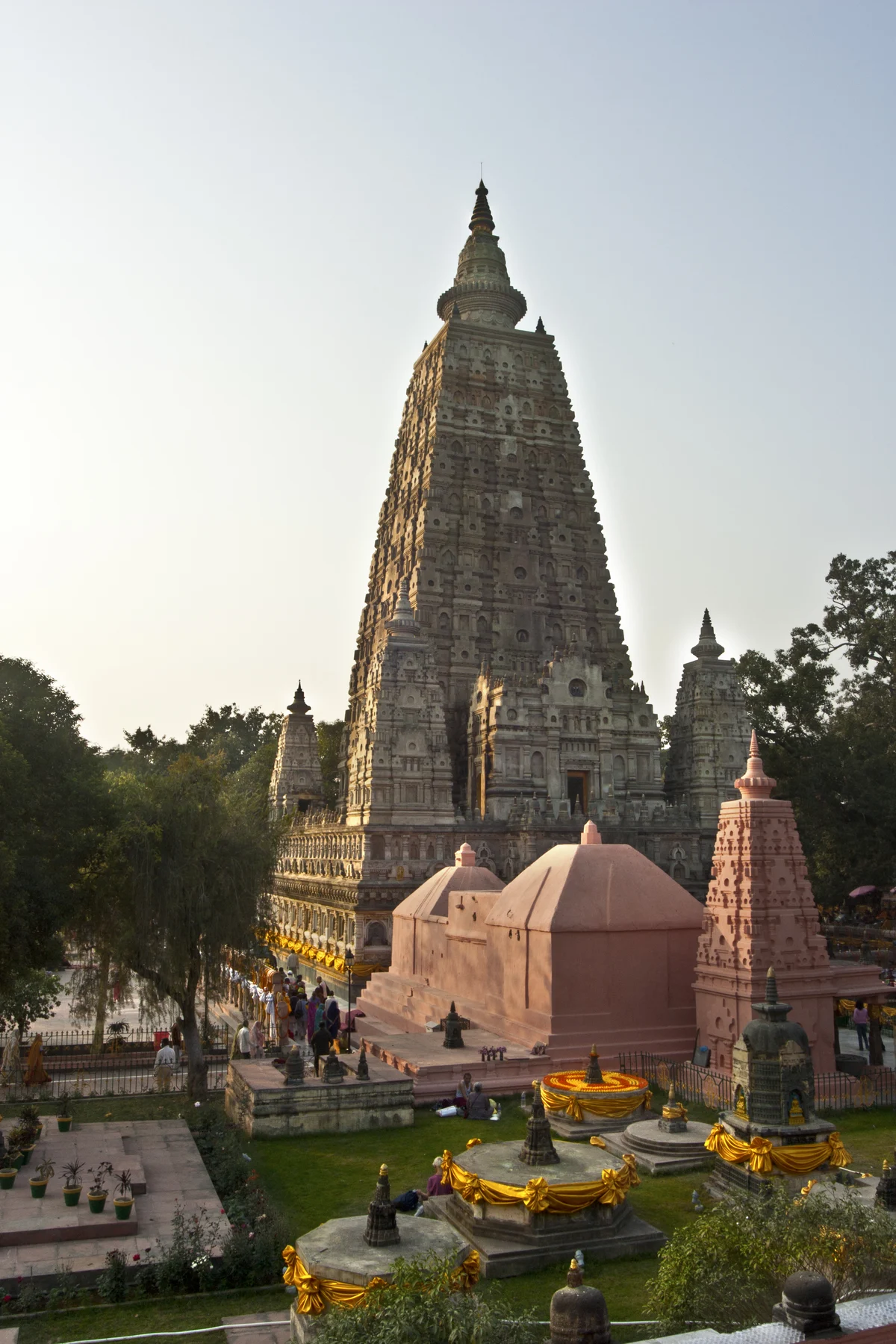
Bodh Gaya is associated with the Buddha’s enlightenment. That association explains why this location matters in a guide to Buddhism in India. The Mahabodhi Temple Complex gives the place an architectural history of its own. UNESCO distinguishes the site’s association with Ashoka from the later brick temple that survives there. Each statement applies to a different subject, so a date or attribution attached to one should stay with that subject.
Start with the name in whatever you are reading. Bodh Gaya names the place. Mahabodhi Temple Complex identifies the complex. The surviving brick temple is a particular building within that account. A short description can move from one to the next in a single paragraph. When a date appears, read back to the noun it describes. This is especially useful when a travel listing compresses centuries of history into a caption beside a photograph.
Example for reading a caption. Suppose an image of the brick temple is paired with a sentence about Ashoka. Treat the image identification and the historical association as two claims to check. First identify the building shown. Then see whether the heritage description assigns the Ashoka association to the site or to that specific structure. If you are writing your own caption, identify the building in one sentence and explain the site’s association separately. The same approach works when taking notes from a sign that discusses the enlightenment tradition alongside the building.
UNESCO describes the first temple at Bodh Gaya as an establishment of Emperor Ashoka in the third century BCE. It dates the existing temple to the fifth or sixth century CE. The tree, temple and other sites in the complex have their own associations. A visitor focused on the architectural chronology should start with the temple complex record and then identify which part of the complex is shown in each photograph.
Sanchi’s stupas, monasteries and sculpture
Sanchi preserves stupas, monasteries and other Buddhist monuments near Bhopal. Its earliest major structures date to the Mauryan period. Architecture and sculpture accumulated over many centuries, which makes Sanchi especially useful for seeing how a place acquires new buildings and decoration over time. A single period label can help place the beginnings of the complex on a timeline, but an account of an individual monument needs evidence specific to that monument.
Use the different types of remains to organise your visit or your reading. Begin by locating a stupa and identifying the extent of the structure described in the site information. Then find a monastery and consider how the surviving layout differs from the form of the stupa. Finally, select a piece of decoration or sculpture and look for information about its own date. The point of the sequence is to keep observations about form, use and chronology attached to identifiable features.
Example for building a timeline from site labels. Suppose one label gives an early period for a monument and another discusses sculpture associated with it. Write down the name of each feature and the wording of its date separately. If the first label dates the monument as a whole and the second gives no date, leave the sculpture undated in your notes. If both labels give dates and the dates differ, record each with its feature. That small distinction helps you describe what you saw without making a claim about when every visible part was made.
Ajanta’s caves, murals and sculpture
Ajanta’s Buddhist monuments are rock-cut caves containing murals and sculpture. UNESCO places the earlier monuments in the first and second centuries BCE and later work in the fifth and sixth centuries CE. These are the site’s two main phases. They give you a way to orient yourself within a long chronology, while the date of an individual cave or work still depends on what the source identifies and how precisely it dates that feature.
Give yourself three things to look for in a cave description. Identify the space cut into the rock, any sculpted features the description singles out and the location of any paintings it discusses. If you are studying from photographs, look for a view of the space as well as a close view of the artwork. The wide view can show where an image sits in relation to the cave interior. A close view serves a different purpose by letting you examine details the wider photograph may barely show.
Example for a visit centred on painting. Suppose a reproduction prompts you to visit Ajanta. Find a reliable caption that identifies the cave and the painting. Look for a date attributed specifically to the work or its documented phase. Before fixing your plans, check whether visitors can currently enter that cave and whether the relevant area is accessible. Ask separately about photography if you want to take your own image. Being able to enter the overall site may still leave a question about access to a particular interior.
Build a timeline from places and objects
These sites support three kinds of timeline entries. At Bodh Gaya, you can record a place associated with an event in the Buddha’s life and separately record the architectural history of the surviving temple. At Sanchi, you can mark the earliest major construction and leave room for later architecture and sculpture. At Ajanta, you can mark both main periods of work and add particular caves or artworks when you have evidence for their dates.
Keep the precision of the original description. A period such as Mauryan and a span such as fifth and sixth centuries CE are already useful at the scale of this guide. If you need finer detail, look for a source that identifies the feature and explains its dating. A heritage description’s coverage can vary within one property. It may identify a broad phase for a group of monuments and discuss one building or artwork in considerably more detail.
Example for a history notebook. Make one entry for the earliest major structures at Sanchi, using the Mauryan period as the date. Make two entries for Ajanta, using the century ranges UNESCO gives for the earlier monuments and later work. Give Bodh Gaya one entry for the enlightenment association and another for the surviving brick temple, leaving the date fields open wherever you lack a supported date. Read down your entries and check whether each one names a tradition, a building or a phase of work. That makes the timeline useful even with some fields unfilled.
At Sarnath the Dhamekh Stupa and the Chaukhandi Stupa identify different episodes in the local pilgrimage tradition. The Ministry of Tourism links the Dhamekh Stupa to the first sermon and Chaukhandi to the Buddha meeting his first five disciples. At Kushinagar the Mahaparinirvana Temple and nearby Ramabhar Stupa are separate stops, associated respectively with his death and cremation. Save each name and pin individually before leaving for the site.
Nalanda in Bihar adds a different part of the story. The UNESCO listing describes monastic and scholarly activity over many centuries, from the third century BCE through the thirteenth century CE, with stupas, shrines, residential and educational buildings. Include the archaeological site separately from Bodh Gaya when planning a visit. A modern institution sharing the name Nalanda is a different destination.
- UNESCO World Heritage Centre: Buddhist Monuments at Sanchi
- UNESCO World Heritage Centre: Mahabodhi Temple Complex
- UNESCO World Heritage Centre: Ajanta Caves
- UNESCO World Heritage entry for the Buddha’s birthplace at Lumbini
- Ministry of Tourism guide to Sarnath near Varanasi
- Archaeological Survey of India inventory of centrally protected sites
- Ministry of Tourism guide to Kushinagar and its monuments
- UNESCO World Heritage entry for the archaeological site of Nalanda Mahavihara
Plan a visit around what you want to see
Turn your interest into a specific destination before you compare transport. For the story of enlightenment and its architectural setting, search for the visitor entrance to the Mahabodhi Temple Complex. For Sanchi, identify the Buddhist monuments you want to visit and use Bhopal as a geographic reference when researching the journey. For Ajanta, identify the caves of interest and establish how visitors currently reach the area they can enter. Names used in heritage descriptions and names used by transport providers may have different levels of detail.
Example for comparing two possible visits. Suppose you can stay in only one base and are deciding between Sanchi and Ajanta because two sets of photographs interest you. Write down what each photograph shows and which property contains it. For each option, find the current entrance, confirm that the feature is accessible and check the outbound and return journeys on the date you would actually go. The results give you a basis for deciding how much time you would have at each site.
Check your exact needs early if the visit depends on step-free access, a place to rest or permission to carry particular equipment. Ask the site operator about the full path from the arrival point to the feature you want to see. A general accessibility description may leave out the last stretch to a building, viewing point or cave. If you are arranging transport separately, verify the return pickup point as well.
A route centred on the Buddha’s life can connect pilgrimage stops across Bihar and Uttar Pradesh. Lumbini adds a cross-border leg and therefore a separate check of entry rules and onward transport. For an art and architecture trip, set aside separate travel for Sanchi in Madhya Pradesh and Ajanta in Maharashtra. The table identifies nearby landmarks for each interest so you can decide which journeys belong together.
- UNESCO World Heritage Centre: Buddhist Monuments at Sanchi
- UNESCO World Heritage Centre: Mahabodhi Temple Complex
- UNESCO World Heritage Centre: Ajanta Caves
- UNESCO World Heritage entry for the Buddha’s birthplace at Lumbini
- Ministry of Tourism guide to Sarnath near Varanasi
- Ministry of Tourism guide to Kushinagar and its monuments
- UNESCO World Heritage entry for the archaeological site of Nalanda Mahavihara
Verify changing details before you travel
Use the heritage descriptions for historical identifications and look for current information from the authority responsible for visitor access. Check that a notice names the relevant entrance, building or cave, and read its effective date if one is given. If two sources disagree and the difference affects whether you can make the visit, seek confirmation from the site or transport operator before relying on either. A route shown on a map may help with orientation while leaving service and access questions open.
- Confirm the opening day, last admission and any temporary closure for your intended date.
- Verify the visitor entrance, current admission conditions and any booking requirement.
- Check access to the particular building, cave or artwork that prompted the visit.
- Check the transport operator’s current service and the return pickup point before committing to an itinerary.
Example for resolving mismatched information. Suppose a map listing gives opening hours for an entire property and a recent announcement mentions a closure in one part of it. Identify what the announcement covers and whether it applies on your date. Ask about the specific feature you planned to see if the wording stops at the property name. If the announced closure affects your visit, decide whether there is enough else you want to see there before committing to transport.
Keep a short record of the source and date for anything that affects a booking or a timed connection. Recheck details that can change close to departure, especially access notices and the final leg of the journey. If a route or opening claim appears only in an undated listing, leave time in the plan to confirm it before you set out.
Sources
- UNESCO World Heritage Centre: Buddhist Monuments at Sanchi
- UNESCO World Heritage Centre: Mahabodhi Temple Complex
- UNESCO World Heritage Centre: Ajanta Caves
- UNESCO World Heritage entry for the Buddha’s birthplace at Lumbini
- Ministry of Tourism guide to Sarnath near Varanasi
- Archaeological Survey of India inventory of centrally protected sites
- Ministry of Tourism guide to Kushinagar and its monuments
- UNESCO World Heritage entry for the archaeological site of Nalanda Mahavihara