Check the documents for each traveller
To move from the United States to India, check each traveller’s entry documents, book a temporary address, and decide what to carry, ship separately, or replace. Before dispatching household goods, confirm their treatment with Indian Customs and check which address documents you’ll need for your first local services.
Make one record per traveller, including children. Use three rows as needed for the household: an Indian passport holder, a foreign passport holder with an Overseas Citizen of India (OCI) card, and a foreign passport holder using an Indian visa. Record the actual documents and any endorsements for each person. In a household using both Indian passports and foreign passports with OCI, the Indian passport holder’s document check leaves the OCI holder’s arrival steps to be checked separately.
For someone travelling on an Indian visa, compare the visa category and the endorsement on the issued document with current e-FRRO guidance. Record any registration trigger and deadline that apply to that person. Official material describes 14-day conditions for some visa categories and 180-day guidance that can depend on how days are counted. A group checklist with one deadline could miss an earlier obligation. The e-FRRO portal lists Registration, Visa Extension, Visa Conversion and Exit Permit as separate services.
Foreign passport holders, including OCI card holders, can complete India Visa Online’s e-Arrival form within 72 hours before arrival. Treat it as a separate arrival task and check the current instructions close to departure. For any ambiguity in the visa endorsement or registration trigger, have the exact wording and intended arrival date ready when consulting the relevant official service.
Indian passport reissue, fees and appointments in IndiaDoes India allow dual citizenship? Citizenship and OCI explainedIndian passport photo sizes and the DS-160 book number
Choose temporary housing and verify the lease process
Choose the first address around what you need to do in person. Consider travel to work or school, visits to likely neighbourhoods and access to any offices you expect to use. Check the booking terms for an extension and ask about parcel delivery and storage. If household goods will arrive separately, ask the mover when it needs a final delivery address and whether a change after dispatch affects the quote.
Before paying for a longer stay, establish the property’s exact jurisdiction. Delhi Police lists Domestic Help/Tenant Registration among its citizen services. That process deals with tenant registration through the police. In Maharashtra, section 55 of the Maharashtra Rent Control Act, 1999 requires covered leave-and-licence or letting agreements to be in writing and registered, with registration the landlord’s responsibility. A signed agreement, its registration and a police submission each serve a different purpose. Check which steps apply locally and ask what record you’ll receive.
Get the proposed agreement and payment terms before committing. Check the full address, names, rent, deposit, payment dates and the terms for ending the agreement or recovering the deposit. Ask how payments will be acknowledged and whether the address will appear in the form a service provider needs. If you need a particular document soon after arrival, confirm its expected availability with the landlord and its acceptance with the provider before paying.
| Situation | Record to request | What to verify |
|---|---|---|
| Temporary stay | Booking confirmation showing your name, address and dates | Whether the host can extend the stay and receive deliveries |
| Long-term rental | Signed agreement, registration record where applicable, and payment receipts | When each record will be available and whose name appears on it |
| Local tenant procedure | Submission acknowledgement where applicable | Which authority handles the address and who submits the information |
| Address check for a service | Provider’s current list of accepted documents | Whether it accepts your document type and requires it in your name |
Decide what to carry, ship separately, or replace
Start with the belongings you’ll need while you’re still in temporary housing. Compare the airline’s current baggage terms for those items with the cost and effort of replacing them in India. For everything else, make a dated inventory and mark what was in your possession abroad. Keep sentimental or hard-to-replace items visible in that inventory so their importance survives a comparison based on price and volume.
Use three categories when discussing the inventory with a mover: personal effects travelling with you, belongings that may qualify as unaccompanied baggage, and goods whose treatment Customs needs to confirm. A door-to-door quote describes a transport service. Customs eligibility depends on the traveller and the goods. Resolve uncertain items before packing or dispatch, when you can still take them out or change the shipping plan.
If a home office includes a laptop needed on the first working day, a bulky desk and reference books used occasionally, split the decision by when each item will be useful. Check the airline’s terms for carrying the laptop. Get a shipping quote without the desk and compare the difference with the cost and effort of furnishing the new room locally. Keep the books on the shipment inventory only if they’re worth receiving after the temporary stay and the mover can accommodate that timing.
Ask each mover to quote against the same inventory and delivery assumptions. Compare what the quote includes for packing, clearance assistance, storage, delivery and changes of address. Check how the carrier documents dispatch and when it considers delivery complete. Those answers help you compare a smaller shipment with a larger one even while the permanent address is undecided.
Match the traveller to the Customs allowance
India’s Baggage Rules, 2026 took effect on February 2, 2026 and superseded the 2016 rules subject to the notification’s transitional wording. Under rule 7, Appendix I covers eligible residents and tourists of Indian origin returning after employment abroad or a transfer of residence. Appendix II covers eligible foreign nationals with valid non-tourist visas who work in or transfer residence to India. Identify the relevant Customs category and the traveller’s dates before using a figure.
Appendix I lists ₹1,50,000 for three through twelve months abroad and ₹3,00,000 for at least one year abroad in the preceding two years, subject to no use of that concession in the preceding three years. The ₹7,50,000 row requires at least two years immediately abroad, with conditions on short visits to India during that period and prior use of the concession. Use the full row to check eligibility where durations meet at a boundary or a visit interrupts the period abroad.
Appendix II uses planned time in India for its main rows. It lists ₹1,50,000 for six through twelve months with a one-year concession lookback, ₹3,00,000 for a minimum year in India during the two years from arrival with a three-year lookback, and ₹7,50,000 for the specified minimum two-year stay with a three-year lookback. Confirm a stay of exactly six months with Customs because the foreign passenger definition specifies more than six months. Appendix II separately addresses qualifying foreigners returning after two or more years abroad.
Apply the figures only to eligible bona fide baggage. Annexure I items are excluded from these rows. Eligible Annexure II items are limited to one unit each within the aggregate. Check jewellery under its specific rules and identify gold in other forms separately. If the planned India stay may end early, check rule 7(4) on notification, duty and interest. Confirm the applicable row and item treatment with Customs before budgeting around a concession.
| Rule appendix | Time basis | Published aggregate limit | Who checks this row |
|---|---|---|---|
| Appendix I | Three through twelve months abroad | ₹1,50,000 | Eligible resident or tourist of Indian origin returning to India under the rule |
| Appendix I | At least one year abroad in the preceding two years | ₹3,00,000 | Check the three-year prior-concession condition |
| Appendix I | At least two years immediately abroad | ₹7,50,000 | Check short India visits and the preceding three years |
| Appendix II | First published India-stay band, six through twelve months | ₹1,50,000 | Check the passenger definition and prior-concession limits with Customs |
| Appendix II | Minimum one year in India within two years of arrival | ₹3,00,000 | Check the preceding three years and other rule conditions |
| Appendix II | Specified minimum two-year India stay | ₹7,50,000 | Check the preceding three years and the separate returning-foreigner provision if relevant |
Work back from arrival to dispatch and declaration
Put the passenger’s arrival and the consignment’s dispatch and arrival on the same calendar. CBIC’s Traveller Guide says unaccompanied baggage ordinarily must be dispatched within one month after the passenger arrives in India. If the goods arrive first, the standard advance limit is two months. The goods must have been in the passenger’s possession abroad. Extensions depend on the circumstances and the relevant authority, so check a shipment that may fall outside the standard timing before releasing it.
For a mover offering to collect boxes in the United States before your flight, get the planned dispatch date and expected arrival date for the goods. If your travel date may slip, compare the carrier’s terms for holding the shipment at origin with its terms for storage after arrival. The possible gap between collection and dispatch matters when checking the calendar, and storage at either end may change the quote.
Keep the dated inventory, carrier paperwork, passenger itinerary and declared item list together. The 2026 declaration regulations address processing separately from allowances, and ICEGATE’s manual covers electronic Form CBD-II for unaccompanied baggage. Check the current filing instructions, agree with the mover who will handle each step and keep the filing reference with the shipment paperwork.
If a pet is moving too, use the U.S. Department of Agriculture’s APHIS guidance for travel from the U.S. to India. It addresses the U.S. health certificate process, India’s advance Animal Quarantine and Certification Services No Objection Certificate, and possible Directorate General of Foreign Trade licensing in separate contexts. Confirm the requirements for the specific animal and itinerary with the relevant authorities and carrier before committing to travel.
If you are shipping separately, record the passenger’s India arrival date and the freight’s dispatch and arrival dates. CBIC’s ordinary rules give a one-month dispatch window after the passenger arrives and a two-month window for baggage arriving before them. Those are different dates in the shipping chain. For an extension or an unusual consignment, verify the official Customs rule and the applicable electronic CBD-II declaration before arranging shipment.
Flights from India and official airport flight statusBringing gold to India from the USA, allowances and declarations
Set up phone access, banking and identity records
Start with services you’ll need during the temporary stay. Keep access to the U.S. phone number or other authentication method you use for important accounts until you’ve confirmed how you’ll sign in from India. Ask the mobile provider and bank what they currently accept for your documents and address, and which steps you can complete from temporary accommodation. Check the requirements for the specific service or account you plan to use.
Aadhaar has its own eligibility check. UIDAI’s 2026 handbook says a non-resident Indian with an Indian passport can enrol in India without meeting the 182-day residence mandate. UIDAI’s separate process for resident foreign nationals specifies at least 182 days in India in the 12 months immediately before enrolment, the applicable visa or OCI evidence, and enrolment at a designated centre. Check the current document list and centre before arranging a visit.
For an OCI holder, UIDAI’s 2026 amendment describes identity evidence including a valid foreign passport with the OCI card, Indian address proof requirements and a ten-year Aadhaar validity period. If enrolment depends on days spent in India, keep a travel-date record and ask providers what documents they accept in the meantime. Verify requirements directly with UIDAI for Aadhaar and with each provider for the service you need.
Keep a separate record of the move dates and work arrangements for tax questions. The IRS generally treats U.S. citizens and U.S. resident aliens abroad as subject to U.S. tax on worldwide income. Use current IRS guidance for U.S. obligations and seek qualified cross-border advice for questions about Indian residence, treaty treatment or your own filing status. Shipping dates and changes of mailing address belong in the record alongside travel and employment dates.
Sources
- Indian Customs Baggage Rules, 2026, Notification 14/2026-Customs (N.T.)
- CBIC Traveller Guide on unaccompanied baggage and transfer of residence
- Indian e-FRRO registration and arrival services
- Delhi Police tenant registration and Maharashtra statutory rental registration example
- UIDAI 2026 Aadhaar handbook and resident foreign national process
- Internal Revenue Service U.S. citizens and resident aliens abroad
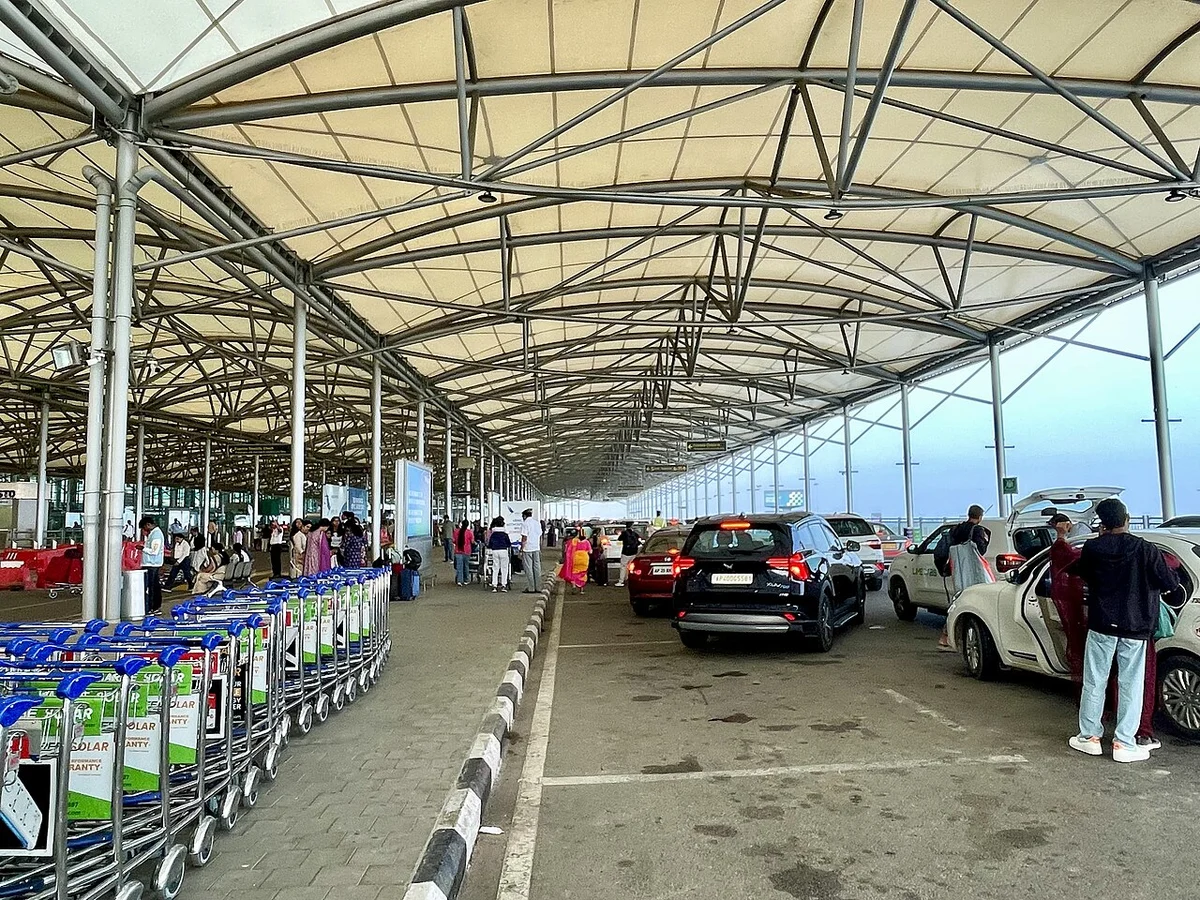
- Existing licensed Hyderabad airport arrival photograph
- CBIC | Customs Baggage (Declaration and Processing) Regulations, 2026
- Ministry of Finance | Baggage Rules and declaration changes
- ICEGATE | Unaccompanied baggage declaration manual
