Which Top Gear India Special is this?
The BBC’s Top Gear India Special first aired on 28 December 2011, with Jeremy Clarkson, Richard Hammond and James May on a staged trade mission. The main screen itinerary runs from Mumbai to Jaipur and Delhi before reaching the Himalayas, and the presenters take an overnight train on the Mumbai–Jaipur leg.
The most precise identifier is the BBC programme ID b018ydx6. The broadcaster’s archived reports date the programme to 28 December, and its original teaser, released on 17 December, names all three presenters. The teaser introduces the trade mission as the setup for an entertainment special. That framing matters when reading the route, since the delivery challenge, the hill climb and the reception are sequences built around that premise.
The BBC’s December 2011 iPlayer report put the special first in its TV programme table with 1,311,000 requests. That comparison applies to the programmes in the monthly iPlayer table. A request measures activity on the service, so the figure supplies neither a count of individual viewers nor the television audience for the original transmission.
Look for a running time of about 1 hour 27 minutes on full-episode listings. The original transmission date is especially helpful when a search surfaces an official clip, a differently numbered edition or a standalone package. Short excerpts have their own upload dates, and some storefront packages show later release dates.
The route in screen order
The table follows the main stages in the edited programme. Its times come from archived broadcast captions and are approximate. A different cut can move the timestamps, so use the named scene to finish the lookup. The locations refer to different kinds of evidence, from a city named in the programme to a hotel named in the production gallery.
| Place or leg | What the evidence establishes | Approximate cue in the broadcast cut |
|---|---|---|
| Mumbai, called Bombay on screen | The trip opens in Mumbai and includes a dabbawala lunch-delivery challenge. | Before 19:40 |
| Mumbai to Jaipur | The presenters take an overnight train. The cars turn up in the Jaipur sequence. | Train from 19:45, arrival near 31:00 |
| Jaipur | The programme sets up a hill climb. The exact course is unverified. | Planning from 33:45 |
| Delhi | An official excerpt identifies the trade reception in Delhi. | Departure mentioned around 1:03:14 |
| Himalayas | The programme shows preparations and a mountain-road sequence. The precise endpoint is unverified. | Preparations near 1:03:23, mountain footage after about 1:11:00 |
| Lake Palace Hotel | Top Gear’s production gallery names the hotel as a photographed location. | No broadcast timestamp established |
The overnight train is the important change of transport. The programme shows the presenters travelling by rail and later rejoining the cars. Those scenes establish how the presenters make that leg in the story. The sources give no equivalent account of the cars’ transport, so a distance calculated by joining the episode’s cities would describe a route chosen by the person making the map.
For an episode map, put the arrows between the city or regional labels and mark the rail transfer explicitly. Leave the Himalayan road at regional scale. Give Lake Palace Hotel a separate photo-location marker, since a production photograph can document where the crew was without fixing the place of that visit in the televised sequence.
A map intended for travel needs a different set of details. A city-to-city line leaves out the station pair, the road alignment and any intermediate stops. Choose those independently of the show and verify them through current transport or local sources before treating the map as directions.
Mumbai’s dabbawalas and the train to Jaipur
The Mumbai sequence revolves around dabbawalas, the city’s lunch-delivery workers. Their trade gives the segment its setting and task, with the presenters taking on a delivery challenge for the programme. The screen name Bombay and the label Mumbai in modern references point to the same stop. Searching both names helps connect the dialogue to the place in the route table.
The archived captions place the delivery sequence before roughly 19 minutes 40 seconds and the start of the overnight train sequence around 19 minutes 45 seconds. The arrival comes near the 31-minute mark. These are positions in an edited film. The roughly eleven minutes between the train cue and the arrival cue tell you how much screen time to skip when looking for Jaipur.
A reader trying to identify the exact train would need firmer evidence than the city names and the description of an overnight journey. The checked material supplies no verified train number or station pair. For a present-day journey, search the operator’s timetable for the actual date, then confirm the station names and service number in the booking result.
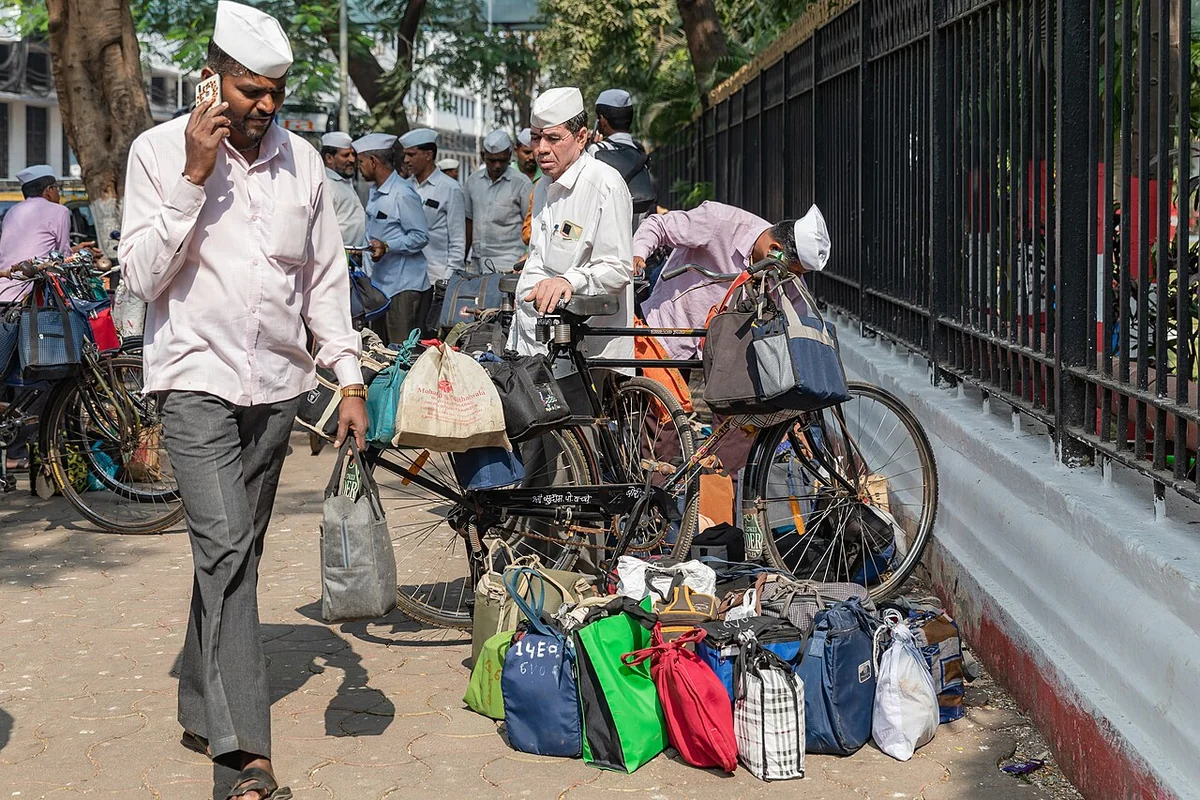
An independent photograph of Mumbai dabbawalas taken on 24 January 2023 documents the same occupation years after the episode. The bicycles and lunch bags make it a useful reference for the real trade. Its date and provenance identify it as a later photograph, separate from the special’s 2011 production.
Mumbai map for visitors: landmarks, stations and airportsJaipur, the Pink City
Jaipur’s hill climb and Delhi’s reception
Jaipur is the first main stop after the overnight train. The arrival appears near 31 minutes in the archived cut, and the hill-climb planning starts around 33 minutes 45 seconds. Those two cues distinguish the train’s destination from the later driving sequence. The material supports Jaipur as the setting for the hill climb but leaves its start, finish and intervening junctions unresolved.
Delhi is tied to a different part of the trade-mission story. An official BBC Studios excerpt identifies the car-decorating sequence and the Delhi trade reception. That clip was uploaded on 20 December 2012, nearly a year after the original broadcast. Its metadata is useful for locating the sequence by city, while the BBC’s programme record supplies the original air date.
Suppose a photograph caption calls the decorated cars part of the Jaipur hill climb. The official clip can settle the narrower question of which segment the caption describes if the photograph matches the reception footage. The city attribution carries over to that documented scene. Identifying an individual street or building still calls for a recognisable landmark or a location credit.
The programme mentions leaving Delhi at around 1 hour 3 minutes 14 seconds, with Himalayan preparations following shortly afterwards. That cut makes a useful boundary between the city and mountain portions when navigating the episode.
Jaipur, the Pink CityThings to do in Delhi: one, two and three-day itineraries
What the Himalayan footage establishes
The Himalayas are a documented filming region. The BBC released a separate clip of the Himalayan road sequence on 5 January 2012, and a Top Gear year-end retrospective also confirms filming in the mountains. In the archived broadcast cut, preparations appear just after the reference to leaving Delhi. The mountain-road footage comes after about 1 hour 11 minutes.
Shipki La is a commonly attributed location for the finale. Himachal Tourism places the pass in its account of Kinnaur and describes the Satluj entering Himachal there before running through a gorge in Kinnaur. The tourism board also describes Shimla’s ridge in relation to Kinnaur. These details locate the places geographically. The official clip, accessible programme description and archived captions leave the finale’s exact location unresolved.
A map pin labelled Shipki La therefore needs a qualifier that it is a common attribution. Keep Shimla out of the confirmed screen itinerary as well. A production location record, or a match between identifiable features in the footage and independent geographic evidence, would give a basis for narrowing the regional label.
Public access is a separate, current question. Anyone considering travel to a named pass should check the relevant district authority for access rules and confirm the road status close to departure. The programme establishes that filming took place in the Himalayas during production, and the tourism description establishes the location of the pass.
The three cars and the filming gallery
Jeremy Clarkson drove the Jaguar XJS, Richard Hammond drove the Mini Cooper, and James May drove the Rolls-Royce Silver Shadow. Top Gear’s own behind-the-scenes gallery documents the three cars during production. The February 2012 announcement for their display at Beaulieu corroborates the presenter and model pairings.
The model names give readers a consistent way to identify each car across the gallery, the episode and the exhibition announcement. A model and a specific vehicle’s year are different details. For a caption that needs the Silver Shadow’s exact year, look for a registration record that can be tied to the car in the special. The model name is enough for identifying May’s car on screen.
| Presenter | Car | Source context |
|---|---|---|
| Jeremy Clarkson | Jaguar XJS | Name established by the programme and gallery |
| Richard Hammond | Mini Cooper | Name established by the programme and gallery |
| James May | Rolls-Royce Silver Shadow | Name established by the programme and gallery |
The production gallery, published on 29 December 2011, also shows the British goods stall and props used in wardrobe and food gags. It names the Lake Palace Hotel as a photographed location. That makes the gallery the source for the hotel sighting. Assigning the hotel to a specific scene or connecting it by road to other locations would require a separate match.
The three cars were historically exhibited at Beaulieu’s World of Top Gear. Beaulieu set Sunday 3 November 2024 as the exhibition’s closing date and now lists it in its past exhibitions archive. A current public display for any of the three cars remains unverified. For a visit, look for a current venue listing that names the individual vehicle.
How to check legitimate viewing in India
Full-episode streaming in India remains unverified. Start with the title India Special and confirm it against the presenters, the 2011 BBC credit and the approximate 1 hour 27 minute runtime. The BBC programme ID b018ydx6 identifies the broadcaster’s archive entry and its iPlayer destination. The archive establishes the programme’s identity and original air date, while current playback depends on the service and territory.
Episode numbers vary by storefront. Apple TV’s US listing calls it Season 17 Episode 201 and gives 28 December 2011, 1 hour 27 minutes and English closed captions. One Prime Video listing puts the same special at Season 17 Episode 7 with the same date and runtime. Other Prime Video packages list it as a bonus or a standalone title, which can change where it appears in search.
Check the offer shown to an account in the country where you plan to watch. Look for the full-episode runtime, an active play or purchase option and any stated subscription or rental terms. A Hindi-language Prime Video page returned an unavailable message in the browsing region. The language selector changes the interface, so that result by itself cannot establish the India catalogue.
For a specific scene, the official broadcaster clips are another legitimate option where available. The original teaser establishes the premise and presenters, the BBC Studios excerpt covers the Delhi stage, and the BBC mountain clip supplies footage of the Himalayan road sequence. Check playback on each clip from your location, since individual videos can carry territory restrictions.
Sources
- BBC iPlayer December 2011 first-party monthly programme report
- Top Gear’s original 29 December 2011 filming gallery
- BBC / BBC Studios official clips with Delhi and Himalayan stage evidence
- Himachal Tourism geography for the Himalayan corridor
- Apple TV US territory episode listing
- Beaulieu’s dated notice closing the former World of Top Gear exhibition
- Reuse-cleared contextual photograph of Mumbai’s dabbawalas
- BBC iPlayer archive record for the Top Gear India Special
- Top Gear team retrospective for 2011
