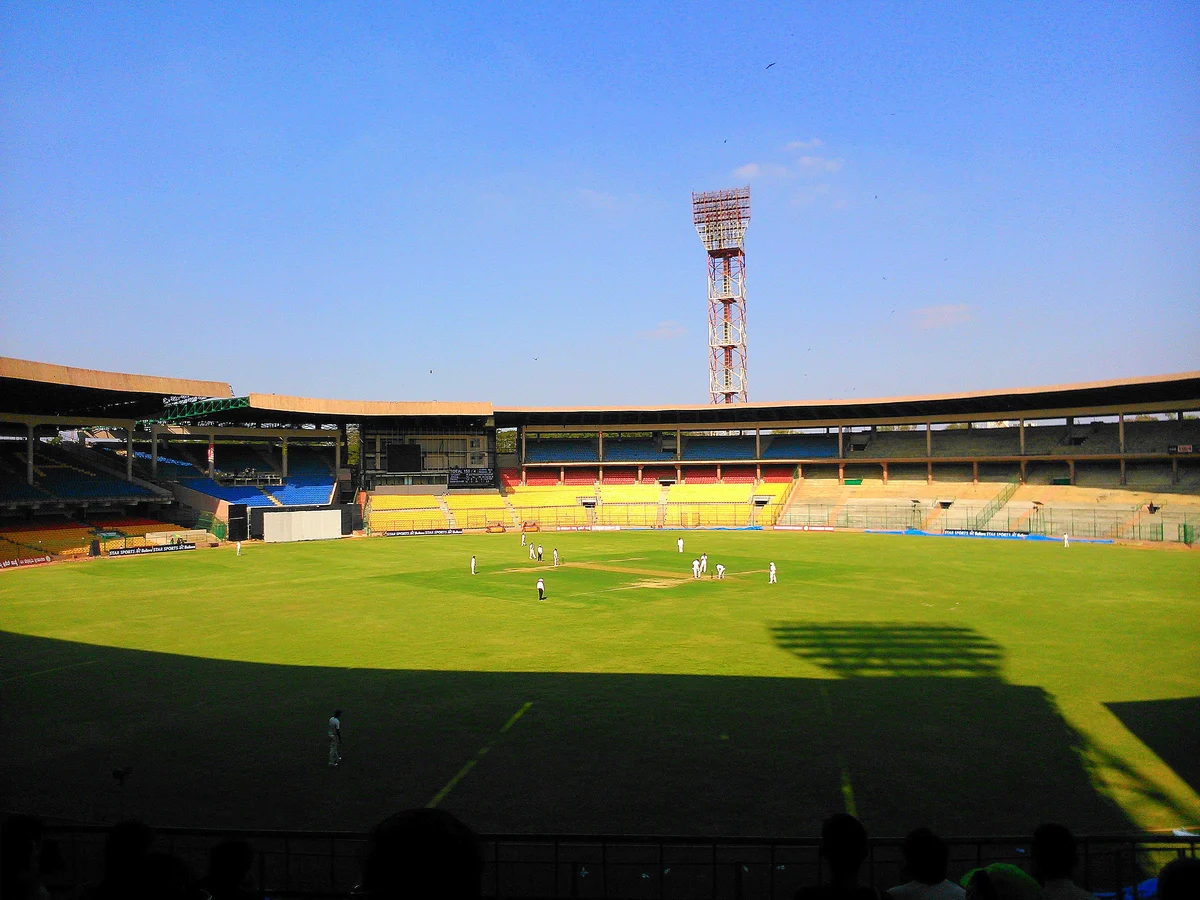
October 2026 series result
India and West Indies finished their October 2026 men’s T20I series level at 2–2 across five scheduled matches. India won in Lucknow and Indore, West Indies won in Ranchi and Hyderabad, and the Bengaluru finale on October 17 ended with no result.
India led after the first match, West Indies drew level in the second, and India went ahead again in the third. The fourth match brought the series back to 2–2. That was the score going into Bengaluru, where the fifth fixture produced no winner. If you remember India leading the series, the Indore result is the last point in the fixture list when that was true.
There are two useful counts in the archive. Five is the number of scheduled T20Is in the October series. Four is the number that produced a winner. The final score of 2–2 adds up the wins, while the fixture list also accounts for Bengaluru. A record with only four rows would leave out a scheduled match, even if it showed the right number of wins for each side.
The October dates belong to the T20I leg of a bilateral visit that also included ODIs on the BCCI schedule. A reader looking up the wider West Indies tour should expect separate entries by format. The 2–2 score belongs specifically to the five men’s T20Is shown here, so use that scope when quoting it in a calendar, match note or results archive.
All five fixtures by date and city
Read the table by date if you remember when a match took place, or scan the city column if you remember where it was played. The match numbers give a third way to locate a fixture. That helps when a reference says only “third T20I” or “series finale,” since the table ties those descriptions to Indore and Bengaluru respectively.
| Match date and number | City | India | West Indies | Result |
|---|---|---|---|---|
| 6 October 2026 · 1st | Lucknow | 172/2 (14.4 overs) | 171 (19.1 overs) | India won by 8 wickets |
| 9 October 2026 · 2nd | Ranchi | 249/5 (20 overs) | 252/4 (18.3 overs) | West Indies won by 6 wickets |
| 11 October 2026 · 3rd | Indore | 223 (20 overs) | 209/7 (20 overs) | India won by 14 runs |
| 14 October 2026 · 4th | Hyderabad | 223/9 (19.3 overs) | 247/3 (20 overs) | West Indies won by 24 runs |
| 17 October 2026 · 5th | Bengaluru | 118/5 (7.4 overs) | No innings recorded | No result |
The rightmost column always puts India first. A score of 1–1 in the Ranchi row therefore means one series win per side after the second match. The 2–1 in the Indore row includes both of India’s victories up to that point. Read the result column for the outcome of a single fixture and the series column for the running tally.
If a note describes the October 14 game as the match that levelled the series, the Hyderabad row supplies both facts that make the description useful. West Indies won by 24 runs in that game, and the cumulative score changed from 2–1 to 2–2. The same score in the next row shows where the series finished.
Use the city entries for city-level identification. If you need a stadium name or a start time for an October fixture, check the individual match listing using the date and match number together. Those two details are especially useful when an archive also carries other fixtures from the same tour or groups multiple competitions under the same two teams.
Cricket West Indies records the Lucknow match at the Ekana Cricket Stadium, Ranchi at the JSCA International Stadium Complex, Indore at Holkar Stadium, Hyderabad at Rajiv Gandhi International Stadium, and Bengaluru at M. Chinnaswamy Stadium. The table keeps the city as a quick search term. Use the official match page if you need the individual ground’s complete name or a detailed scorecard.
How to read the winning margins
The Lucknow and Ranchi results use wickets. In standard cricket result notation, a win by wickets tells you how many wickets the chasing side had in hand when it reached the winning score. India had eight wickets in hand in the opener, and West Indies had six in the second T20I. A wickets margin by itself gives no count of the balls remaining.
The Indore and Hyderabad results use runs. A win by runs gives the margin by which the winning side defended its score. India’s margin in Indore was 14 runs, and West Indies’ margin in Hyderabad was 24. Hyderabad had the larger of the two runs margins in this series. Comparing Hyderabad with Lucknow takes more match context because runs and wickets describe different ways a game ends.
Suppose you are checking a caption that calls the Ranchi fixture a six-run win. The date and city would lead you to the correct match, and the result would show which word needs changing. West Indies won by six wickets. Keeping the unit alongside the number preserves the fact that West Indies won the chase.
A match result can settle who won and by what margin without answering how the innings developed. To check an innings total, the over in which a chase ended or the performance of a particular player, find a scorecard tied to the specific fixture. The winner and margin give you two useful fields to cross-check before you use the additional detail.
India chased 171 in Lucknow and reached 172/2 in 14.4 overs. West Indies chased 249/5 at Ranchi and reached 252/4 in 18.3 overs. The chasing team can finish beyond the target when the winning delivery produces more runs than are needed. In cricket notation 18.3 means 18 overs and three legal balls. Reading it as a decimal would give the wrong number of balls left.
What no result means for Bengaluru
The October 17 Bengaluru fixture is recorded as no result. Keep that wording when referring to the individual match. In cricket a tied match and a match with no result are distinct outcome categories. The series can accurately be described as level, with the two teams taking two wins apiece and the fifth fixture adding no win to either side’s tally.
A fixture’s outcome and the amount of play are separate facts. The result entry establishes that Bengaluru produced no winner. To establish whether play began, how much cricket took place or what caused the match to end that way, look for an official match report or a detailed scorecard for October 17. The outcome line alone gives no basis for choosing a cause.
If a results sheet asks for a winner on every row, record the Bengaluru fixture with its outcome of no result and leave the winner field empty if the sheet allows it. If the sheet also tracks the series after each match, enter 2–2 there. That retains the distinction between the status of the fixture and the state of the series.
The same distinction matters when checking the fixture count. Bengaluru was the fifth scheduled T20I even though Hyderabad was the last fixture to produce a winner. A reference to the final scheduled match takes you to Bengaluru. A reference to West Indies’ last win of the series takes you to Hyderabad on October 14.
The official Bengaluru row retains India at 118/5 after 7.4 overs in a nine-over allocation and labels the match no result. There is no completed West Indies chase in that entry. The 118 belongs in the series results as an innings figure, while the team outcome remains no result. That explains how the series can contain five fixtures and finish with two wins on each side.
The March World Cup meeting
India also played West Indies in the men’s T20 World Cup on March 1, 2026. That match was in the Super Eight stage at Eden Gardens in Kolkata, and India won by five wickets. Use the month or the competition to identify which meeting a search result is describing, since the team names, year and T20 format appear in references to both events.
Kolkata, Eden Gardens and Super Eight point to the March match. An October date or a reference to one of the numbered T20Is in the table points to the bilateral series. India’s five-wicket win belongs to the World Cup record. The two India victories counted in the October series came in Lucknow by eight wickets and in Indore by 14 runs.
If you are tracing a reference to “India beat West Indies by five wickets in 2026,” look for March 1 and the Super Eight label in the ICC match record. If the reference supplies October 6 and Lucknow instead, the official October result gives India an eight-wicket margin. The date and margin together resolve which match the description fits.
A broader head-to-head question needs a defined period and competition scope. Someone asking for the October series result needs those five fixtures. Someone asking about meetings across 2026 would need to specify whether to include tournament matches and then check the full calendar for that scope. The March and October records here identify the events a reader could easily confuse.
Which match record to check
Start with Cricket West Indies’ competition results for an October winner, winning margin or match status. Match your reference against its date and city, then read the outcome from the corresponding fixture. If a result differs across two listings, check that both refer to the same year, format and match number before treating the difference as a correction.
Use the BCCI men’s home schedule announcement to check how the visit was organised. Its separate ODI and T20I entries help if a calendar describes a fixture simply as an India–West Indies match. A schedule is useful for identifying what was announced. For what happened in October, use the competition results and check the individual match record if the detail you need goes beyond the outcome.
For the March match, look up the ICC’s tournament match record under the Super Eight stage. Check the date, Kolkata venue and winner together. Those fields make it easy to spot a search result or saved note that uses the right team names but has carried over a result from the other event.
If an October fixture detail is revised, check the latest official entry for that specific match against the version you saved. Example. If a stadium entry changes, use the date, city and match number to establish that both listings refer to the same fixture, then confirm the stadium in the updated match record. If the field you need is still missing, an official match report is the next place to look.
How to find the right result from a partial clue
Use the most specific detail you remember when searching for a single game. A city and year can get you close, and adding the month or match number can pin down the fixture. If you remember a result but have lost the date, keep the unit with the margin. Six wickets and 24 runs both point to West Indies wins in October, in Ranchi and Hyderabad respectively.
If a clip is labelled “India vs West Indies, third T20I” and has no date, look for Indore, October 11 or India’s 14-run victory in the accompanying description. Any of those details helps connect it to the October fixture. With only the teams and the match number, there is still room for confusion with another tour between the same sides.
Match order also helps when you remember the state of the series instead of a date. A reference to India going 2–1 up points to Indore. A reference to West Indies making it 2–2 points to Hyderabad. If the wording says the series was already level before the match and remained level afterwards, check the result entry for the Bengaluru finale.
When saving or sharing a result, include the format, date and competition alongside the margin. A short note for Ranchi can identify it as the October 9 bilateral T20I and give the six-wicket West Indies win. For Kolkata, the March 1 date and World Cup Super Eight stage identify the match even if the note later appears beside October series results.