Choose the format and pack size
Organic India’s India storefront listed Triphala capsules at ₹330 for 60, ₹660 for 60 × 2 and ₹890 for 180, and Triphala powder at ₹240 for 100 g and ₹355 for 100 g × 2. At those displayed prices, 180 capsules had the lowest price per capsule, the two-pack of powder had the lowest price per 100 g, and a separate 100 g Can listing was sold out.
Start with the format printed on the listing. The capsule selector counts individual capsules, while the powder selector gives the net weight in grams. A capsule pack and a powder pack can share the same product name and named fruits, yet the quantities describe different things. Use the same unit when comparing what you pay for two offers. A price per capsule and a price per 100 g give you two separate comparisons.
The table gives the displayed India direct prices and the availability status of each exact offer in the checked storefront records. A multi-pack row gives the total quantity across the listed packs. The regular 100 g powder and the separate 100 g Can have their own rows because the storefront treated them as distinct offers, each with its own product record.
| Selected offer | Total quantity | Displayed price | Unit price | Observed seller flag |
|---|---|---|---|---|
| Capsules, 60 | 60 capsules | ₹330 | ₹5.50 per capsule | Available |
| Capsules, 60 × 2 | 120 capsules | ₹660 | ₹5.50 per capsule | Available |
| Capsules, 180 | 180 capsules | ₹890 | About ₹4.94 per capsule | Available |
| Powder, 100 g | 100 g | ₹240 | ₹240 per 100 g | Available |
| Powder, 100 g × 2 | 200 g | ₹355 | ₹177.50 per 100 g | Available |
| Powder, separate 100 g Can | 100 g | ₹240 | ₹240 per 100 g | Sold out |
Compare 60, 120 and 180 capsules
The 60 × 2 offer combines two 60-capsule packs for a total of 120 capsules. Its ₹660 price is exactly twice the ₹330 single-pack price, so the displayed bundle brings no per-capsule saving. The 180-capsule selection comes to about ₹4.94 per capsule, compared with ₹5.50 for either of the smaller selections. The 60-capsule selection still gives the lowest upfront price among the capsule offers.
Suppose you want exactly 180 capsules and the storefront lets you add three 60-capsule packs at the displayed single-pack price. Those three packs would total ₹990. Selecting the listed 180-capsule offer would cost ₹890, a difference of ₹100 before any order-level charges or discounts. That comparison holds the capsule count steady. If you only want 60 capsules, the larger offer still requires you to spend ₹560 more upfront.
Check the selected quantity on the product page and again on the basket line. The capsule page address contains “180 cap,” but its selector includes all three quantities. The label on the selected option is the useful reference when a saved link or search result opens the page. If your receipt gives a SKU, the checked records identify 14000000008333 as the 60-capsule pack, 14000000008333-2 as the 60 × 2 offer and 14000000008352 as the 180-capsule offer.
Compare powder bundles and identify the 100 g Can
The standard powder listing offered one 100 g pack for ₹240 and two 100 g packs for ₹355. Dividing ₹355 across the two packs gives ₹177.50 per 100 g. The storefront showed ₹480 alongside the bundle price, which also equals two singles at the displayed price. For the same total weight of 200 g, the bundle was ₹125 cheaper on the product prices alone.
A shopper who intends to buy only 100 g would pay ₹115 more upfront for the bundle and receive another 100 g. The saving per 100 g matters when the full quantity fits the purchase. If the second pack would go unused, the single pack meets the original need at a lower total cost. A later price change can alter both calculations, so use the amounts shown for the two selected options on the day you order.
The separate product titled Triphala Powder 100 g Can also showed ₹240 and had a sold-out status. The standard 100 g powder was listed as available at the same price. If you specifically want the Can, check that listing by name. Its checked SKU ends in “-LQ,” while the standard single-pack SKU is 14000000008302. The shared weight and price are enough for a unit-price comparison. They leave packaging details or any other differences to be confirmed on the specific product label.
Read the three fruit names
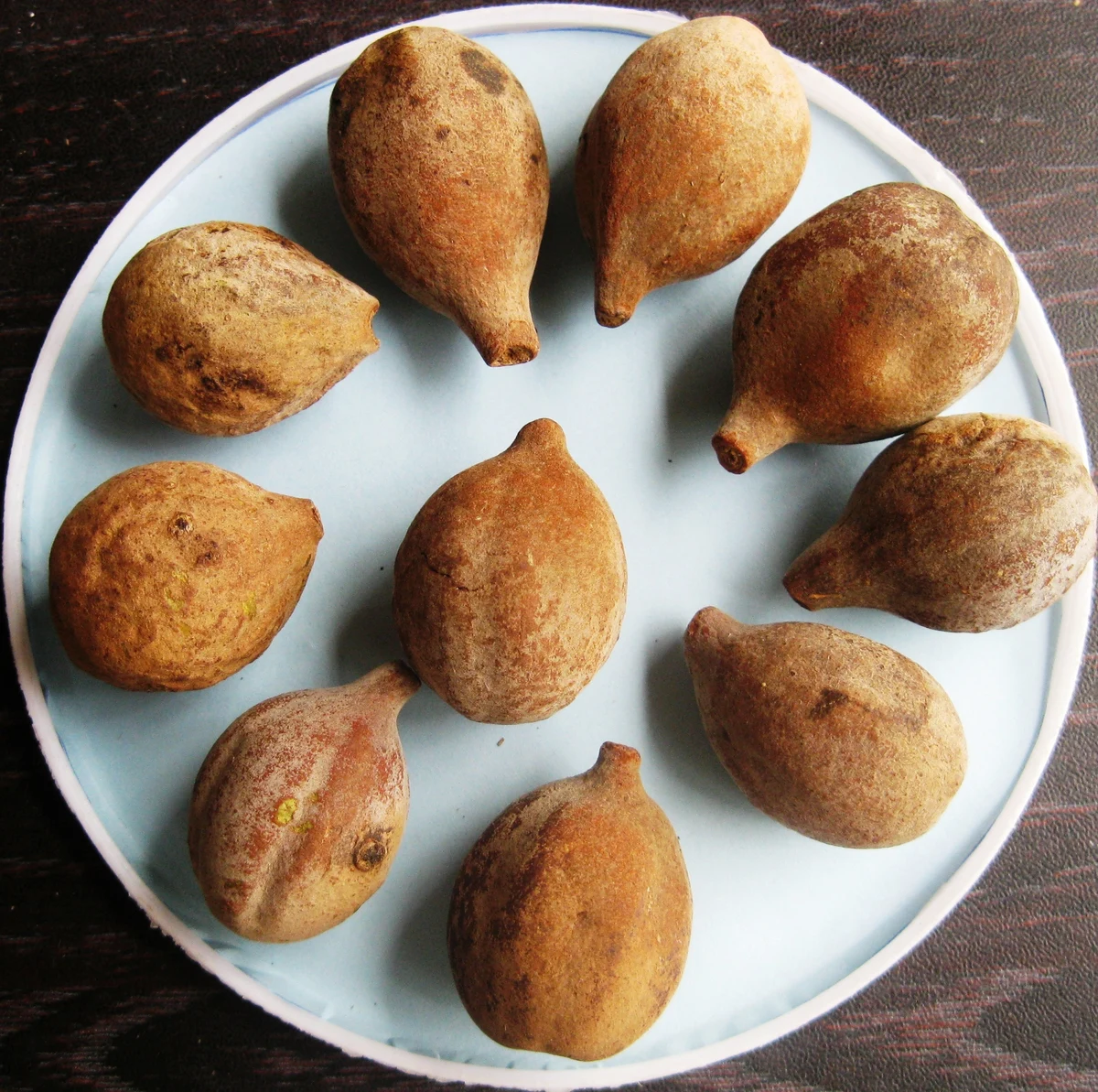
Organic India’s capsule and powder listings both name Amalaki, Bibhitaki and Haritaki. The powder listing describes its ingredients as organically grown whole fruits. The Ministry of Ayush’s PCIM&H monograph for classical Triphala Curna gives a reference for the names that appear in ingredient searches. It calls them Amalaki, Bibhitaka and Haritaki and lists the botanical names Emblica officinalis, Terminalia belerica and Terminalia chebula, respectively.
The spelling of a fruit’s name can vary by source. Bibhitaki is the spelling used in the seller text and Bibhitaka is the spelling in the classical monograph. For amla, Kew uses Phyllanthus emblica for Indian gooseberry, while the monograph uses Emblica officinalis. If you are matching the storefront text to a photo or a reference entry, record the wording each source actually uses. This makes it easier to see which source refers to the fruit and which describes the specific product.
The shared fruit names establish what the two seller listings declare in common. To compare amounts or proportions, you need a declaration for each finished product. The public powder text used for this guide did not establish Organic India’s mixing ratio. The classical monograph covers a classical preparation and cannot establish the proportions of either packaged offer. A comparison between capsules and powder would also require the capsule fill declaration and a corresponding powder declaration. Pack count and net weight alone give no basis for that conversion.
Verify the physical pack and its date marking
The capsule page names Organic India Pvt Ltd in Barabanki as the manufacturer and gives India as the country of origin. The powder page describes the product as made in India and places it under the seller’s Herbal Supplements category. Use those details to orient yourself on the listings, then read the manufacturer and category declarations on the exact pack. For capsules, look for the shell and fill declarations if those details matter to your choice. Ask for legible label panels if the listing photos show only the front.
Both product pages publish a 36-month shelf life. The time remaining on a pack depends on its own date marking. If you are weighing a larger order because of the unit price, check the relevant marking on every pack you receive. In a two-pack offer, a readable date on the first pack gives you information about that pack. Read the second one too, especially if you plan to keep it unopened for longer.
Keep the licence and regulatory category tied to the label you can inspect. The seller’s navigation category helps locate the powder listing, and the classical monograph helps interpret ingredient names. A specific licence or conformity statement requires evidence for the exact packaged product. Any proposed health or treatment claim requires its own evidence and qualified editorial review. The storefront wording can verify that a claim appears on the page, and the scope of that observation ends with the seller’s wording.

| Field | Source to check |
|---|---|
| Capsule count and SKU | Seller’s selected option and outer packaging |
| 100 g standard powder or separate can | Exact storefront product and variant record |
| Pack name and shell material | Photograph of the specific capsule label |
| Actual batch, date and category | Physical label for the item received |

Check current stock, delivery and total price
The five standard selections in the table were marked available in Organic India’s public India store records. The separate Can record was marked unavailable. These are storefront statuses for exact selections. Delivery to a specific address and the final basket were outside the check. To verify a purchase now, select the quantity you want and enter the delivery details required by the store. Read the resulting delivery status for that basket before relying on the product page’s availability.
For a current price comparison, divide the amount shown for the selected capsule offer by the total capsule count. For powder, divide by the total number of grams and multiply by 100. If you are choosing between sellers, compare the final amounts for baskets with the same format and quantity. Delivery charges or checkout discounts can change the amount you pay, even when the page still shows the same item price. Note which price you used when sharing a comparison.
Use the exact pack wording when you check a marketplace listing or ask a shop about stock. “Organic India Triphala” leaves the format and quantity open, while “Triphala Powder 100 g Can” identifies the offer whose stock you are trying to verify. Confirm what the seller will actually supply when a marketplace title, quantity selector and product photo give different pack information. Prices and availability on the brand’s India storefront apply to that storefront and may differ by sales channel.
Organic India moringa powder and capsules, price and pack guideOrganic India tulsi teas, herbal infusions, blends and prices
Check the delivery and report discrepancies promptly
Organic India’s direct online terms describe orders as generally non-returnable, with exceptions for incorrect, damaged or expired deliveries and a 24-hour contact rule. The separate refund policy mentions seven days for general requests and 24 hours for transit damage. The two documents also differ on remaining shelf life. Check the terms attached to your order channel. For a direct order with any of those problems, contacting the seller within 24 hours follows the shorter published window while the seller identifies the applicable terms.
If you ordered 60 × 2 capsules and the parcel contains a single 60-capsule pack, use the exact selection on the order confirmation to describe what arrived. A photo of the received pack and its visible quantity gives the seller something concrete to compare with the order line. For a damage or date-marking issue, capture the relevant part of the packaging while it is still available. The seller can then match the issue to the order and the pack you received.
For a marketplace or offline purchase, locate the reporting route and deadline on the marketplace order or shop receipt. The direct website terms describe the brand’s own online channel. Keep the order confirmation and the pack details together so you can state the format, quantity and issue in one message. If a date marking is the concern, give the exact text printed on the pack so the seller can assess it under the applicable policy.
Sources
- Organic India India Triphala capsule product selector
- Official India public Triphala Capsules variant records
- Organic India India Triphala Powder product selector
- Official India public Triphala Powder variant records
- Separate Organic India Triphala Powder 100 g Can record
- Ministry of Ayush PCIM&H Triphala Curna standard
- Organic India direct online replacement and complaint scope
- Dried Bahera fruits in Kolkata, licensed Triphala ingredient photograph
- Organic India Triphala capsule listing
- FSSAI food advertising and claims regulations
