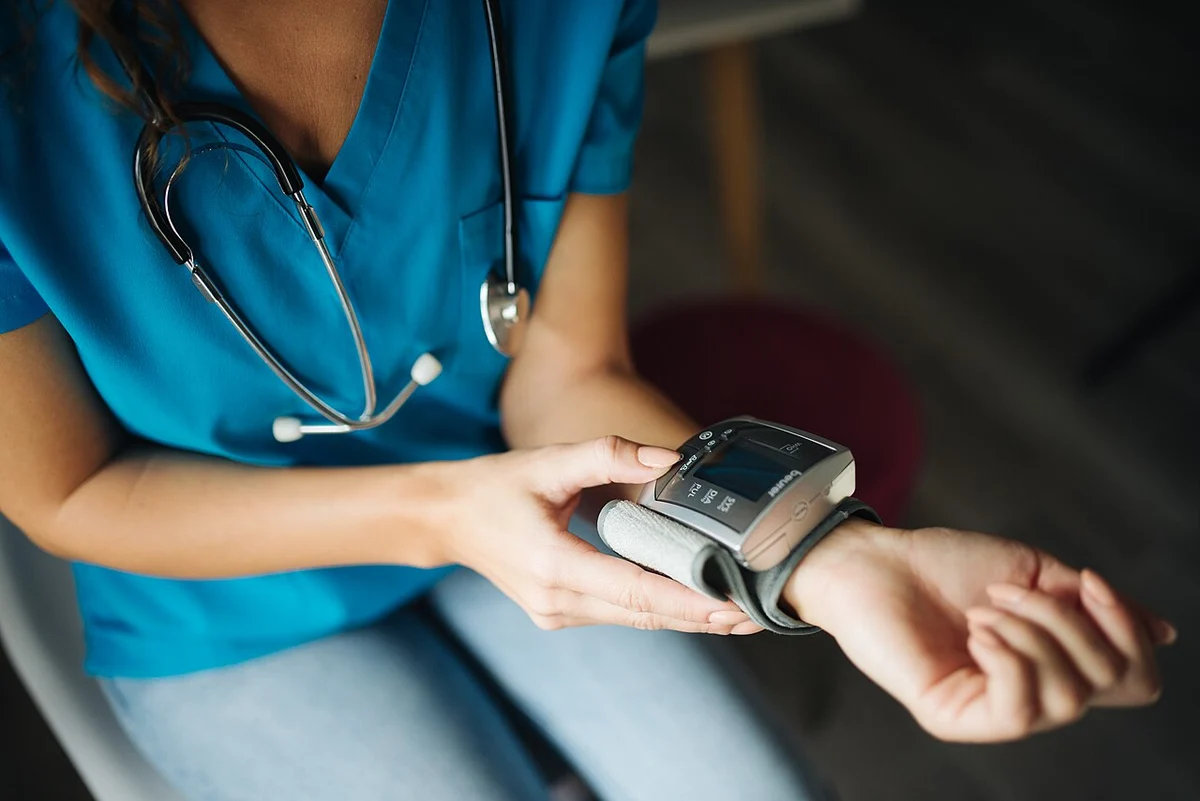
Compare devices by what they measure
Match the device to the measurement already identified for home use. An upper-arm monitor measures blood pressure, a digital thermometer measures temperature, a glucose meter measures blood glucose, and a fingertip pulse oximeter estimates oxygen saturation and shows pulse.
For an older person using a device independently, the practical comparison starts with what they can fit or hold, what they can read clearly, and whether they can retrieve or share a result later. If someone else helps, identify where that help enters the process. A cuff that requires assistance each time creates a different arrangement from a display that someone else reads only during a visit.
| Category and example | Display or storage feature | Fit, supplies or documentation |
|---|---|---|
| Upper-arm blood pressure monitor, Omron HEM-7120 | Pulse display, last reading stored, one listed user, no Bluetooth | Included HEM-CR24 cuff fits 22–32 cm. India support lists model manuals. |
| Digital thermometer, Omron MC-246 | 0.1°C or 0.1°F display increments, buzzer, last-reading recall | Replaceable LR41 battery, protective case and instruction manual listed. |
| Blood glucose meter, Accu-Chek Instant | Backlit display and Bluetooth | Uses Accu-Chek Instant test strips. India FAQ describes two batteries and home-use scope. |
| Fingertip pulse oximeter, BPL Smart Oxy | Four-direction colour OLED with estimated SpO₂, pulse rate and perfusion index | Match the full model name to the India product listing and confirm the manual supplied. |
The HEM-7120 and the Smart Oxy both display pulse. On a shopping page that shared feature can make them look more interchangeable than they are. The upper-arm monitor supplies a blood pressure result, while the oximeter supplies an oxygen saturation estimate. Read the full names of the displayed quantities before comparing screen size or the number of values shown.
Also separate the information shown at the time of use from the information available later. A clear current reading helps the person holding the device. A stored reading or connected record helps when someone needs to see it after the screen has cleared. The same household may need both, and each feature warrants its own check in the model documentation.
| Device and model | Measurement | Published feature to verify | Accessory or practical check |
|---|---|---|---|
| Omron HEM-7120 | Blood pressure and pulse | Included HEM-CR24 cuff 22–32 cm, one retained reading, no Bluetooth | Optional HEM-CS24 small cuff is listed as 17–22 cm. Verify the correct accessory. |
| Omron MC-246 | Temperature | 0.1 °C or °F display increments and last-reading recall | Replaceable LR41 battery. Display resolution and accuracy have separate definitions. |
| Accu-Chek Instant | Blood glucose | Backlit display and Bluetooth in the India FAQ | Verify Accu-Chek Instant strips and the manual for the exact model. |
| BPL Smart Oxy | Estimated oxygen saturation and pulse | Four-direction OLED, SpO₂, pulse and perfusion index | Read measurement limitations in the manual and seek care if symptoms warrant it. |
- Omron Healthcare India HEM-7120 upper-arm monitor
- Omron Healthcare India MC-246 digital thermometer
- Accu-Chek India Instant meter support and limitations
- BPL Medical Technologies India Smart Oxy pulse oximeter
- U.S. FDA consumer explanation of pulse oximeter limitations
- CDSCO India device and diagnostics directory
Upper-arm blood pressure monitors and cuff fit
Start with arm circumference because the cuff supplied in the box defines which arms it is sized to fit. Omron India lists the HEM-CR24 cuff with the HEM-7120 for 22–32 cm. It separately lists the HEM-CS24 small cuff for 17–22 cm as an option. The two ranges describe different accessories, so check the cuff code on the offer as well as the monitor code.
For an arm circumference of 20 cm, the included cuff falls outside the listed range and the optional small cuff covers it. The purchase comparison then depends on whether the seller can supply the documented small cuff with that exact monitor. A listing that describes a cuff only as small leaves its circumference range and model compatibility unresolved.
The HEM-7120 stores the last reading and lists one user. That is enough to look up the previous result before another is recorded. A household planning to review several readings or share the monitor needs a separate way to keep dated results attached to the correct person. The India listing also specifies no Bluetooth and no included AC adapter, both useful details when comparing offers for the same model.
Use Omron India’s support directory to locate the HEM-7120 manual by model number. For everyday handling, check whether the wearer can manage the cuff fastening, reach the controls and see the screen from where they will use it. These are distinct checks. Someone may find the controls clear and still need help fastening a correctly sized cuff.
Record the model number rather than the brand alone when storing a manual. In the HEM-7120 listing, the included and optional cuffs have different ranges. A household using more than one cuff can check the printed accessory number and mark which cuff fits whom, keeping any health records separate.
Digital thermometers and display resolution
Omron India’s MC-246 listing gives display increments of 0.1°C or 0.1°F. That increment describes how finely the display steps between numbers. The manufacturer’s separate accuracy specification describes the stated measurement performance. When two listings both show one decimal place, compare their documented accuracy and the conditions attached to it before drawing any conclusion about measurement performance.
The MC-246 also lists an audible buzzer, last-reading recall, a water-resistant design and a replaceable LR41 battery. Each feature answers a different household question. The buzzer concerns whether the user can hear the signal. Recall concerns whether they can retrieve the latest value. The battery code makes it possible to identify the replacement before buying. Consult the instruction manual for the manufacturer’s cleaning directions.
If two people in a household use different temperature units, check how the unit appears next to the number and whether the person recording the result can see it. Writing the unit with the value preserves information that may disappear when the display is copied into a note. Last-reading recall helps recover one number, so a record that needs earlier values requires separate storage.
The India product listing includes a protective case and an instruction manual. Those details matter when a device will spend most of its time in a drawer and may be used by someone who did not buy it. Keep the model identifier available so the current manual can be found through the support directory if the printed copy goes missing.
Glucose meters and recurring test strip supply
With the Accu-Chek Instant, compare the meter and its ongoing strip supply together. Accu-Chek India identifies Accu-Chek Instant test strips as the matched consumable. Check that full name on the strip pack and in the meter documentation. A pack from a similarly named product family needs its own documented compatibility, even when the packaging carries the same brand.
A pharmacy may have the meter in stock while carrying only a different Accu-Chek strip family. In that situation, the missing information is whether the pharmacy can supply Instant strips regularly or whether another supplier carries the exact pack. Ask for the pack name and strip count when checking prices. Comparing prices per strip makes differently sized packs comparable, provided both contain the documented consumable.
The India FAQ describes a backlit display, Bluetooth and two batteries. Readability and phone connectivity are separate buying considerations. A person who reads the meter directly can judge the usefulness of the screen on its own. A household buying it for connected records should confirm the current app, phone support and available sharing or export functions in the manufacturer’s documentation for its setup.
Accu-Chek India explicitly describes the Instant as a home-use meter without a diagnosis claim. That scope matters when a retail description uses broad language about diabetes. Use the manufacturer’s stated purpose when comparing products. For a household purchase, the recurring questions are whether the exact strips remain available, who will replace them, and whether the people who need the results can retrieve them.
Pulse oximeter displays and measurement limits
BPL Medical Technologies lists the Smart Oxy with a four-direction colour OLED displaying estimated oxygen saturation, pulse rate and perfusion index. The orientation feature matters when the person wearing the device and the person reading it are seated at different angles. Check the full Smart Oxy name when comparing offers, since the feature list belongs to that model.
The U.S. FDA describes several factors that can affect pulse oximeter accuracy, including poor circulation, skin pigmentation, skin temperature and nail polish. Those limitations matter even with a bright screen that presents a precise-looking number. The display specification describes how the value appears. Understanding performance requires evidence about the measurement and the conditions in which it was assessed.
At a shop counter, a person looking at a display with several values should be able to identify which one is SpO₂ and which one is pulse. If another person will usually read the screen, the relevant view is from that reader’s position. These checks establish whether the display works for the intended household arrangement. The product page supplies feature information, and the manual is the place to check the manufacturer’s explanations of the labels.
Use the FDA explanation for the general measurement limitations. Its medical-purpose and general-wellness distinction belongs to the U.S. regulatory context. For an India purchase, check the manufacturer’s stated intended use for the exact model and use Indian regulatory documentation for local status. Medical interpretation of the estimate requires separate clinical guidance.
Verify Indian classification, model details and stock
The Central Drugs Standard Control Organisation’s October 2025 consolidated classification lists blood pressure monitoring devices and digital thermometers as Class B and glucometers as Class C in the in vitro diagnostics category. These entries describe regulatory categories. Use the CDSCO directory’s classification and notices sections to check the latest applicable entry, then verify the India licence separately for the exact model being offered.
The manufacturer's India model listing or manual is the source for intended use, supplied accessories and documented compatibility. Regulatory classification, model licensing and independent accuracy validation each answer a separate question. A feature comparison can be made from the manufacturer’s specifications. An accuracy comparison needs independent evidence for the individual models under comparable conditions.
To verify a purchase detail that can change, match the model code on the carton or seller listing to the manufacturer’s India documentation. Then ask the seller to confirm the contents of the actual pack and current availability of any separately purchased cuff, strip or battery. The product page can document a compatible item even when the seller has none in stock.
Record the date of a price or stock check alongside the exact item and pack size. This is particularly useful for a strip-based meter, where the same search can surface a starter kit, a meter alone and strips sold separately. If two sellers describe the box contents differently, the model code and the manufacturer’s pack details give you specific points to resolve before paying.
CDSCO’s consolidated classification lists blood pressure monitors and digital thermometers as Class B and glucometers as Class C in the in vitro diagnostic group. A category in that document gives the regulatory classification. To check an individual listing, match the printed model, labelling and current manufacturer information.
Shopping platforms in India, returns, delivery and seller rulesHealth insurance in India, policy comparison and claim deadlines
- CDSCO India device and diagnostics directory
- Omron Healthcare India HEM-7120 upper-arm monitor
- Omron Healthcare India MC-246 digital thermometer
- Accu-Chek India Instant meter support and limitations
- BPL Medical Technologies India Smart Oxy pulse oximeter
- Omron India official manual and service directory
- U.S. FDA consumer explanation of pulse oximeter limitations
Sources
- CDSCO India device and diagnostics directory
- Omron Healthcare India HEM-7120 upper-arm monitor
- Omron Healthcare India MC-246 digital thermometer
- Accu-Chek India Instant meter support and limitations
- BPL Medical Technologies India Smart Oxy pulse oximeter
- U.S. FDA consumer explanation of pulse oximeter limitations
- Open documentary photograph of digital blood pressure equipment
- Omron India official manual and service directory
