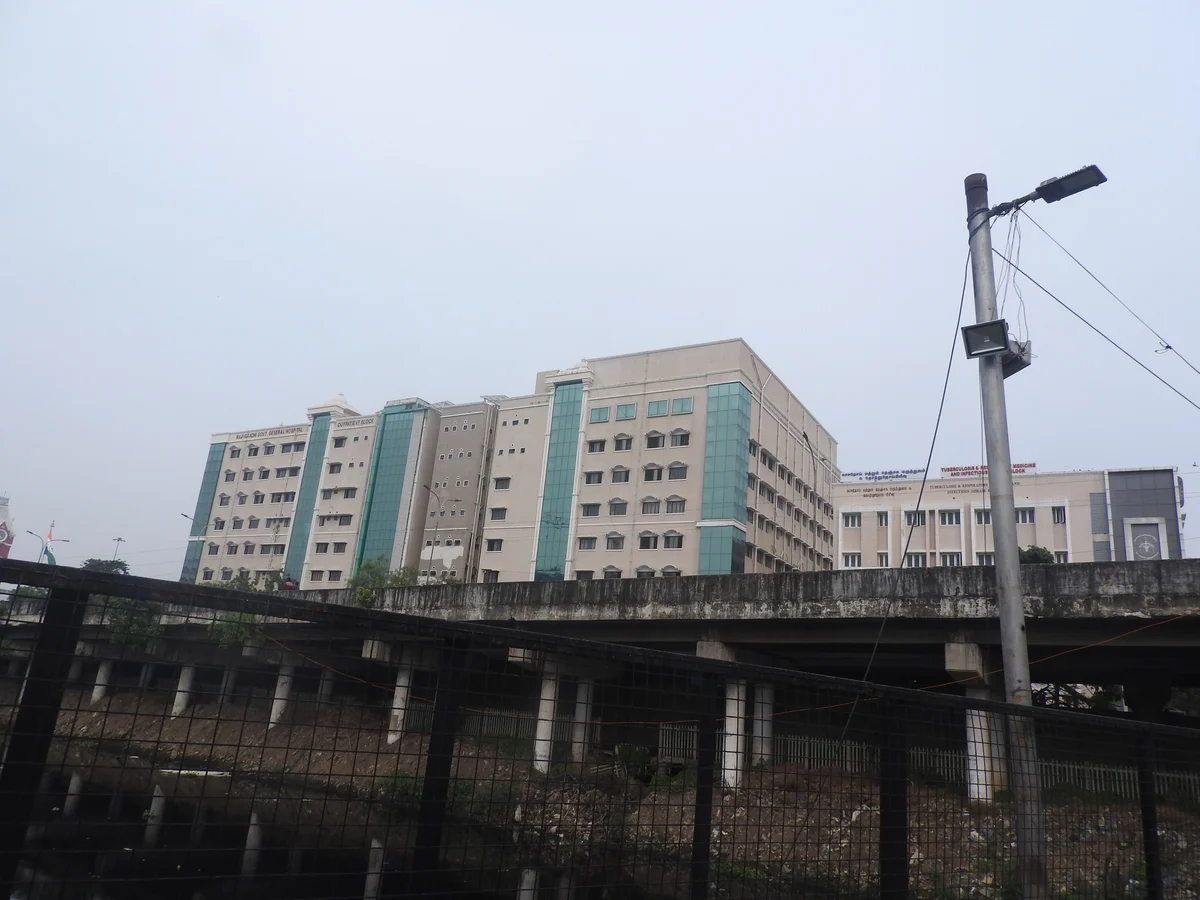
Which Star Health policy versions are you comparing?
Compare Star Health’s Family Health Optima as a shared family floater, Star Comprehensive by its room entitlement and entry-age co-pay, Super Star by the options selected, and Star Super Surplus Floater by how its deductible works. If you came looking for a 2025 review, the exact Family Health Optima, Comprehensive and Super Star versions covered here launched in 2026, while the Super Surplus Floater UIN dates to 2021 and its cited wording carries a 2025 revision.
The Unique Identification Number, or UIN, is the quickest way to connect a product name to the wording you need. Star’s register dates both the Family Health Optima and Comprehensive versions below to 9 February 2026 and the Super Star version to 26 May 2026. Comprehensive illustrates why the date printed in a document code can mislead. Its wording carries a 2025 code, and the register gives the corresponding UIN a February 2026 launch date.
| Product | Unique Identification Number | Room entitlement in cited wording | Main cost-sharing rule | Policy type |
|---|---|---|---|---|
| Family Health Optima | SHAHLIP26046V092526 | Standard A/C room on stated ₹5–25 lakh tiers | 20% mandatory co-pay on specified benefits for entry at 61+ | Primary cover |
| Star Comprehensive | SHAHLIP26044V092526 | Private single A/C room | 10% mandatory co-pay on specified benefits for entry at 61+ | Primary cover |
| Super Star | SHAHLIP27049V022627 | Any room by default, subject to the issued schedule and chosen option | Optional aggregate annual deductible or voluntary co-pay | Primary cover |
| Super Surplus Floater Silver | SHAHLIP22034V062122 | ₹4,000 daily room, boarding and nursing cap | Deductible applied to each hospitalization | Top-up |
| Super Surplus Floater Gold | SHAHLIP22034V062122 | Single private A/C room | Qualifying inpatient amounts accumulate toward the defined limit, reset each policy year | Top-up |
For cover you already hold, copy the UIN from your issued schedule, find the matching wording in Star’s Downloads and read any endorsements alongside it. For a policy you are considering, match the UIN on the written offer to the same documents. Star makes the wordings available publicly. Its View Plan forms for Comprehensive, Super Star and Top-up collect contact details for enquiries. A displayed product establishes what Star lists publicly, while acceptance, the available tiers and the price for a particular application require an offer.
- Star Health product register — version-specific launch dates
- Star Health downloads — public first-party policy wordings
- Star Family Health Optima — operator overview and public UIN
- Star Comprehensive — operator overview and official plan route
- Star Super Star — public product page and option amounts
- Star Super Surplus Floater wording — SHAHLIP22034V062122, POL / SSF / V.18 / 2025
- Star Top-up and Super Top-up — public comparison and enquiry route
Family Health Optima and Comprehensive room and co-pay rules
Family Health Optima gives the insured family a shared sum insured. When reading the schedule, check who is covered and which room entitlement goes with the quoted sum. The wording shows a single standard A/C room for displayed ₹5 lakh to ₹25 lakh options and separate daily rupee caps for smaller sums. Those rows describe the contract terms at the listed amounts. Check the written offer to see which amounts Star is offering for the proposed policy.
Comprehensive specifies a Private Single A/C Room for inpatient cover. Both wordings contain proportionate conditions tied to room eligibility. If a hospital offers a room above the contractual entitlement, the financial effect can extend to associated room-linked charges under the wording. Ask the hospital insurance desk which of its billed categories matches the schedule. A hospital’s room label alone gives you little basis for estimating how the insurer will apply the clause.
The two wordings also differ on mandatory co-pay for older entrants. Family Health Optima applies 20% to the named coverages when the insured enters at age 61 or above, including on renewals. Comprehensive specifies 10% on the sections it names for entrants aged 61 or above and exempts people who entered before 61 and renewed continuously without a break. For an existing Comprehensive policy, the entry age and renewal record therefore matter when checking whether the clause applies.
Suppose an insured person enters at 62 and has ₹1 lakh in expenses admitted under a section subject to the relevant co-pay. Applying the percentages in isolation gives a member share of ₹20,000 under Family Health Optima or ₹10,000 under Comprehensive. That calculation starts with an admitted amount. To understand the share of an actual hospital bill, the room assessment, exclusions and any other applicable limits also need to be accounted for.
Waiting periods and paid reductions
Family Health Optima, Comprehensive and Super Star each show a base wait of 36 months for declared and accepted pre-existing disease, a 24-month wait for specified conditions or procedures and an initial 30-day illness exclusion with a covered-accident exception. These clauses address different reasons a claim can fall outside cover. Read the continuity provisions in the matching wording and check what happens to the waiting period on an increased sum insured where the contract addresses it.
Comprehensive offers a paid buy-back that can shorten the pre-existing disease wait from 36 to 12 months at first purchase, up to the sum insured selected then. It requires screening at Star’s nominated centre. The option is unavailable at renewal and on incoming ported policies. If the same disease falls under the specified-condition clause, the longer applicable wait still governs. The buy-back therefore needs to be read alongside the list of specified conditions.
Super Star offers a pre-existing disease reduction to 24 or 12 months at first purchase, subject to underwriting and limited to the sum insured chosen then. The option is unavailable on renewal, porting or migration, and the wording gives separate conditions where Quick Shield is selected. A separate option can cut the specified disease or procedure wait from 24 to 12 months on first purchase, also subject to underwriting and the initial sum insured. Check which option appears on the offer and how the overlapping exclusions apply.
A completed wait still leaves other coverage conditions to check. Family Health Optima, for example, excludes primarily diagnostic or evaluation-only admissions and unrelated diagnostic expenses under its investigation and evaluation clause. It separately addresses certain rest-care or respite admissions. When assessing a review about a denied claim, distinguish a waiting-period decision from an exclusion tied to the purpose of admission. The wording and the insurer’s stated reason are needed to tell which issue the review describes.
- Star Family Health Optima wording — SHAHLIP26046V092526, POL / FHO / V.26 / 2026
- Star Comprehensive wording — SHAHLIP26044V092526, POL / COMP / V.24 / 2025
- Star Super Star wording — SHAHLIP27049V022627, POL / SS / V.5 / 2026
- Star Super Surplus Floater wording — SHAHLIP22034V062122, POL / SSF / V.18 / 2025
Super Star room choices, voluntary co-pay and annual deductible
The Super Star product page describes the default room eligibility as Any Room and lists Single Private AC Room, Shared Room and General Ward as optional selections. Check the schedule for the category actually issued. Room selection affects which accommodation fits the contract, while a voluntary co-pay assigns a percentage of an eligible claim to the insured. Star publishes voluntary co-pay choices of 10%, 20%, 30%, 40% and 50% for this version.
The voluntary deductible uses a fixed amount. Published choices run from ₹10,000 to ₹5 lakh, with ₹25,000, ₹50,000 and ₹1 lakh through ₹4 lakh among the options. The wording applies the amount in aggregate over the policy year to qualifying hospitalization expenses under the specified base coverage sections. It applies individually or on a floater basis according to the policy. Expenses outside those sections need to be checked separately before counting them toward the deductible.
Consider a floater with a ₹50,000 deductible and two qualifying hospitalizations in the same policy year, one with ₹30,000 in qualifying expenses and one with ₹35,000. The first uses ₹30,000 of the deductible and the second uses the remaining ₹20,000, leaving ₹15,000 above the threshold for assessment under the policy. Super Star bars combining the voluntary deductible with the voluntary co-pay, and the wording says the selected deductible cannot be reduced or dropped. That restriction matters when comparing the option across future renewals.
Health insurance in India, policy comparison and claim deadlines
Super Surplus Floater Silver and Gold thresholds
The Super Surplus Floater wording gives Silver a deductible for each hospitalization. Gold uses a Defined Limit that qualifying inpatient expenses can cross in aggregate during the policy period. On a multi-year policy, the Gold threshold resets each year. The limit is the point above which eligible expenses can be assessed for payment. The sum insured separately limits what the policy can pay. Pre- and post-hospitalization expenses are excluded from the calculation of either threshold.
Suppose two admissions each produce qualifying inpatient expenses equal to three quarters of the threshold in the same policy year. Under Silver, each hospitalization is measured separately, so neither clears its own deductible. Under Gold, the first admission contributes three quarters of the Defined Limit and the second takes the combined spend to one and a half times that limit. Half the Defined Limit is then above the threshold for assessment, subject to the sum insured and the remaining policy terms.
The published floater comparison also gives Silver a ₹4,000 daily cap on room, boarding and nursing and gives Gold a single private A/C room. Silver’s waits are 36 months for declared and accepted pre-existing disease and 24 months for listed diseases or procedures. Gold lists 12 months for each. Both carry the initial 30-day illness exclusion with the stated accident and continuity provisions. Before using these figures, confirm that the offer shows the floater UIN. Star registers a distinct UIN for its individual Super Surplus policy.
| Input or result | Silver per-admission threshold | Gold annual aggregate threshold |
|---|---|---|
| Illustrative threshold | ₹3 lakh | ₹3 lakh |
| First eligible inpatient bill | ₹2 lakh | ₹2 lakh |
| Second eligible inpatient bill in the same policy year | ₹2 lakh | ₹2 lakh |
| Spend that clears the threshold | ₹0 | ₹1 lakh, subject to the remaining limit and coverage terms |
Check a hospital branch and follow the claim handoffs
Use Star’s hospital directory to search by hospital, PIN code, city or state. Verify the branch and its listing category with Star and the hospital insurance desk. The directory distinguishes Network, Excluded, Agreed Network and Value Network listings. The cashless workflow starts when the hospital sends a preauthorization request. Star assesses contract eligibility, and the hospital seeks final authorization at discharge. Confirming a directory listing answers a different question from obtaining authorization for the admission.
Star’s general Cashless Anywhere service at non-network hospitals requires notice at least 48 hours before a planned admission or within 24 hours after an emergency admission, subject to the policy and a hospital arrangement. The Comprehensive wording covered here describes network cashless and reimbursement outside the network. If considering a particular non-network branch under that version, ask Star whether it will arrange cashless there under the exact UIN. Star limits its published excluded-hospital exception to emergency stabilization under its terms.
For reimbursement, Star describes settling the hospital account and submitting the claim papers through a branch or its portal or app, with originals as stated. In this Comprehensive wording, the filing instructions give 15 days from discharge for inpatient, day care and pre-hospitalization reimbursement, and 15 days after the stated 90-day post-discharge period for post-hospitalization reimbursement. Star’s Citizens’ Charter separately lists service targets of one hour for cashless acceptance communication, three hours for the discharge-side settlement offer and 15 days for non-cashless settlement. Check which event starts the clock for the step in question.
The published Comprehensive wording describes network cashless and reimbursement outside the network. Star separately describes a Cashless Anywhere procedure subject to policy terms and an arrangement with the hospital, including notice 48 hours before planned admission or within 24 hours after emergency admission. Verify how Star applies those procedures for the exact UIN and branch before relying on cashless billing.
- Star Comprehensive wording — SHAHLIP26044V092526, POL / COMP / V.24 / 2025
- Star Health claims — official patient and hospital handoffs
- Star Health public hospital directory
- Star Health Citizens’ Charter
- IRDAI health insurance business circular, signed 29 May 2024
- Ministry of Finance confirmation of cashless deadlines in March 2026
How to read Star Health reviews and escalate a dispute
A review is most informative when it identifies the policy version, hospital branch and stage of the claim. A discharge delay could occur before the hospital sends its final request or while a submitted request awaits a decision. A report of partial payment can likewise describe a cost-sharing clause, a coverage limit or a disputed assessment. Look for enough detail to tell what happened and whether the writer had the same contract terms. A brand-level rating gives little help with those distinctions.
For a dispute on your own policy, keep the schedule, relevant wording, insurer decision and correspondence together. Ask Star to identify the clause behind the decision and retain the grievance reference so you can track the response. Star accepts written grievances and also lists branch and zonal grievance officers. Its grievance page shows the insurer’s escalation levels. IRDAI’s Bima Bharosa is a separate grievance route. Check the official instructions for the current steps and use the insurer’s written response to describe the specific decision you are disputing.
Health insurance in India, policy comparison and claim deadlines
Sources
- Star Health product register — version-specific launch dates
- Star Health downloads — public first-party policy wordings
- Star Family Health Optima — operator overview and public UIN
- Star Family Health Optima wording — SHAHLIP26046V092526, POL / FHO / V.26 / 2026
- Star Comprehensive — operator overview and official plan route
- Star Comprehensive wording — SHAHLIP26044V092526, POL / COMP / V.24 / 2025
- Star Super Star — public product page and option amounts
- Star Super Star wording — SHAHLIP27049V022627, POL / SS / V.5 / 2026
- Star Super Surplus Floater wording — SHAHLIP22034V062122, POL / SSF / V.18 / 2025
- Star Top-up and Super Top-up — public comparison and enquiry route
- Star Health claims — official patient and hospital handoffs
- Star Health public hospital directory
- Star Health Citizens’ Charter
- Star Health grievance redressal — insurer first contact
- Rajiv Gandhi Government General Hospital in Chennai — original photo and license
- Star Health consumer insurance terminology
- IRDAI Bima Bharosa official grievance system
- IRDAI health insurance business circular, signed 29 May 2024
- Ministry of Finance confirmation of cashless deadlines in March 2026
