Which shopping app fits your purchase?
Start with Amazon India or Flipkart for electronics, Myntra for fashion and lifestyle, Meesho for fashion and home, and Flipkart Minutes for groceries you need quickly where delivery is available. To shop through ONDC, choose a Buyer App from its directory, then compare the actual seller, delivery promise and item-level remedy before paying.
The table compares a selection of consumer shopping models using public operator documentation, an individual product listing and the Indian e-commerce rules. The category examples show where to start looking. The purchase checks help you compare offers once you find an item. The evidence provides no basis for ranking the platforms by market share, estimating stock at a particular PIN code or naming a cheapest app.
| Platform or service | Shopping context | Published example | Where to start a problem report |
|---|---|---|---|
| Amazon India | Electronics | OnePlus 13s listing B0HHRM5FW8 shows 10-day service-centre replacement with distinct treatment of defects, wrong or missing items and physical damage. | Your orders and Amazon Customer Service |
| Flipkart | Electronics | General policy has defined 7-day replacement-only categories and named exceptions. Product-page terms control. | Open the product’s order and the applicable cancellation or return policy |
| Flipkart | Home and household | General category policy lists 7 days for refund or replacement on some items. | Open the item terms and your exact order |
| Flipkart hyperlocal | Groceries and daily essentials | Separate policy lists one day for refunds on the named fruit and vegetable rows. | Record the delivery time and open the hyperlocal order |
| Meesho | Fashion and other marketplace goods | General policy says seven days in many cases. Listings disclose particular remedy and eligibility. | Open the app order and check its remedy type |
| Myntra | Fashion | Public return screen displays 14 days. Individual eligibility and the original tags and unused-condition requirements matter. | Check return or exchange on the item’s order screen |
| ONDC Buyer Apps | Network shopping | Catalogue, delivery PIN code, seller and order terms depend on the Buyer App and offer. | Log the issue with the Buyer App and keep the ticket |
Brand navigation is a different task. If you want a particular manufacturer’s own store, confirm who operates the store and who would issue the invoice. A brand name in a listing identifies the advertised product, while the seller field identifies the business making the offer. Manufacturer warranty coverage is a separate question again. Those distinctions matter if your buying decision depends on a direct relationship with the brand or a particular warranty route.
- Department of Consumer Affairs — Consumer Protection (E-Commerce) Rules, 2020
- Amazon India seller registration and fulfilment FAQ
- Amazon India — OnePlus 13s listing return-policy example
- Flipkart — Order Cancellation and Return Policy
- Flipkart Seller Hub — official categories and onboarding guide
- Meesho — Returns, Refunds and Replacement Policy
- Myntra Terms of Use — marketplace scope and return condition
- ONDC — How to Shop and public buyer-app list
- Flipkart Minutes — operator expansion disclosure dated 11 September 2026
Read electronics offers by seller, fulfiller and remedy
Indian e-commerce rules distinguish a marketplace that facilitates transactions from an inventory e-commerce entity that sells inventory it owns. On a marketplace offer, read the seller and fulfilment fields separately. Amazon India describes Fulfilment by Amazon and Easy Ship as arrangements in which it handles delivery. That delivery role can sit alongside a separate seller, so use the specific offer to establish who sells the item and what remedy comes with it.
An Amazon India listing for the OnePlus 13s, ASIN B0HHRM5FW8, illustrates why the detail behind a short return label matters. It displayed a 10-day service-centre replacement label. The detailed terms directed defects to the OnePlus service-centre warranty process. They gave a replacement route within 10 days of delivery for physical damage, wrong items or missing items, subject to verification and an Open Box Delivery exception. The listing displayed a separate one-year warranty.
Flipkart’s general return policy shows seven-day replacement-only terms for defined groups of mobiles, electronics and appliances, with brand and category exceptions. Flipkart says the product page takes precedence over that table. A replacement request can also involve troubleshooting or an authorized service route. For comparison, the same policy shows seven-day refund or replacement terms on specified home improvement, decor and household rows. The remedy can change even where the number of days stays the same.
If you are buying a phone for a fixed departure date, check how a fault reported straight after delivery would be handled. A service-centre assessment and a direct replacement request are different commitments for your schedule. Read the fault, damage and missing-item terms before choosing an offer, then check the delivery promise with your PIN code entered. For an Amazon order issue, its public support guide directs signed-in buyers to Customer Service and the relevant order.
If the price on another listing looks lower, compare the model identifier, named seller, delivery conditions and remedy side by side. The OnePlus listing’s one-year warranty is a separate part of the offer from its 10-day service-centre replacement label. Save the terms attached to the listing and the order so you can identify the right channel if the shipment arrives incomplete.
- Department of Consumer Affairs — Consumer Protection (E-Commerce) Rules, 2020
- Amazon India seller registration and fulfilment FAQ
- Amazon India — OnePlus 13s listing return-policy example
- Amazon India — official customer-service entry points
- Flipkart — Order Cancellation and Return Policy
- Amazon India return guidance for inventory fulfilled by Amazon
Compare fashion returns on Meesho and Myntra
Meesho’s general policy says products are usually returnable or exchangeable within seven days of delivery and points buyers to the exact product description. Some eligible listings distinguish an all-return option from an option for a wrong or defective item. Some items are marked non-returnable. The policy also has a separate brand replacement section describing a request within seven days and evidence requirements for damage. Identify which provision applies to your item and reason before counting days.
Myntra’s public return page displays a general 14-day return message. Its terms describe fashion and lifestyle goods sold by registered sellers and allow product-specific conditions. Check whether the item offers a return, an exchange or both, and whether the condition requirements fit how you plan to inspect it. Myntra’s terms call for unused condition and original tags. The applicable request goes through the MyMyntra order workflow, while Meesho describes an in-app post-purchase flow for eligible items.
Suppose you are choosing shoes from a brand whose sizing you have never worn. An all-return option helps if you may want your money back after checking the fit. A size exchange may suit you if you want the same pair and the size you need is available. A wrong-item or defect option addresses a different problem, such as receiving a size other than the one ordered. Compare those terms before treating two similarly priced listings as interchangeable.
Check quick-commerce coverage and grocery claim windows
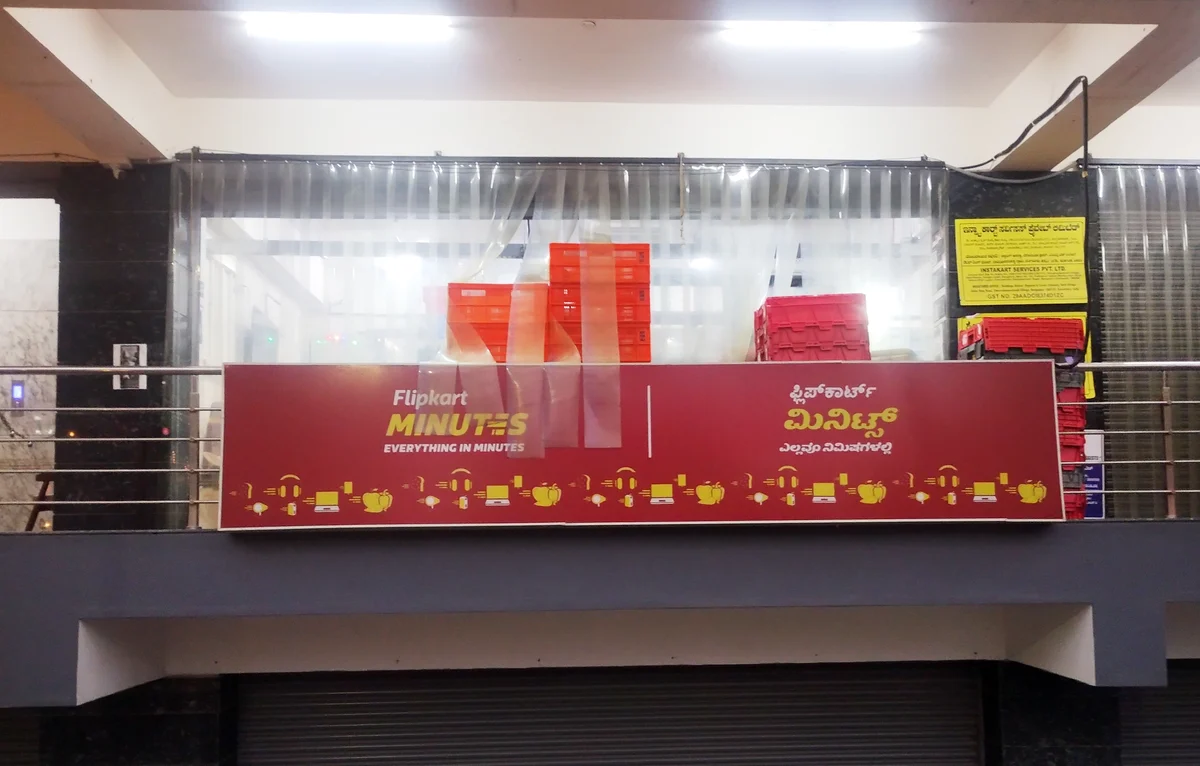
Flipkart describes Minutes as its quick-commerce service, launched in August 2024. In its 11 September 2026 announcement, the company reported nearly 1,200 micro-fulfilment centres across more than 150 cities. Those operator figures describe the size of the network at that point. To establish whether you can place a particular order, enter the delivery address in the service and check the available items and delivery estimate for that address.
Flipkart’s separate hyperlocal return table shows how quickly grocery refund windows can differ within one basket. It lists one day for the stated fruit, vegetable and milk group, two days for the listed eggs, meat and seafood group, and three days for the stated bread, cheese and grocery groups. These are refund examples in the hyperlocal table. Check the individual item page for exceptions and verify which terms apply to your Minutes order.
If a delivery contains damaged milk packaging and the wrong bread, open the order and check both line items as soon as you discover the problems. Under the published hyperlocal examples, the milk has the shorter refund window. Each item can have its own reason for the request and its own applicable terms. Check the order’s reporting options while the details of the delivery are fresh, especially if the items arrived together and the interface groups them under one order.
Choose an ONDC Buyer App and find its support route
ONDC provides network infrastructure that lets independently operated Buyer Apps connect shoppers with sellers. Its public How to Shop directory has listed DigiHaat, Mystore and Snapdeal in the Shopping section. Consult that directory for current choices, then enter your PIN code in the app you intend to use. Compare the seller, listing terms and delivery promise there. The network policy treats the buyer-seller transaction and invoice separately from the relationships among network participants.
If two Buyer Apps show the same product and one gives clearer delivery and return details, those details can settle the choice even when the item prices match. Check whether both offers name the same seller and show who will handle an order issue. A product match alone leaves those questions open. If you need a particular delivery date, use the promise shown for the offer and address you would actually select.
Report an ONDC order issue first in the Buyer App and keep its ticket. Resolving it can involve the seller, Seller App or delivery partner, with the Buyer App as the starting point for the shopper. ONDC publishes contacts and escalation guidance for missed promised timelines, lack of acknowledgment after 48 hours and cases that remain unresolved. Its public guidance uses 30 days in that escalation context. The underlying e-commerce rules use one month for grievance redress.
Compare seller registration paths by product and tax status
Amazon India’s seller FAQ asks applicants for business and contact details and PAN and GST information. It says taxable goods require GST details and describes a different treatment for sellers dealing solely in GST-exempt categories. Restricted categories can require separate approval. Flipkart Seller Hub describes a GSTIN registration path and a books-only exception. Check the operator’s onboarding description for the specific category you intend to list, particularly if your catalogue spans more than one category.
Meesho’s public filing describes mobile and bank-account verification and distinguishes GSTIN from an Enrolment ID or UIN route for eligible sellers. Its supplier guidance describes in-state sales limits for eligible unregistered or composition sellers and distinguishes composition GSTIN from the enrolment route. These published routes let you compare operator requirements. Individual tax eligibility and the acceptance of a particular application require separate verification. Myntra’s public consumer terms establish the presence of registered sellers, with self-serve seller eligibility still unverified.
A bookseller planning to add stationery has a concrete reason to check both categories before applying through Flipkart. The described exception is books-only, so the planned mixed catalogue changes which registration path to investigate. Once you have the applicable path, review the seller terms and current fee schedule for that category. Flipkart’s Seller Terms describe seller duties and fees. Its consumer returns page serves a different purpose and provides no basis for estimating seller charges.
E-commerce shipping in India, courier costs and parcel ratesOnline shopping in India, household survey and marketplace trends
- Amazon India seller registration and fulfilment FAQ
- Flipkart Seller Hub — official categories and onboarding guide
- Meesho Limited Red Herring Prospectus — consumer support and seller onboarding
- Meesho Seller — operator-hosted non-GST seller guidance
- Myntra Terms of Use — marketplace scope and return condition
Check statutory protections and escalate an order issue
Separate the platform’s voluntary change-of-mind policy from the take-back and refund protections in the Consumer Protection (E-Commerce) Rules, 2020. Rules 6(3) and 7(4) cover defects, deficiency, spurious items, discrepancies from advertised or agreed characteristics and late delivery. The late-delivery provision has a force-majeure exception. When raising a problem, describe the specific discrepancy or fault and consult the relevant rule and order terms. That gives the recipient a clearer basis to assess the complaint.
Keep the relevant listing details, seller name, order reference and grievance reference privately. If the ordinary order support route leaves an issue unresolved, use the e-commerce entity’s published grievance channel. Under Rule 4(5), the grievance officer has 48 hours from receipt to acknowledge the complaint and one month from receipt to redress it. The National Consumer Helpline also accepts grievances through its website, app, UMANG, WhatsApp and calls to 1915 or 1800 11 4000. It forwards grievances to the relevant entity and offers tracking.
The Consumer Protection (E-Commerce) Amendment Rules, 2026, notified as G.S.R. 789(E) on 9 September 2026, apply from 1 January 2027. They retain the acknowledgment and redress deadlines and add a copy of the recorded complaint and National Consumer Helpline convergence. They also require clear sponsored-listing labels, defined 30-day prior-price disclosures when price reductions are advertised and specified seller-name display on invoices. Check the notification’s effective date and the applicable provision when assessing a listing, invoice or complaint around the transition.
The September 2026 amendment begins on 1 January 2027. Follow the dated Gazette text when comparing order examples before and after that date. The amendment adds the requirement to provide a copy of the recorded grievance and adds specified sponsored-listing and prior-price disclosures, alongside the existing acknowledgment and redress deadlines.
Sources
- Department of Consumer Affairs — Consumer Protection (E-Commerce) Rules, 2020
- Gazette — Consumer Protection (E-Commerce) Amendment Rules, 2026
- National Consumer Helpline — Department of Consumer Affairs
- Amazon India seller registration and fulfilment FAQ
- Amazon India — OnePlus 13s listing return-policy example
- Amazon India — official customer-service entry points
- Flipkart — Order Cancellation and Return Policy
- Flipkart Seller Hub — official categories and onboarding guide
- Meesho — Returns, Refunds and Replacement Policy
- Meesho Limited Red Herring Prospectus — consumer support and seller onboarding
- Meesho Seller — operator-hosted non-GST seller guidance
- Myntra Terms of Use — marketplace scope and return condition
- ONDC — How to Shop and public buyer-app list
- ONDC — complaints, Buyer App contacts and escalation
- Flipkart Minutes — operator expansion disclosure dated 11 September 2026
- Flipkart Minutes, RR Nagar, Bengaluru — original photo and license
- Flipkart return and replacement process
- Amazon India return guidance for inventory fulfilled by Amazon
