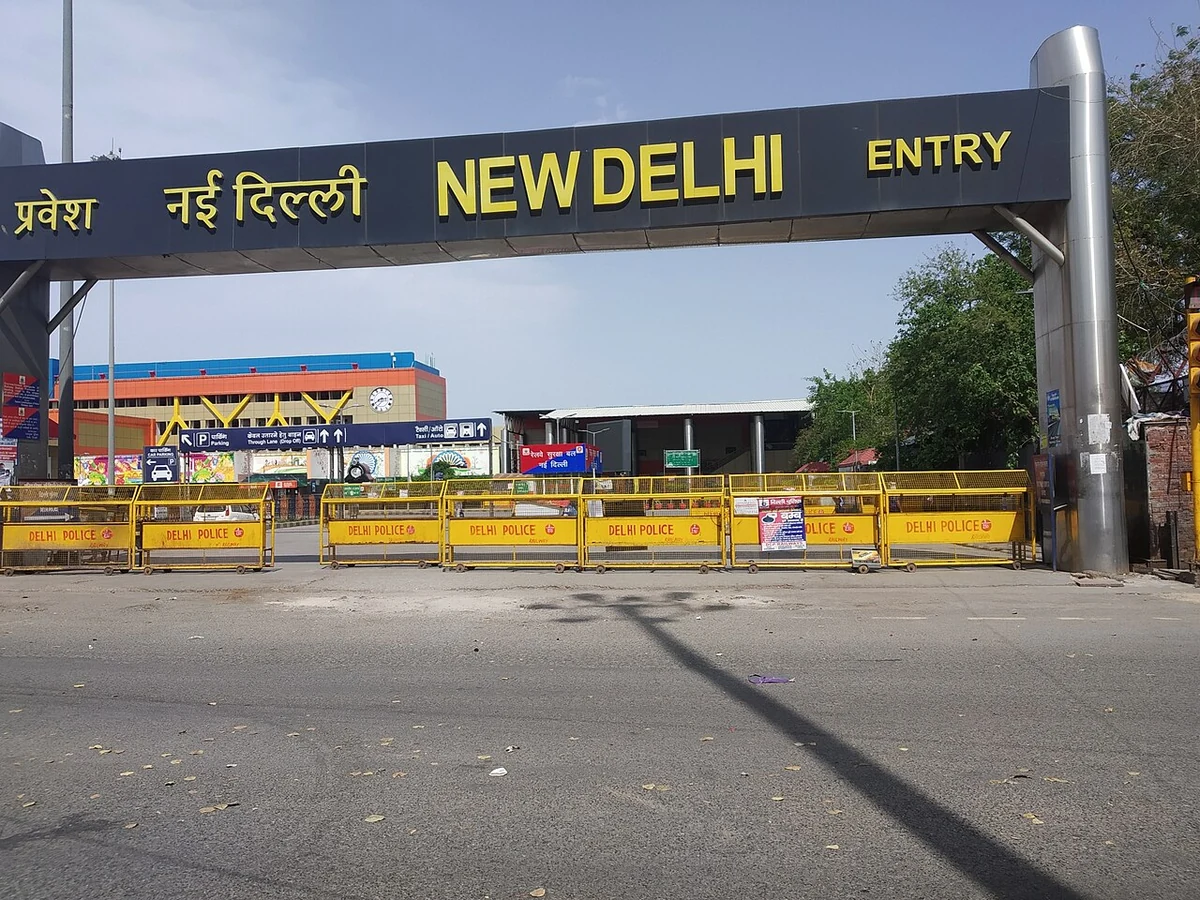
Was there a nationwide lockdown in India in 2026?
A review of the Union records checked for this guide found no signed order imposing a nationwide COVID-19 lockdown in India in 2026. On 27 March 2026, Akashvani reported that the Press Information Bureau’s Fact Check Unit had rejected a specific viral thumbnail claiming that the prime minister had announced a countrywide lockdown and told people to stay indoors because of a crisis.
The March correction answers what that thumbnail claimed. The review of Union records addresses whether a signed nationwide COVID-19 lockdown order turned up in the material examined. A claim about a later date, a particular state or a different emergency requires evidence for that date, place and event. In particular, a district restriction can be real even when a post describing it as an India-wide lockdown is inaccurate.
Start by pulling out the place, the date the restriction supposedly starts and the action people are being told to take. A post headed simply “India lockdown 2026” could be referring to an alleged central announcement, a local closure or an old address with a new caption. Each version requires a different check. If the post leaves out the date or place, keep that uncertainty visible when you describe what you found.
Use PIB Fact Check for claims about the Government of India and its organisations. For a claim about a state government decision, look for confirmation from the authority responsible in that state. The source of the restriction matters more than the location of the account that shared it.
Check the March claim against the dated records
Akashvani published the correction at 5:02 pm on 27 March 2026. That timestamp belongs to the story itself. A page footer can display a date months after publication, which makes an old correction look like a response to a fresh rumour. On a shared screenshot, look for the date next to the headline or byline and compare it with the date on the article page.
For an example of what a headline can lose, read the Prime Minister’s Office English rendering of the 24 March 2026 Rajya Sabha remarks. The address discusses the situation in West Asia, economic coordination and cooperation during COVID as a past example. The full rendering lets you see which event the speaker is discussing and which event he is recalling. The supplied records do not establish which footage appeared in the video whose thumbnail drew the correction.
If a new post quotes a prime ministerial address, search for a distinctive phrase alongside the claimed date and venue. Read the surrounding passage for references to past events, future possibilities or a specific place. If the post also says restrictions take effect that evening, look separately for the issuing authority’s dated order and the clause giving the start time. A speech transcript can settle what was said while leaving the claim about an enforceable measure unresolved.
Publication date alone tells you little about whether a document changes the rules. The government’s 16 November 2026 COVID response backgrounder is a dated retrospective account. Its publication in 2026 does not give the measures it discusses a new effective date.
Find the authority for the place named in the claim
Match the claim’s geography to the authority that could have issued the measure. For a nationwide claim, begin with the relevant Union announcement or order archive. For a state or district claim, use the corresponding government or disaster management authority’s dated notices. Where the claim concerns a particular subject, such as air quality in the National Capital Region, check the regulator responsible for that measure.
The distinction matters when one place name has several meanings. Delhi can refer to Delhi NCT, while NCR can describe a wider region. A news headline may shorten either term, and a screenshot may cut off the clause that defines the area. Read the territorial wording in the document itself and match it to the location you care about. Use any named districts or zones to resolve ambiguity in the headline.
The National Disaster Management Authority’s SACHET service disseminates official alerts with locations and timestamps. A relevant alert can point you towards the authority and the event. Read the alert’s category and time window, then look for the underlying order if the claim says that an activity has been prohibited. A warning may call for precautions. An advisory may recommend a course of action. A current order can specify who must do what within a defined area.
When the document appears as a forwarded image, use the visible authority, date and reference number to find the official copy. Compare the affected area, operative wording and any attached schedule. Where the image omits these details, it can give you a lead while leaving the actual restriction unverified.
| Field | What to record |
|---|---|
| Claim | Exact activity, affected place and alleged start |
| Authority and instrument | Issuer, order number and whether the document is an order, advisory or alert |
| Territory | State, Union territory, district, zone or other area as written |
| Validity | Issue date and operative start and end in IST where stated |
| Later action | Latest relevant amendment, extension or revocation and when it takes effect |
| Verification | Date the official records were checked |
Read start times, expiry and follow-up orders
An order can carry several dates with different jobs. The signing date identifies the document. The effective start tells you when the measure begins. An expiry time sets the initial endpoint, subject to any subsequent extension, replacement or withdrawal. An archive date may show when a document became available online. Copy the operative times as written and record them in IST for the lookup. If the document omits a time, leave that field open.
Delhi Disaster Management Authority Order 383 shows how these dates can diverge. Dated 20 April 2021, it refers back to Order 381 of 19 April and confirms a Delhi NCT curfew beginning at 10 pm on 19 April. The endpoint then scheduled was 5 am on 26 April. The date on Order 383 therefore falls after the curfew began. A search based only on the date of that PDF would miss the first night of the measure.
If you were checking whether the same curfew applied at 9 am on 26 April 2021, the initial endpoint would put that hour outside the stated interval. The answer would still depend on whether a follow-up order extended or replaced the curfew. The Delhi Health department’s dated 2021 order index provides a place to look for those later notices.
Search the notices around the endpoint as well as those published on the original issue date. A later document may refer to the earlier order number and change only a particular clause. Record the new clause alongside the provision it changes so the conclusion can be traced to both documents.
Use the 2020 timeline to date recirculated material
The Union announced the first nationwide COVID-19 lockdown on 24 March 2020. The 21-day operative interval ran from 25 March through 14 April. The announcement identifies an NDMA order under Section 6(2)(i) of the Disaster Management Act 2005 and an accompanying Ministry of Home Affairs order under Section 10(2)(l). Those details help identify the original announcement when a post strips away the year or shares only part of the text.
The difference between the announcement and effective dates explains why some accounts use 24 March as shorthand for the start. For a timeline of when the rules applied, use 25 March. A screenshot that preserves only “24 March” needs the archive record and surrounding text to establish which year and announcement it belongs to.
A new order on 14 April continued the nationwide rules through 3 May. Revised guidelines issued on 15 April provided for selected relaxations starting 20 April under stated conditions. On 1 May the government announced a further two weeks from 4 through 17 May, with rules differentiated across Green, Orange and Red zones. A report from that period about a local relaxation can therefore sit alongside a valid nationwide framework.
The 17 May extension continued measures through 31 May with revised guidelines and more relaxations. A clarification the following day said states and Union territories could set stricter local measures based on conditions. Unlock 1, announced on 30 May for 1 through 30 June, provided for phased reopening outside containment zones, with named categories permitted from 8 June. Restrictions persisted in containment zones. To check a claim about reopening, identify the activity and zone before assigning it a date.
| Document or stage | Jurisdiction | Issue date or notice | Effective period or outcome |
|---|---|---|---|
| Original COVID lockdown | India | 24 March 2020 | 21 days starting 25 March |
| April extension | India | 14 April 2020 | Continued through 3 May with applicable later relaxations |
| May extension and zone rules | India | 1 May 2020 | 4–17 May under differentiated restrictions |
| Further May extension | India | 17 May 2020 | Continued through 31 May under revised guidelines |
| Unlock 1 | India | 30 May 2020 | June phased reopening with separate containment-zone scope |
| Delhi NCT curfew | Delhi | Order 383 of 20 April 2021 | Initially 19 April, 22:00 through 26 April, 05:00 IST |
| Home Secretary’s letter on the central COVID order | India | Signed 22 March 2022 | Addressed the expiry of the existing February order and subsequent arrangements |
| Stage IV air quality revocation | Delhi NCR | 20 January 2026 | Revoked Stage IV. Earlier stages remained in force at the time. |
| Akashvani reports PIB Fact Check correction | India | 27 March 2026 | Corrected a specific circulated nationwide-lockdown claim |
- Press Information Bureau: March 2020 Lockdown Announcement
- Government of India 24 March 2020 order announcement
- Union 14 April 2020 extension and revised guidelines
- MHA 1 May 2020 two-week extension from 4 May
- MHA 17 May extension to 31 May and 30 May Unlock 1 announcement
- Union Government, Unlock 1 announcement of 30 May 2020
- Home Secretary letter on expiry of central COVID containment orders, signed 22 March 2022
What the March 2022 Home Secretary letter changed
The Home Secretary’s signed letter to Chief Secretaries is dated 22 March 2022. The archive lists it on 23 March. If a post gives either date, open the scan and check whether the post is using the document date or the listing date. The letter also refers back to the existing Ministry of Home Affairs order of 25 February. That earlier order is the document to consult for the rules that still applied before expiry.
The letter said that after the existing order expired, no further MHA order may be issued under the Disaster Management Act for COVID containment. It also said Ministry of Health and Family Welfare advisories would continue to guide the response. Read together, those points describe the phasing out of a particular central containment mechanism while health guidance continued. The archive’s Ministry of Home Affairs collection contains the signed letter and the February order.
The subject and issuer are particularly useful if someone cites the letter as proof that all restrictions everywhere ended in March 2022. Its language concerns further MHA orders under the Act for COVID containment. A repeal of the Act would require its own evidence, as would the withdrawal of a particular local measure. If the question concerns a separate local curfew, the applicable authority’s own orders establish its dates and terms.
Check regional measures and partial withdrawals
The Commission for Air Quality Management provides a 2026 example of a real regional measure that could be misdescribed in a forwarded message. CAQM said it invoked Stage IV air-quality measures in NCR on 17 January and revoked that stage on 20 January. The revocation release said earlier stages remained in force at the time. The governing issue was regional air quality, and the withdrawal applied to one stage of the measures.
If someone forwards the 17 January announcement as evidence that Stage IV applied on 21 January, compare it with the 20 January revocation. The first announcement establishes that the stage was invoked, and the later release establishes the intervening change. To answer for a specific activity on 21 January, check the applicable stage and any further official action. The stage name by itself cannot tell you what rule applied to that activity.
For a claim circulating today, look for newer notices under the same authority and subject. A release lifting one stage, changing a boundary or modifying an activity can leave other provisions in force. Match the later notice to the exact provision in the earlier one and check when the change takes effect. If you can find only a timestamped alert or a report of an announcement, describe what that source establishes and leave the current order status unresolved until you can locate the relevant text.
For an update about a shop or journey, start with the authority named in the document and check its most recent relevant order. Then confirm actual service with the operator. Some government notices apply by air-quality stage and jurisdiction, while a separate operator notice can describe how one service runs that day. The two records can answer different questions about the same planned trip.
India health alerts and official outbreak reportsStrike news in India and how to check a service disruption
Sources
- Press Information Bureau: Fact Check FAQ
- National Disaster Management Authority: SACHET Alerts
- Press Information Bureau: March 2020 Lockdown Announcement
- Akashvani, Press Information Bureau Fact Check on a specific 2026 lockdown claim
- Prime Minister's Office, 24 March 2026 Rajya Sabha remarks
- Government of India 24 March 2020 order announcement
- Union 14 April 2020 extension and revised guidelines
- MHA 1 May 2020 two-week extension from 4 May
- MHA 17 May extension to 31 May and 30 May Unlock 1 announcement
- Delhi Disaster Management Authority, April 2021 curfew and follow-up
- Home Secretary letter on expiry of central COVID containment orders, signed 22 March 2022
- CAQM dated NCR air-quality example and official current-order entry points
- Licensed April 2020 photograph near New Delhi railway station
- Union Government, Unlock 1 announcement of 30 May 2020
