Selected listings checked on . Dates come from the organiser or the linked public authority. Tentative listings are planning leads. Confirm session times, tickets and any changes with the linked source.
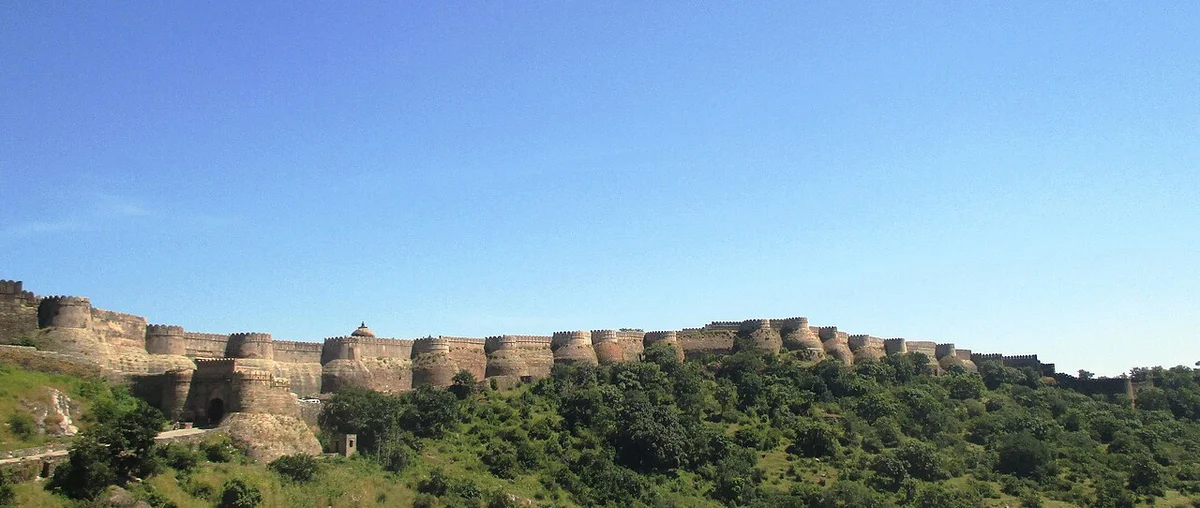
The nickname “Great Wall of India” refers to the walls of Kumbhalgarh Fort in Rajasthan’s Rajsamand district, north of Udaipur. Set your destination to Kumbhalgarh Fort and check which wall sections are open before planning a walk, since Rajasthan Tourism’s estimate of about 36 km describes the fort’s wall system.
A 2023 National Informatics Centre newsletter uses the nickname for Kumbhalgarh, so the phrase has a documented connection to the site. The state visitor guide uses Kumbhalgarh Fort and describes it as a Mewar stronghold in the Aravallis. Search by the fort’s name when looking for admission information, a driver or a map pin. It identifies the protected monument you intend to visit and gives you a way to check what a listing means when it uses the nickname alone.
The size of the wall system matters because the visit can take two forms. You can go to see the fortifications in their hill setting, or you can make walking an open stretch of wall a priority. The first plan gives you more flexibility on the day. The second depends on knowing where visitors may get onto the wall, how far they may go and where they can come back down. Set your expectations around that distinction when deciding how much time to give the fort.
India’s World Heritage nomination attributes Kumbhalgarh’s principal building campaign to Rana Kumbha in the 15th century. Rajasthan Tourism places the fort in the history of Mewar and identifies Badal Mahal within the complex. On a visit, the palace and the perimeter give you different ways to read the same place. The palace draws your attention to the structures within the stronghold, while the walls draw it outward to the terrain the fortifications enclose.
UNESCO inscribed the Hill Forts of Rajasthan in 2013 as a single World Heritage property composed of six separate forts. Kumbhalgarh is one component, alongside Chittorgarh, Ranthambore, Gagron, Amber and Jaisalmer. The nomination documentation defines a boundary for Kumbhalgarh’s component. That designation tells you which fortified landscape forms part of the heritage property. Use visitor information from the site operator to establish where you can go during an ordinary visit.
The World Heritage account considers defence alongside settlement and water. That gives the visit a wider focus than the length of the walls. At a permitted vantage point, follow the line of the wall with your eye and look at how much ground the fortifications enclose. Then look back toward the buildings inside. The relationship between the perimeter, the slopes and the space within is part of what makes the fort legible as a place built to sustain a settlement as well as defend it.
Rajasthan Tourism estimates the wall system at about 36 km. Treat that as a description of the scale of the fortifications. The published figure gives you no breakdown by visitor section, so there is no sound way to turn it into walking time. Access to the fort, access onto a particular stretch of wall and permission to continue along it are separate details. A line tracing the ramparts on a map can help you understand the layout, but a route you can actually follow requires current access information.
If the wall walk is the reason you are making the trip, ask which stretch is open, where it starts and whether you have to return the same way. The return arrangement matters when you have a fixed pickup or someone in your group who wants a shorter outing. A reachable stretch with a confirmed way back gives you something concrete to plan around. A distant visible bend in the wall gives you a landmark for looking across the landscape.
For a visit with two people who want different amounts of walking, agree on a meeting point after you establish which areas both can reach. One person might spend time at an accessible viewpoint while the other walks an open section. Work from the meeting point and pickup time to decide when to turn back. If the wall access you had in mind is closed, you can still make a visit around the fort interior and any available views of the ramparts.
Rajasthan Tourism’s approximately 36 km figure describes the fortification. To plan a visit, ask which rampart stretches are open and how to return to the same gate. Starting at a gate, continuing into the main visitor area and allowing time for Badal Mahal is a different itinerary from trying to follow the wall’s full perimeter.
Rajasthan Tourism puts the approach at around 84 km north of Udaipur. Treat the figure as an orientation for a trip out of the city. Your distance depends on your starting point and the route to the fort, so enter your actual accommodation or pickup location and the fort entrance when checking a map. The site is in Rajsamand district. The festival appears under Udaipur tourism on the organiser’s site, where the listing gives Kumbhalgarh Fort as the venue.
A return trip from Udaipur gives you one base for the day. Staying nearer the fort may suit a plan that includes an evening programme, especially if you want to keep the onward journey short. Compare those choices using the actual pickup and drop-off points. If you are arranging a driver, establish where you will meet after the visit and whether the return time can move. If you are relying on public transport, verify the last connection and the link between its stop and the fort before committing.
Suppose you are considering the fort between checking out in Udaipur and an onward departure that afternoon. Work back from the time you have to be at your departure point, using a current journey estimate for each leg and the latest entry time the fort can confirm. Allow time at the entrance and on the way back from your furthest planned stop inside. If those pieces leave you with only a brief visit, decide whether seeing the wall from available viewpoints is enough for the detour.
Fort admission and the regular light and sound show
The Archaeological Survey of India lists Kumbhalgarh as a ticketed protected monument under its Jodhpur Circle. Incredible India publishes ordinary visiting hours of 9 am to 6 pm. Use that window for an initial itinerary and confirm the last entry for your date before choosing a late arrival. Closing time, last admission and the time you need to get back to the entrance are three different constraints. The published hours also leave open which areas of the fort are accessible on the day.
ASI also lists Kumbhalgarh in its general light and sound show directory. If you want to attend, check whether the show is running on your date, when you can enter and how admission works. Ask whether a daytime visitor can remain on site or has to leave and enter again. The answer affects where you spend the interval and when to arrange transport. Get ordinary admission prices and any show charges from current visitor information for the specific visit you intend to make.
A late arrival can be workable when your goal is to see the fort and get a view of the walls. If you also want to reach a particular part of the complex, ask about access to that area before setting out from Udaipur. Anyone planning around limited mobility can make the question more specific by naming the palace or wall section they hope to see and asking about the route from the entrance. Conditions on the approach matter as much as whether the destination itself is open.
Access details to verify before you travel
Visit choice
Where to check
Detail to confirm
Ordinary fort visit
ASI or the fort entrance
Last admission, current price and applicable visitor category
Walk along the wall
Fort visitor staff
Open section, access point, walking surface and way back
Regular light and sound show
ASI or the current show operator
Operating date, start time, admission and re-entry procedure
December festival session
Rajasthan Tourism’s current festival listing
Session time, venue access and any booking requirement
Rajasthan Tourism’s event listing gives 1–3 December 2026 for Kumbhalgarh Festival at the fort. The organiser describes daytime folk performances and cultural activities, with light, sound and dance programming in the evening. Those are features of the festival as described by the organiser. For a particular evening or performance, look for a current edition programme with session times and public entry details. The hour-by-hour programme published for the 2018 edition belongs to that year.
The state’s long-range fairs and festivals calendar also lists 1–3 December for 2027. Use those published dates to identify the likely travel window and check the organiser’s main listing again as the visit approaches. A dedicated 2027 programme, gate arrangements and ticketing remain unverified. This matters if a particular performance is the main reason for the trip. The calendar gives you three dates to watch, while the edition-specific programme is where you would look to choose an evening.
If you want to see the fort in daylight and attend a festival event later, check both admission arrangements before choosing when to arrive. Ask which gate the evening audience uses, whether booking is required and whether the ordinary visit and the festival session can be combined without leaving the grounds. Confirm those details with the organiser and check ordinary monument access with ASI or the fort. The regular light and sound show has its own listing, so verify the named event when arranging a pickup around the end of a performance.
The two dated calendar rows are available as separate all-day reminders. The 2026 date comes from a titled event listing. The 2027 date is a planning-calendar entry, so the download marks it tentative. Confirm the venue and the later year’s programme before booking transport around the long-range listing.
For a visit centred on the wall, start by finding out where you can see it in relation to the surrounding hills. A view that takes in several changes of direction can show how the fortifications follow the terrain. A closer view helps you examine one section of the rampart. Those are two different reasons to choose a stopping point. If the fort has opened a section for walking, the view along the wall can add a third perspective from within the defences themselves.
For a visit centred on the buildings and history of Mewar, ask about access to Badal Mahal and use that as a named destination within the complex. Give yourself time to look outward from any permitted viewpoints along the way. UNESCO’s account of the hill forts puts water and settlement alongside defence, so the ground enclosed by Kumbhalgarh is worth looking at as carefully as the outer wall. The shape and extent of that space are features you can observe even when your visit covers only part of the site.
A group with limited time can choose one interior destination and one place to look across the walls, using the day’s access information to settle the order. Ask at the entrance which stop takes longer to reach and how to return from it, then set the turnaround around your confirmed pickup. With more time and a stretch of wall open, you can add a walk after locating the return point. This lets the condition of the paths and the interests of the group determine how much ground to cover.