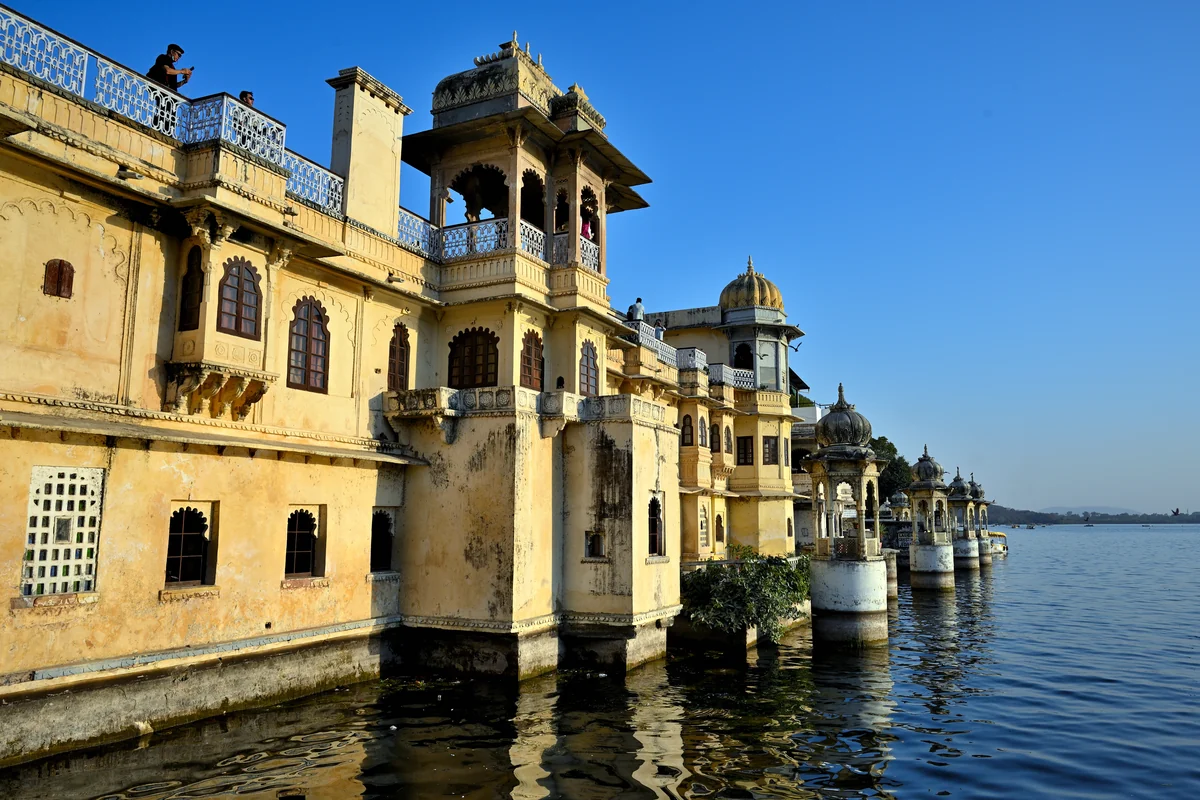
Choose a mansion by what you want to see
For historic mansions in India you can visit, start with the painted haveli museums of Shekhawati, Bagore Ki Haveli in Udaipur or the Tagore family home in Kolkata. For a stay in a restored merchant mansion, look at Saratha Vilas in Chettinad, Tamil Nadu, and check room availability directly with the hotel.
The search term “mansions in India” can also mean large homes for sale. The addresses here are documented historic houses or examples within heritage settlements. A heritage entry can help identify a building or explain why it matters. A purchase search requires a current listing for a specific property and confirmation of who has authority to offer it. The records behind this guide establish museum use, lodging or architectural interest.
For an architecture visit, choose the scale you want to understand. At a house museum you can concentrate on the relationship between the courtyard, the surrounding rooms and the displays. The Chettinad and Shekhawati dossiers also make it possible to read houses at settlement scale, in the context of the merchant communities that built them. An individual museum visit and a study of a town or village therefore answer different questions.
If you have time for one interior, pick a named house with a published visitor contact. Someone mainly interested in painted walls can begin with the Dundlod or Nawalgarh museum. Someone interested in how a large residence accommodated cooking and celebrations can use the hotel’s descriptions of Saratha Vilas to decide whether its former domestic spaces are worth making part of a stay.
| House | Location | Documented date or period | Current public use | Operator for access |
|---|---|---|---|---|
| Bagore Ki Haveli | Udaipur, Rajasthan | Eighteenth century, handed over to WZCC in 1986 | House museum | West Zone Cultural Centre |
| Seth Arjun Das Goenka Haveli | Dundlod, Rajasthan | 1875 in the operator record | House museum | Goenka Haveli Heritage Museum |
| Dr. Ramnath A. Podar Haveli | Nawalgarh, Rajasthan | Construction year outside this checked reference | House museum | Podar Haveli Museum |
| Saratha Vilas | Kothamangalam, Tamil Nadu | 1905 mansion, first lodging guests in December 2010 | Heritage lodging | Saratha Vilas |
| Jorasanko Thakurbari | Kolkata, West Bengal | 1784 property acquisition, Tagore born 1861, museum established 1962 | House museum | Rabindra Bharati University |
The dates establish different events. Saratha Vilas gives both a mansion date and the opening of lodging, and Rabindra Bharati University gives an early plot acquisition before the later expansion. Use the descriptions in the table when identifying a milestone or planning around the way a property operates today.
- UNESCO World Heritage Centre — India's Chettinad village clusters tentative submission
- UNESCO World Heritage Centre — Painted Haveli Towns of Shekhawati tentative submission
- West Zone Cultural Centre — official Bagore Ki Haveli Museum record
- Seth Arjun Das Goenka Haveli Heritage Museum — Dundlod official house history
- Dr. Ramnath A. Podar Haveli Museum — Nawalgarh operator site
- Saratha Vilas — Chettinad house operator history
- Rabindra Bharati University — Rabindra Bharati Museum and Jorasanko Thakurbari
Read Shekhawati’s painted merchant houses
India’s tentative submission for the Painted Haveli Towns of Shekhawati, dated 1 June 2026, puts the Rajasthan houses in a broader building programme. It traces merchant investment in houses and civic complexes from the mid-nineteenth century to the 1930s. That range belongs to the development described in the dossier. A date for a particular house needs evidence tied to that address.
The dossier discusses painting on both exteriors and interiors and identifies fresco buono and secco techniques. The distinction concerns the surface when the colour is applied. Buon fresco uses fresh, wet plaster, while secco work is done on a dry surface. The presence of wall painting in a photograph gives you something to locate during a visit. Identifying the technique of an individual painting takes a more specific record, such as a label or conservation description.
Start at the facade and follow the placement of painted surfaces as you move through the rooms or courtyards open to visitors. This lets you see how the work is encountered from the street and how its setting changes inside the house. At the Goenka museum in Dundlod, the documented facade murals and courtyard organisation give you two features to compare on the same visit.
The wider settlement framing matters when taking notes. A dated merchant house, a painted street facade and a civic building may all contribute to the same townscape. Record the building name and locality beside each observation. That small distinction makes it possible to check the history of the right building later, particularly when several images online are captioned simply as Shekhawati havelis.
Pick the right house museum in Dundlod or Nawalgarh
The Seth Arjun Das Goenka Haveli Heritage Museum is in Dundlod. Its operator dates the merchant residence to 1875 and documents its preservation as a museum. The facade murals, courtyard layout and restored domestic artefacts give you three ways to read the house. The paintings are part of the building’s fabric, while the objects provide cues about the activities once carried out in domestic rooms.
The Dr. Ramnath A. Podar Haveli Museum is in Nawalgarh. Its operator identifies decorative frescoes, paintings and other material displayed in the heritage house. Its public directions and contact details are the practical reference for a visit. The documentation used here establishes the museum’s location and function. If a construction date matters for your plans or notes, ask the museum which building record or exhibit label supplies it.
If a companion sends you a photo of a painted courtyard captioned only “Goenka haveli,” match the town and full museum name before arranging a meeting. The Dundlod operator’s history connects its museum to the 1875 house. For a meeting at the Podar museum, use its Nawalgarh directions. A town name is especially useful when the visual clues in a photo are painted walls and a courtyard, features that can recur across houses.
Choose Dundlod if you want to connect documented facade painting with domestic objects and courtyard organisation. Put Nawalgarh on your list if the Podar museum’s decorative work or displays are your priority. Check each operator separately when planning to see both. A confirmation from one museum applies to that venue, and exhibit information can help you decide which stop deserves more time.
Understand Chettinad at village and household scale
India’s Chettinad village clusters dossier, submitted on 15 April 2014, describes mercantile residential settlements in Tamil Nadu. It includes Kanadukathan, Pallathur, Kothamangalam and Kottaiyur in one cluster and places the residences in the context of wider trade networks. Those four names identify settlements. When planning a visit, pair the village name with the name of the actual house so you can distinguish a property record from a description of its surroundings.
Saratha Vilas is a named mansion in Kothamangalam. Its operator dates the house to 1905 and reports receiving its first hotel guests in December 2010 after restoration. The first date describes the residence’s origin in the operator’s history. The second records the start of its use for lodging. Together they help explain why the former domestic building can be experienced today through a hotel booking.
The operator identifies guest rooms within former domestic spaces and describes a Moonamkattu used for wedding food preparation. That detail gives the layout a social purpose. Preparing food for a wedding was an activity with its own place in the house. Read Moonamkattu here as a term used in the property’s account and consult house-specific documentation before assigning the same use to a space in another mansion.
If the purpose of an overnight stay is to understand the house, ask which former domestic space corresponds to the room you are considering and which courtyards guests can enter. That is more specific than asking for a heritage room. If your plan is a daytime look around, ask whether the hotel receives non-guests and what areas any visit would cover before building your day around it.
Explore Bagore Ki Haveli in Udaipur
The West Zone Cultural Centre attributes Bagore Ki Haveli to Amar Chand Badwa, who served as Mewar’s prime minister from 1751 to 1778. Eighteenth century is the useful date for comparing the residence with other houses in this guide. Badwa’s tenure adds context to the attribution, while the two endpoints of that tenure refer to his office. The centre also records the 1986 handover from Rajasthan, subsequent restoration and the building’s museum use.
The centre describes about 138 rooms as well as courtyards, balconies and terraces. Read the room count as a measure of the building’s scale. For a visit, ask which parts are on the current museum circuit. The sequence of open courtyards and upper levels will shape what you can see, including whether you can observe a courtyard from a balcony as well as from within it.
The combination of open courts and elevated spaces offers a simple way to look closely at the architecture. At each court, note which doors and passageways meet it and where you can see openings above. Then use any permitted upper viewpoint to look back. The views can help you understand the relationship between circulation on different levels and the open space at the centre.
If you are choosing between a museum visit and the separate performance programme, check the arrangements for the activity you want. A museum visit suits someone whose priority is to see the building and exhibits. To fit both into an outing, confirm the admission arrangements and whether the performance programme includes any of the spaces on your museum list.
Udaipur guide: City Palace, Lake Pichola and two-day itinerary
Read Jorasanko Thakurbari through its family and museum history
Jorasanko Thakurbari in Kolkata is the Tagore ancestral residence and home of the Rabindra Bharati Museum. Rabindra Bharati University records the acquisition of a plot in 1784 and later expansion into Bhdrasan Bari. Rabindranath Tagore was born there in 1861. The university was founded in 1961 and the museum was established the following year, in 1962. Each date marks a different event in the history of the address.
That sequence gives a visitor a way to read captions and room descriptions. A reference to the eighteenth century may concern the plot, while an account of Tagore’s birth places a particular family event in the nineteenth century. A museum display is part of a later institutional use. If you are recording the age of a wing or room, look for evidence about that part of the building, since the university describes the residence expanding over time.
The university lists museum hours of 10:30 to 17:00, with last tickets at 16:30 and closures on Mondays and specified holidays. Use the university’s museum notice to confirm your date. If you expect to arrive at 16:40, the published last-ticket time is the detail that governs your plan. Arrange an earlier arrival if the operator still lists that cutoff.
The university limits photography to the exterior and courtyard. For interior details you want to remember, record the wording of a room label in your notes or note its title and location for later reference. If you are visiting for architectural photography, use the building’s exterior and courtyard to plan your coverage and check with the museum about any additional conditions.
Match the house, date and access route
The useful comparison is between a named house, the event its date describes and the organisation that can confirm access. Use the table to carry those details into a map search, booking or call. For museum visits, ask about your intended day and the last admission time. For lodging, check the room and the access included with it. In a village or town with several historic houses, make any enquiry using the individual property name.
| House | Locality | Recorded milestone | Feature to look for | Access source |
|---|---|---|---|---|
| Seth Arjun Das Goenka Haveli Heritage Museum | Dundlod, Rajasthan | 1875 house date reported by the operator | Facade murals and courtyard organisation | Goenka museum operator |
| Dr. Ramnath A. Podar Haveli Museum | Nawalgarh, Rajasthan | Construction date unverified in the operator material reviewed | Decorative frescoes and paintings | Podar museum operator |
| Bagore Ki Haveli | Udaipur, Rajasthan | Eighteenth-century residence and 1986 handover | Courtyards, balconies and terraces | West Zone Cultural Centre museum information |
| Saratha Vilas | Kothamangalam, Tamil Nadu | 1905 mansion and first hotel guests in December 2010, according to the operator | Former domestic spaces and the documented wedding food preparation area | Saratha Vilas booking contact |
| Jorasanko Thakurbari | Kolkata, West Bengal | 1784 plot acquisition, Tagore’s birth in 1861 and museum established in 1962 | Ancestral residence and courtyard | Rabindra Bharati University museum notice |
For either Chettinad or Shekhawati, verify heritage status through the relevant World Heritage Centre entry. The dates in this guide refer to India’s tentative submissions, a stage in the nomination process. If you encounter a claim that a house is a World Heritage Site, check for an inscription record and read the named property and its scope. The access question belongs with the operator or owner, even when the house appears in heritage documentation.
A practical visit check gives the person answering enough detail to confirm what you will actually see. If an interior matters, ask which rooms or courtyards will be open on your date. If photography matters, ask where it is allowed. For a house described only in a settlement dossier, establish whether there is an operator or a contact able to confirm a visit. This is especially helpful when an exterior photograph names the village but gives no information about the house.
For a purchase enquiry, start with an identifiable property and a current offer. Match the village or town, address and building name across the listing and any heritage description before using construction dates or architectural claims in your comparison. Ask for the property-specific basis of any claim about ownership, access or permitted use. The house histories in this guide can help place a building in context, while those questions depend on records for the property being offered.
- UNESCO World Heritage Centre — India's Chettinad village clusters tentative submission
- UNESCO World Heritage Centre — Painted Haveli Towns of Shekhawati tentative submission
- West Zone Cultural Centre — official Bagore Ki Haveli Museum record
- Seth Arjun Das Goenka Haveli Heritage Museum — Dundlod official house history
- Dr. Ramnath A. Podar Haveli Museum — Nawalgarh operator site
- Saratha Vilas — Chettinad house operator history
- Saratha Vilas — first-party mansion room and courtyard descriptions
- Rabindra Bharati University — Rabindra Bharati Museum and Jorasanko Thakurbari
Sources
- UNESCO World Heritage Centre — India's Chettinad village clusters tentative submission
- UNESCO World Heritage Centre — Painted Haveli Towns of Shekhawati tentative submission
- West Zone Cultural Centre — official Bagore Ki Haveli Museum record
- Seth Arjun Das Goenka Haveli Heritage Museum — Dundlod official house history
- Dr. Ramnath A. Podar Haveli Museum — Nawalgarh operator site
- Saratha Vilas — Chettinad house operator history
- Saratha Vilas — first-party mansion room and courtyard descriptions
- Rabindra Bharati University — Rabindra Bharati Museum and Jorasanko Thakurbari
- Wikimedia Commons — Sharvarism, Bagore Ki Haveli in Udaipur
