The essential visit details
Karni Mata Temple in Deshnok is about 30 km from Bikaner in Rajasthan. Rajasthan Tourism lists the temple as open from 04:00 to 22:00 daily and says ordinary admission is free. This is the temple associated with revered resident rats. Use the destination Karni Mata Temple, Deshnok, Bikaner district when planning your route. The hill temple dedicated to Karni Mata in Udaipur has its own access and operator information.
Start with a morning block from Bikaner if you also want to visit Junagarh Fort on the same day. The temple’s published hours cover a long part of the day, while the Ministry of Tourism lists the fort as open from 10:00 to 16:30. Plan separate door-to-door journeys and confirm the fort’s last admission. When you want to see the temple at a particular ritual time, confirm that with the site rather than treating the opening time as the ritual time.
For rail, match Deshnok station code DSO to the train’s actual stopping pattern on your date. Bikaner Junction is BKN. A journey to Bikaner Junction followed by a road transfer is another valid plan, particularly if the trains stopping at Deshnok do not give enough time for the visit or return. Keep the temple, station and pickup point as separate destinations in your notes.
- Incredible India visitor listing for Karni Mata Mandir in Deshnok, Bikaner district
- Rajasthan Tourism site record for Deshnok temple and Bikaner road approach
- Northern Railway's 2026 revision identifies Deshnok and Bikaner rail station codes
- Incredible India Junagarh Fort visitor listing in Bikaner
- Incredible India location distinction for Udaipur's Shri Manshapurna Karni Mata Temple
Temple hours, admission and fair dates
The detailed Rajasthan Tourism temple page was marked updated 30 July 2026. It gives a regular window of 04:00 to 22:00 every day and ordinary admission as free. Incredible India publishes the same general hours. Rajasthan Tourism describes offerings separately, so visitors can distinguish the ordinary published admission from the customary transactions and devotional arrangements that may take place at the temple.
The same state source mentions Mangla-ki-Arti without giving an exact start time. No verified site schedule was found for inner darshan intervals, queues, particular aarti times or the last visitor entry of the day. Build your itinerary with time to approach the shrine, ask about the regular route and allow for the site’s announcements. An outer door may operate over a wider period than a particular ritual or part of the temple.
Rajasthan Tourism describes fairs associated with the Chaitra and Ashwin Navratras. It places them broadly in March or April and September or October. Their Gregorian dates move, and a confirmed future event timetable was not available in the sources checked. If your visit depends on a fair, ask about specific dates, local access and transport for the month and year you intend to travel. If quiet time matters more, confirm the dates before choosing your day.
Keep a clearly timed way back when planning around a fair or a late visit. Your accommodation may be able to confirm a pickup location away from a crowded gate. The regular temple hours help decide how early or late a visit might be possible. The actual length of a queue and changes to local traffic arrangements are date-specific.
Reach Deshnok by road or by train
The local Government College places Deshnok on NH 62, referred to in its material as the former NH 89. North Western Railway’s tourism guide puts the temple on the road from Bikaner towards Jodhpur. From Bikaner, use the exact temple name and the district in your route search. The state tourism distance of about 30 km is a planning reference, and the time from your hotel will depend on the route, stops and traffic.
If travelling by car with a driver, confirm who will be there for the return and where you will meet. Ask whether timing is flexible if the queue takes longer than planned. A taxi stop or parking lot identified on a map can be useful as a landmark. The reviewed official sources give no reliable ordinary taxi fare, local bus frequency or guarantee of parking near the entrance. Check directly for the date and the pickup arrangements you need.
For rail, the Northern Railway’s August 2026 record identifies DSO and BKN. It includes blank cells for some intermediate stations, so it works as a station reference but may leave a stop time unstated. Check a current railway search for your specific train and direction. Plan the leg from Deshnok station to the temple, including how you will return, before using a short turnaround. A station code in a public timetable does not establish that every passenger service on the corridor stops there.
For a visitor travelling onward towards Jodhpur, decide whether to return to Bikaner or continue from Deshnok by checking the booked service and luggage plan. If your bags are at a Bikaner hotel, returning there may fit the rest of the route better. Verify arrangements for bags if you need them. The temple visitor sources did not establish a current official luggage storage or bag policy.
| Place | Identifier or approach | Verify on your date |
|---|---|---|
| Deshnok railway station | DSO | Both booked trains stop there. Plan the last leg and return. |
| Bikaner Junction | BKN | Meet the driver or board your onward train at the actual ticketed station. |
| Karni Mata Temple at Deshnok | Approximately 30 km from Bikaner, via NH 62 corridor | Enter Deshnok, Bikaner district as the attraction locality. |
| Manshapurna Karni Mata, Udaipur | Separate hill temple and access arrangements | Use Udaipur operator information only for that temple. |
- Rajasthan Tourism site record for Deshnok temple and Bikaner road approach
- Northern Railway's 2026 revision identifies Deshnok and Bikaner rail station codes
- Incredible India location distinction for Udaipur's Shri Manshapurna Karni Mata Temple
- Government College Deshnok, NH 62 location
- North Western Railway tourism reference for Deshnok
Understand the traditions at the shrine
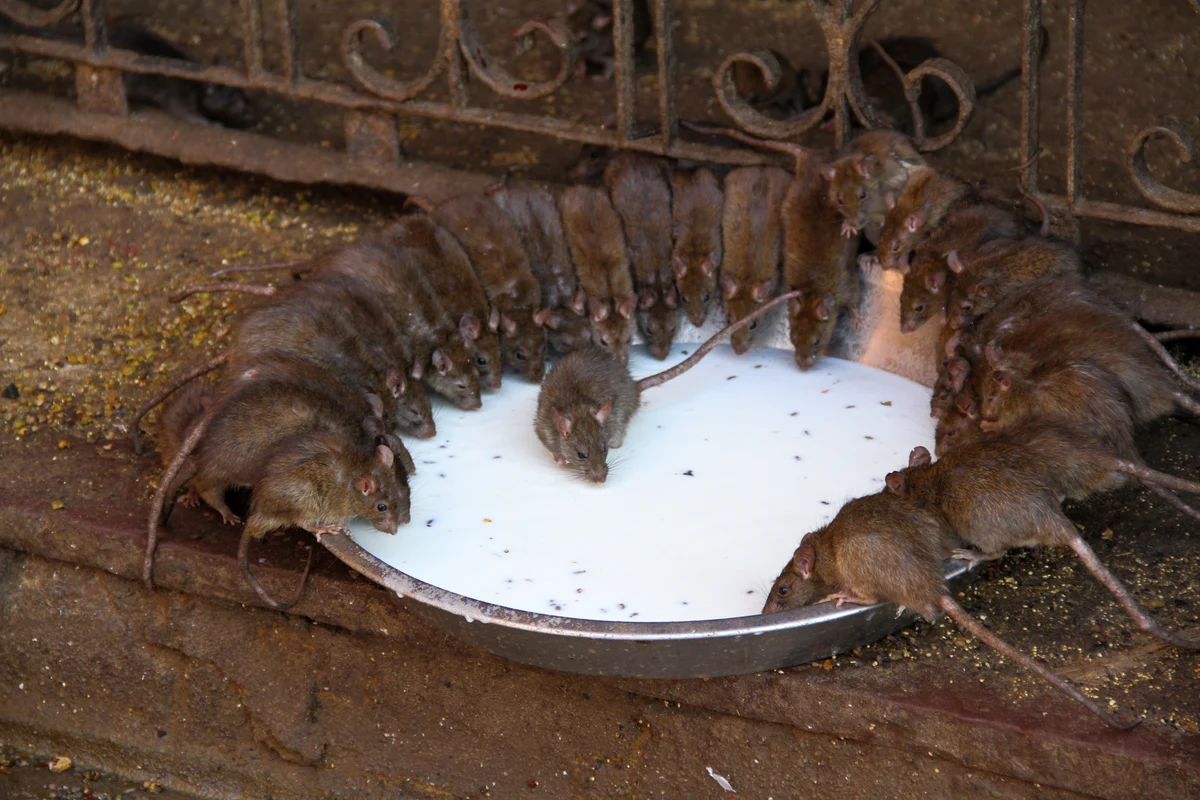
The national tourism listing describes the rats at Deshnok as revered within the worship tradition. The animals are part of how visitors experience this particular temple. Stories about their origin or the significance of seeing a white rat belong to local and devotional tradition. Respect the people attending the temple and give the animals space. A visit can include observing quietly when the staff and the queue allow it.
The archived photograph below shows animals at the temple in December 2013. Its date and the photographer’s description tell you what that image documents. It supplies no estimate of the current rat population. It also cannot establish the photography rules for a visit now. Before taking pictures, ask whether the specific area and activity can be photographed and follow the response.

Bring clothing suitable for an active place of worship and follow instructions on removing footwear where required. The Ministry’s general arrival information advises being attentive to worship-site customs. This shrine’s precise current sock, bag and camera policies were not verified in an operator source. If the rules affect your comfort or accessibility, ask at the site before committing to the queue.
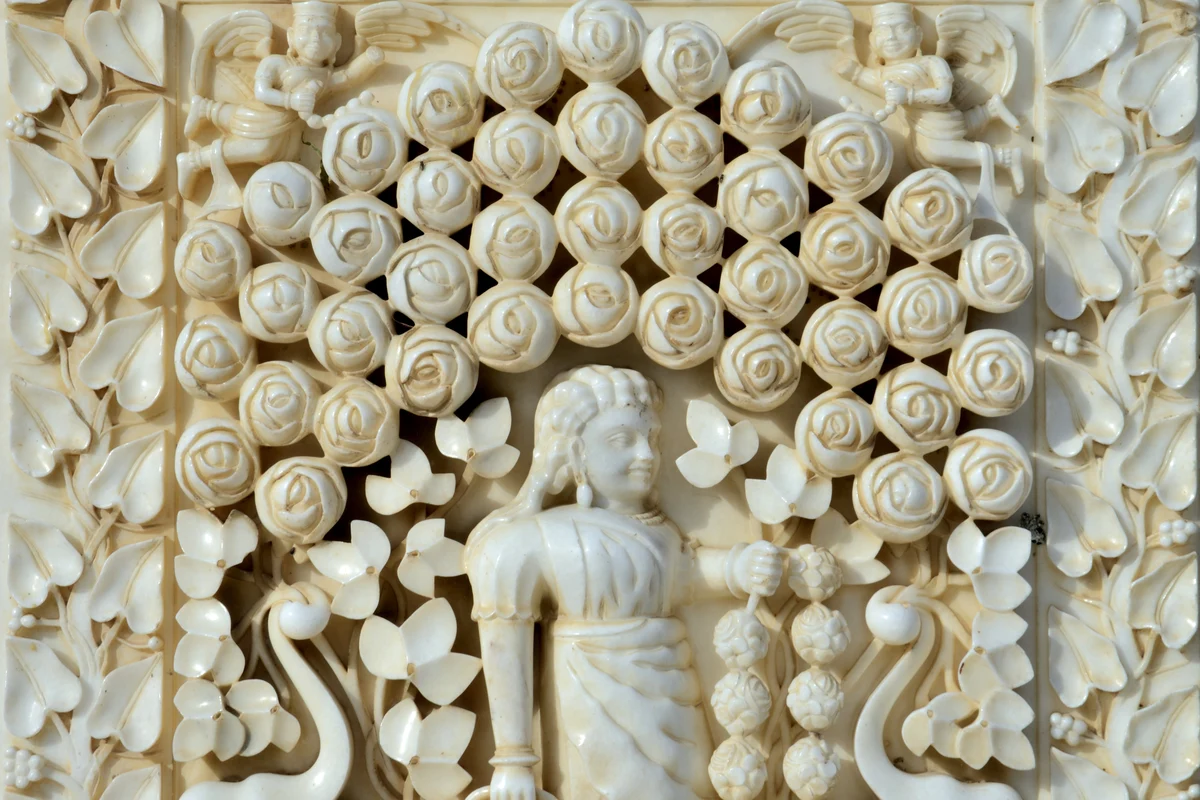
The carved marble exterior is another feature of the Deshnok visit. The Ministry of Tourism associates the entry’s patronage with Maharaja Ganga Singh in the early twentieth century. A photograph of the exterior helps identify the scale and detail of the stonework, and the visitor policy still governs what you can photograph. Keep the exterior, main shrine and devotional activities distinct in a caption or trip report.
Combine the temple with one Bikaner stop
For a simple full day based in Bikaner, visit Deshnok in the morning and return with a buffer before Junagarh Fort. The latter’s Ministry of Tourism listing gives 10:00 to 16:30. The fort and museum are another site with separate entry and last admission. If your return is taking longer than expected, use the temple and fort as separate days or choose an afternoon activity based on a confirmed later entry.
The National Camel Research Centre has a published visitor window of 14:00 to 18:00 on the national tourism page. Use that as another option if you can travel independently to the centre. The reviewed primary sources do not establish a current admission fee or specific feeding, ride or show schedules. Confirm those separately if they are central to your visit.
The Shri Karni Mata Panorama has its own state heritage project record and is mentioned in the government tourism overview of Deshnok. This has a different status from the temple’s door and admission policy. Its current operations, entrance, admission cost and hours were not verified. Treat it as a potential local stop only after you have confirmed visitor access.
Choose a schedule with one fixed booking and give the transfers room to move. If the objective is the atmosphere of worship rather than sightseeing, a temple-only morning or afternoon is a complete visit. If the aim is the carved exterior and a second town attraction, set an explicit time to leave Deshnok. Check attraction hours and admission with each operator before packing both into one ticketed day.
| Stop | Published regular window | Visitor terms |
|---|---|---|
| Karni Mata Temple, Deshnok | 04:00–22:00 daily | Free ordinary admission per Rajasthan Tourism. Ritual schedule unverified. |
| Junagarh Fort, Bikaner | 10:00–16:30 | Separate venue. Confirm ticket and last admission. |
| National Camel Research Centre, Bikaner | 14:00–18:00 | Price and activity times unverified. |
| Shri Karni Mata Panorama, Deshnok | Current hours unverified | Separate interpretive project. Confirm operating status. |
Rajasthan travel guide: Jaipur, desert forts and Mewar routesJodhpur travel guide: Mehrangarh Fort, Blue City and Mandore
Plan a departure and a return around your priorities
For a temple-first day, leave Bikaner with enough time to approach the entrance at your own pace, return by the arrangement you agreed with the driver and then decide about the fort. You can use the national tourism figure of 16:30 for Junagarh as the outer limit when putting together a rough itinerary. Set the transport and fort admission checks earlier. This avoids making a trip through town that depends on the full published opening window.
For a rail-first day, look at both directions before buying either ticket. A convenient arrival at DSO may be followed by a long gap in the return service or a departure too soon for the temple and the station transfer. Check which train you actually booked, where it stops and whether your group can manage the waiting time. If a short train return is impractical, consider arranging a separate road pickup or spending that part of the day in Deshnok.
For a fair-centred visit, first confirm which Navratra observance you mean and obtain venue or local advice for the particular date. In a larger crowd, use a specific meeting point rather than agreeing to meet “at the temple.” Ask your accommodation or driver which pickup points are easy to use with your group. Someone travelling with elderly relatives or young children can place a shorter visit in a quieter part of the day if the local information supports it.
- Incredible India visitor listing for Karni Mata Mandir in Deshnok, Bikaner district
- Rajasthan Tourism site record for Deshnok temple and Bikaner road approach
- Ministry of Tourism Utsav event record for the Karni Mata Fair, Deshnok
- Northern Railway's 2026 revision identifies Deshnok and Bikaner rail station codes
- Incredible India location distinction for Udaipur's Shri Manshapurna Karni Mata Temple
- Government College Deshnok, NH 62 location
- North Western Railway tourism reference for Deshnok
- Rajasthan Heritage Protection and Promotion Authority Karni Mata Panorama record
- Incredible India Junagarh Fort visitor listing in Bikaner
- Incredible India ICAR National Research Centre on Camel visitor listing in Bikaner
Sources
- Incredible India visitor listing for Karni Mata Mandir in Deshnok, Bikaner district
- Rajasthan Tourism site record for Deshnok temple and Bikaner road approach
- Northern Railway's 2026 revision identifies Deshnok and Bikaner rail station codes
- Rajasthan Heritage Protection and Promotion Authority Karni Mata Panorama record
- Incredible India Junagarh Fort visitor listing in Bikaner
- Incredible India ICAR National Research Centre on Camel visitor listing in Bikaner
- Ministry of Tourism Utsav event record for the Karni Mata Fair, Deshnok
- Incredible India location distinction for Udaipur's Shri Manshapurna Karni Mata Temple
- Original exterior marble photograph at Karni Mata Temple by Sharvarism
- Original documentary image of rats at Karni Mata Temple by Bhups77
- Government College Deshnok, NH 62 location
- North Western Railway tourism reference for Deshnok
- Incredible India, general visitor questions and customs
