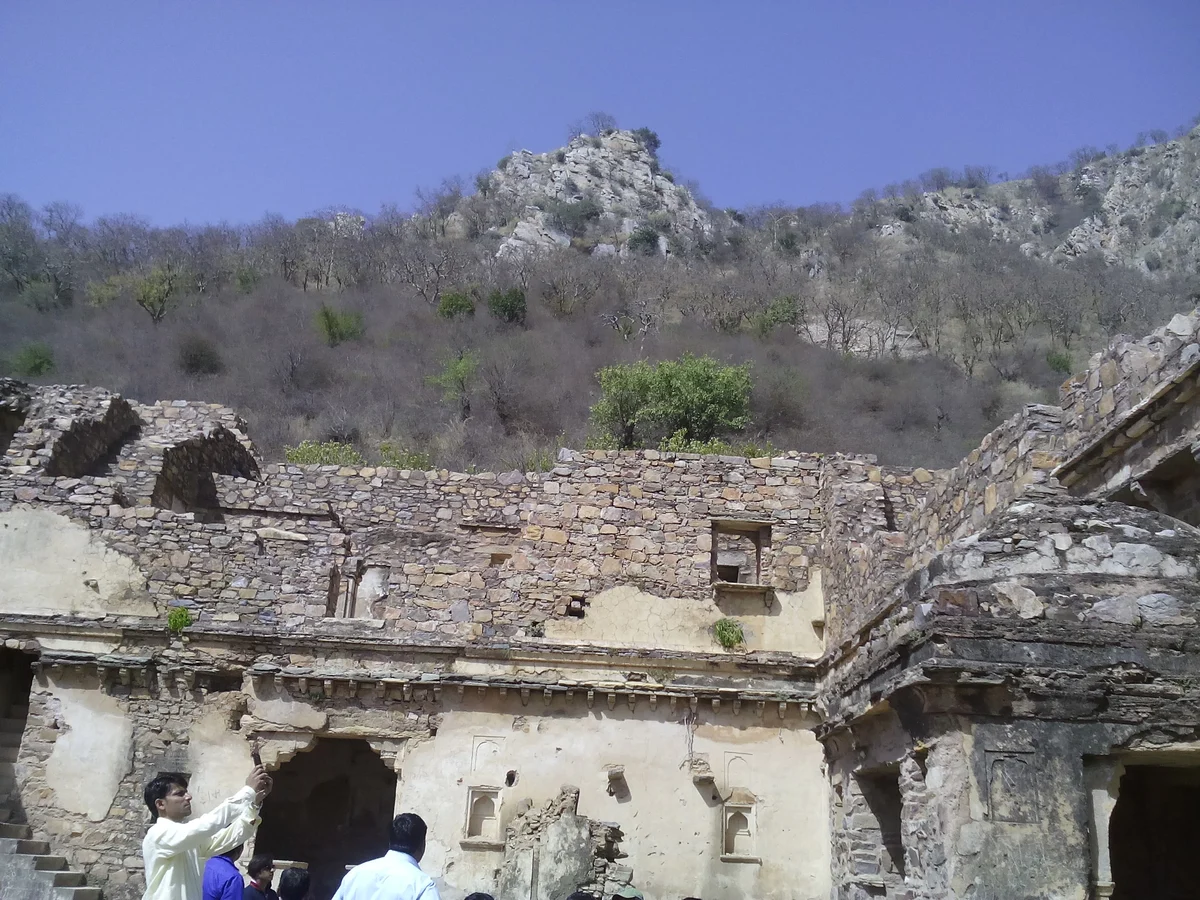
Where Bhangarh Fort is and when to go
Bhangarh Fort is a protected historic settlement in Rajgarh tehsil, Alwar district, Rajasthan. For a first visit, aim for the middle of the day and leave time to get back to the entrance before closing. The Archaeological Survey of India’s general rule and Rajasthan’s site-specific heritage account both support a daylight visit. A current gate notice governs the practical hours on your date.
Use Alwar as a regional locator when you search. The destination label in the official guides identifies the area, while a journey planner needs your actual starting point and the public visitor entrance. If you are already in Rajasthan, enter your accommodation or pickup point. If you are researching from abroad, start with where you expect to spend the preceding night. That gives you a basis for deciding whether the fort fits your itinerary.
The useful question for a day trip is how much time you can spend at the site after allowing for the approach and return. Consider Bhangarh on its own first. Once you have a workable arrival and departure, you can see whether another stop fits. A map may make several places look close together while leaving the final approaches and pickup arrangements unclear.
If your schedule gives you only one possible day, confirm access for that date before arranging transport around the fort. On a flexible itinerary, keep the order of your stops open until you have a usable entry window. The distinction matters because a change at the site can affect both the value of the drive and the time you have for the rest of the day.
- Rajasthan Tourism | Bhangarh Fort
- Incredible India | Bhangarh Fort visitor guide
- Archaeological Survey of India | Protected Monument Visiting Rules
- Rajasthan Government | Site-Specific Bhangarh Daylight Access
- Archaeological Survey of India Jaipur Circle | Ticketed Bhangarh Site
- Indira Gandhi National Centre for the Arts | Archaeological Inventory of Ancient Site, Bhangarh
What the ruins establish and where folklore begins
Rajasthan Tourism distinguishes the physical fort and its remains from the stories associated with Bhangarh. Incredible India describes the ruined settlement. Together, these accounts support a visit focused on the built site and its setting. The settlement description also gives you a useful way to read what you encounter. Look at the relationship between visible remains, open spaces, and the paths you can follow from areas open to visitors.
A building’s appearance can prompt questions about its purpose or age. A specific identification needs a source that can connect the structure you are looking at to a name or function. If there is an interpretive panel, read the wording and check what it identifies. A panel about the settlement as a whole may give context while leaving the date and use of a particular ruin open.
Treat a story you hear as an account associated with the place and keep its attribution when you pass it on. If a version gives a reason the settlement fell into ruin, establishing that account as history would require evidence about when and how the settlement changed. The condition of the buildings today, on its own, cannot establish a particular cause.
If a guide gives a name to a structure and then tells a story involving it, record those as two claims. A labelled plan or archaeological description could substantiate the structure’s identification. The guide’s account can be attributed to the person who told it. That lets you retain the local telling while keeping a clear record of what you could verify about the site.
The archaeological inventory attributes the late-sixteenth-century township to Raja Bhagwan Das of Amber and identifies Bhangarh as a later capital of Madho Singh. Rajasthan Tourism connects the fort with Madho Singh in a separate account. The archaeological inventory describes walls, a bazaar, residential buildings, temples and palace remains. Those records let you distinguish a surviving historic settlement from stories about why people left it. A story told on a tour is evidence of local folklore and needs its own attribution.
Look for the remains of shops and dwellings as well as the palace. The archaeological site plan identifies the Gopinath, Someshwar, Keshav Rai and Mangla Devi temples. Use the names on the plan or posted signs to locate buildings and stay within routes open to visitors. The Royal Palace photograph shows the state of the ruins in 2015. Its view is a reference for the architecture, with the route and condition of the paths to be checked at the site.
Verify admission and closures for your date
Daylight access describes the general pattern reported by Incredible India. To turn it into a plan, check three separate times for your visit date. Find out when visitors can first enter, when the last visitor is admitted, and when people already inside must leave. Sunset on a weather app can help you judge outdoor light, but the applicable admission and exit times come from the site’s current instructions.
Start with current official notices that name Bhangarh and cover your date. If a notice is undated or the general tourism listing leaves the hours unclear, use an official tourism or site contact and ask specifically about that day. Ask whether any closure affects all admission or only part of the site. A partial restriction can still change the visit if it covers the area you most want to see.
On arrival, read the posted directions before going in. If the sign and the information you received earlier differ, ask the staff at the entrance which instruction applies that day. When travelling with a driver, relay the confirmed exit time and agree on the pickup point before you start walking. Your agreed departure should give you time to reach that point after leaving the visitor area.
If you can reach Bhangarh only late in the day and the listing gives a closing time without specifying last entry, confirm admission before committing to the journey. Even if you can enter, ask when you must be back at the exit. Those two answers tell you whether your remaining visit time is enough to make the stop worthwhile.
| Check | Documented reference | Detail to confirm for your visit |
|---|---|---|
| Daylight access | ASI visiting rules and Rajasthan heritage plan | Posted gate opening, last admission and exit time |
| Admission | Jaipur Circle lists a ticketed monument | Current price, category and ticket method |
| Approach | ASI tender names main-road parking and Ajmeri Gate | Staffed entrance and any detour |
| Facilities | Ministry reported water, benches, first aid, a wheelchair and accessible toilets in March 2026 | Available equipment and walking or wheelchair route |
| Return transport | Dausa and Gola-ka-Bas appear in the archaeological inventory | Your current service or confirmed driver pickup |
The Jaipur Circle includes Ancient Site at Bhangarh among its ticketed monuments. The two Incredible India listings display different fixed hours, 09:00 to 17:00 and 06:00 to 20:00. Both describe daylight restrictions. Use a visit comfortably inside daylight and confirm the posted opening, last admission and exit separately. Check the official directory for the named site and your ticket category. The current payable amount and an online checkout for this particular site were not verified on 26 November 2026.
- Incredible India | Bhangarh Fort visitor guide
- Archaeological Survey of India | Protected Monument Visiting Rules
- Archaeological Survey of India | Rule 5 and Protected Monument Closures
- Rajasthan Government | Site-Specific Bhangarh Daylight Access
- Incredible India | Alternate Dausa Bhangarh Listing
- Archaeological Survey of India Jaipur Circle | Ticketed Bhangarh Site
- Ministry of Culture | Lok Sabha Reply on Bhangarh Visitor Amenities, 23 March 2026
- Ministry of Culture | Lok Sabha Reply on Bhangarh's Protection
- ASI public monument ticket directory
Choose a route to the visitor entrance
Build your route from your departure point to the entrance you intend to use. Search results and map labels can show the centre of an attraction, a settlement, or a place where someone took a photograph. Check that the pin you choose corresponds to the public entrance and ask where vehicles actually stop. If a driver names a pickup location, compare that pin with the entrance as a separate step.
When a navigation app offers several approaches, check which one suits your vehicle and whether any current road issue affects the final stretch. A driver familiar with the approach may be able to explain where the car can turn, stop, or wait. Ask about the route they expect to take on your date. Use any travel time you receive as an estimate and leave room for a slower approach when admission is time sensitive.
For a bus or shared vehicle, find out the name of the stop, how you get from there to the public entrance, and where to board for the return. Verify those pieces for the direction and day you actually need. A service that gets you into the wider area helps only if the remaining distance and return connection fit your time and walking requirements.
If you are comparing a day trip from Jaipur with a visit while staying in the Alwar area, run each journey from the place where you would actually start. Include the return to your accommodation or the onward leg to your next stop. Look at when each option would put you at the visitor entrance. The better fit is the one that gives you a confirmed admission window and a workable departure.
The ASI tender for work with a July 2026 closing date names the route from the main road to parking, the toilet block to Ajmeri Gate and the connection between Keshav Rai and Someshwar temples. The notices identify places to ask staff about. A tender alone supplies no completion date for the approach work. Check which gate serves visitors and agree on the parking or pickup point before the driver leaves.
Arrange the return before you enter
With a hired car, establish whether the driver will wait nearby or come back to collect you. Agree on an exact pickup point you can identify on foot, especially if you plan to finish the visit near closing. Confirm how you will reach each other if the visit ends early or if you are directed to leave from a different point. Save the meeting point and contact details so you can consult them without reopening a booking screen.
With public transport or separate rides, work backwards from the return option you can verify. Include time to reach the stop after leaving the visitor area and to make any onward connection. If a transport operator gives you an approximate departure, ask where to wait and how you can tell that you are boarding the right vehicle. This is especially useful when several services use the same stop.
If your outbound driver offers to drop you at Bhangarh and you plan to book the return separately, first check whether a provider will collect you at that exact point at the time you need. If that remains uncertain, price and availability can be checked for a round trip with a waiting driver before you decide. Base the comparison on the actual pickup arrangement and the time you would have at the ruins.
Dausa railway station and Gola-ka-Bas bus station appear in the archaeological inventory as approach references. Check the current Indian Railways lines and any local connection for your own date. In the absence of a verified last bus or a staffed taxi rank, arrange a return as a separate leg, with a pickup time that allows you to leave the protected area before the gate closes.
Plan the walk around your group
The official descriptions establish that you are visiting ruins. If walking conditions decide whether someone can join, ask about the specific route from the drop-off to the first place they would like to see. Useful details include steps, gradients, the surface underfoot, and places to rest. Check the approach from the vehicle as well as the path once inside. Either stretch can determine whether the outing works for your group.
Ask what facilities are available on the date you are going and where they are in relation to the entrance. A toilet near the vehicle stop calls for a different plan from one you can reach during the visit. Check the weather for your intended arrival window and use that forecast when deciding how long to spend outdoors and what to carry. Take current site directions into account when choosing where to walk or stop.
If one person in your group is comfortable with a short walk and needs a place to sit, ask whether there is a permitted viewing point within their walking range and somewhere they can rest. If the answers are clear, plan that part together and agree on a meeting time if other members want to continue. The same approach works when someone wants time for photographs and the rest of the group prefers a shorter visit.
A Ministry of Culture reply dated 23 March 2026 reported directional signs, drinking water, benches, first aid, a wheelchair and toilets including an accessible one. Ask about the ground between parking, the gate and the part of the ruins you want to reach. The dated inventory establishes that the ministry reported those facilities. Continuous routes, the gradient and the availability of equipment on your day require a local check.
- Rajasthan Tourism | Bhangarh Fort
- Incredible India | Bhangarh Fort visitor guide
- Archaeological Survey of India | Protected Monument Visiting Rules
- Ministry of Culture | Lok Sabha Reply on Bhangarh Visitor Amenities, 23 March 2026
- Archaeological Survey of India Jaipur Circle | Bhangarh Approach Path Tender
- Indira Gandhi National Centre for the Arts | Archaeological Inventory of Ancient Site, Bhangarh
Sources
- Rajasthan Tourism | Bhangarh Fort
- Incredible India | Bhangarh Fort visitor guide
- Archaeological Survey of India | Protected Monument Visiting Rules
- Archaeological Survey of India | Rule 5 and Protected Monument Closures
- Rajasthan Government | Site-Specific Bhangarh Daylight Access
- Incredible India | Alternate Dausa Bhangarh Listing
- Archaeological Survey of India Jaipur Circle | Ticketed Bhangarh Site
- Ministry of Culture | Lok Sabha Reply on Bhangarh Visitor Amenities, 23 March 2026
- Archaeological Survey of India Jaipur Circle | Bhangarh Approach Path Tender
- Indira Gandhi National Centre for the Arts | Archaeological Inventory of Ancient Site, Bhangarh
- Ministry of Culture | Lok Sabha Reply on Bhangarh's Protection
- ASI public monument ticket directory