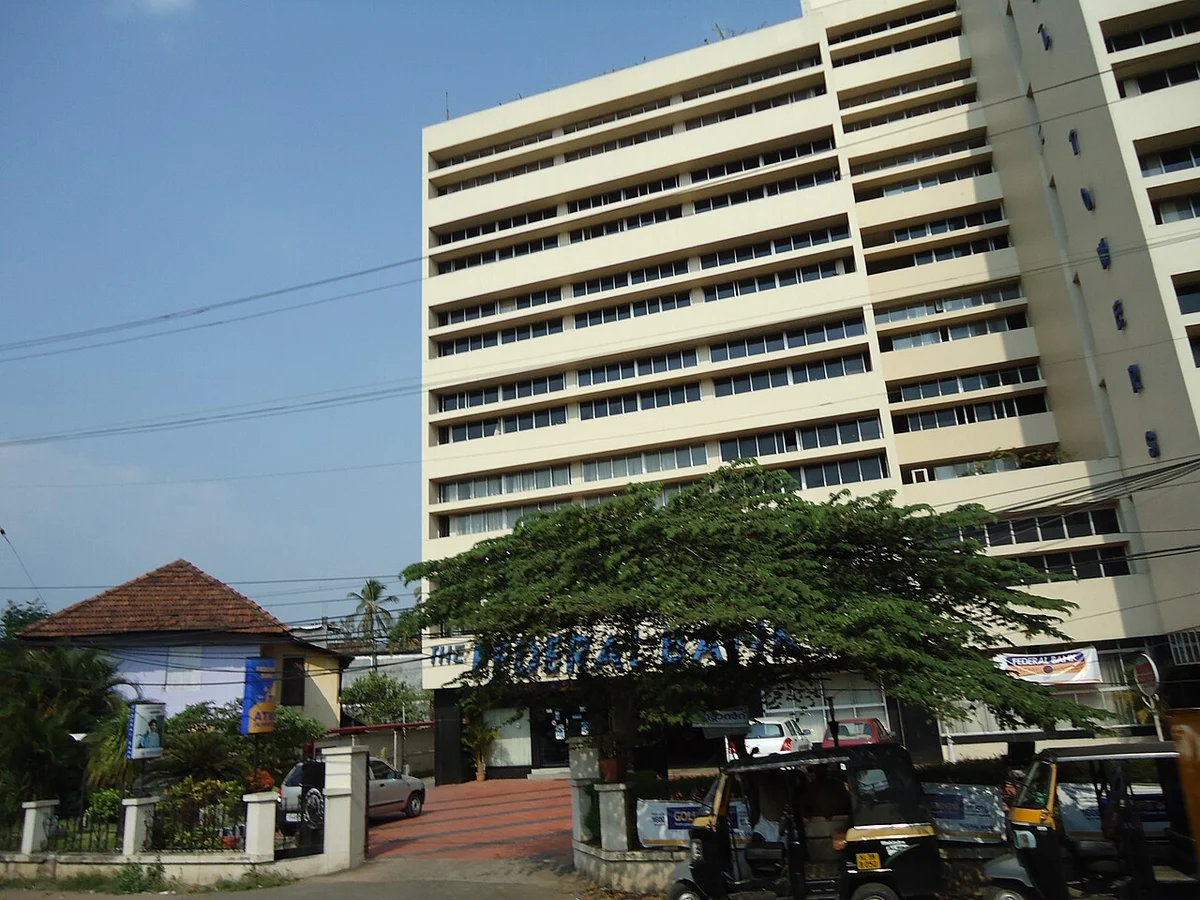
Choose the account route by residency and purpose
Federal Bank offers resident savings accounts in India and separate NRE and NRO savings routes for eligible nonresidents. Start with the resident product list if you qualify as a resident, the NRE list if you need an account with repatriation features, or the NRO list if you are an eligible nonresident handling local rupee income.
The useful distinction is between opening an account for future use and dealing with money or an account you already hold. A move overseas can raise both questions at once. Federal Bank’s March 2025 deposit policy distinguishes resident and nonresident deposits. If your circumstances have changed, ask the bank which classification applies to your existing account and which product and application route fit the transactions you expect to make.
Suppose you live overseas and receive rent in India. The NRO savings documents give you a starting point for checking the account route for that local income. If you also want to send some of the proceeds abroad, check Federal Bank’s separate NRO repatriation information for that transaction. That gives you two concrete questions for the bank, one about receiving the rent and one about the documents required for a later transfer.
Compare resident savings balances and interest
Open the product card and agreement for the resident savings variant you are considering. Federal Bank lists lower-balance routes, and the balance conditions, onboarding requirements and available application channels depend on the variant. If a zero-balance headline caught your eye, match it to the exact product name on the application and check that product’s agreement. Ask which balance measure applies and what the agreement says happens if your balance falls below the requirement.
The savings interest schedule answers a different question from the product agreement. Effective 16 July 2026, Federal Bank’s published savings rate for balances up to and including ₹1 lakh was 2.50% per annum. The bank calculates interest using daily closing balances and credits it quarterly. A product’s balance requirement comes from its own terms, so keep both documents handy when comparing accounts.
A balance held steady at ₹50,000 for a full year at a constant 2.50% gives an illustrative simple calculation of ₹1,250 before other effects. For an account that receives a salary and then funds regular spending, the daily closing balances determine the interest calculation. A single month-end snapshot gives you little information about the balances on the intervening days. If you expect to hold more than ₹1 lakh, read the current schedule’s higher-slab wording before estimating interest across the whole balance.
Match a fixed deposit rate to the exact term
Federal Bank’s ordinary retail term deposit schedule effective 12 November 2026 quoted annual rates for a single deposit under ₹3 crore. It applies the general rate to ordinary NRO fixed deposits and excludes NRO and ONR deposits from the resident senior uplift. For an NRE fixed deposit, use the separate NRE rate table and check its minimum conditions. That account category has its own schedule.
The exact maturity date can change the quoted rate. For a general-category depositor using the November schedule, exactly 18 months carried 6.80% per annum, while a term just beyond 18 months and under two years carried 6.55%. If your spending date falls shortly after the 18-month mark, compare the earlier maturity with the date you actually need the money before selecting a term. For a maturity amount, ask for a quote using your deposit amount, maturity date and interest payment option. The annual percentages provide the rate comparison.
| Term | General rate per annum | Resident senior rate per annum |
|---|---|---|
| 7 to 29 days | 3.00% | 3.60% |
| 30 to 45 days | 3.25% | 3.85% |
| 46 to 90 days | 5.00% | 5.60% |
| 91 to 180 days | 5.10% | 5.70% |
| 181 to 270 days | 6.00% | 6.60% |
| 271 days to less than one year | 6.05% | 6.65% |
| Exactly one year | 6.50% | 7.10% |
| Over one year to under 18 months | 6.55% | 7.15% |
| Exactly 18 months | 6.80% | 7.40% |
| Over 18 months to under two years | 6.55% | 7.15% |
| Two years to under three years | 6.80% | 7.40% |
| Three years to ten years | 6.60% | 7.20% |
Read the premature closure terms before booking if the money may be needed sooner. The ordinary rupee fixed deposit penalty schedule lists nil for up to 15 days for a deposit under ₹3 crore, then 1%, subject to the relevant eligibility and tenor conditions. The penalty entry alone cannot tell you the interest payable on early closure. Ask for the bank’s calculation for the actual deposit and proposed closure date. Deposit Plus has no preclosure, a minimum term of 12 months and a separate rate table. In the displayed segment under ₹3 crore, its minimum deposit is ₹1,00,00,001.
The table gives annual interest rates by contracted term for the scheduled product and amount. The effective annualised return may differ for a reinvestment product. Compare that measure with the same measure for another offer, using the same deposit size and start date. If you need to leave early, ask how the bank calculates the interest for the actual period held and whether a penalty or non-callable condition applies.
Build the document checklist for your NRE or NRO application
Use the document list linked from the exact Federal Bank NRE or NRO savings product and select the applicant category that fits your circumstances. The bank’s application sources give document choices by customer category and route. Check whether the bank can handle your application from your country of residence through the channel you intend to use, and confirm the exact balance requirement for the variant you select.
- Passport details and the pages required for your applicant category.
- Evidence of overseas residence or permission that the bank accepts for your circumstances.
- The applicable address evidence, including which address the bank wants to verify.
- Photograph requirements and any tax status information or declarations requested.
- The bank’s instructions on where to submit documents and how it verifies them.
If you recently moved overseas and the address on your passport differs from the address you now use, check which document the applicable checklist accepts for your overseas address. Give the bank the document type and ask how it handles the mismatch before sending a full application. This is also a good point to confirm whether the route is for a new account or for a change to an existing relationship.
If overseas access matters after opening, check the servicing route separately. Federal Bank’s FedNet FAQ describes digital servicing for several account types, including eligible nonresident accounts. Confirm that your account qualifies, and ask what support is available from where you live for the operation you need. Treat opening, activating digital access and carrying out a specific service request as distinct checks, each with its own eligibility or verification steps.
| Customer purpose | Bank’s public starting point | What to check separately |
|---|---|---|
| Resident savings | Resident savings account directory | Variant, minimum or average balance, interest and charges |
| Eligible nonresident saving with repatriation features | NRE savings account directory | KYC, residency, permitted credits and exact variant |
| Eligible nonresident handling Indian rupee income | NRO savings account directory | Tax status, supported credits, application and repatriation requirements |
| Qualifying resident or NRO ordinary term deposit | Resident term deposit table | Exact tenor, interest-credit method, senior-rate scope and early withdrawal |
| Unclaimed deposit or inoperative account | Federal Bank’s unclaimed deposits page | Bank claim or revival process and current identity documents |
Check charges and timing for an overseas transfer
Federal Bank’s November 2026 cross-border information lists different remittance and NRO repatriation cases and sets out supporting paperwork. Start with the entry that matches the transaction you need, including the account the funds will come from and the purpose of the payment. An NRO savings product page can help with account selection. The cross-border document is where you check which evidence the bank asks for when it processes a transfer.
The publication gives examples of a flat ₹1,000 charge and a ₹500 SWIFT charge, each subject to the stated scope. Adding those figures before checking applicability can give you the wrong budget. Ask the bank which published charges apply to the transfer and what it can quote for the amount, currency and destination. If you need a specific amount to arrive, ask which deductions or conversion costs the quote includes and whether the bank can confirm the amount the recipient would receive.
For eligible cases with complete paperwork received by 3 p.m., the publication gives an indicative same-business-day processing target. If a recipient has a deadline, ask the bank to confirm the applicable cutoff and distinguish its processing estimate from expected recipient arrival. Check the status of any outstanding paperwork before relying on the processing window. The published target depends on eligibility and completeness, and the bank still has to review the transaction.
Find the claim route for an old account or deposit
For a long-unused Federal Bank account, start with the bank’s inoperative account and unclaimed deposit information. Its public lookup displays a November 2026 update and directs applicants to identity verification and claim steps. Follow the instructions for the type of record you are trying to resolve. If you now live away from the original branch, check whether the bank’s published route allows you to approach a non-home branch for your case.
If you have an old fixed deposit receipt from a branch in another city, keep the receipt available when you contact the bank. Ask what the current claim route requires and where the bank can verify your documents. Use the public lookup as one step in locating a record. If the result is unclear, check with the bank using its claim instructions before drawing a conclusion about the status of the deposit or your ability to claim it.
For an account you already service through FedNet, ask whether the request falls within the supported operations for that account or requires the separate claim process. The bank’s digital servicing FAQ describes eligible account types, while the unclaimed deposit instructions give the verification route for that specific problem. Before submitting documents, check the update marker and current instructions on the bank’s claim page for the branch or channel you plan to use.
Sources
- Federal Bank resident and NRO retail deposit schedule
- Federal Bank daily balance savings rate
- Federal Bank NRE savings products and account document routing
- Federal Bank NRO savings products and document routing
- Federal Bank published customer information for cross-border transactions
- DICGC official deposits FAQ
- Federal Bank inoperative account and unclaimed deposit routing
- Federal Bank retail savings variants and application routes
- Federal Bank FedNet account servicing FAQ
- Federal Bank March 2025 bank deposit policy