What your CKYC number tells you
CKYC means Central Know Your Customer, and your 14-digit CKYC number identifies your record in India’s Central KYC Records Registry (CKYCR), operated by CERSAI. To verify the number, use the official CERSAI portal’s “View your CKYC Card” route or ask the bank that originated the record to confirm the identifier it was required to communicate when generated.
The registry gives participating financial institutions a way to retrieve KYC information already on file. The identifier points to the registry record. Your PAN has a separate role in customer due diligence, and your account number identifies the account held with a particular bank. A number with 14 digits fits the format described in CERSAI’s institutional manual. Confirmation from the registry or the originating bank is what connects it to your record.
It helps to decide exactly what you need verified before you contact anyone. To recover the identifier, you need confirmation of the number assigned to you. To find out whether a new bank can use the record, you need that bank to assess the information it retrieves. To check whether an address correction has reached your existing bank’s customer profile, you need confirmation from that bank. A single CKYC number can be relevant to all three questions, each of which has a different answer.
The RBI directions cited here apply specifically to commercial banks as defined in those directions. If your query concerns a payments bank, small finance bank, local area bank or non-banking financial company, check the RBI directions for that institution’s category when verifying its documentation or update rules. The registry identifier remains the starting point when the question is simply which record is yours.
How to recover or confirm your CKYC number
Start with CERSAI’s public Central KYC Records Registry homepage. It lists a “View your CKYC Card” option and a missed-call number, 7799022129. Confirm the number on the official homepage before using it. The public homepage lists these options, and the current card lookup screens and required inputs could not be verified. The institutional sign-in serves organisations that access registry records through their own processes.
If the card route is unavailable, use the official support channel of the bank that originated the record. Ask specifically for the KYC identifier assigned by CKYCR. Under the commercial bank directions, the originating bank must communicate the identifier once it is generated. If you are unsure whether that bank originated the record, ask whether it submitted one and whether it can confirm that the registry assigned an identifier. This gives support staff a specific question to investigate.
If you received a message that claims to contain your CKYC number, verify it by independently opening the official portal or contacting the bank through a channel you already trust. The 14-digit format gives you a quick way to spot a transcription error, such as a missing digit. Use the official route to confirm a number even when its format looks right. Keep identity numbers, OTPs and document images off this site and out of public messages.
The portal also lists a helpdesk query form and phone numbers 022 61102592 and 022 50623300. Check its current contact details before supplying any information. The registry helpdesk is a route for questions about the public portal. If your concern is whether a particular bank has completed its checks or updated your account profile, ask that bank to confirm the status on its side.
The CERSAI homepage publishes both a public card link and a help-desk route. If the card link is unavailable, contact the originating institution using contact details from its official site or your existing records. Ask whether it has a CKYC identifier to communicate and how it verifies you through its own process. Keep identity numbers and verification codes out of public searches and third-party lookups.
Using CKYC to open a commercial bank account
A commercial bank can use your KYC identifier with your explicit consent to retrieve your CKYCR record as one route for customer due diligence. Ask whether the account opening process you are using supports that route and where you give consent. The RBI directions allow the bank to rely on a current, compliant registry record for identity and address. The bank opening the account remains responsible for the remaining due diligence.
The commercial bank directions separately address PAN, an equivalent electronic document or Form No. 60. That is why a bank can ask about PAN even after it has retrieved your CKYC record. The directions also contain specified Aadhaar routes and routes involving officially valid documents, called OVDs. If you are asked for Aadhaar in a particular application flow, ask the bank which other applicable identity and address routes it supports for the account you are opening.
Suppose you open a second savings account and your registry record reflects your current address. Give the bank your CKYC identifier and explicit consent through its official process. If the bank then asks for PAN, treat that as a separate item in the application. If it also asks you to resubmit the same address record, ask whether retrieval succeeded and whether the bank identified a document problem or an additional verification requirement.
The account holder’s category also matters. Federal Bank, for example, publishes different documentation lists for individuals and businesses, with additional requirements depending on the customer profile. If a bank sends you to a checklist, verify that it covers the legal form and account type you are applying for. The availability of a CKYC record is one part of determining which items on that checklist the institution still needs.
Federal Bank India savings, NRE, NRO and fixed depositsSend money from the USA to India, rates, fees and payout
When a bank can ask for documents again
Paragraph 65(10) of the commercial bank directions says the bank should obtain available CKYCR records and should avoid seeking the same records again outside the stated exceptions. These include changed details, incomplete or noncompliant records, expired documents, and additional information needed for identity or address checks, enhanced due diligence or risk profiling. A bank can recognise a valid CKYC number and still find that a particular item in the record needs attention.
When a bank asks for a document you already supplied, ask which item it needs and why. This can reveal whether the bank retrieved the record and found a specific problem, or whether the application is taking you through a separate document submission route. If the bank names a gap, ask which current document or permitted process will resolve it. The reason for the request determines what you need to do next.
An expired identity document illustrates the difference between verifying a number and verifying its contents. If the bank says the document in the registry has expired, confirming your CKYC number again leaves the document issue unresolved. Ask the bank which valid document it accepts for the check it needs to complete, and whether you can supply it through the application channel you are already using.
The RBI amendment assigns responsibility for the applicable identity or address verification to the regulated entity that last uploaded or updated the registry record. If your question is about a particular application, contact the institution handling that application. It can tell you which of its requirements is outstanding. The existence of an earlier upload, even one made by a different institution, cannot answer that question by itself.
Choose the update route for what changed
Start by identifying which information in the bank’s customer profile needs attention. In a commercial bank’s periodic update, unchanged information and an address-only change can use supported self-declaration channels. If your name or another identity detail changed, ask the bank for the document process for that specific change. If the bank flags an expired document, ask which replacement it accepts. A declaration that nothing changed only fits when the information remains current.
For the ordinary address-only self-declaration process, the commercial bank generally must positively confirm the declared address within two months. When initiating an address change, check which submission channel your bank supports and how it confirms the new address. You can then distinguish the date you submitted the declaration from the point at which the bank confirms the change.
A separate current-address rule applies to the applicable non-face-to-face Aadhaar OTP periodic update under paragraph 42(3)(vii). The bank also checks that the mobile number in its profile matches the number used for Aadhaar authentication. Before choosing that process, verify your bank’s instructions for the mobile match and current address. If the profile mobile number needs to change first, ask which channel the bank accepts for that change or which other periodic update route is available.
The bank gives an acknowledgement when you submit update information and subsequently notifies you when it updates the record. Commercial banks also have a separate obligation under paragraph 65(8) to furnish newly obtained updated information to CKYCR within seven days or any period subsequently notified by the central government. If a receiving bank later sees older information, ask the updating bank when it updated its profile and furnished the change, and ask the receiving bank which details it retrieved.
| Customer situation | Published route to check | What the current rules expect |
|---|---|---|
| KYC details unchanged | Supported self-declaration route | The bank may still require current documentation if records are incomplete or expired. |
| Only address details changed | Supported address-only declaration | Normally requires positive confirmation within two months, with separate terms for eligible Aadhaar OTP update. |
| A document has expired or information is incomplete | Bank onboarding or record refresh instructions | Check the written request and which current documents the bank requires. |
| Unsure whether the institution received the update | The submitting institution’s approved channel | Request the acknowledgement of receipt and the later update notice. |
Check when periodic KYC is due
Under the commercial bank directions, the minimum periodic update frequency is once every two years for high-risk customers, eight years for medium-risk customers and ten years for low-risk customers. The interval runs from account opening or the last KYC update, as applicable. To verify a reminder, ask your bank for the due date and the opening or last update date it used. The date you first received your CKYC number may differ from the date relevant to the bank’s calculation.
Paragraph 42(2) gives low-risk individual customers an allowance to complete the periodic update within one year of its due date or up to 30 June 2026, whichever is later. The June date has passed. The one-year part can still matter for a particular customer, depending on the original due date and whether the bank confirms that the provision applies. Use the current direction for your institution and the bank’s recorded dates to verify the applicable timeframe.
For example, if a commercial bank confirms that a low-risk individual customer’s periodic KYC was due on 15 May 2026 and paragraph 42(2) applies, one year after the due date is 15 May 2027. That is later than 30 June 2026, so the later date is the one that applies in that example. A reminder that only says KYC is pending leaves both the original due date and the applicability of the allowance to be confirmed with the bank.
| What you need to verify | Where to check | What to ask for |
|---|---|---|
| Your CKYC number | CERSAI’s public CKYCR portal or the originating bank | Confirmation of the identifier assigned to your record |
| Reuse for a new account | The bank opening the account | Whether it can retrieve the record with your consent and which checks remain |
| A repeat document request | The bank requesting the document | Which record needs attention and why |
| An address update | The bank that took your declaration | Acknowledgement of receipt and confirmation when the update is complete |
| A periodic update deadline | Your bank and the RBI directions for its category | The original due date and whether a specific allowance applies |
| Bank’s risk category | Maximum interval in ordinary schedule (years) | Basis |
|---|---|---|
| High risk | 2 | From account opening or last KYC update |
| Medium risk | 8 | From account opening or last KYC update |
| Low risk | 10 | From account opening or last KYC update. Check the separate allowance applicable to a low-risk individual. |
Sources
- RBI commercial banks KYC directions, updated 1 October 2026
- CERSAI Central KYC Records Registry public portal
- CERSAI institutional CKYCR user manual, identifier fields
- RBI public KYC FAQ
- Federal Bank KYC public routing example
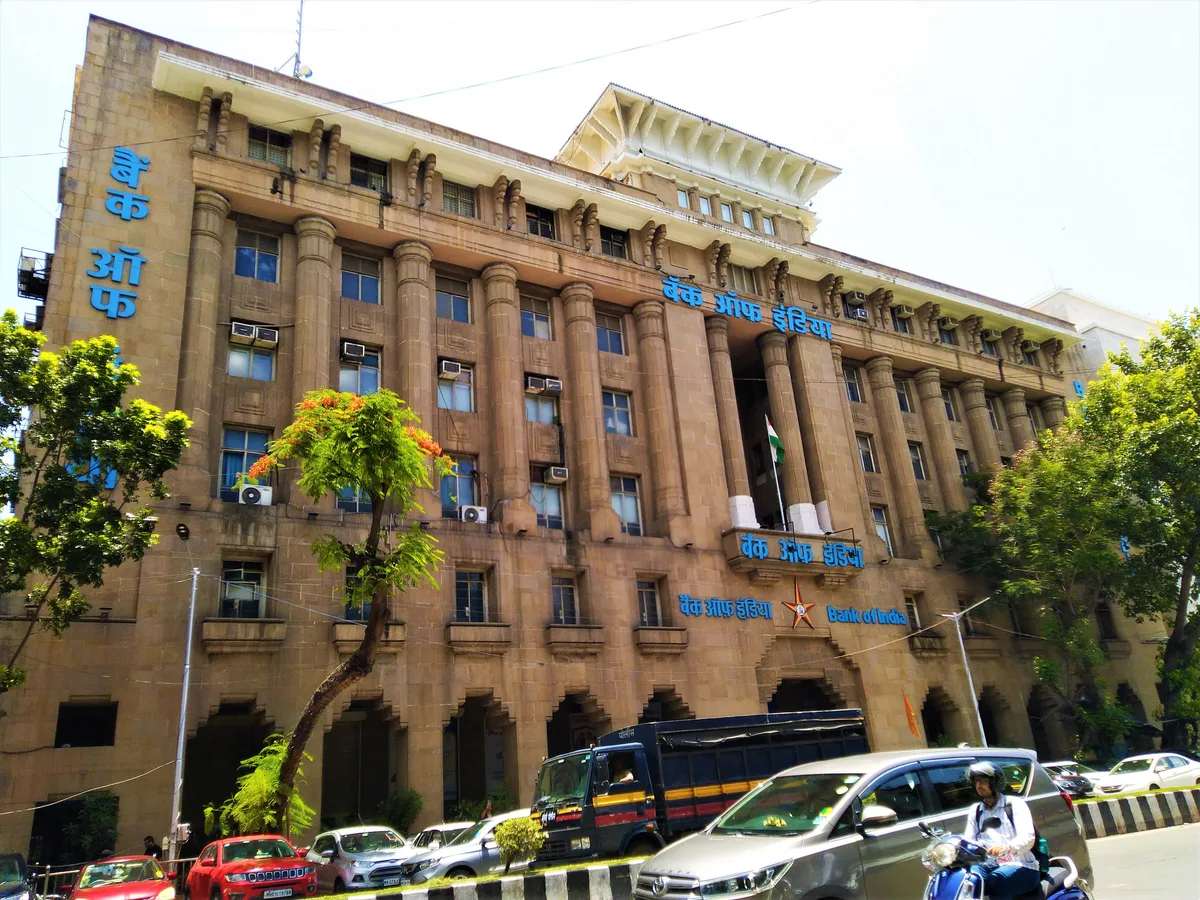
- Existing documentary bank exterior for KYC context
- RBI official commercial bank CKYCR verification amendment
- CERSAI November 2023 CKYC Registry operating guidelines
