What India means in India pale ale
India pale ale gets its name from the trade that carried British pale ale to colonial India. India was the export destination, while pale ale was the kind of beer British brewers supplied.
Read the name as a pale ale associated with the India trade. That gives each part of the phrase a job. India identifies the market in the historical account, and ale identifies the beer family. The connection is geographical in a specific sense. The place mattered to the beer’s commercial history because it was where shipments went. A bottle that carries those initials today can use the inherited style name regardless of where the brewery is based.
The export connection answers why India appears in the name. Establishing when the full expression appeared in print takes a different kind of evidence. A record can show pale ale going to India while describing it in the language of a particular merchant or brewer. To date the name itself, look for a document that actually prints the words. The trade history can be clear even when the first use of the expression is still an open question.
How George Hodgson fits into the story
George Hodgson belongs in the history because he became an important supplier of beer to India. That is a concrete claim about his role in the trade. An invention claim would have to identify what he introduced and show that the relevant beer or practice began with him. The history assembled by the Campaign for Real Ale supports his importance as a supplier and leaves sole invention unestablished.
An example shows why the verb matters. Suppose a dated merchant’s account identifies a brewer who repeatedly supplied pale ale for India. The entries could establish a trading relationship and, with quantities and comparable records, might help show the scale of the business. To give that brewer credit for originating a recipe, a historian would need brewing evidence and a comparison with earlier practice. If the claim is about who originated the name, the search shifts to documents that use the expression.
A short retelling can accurately call Hodgson an important supplier in the India beer trade. If a longer account calls him the inventor, check what the author means by invention. Brewing a pale ale, developing a particular version, selling it successfully overseas and introducing a name are four events that would leave different traces. A source that documents one can be valuable on its own terms.
Several claims are often joined together when the name Hodgson appears. The supplier’s commercial prominence is one. Innovation in brewing is another. Invention of the term is a third. The export records or later historical accounts may support the first without deciding the others. Where a dated advertisement identifies a merchant but no brewer, its attribution should stop at the merchant.
What the voyage records say about hops and strength
In the familiar voyage story, brewers supposedly had to make pale ale stronger and add more hops so it could survive the journey to India. The word had carries most of the claim. As the Campaign for Real Ale notes, surviving brewing records show that India-bound shipments could include beers of lower strength and beers with less hopping. That makes it difficult to treat a strong, heavily hopped recipe as a universal requirement for beer sent to that market.
Quantity shipped, condition on arrival and the reason behind a recipe choice are separate questions. An entry tying a beer to an India shipment can tell you what went aboard. A contemporary report from the receiving end could tell you how a particular shipment arrived. A brewer’s own account of the recipe could help explain why the brewer chose it. A story that moves from the first fact straight to the third needs evidence for that last step.
Consider this example. A brewing entry records a lower-strength beer intended for India, and the surviving paperwork ends at dispatch. You can use the entry to show that a brewer was willing to send that beer. Its condition at the destination remains unknown. If you later find a report saying the beer arrived in good order, the result applies to that consignment. To generalise about the trade, you would need to compare consignments and see how often the records cover both ends of the voyage.
How to check an origin claim in primary material
Start with the precise claim you want to verify. For an early use of the name, a dated advertisement, price list or similar printed notice could give you the wording and its commercial context. Check a scan of the full item where available. Look at the date on the issue and read the surrounding entry to see whether the words describe the beer itself, its destination or two neighbouring items. Search results and transcriptions are useful leads, especially when older print is difficult to read.
For example, imagine finding a catalogue that uses the full name in an edition with a legible date. You could report that the term appears in that edition and identify who published it, if the document supplies that information. Calling it the first use would require a broader search. Even a well-documented earliest example is tied to the material that has been found and checked, so an earlier discovery could move the date.
For recipe claims, look for the brewing entry behind the historian’s account and check whether the destination appears in the same record or is established elsewhere. Note what the original document measures before repeating a comparison about strength or hopping. If the route from brewing entry to shipment runs through another source, record that connection. That way a reader can tell whether the destination is explicit, supported by matching records or still uncertain.
| Claim to check | What to look for | What it can establish |
|---|---|---|
| A seller used the name | A dated notice with the full wording visible | Use by that seller by the date of the notice |
| A particular beer went to India | A dispatch or receipt record identifying the beer and destination | One documented movement or receipt |
| The beer had a particular strength or hop charge | A brewing entry tied to the batch in question | What the brewer recorded for that batch |
| The beer arrived in good condition | A report tied to the consignment after arrival | The reported condition of that shipment |
| A brewer designed the beer for the journey | A contemporary account explaining the recipe decision | The reason given by its author |
A Liverpool Mercury advertisement of 4 March 1825, cited in an archival study in Brewery History, described pale bottling ale intended for India. A Sydney Gazette advertisement on 29 August 1829 used the longer name East India pale ale. The archival researcher Martyn Cornell found a further advertisement in Hobart’s Colonial Times on 19 February 1830. These records place the name in circulation without claiming they contain its first use anywhere.
The Sydney example comes from the advertisement reproduced in a Vermont Brewers Association presentation. The merchant name visible in the historical evidence is Spark. A merchant selling the beer provides evidence of public use and distribution. The wording on that advertisement leaves its brewer unclear. Cornell used the earlier Liverpool material to challenge the later story that a shipwreck first introduced this type of beer to that city.
What English IPA means in a modern style guide
The Beer Judge Certification Program uses English IPA as a competition category and discusses the British export history alongside later versions. The category helps judges and entrants use a common description. It also gives curious drinkers a place to look up what the style name is meant to convey in that setting. Its scope is the category described in that edition, so use the historical records for questions about individual export beers.
Here is an example of how those sources work together. Suppose you find a historical brewing entry and want to compare the beer with a modern English IPA. First use the entry to establish what the brewer recorded for the batch. Then consult the competition guide for the characteristics of the modern category. Any resemblance you find is a comparison across periods. To say the historic brewer was following a standard, you would need evidence of the standard that applied at the time.
If you encounter a claim that English IPA must meet a certain specification, check who is imposing it. A competition can set expectations for its own entries. A brewery can describe its own beer, and a historian can document a particular export batch. When the claim comes from a competition, verify the category and edition before carrying it into a discussion of another guide or a beer you have seen for sale.
How American craft brewing extended the name
The Campaign for Real Ale traces a later reinvention of IPA by American craft brewers. That part of the history helps explain why the initials turn up in discussions of both British export brewing and modern beers from other countries. The name travelled into a new brewing context, where brewers could use it for their own versions. The English IPA category is one place the older connection remains visible in modern style language.
For example, imagine a menu with one beer described as English IPA and another described as American IPA. The modifiers give you more information about the styles the producer or seller has in mind. To find where each beer was actually brewed, look for the brewery and production information given for that beer. To anticipate the flavour, look for its own tasting description. The menu may use the inherited style vocabulary while listing beers made in the same city.
The distinction also helps when a modern tasting note is used to explain the past. A description of a current American craft IPA tells you about that product. To describe the flavour of a historical export beer, look for contemporary tasting accounts or for a reconstruction that identifies the records behind its recipe. A reconstruction can help explore what a recipe might produce under stated conditions. Its tasting notes belong to the beer brewed for the reconstruction.
Sources
- Campaign for Real Ale: India Pale Ale: A History
- Beer Judge Certification Program: English IPA Style Guidelines
- Vermont Brewers Association presentation reproducing the Sydney Gazette advertising record
- Martyn Cornell’s original newspaper research and advertisement reproductions
- Brewery History, Martyn Cornell’s archival study of the IPA shipwreck story
- Toit India Pale Ale, brewery product listing
- Marz Community Brewing, brewery’s India Pale Lager example
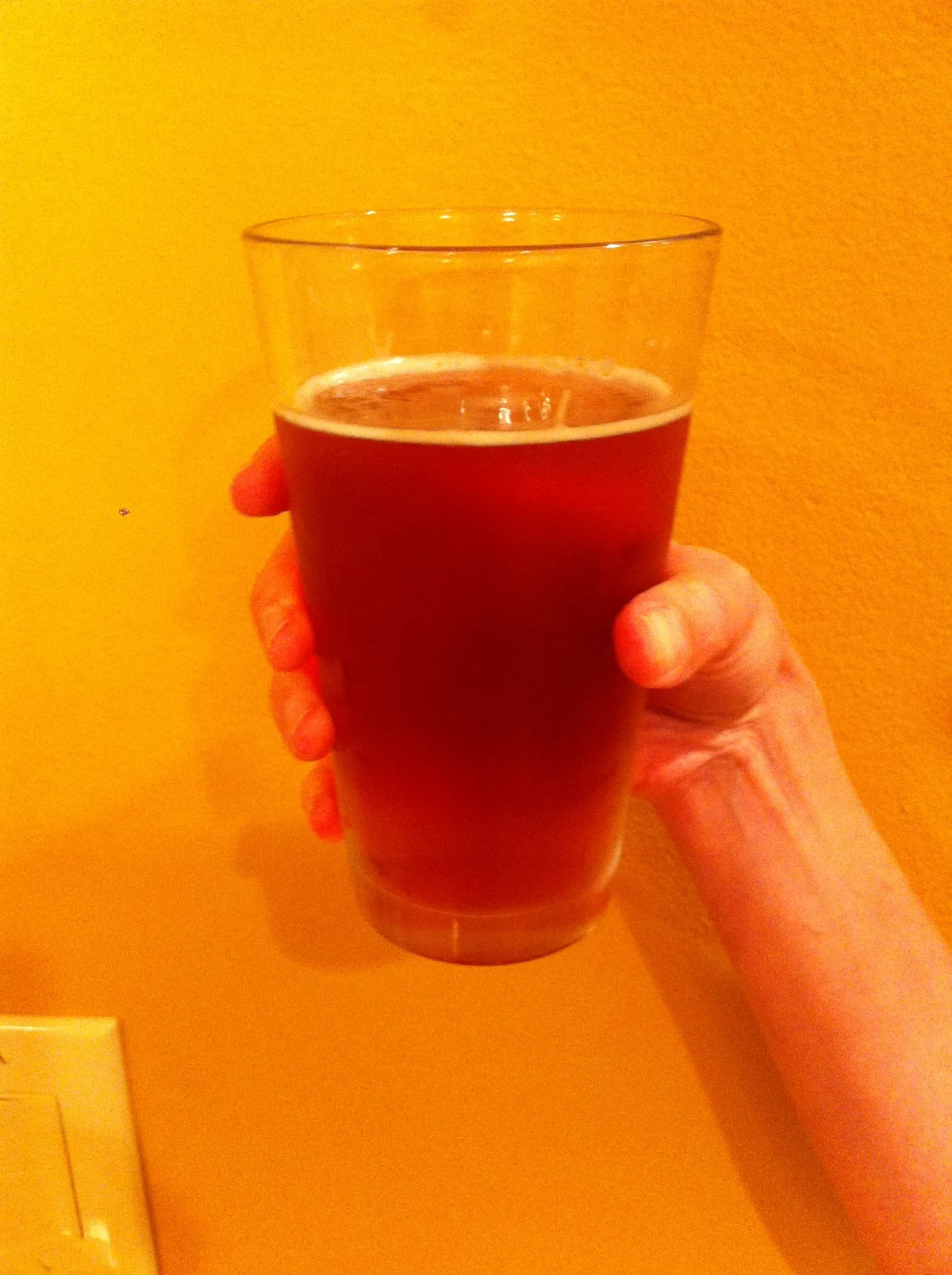
- Visual candidate — a modern Hoppyum IPA in a pint glass
