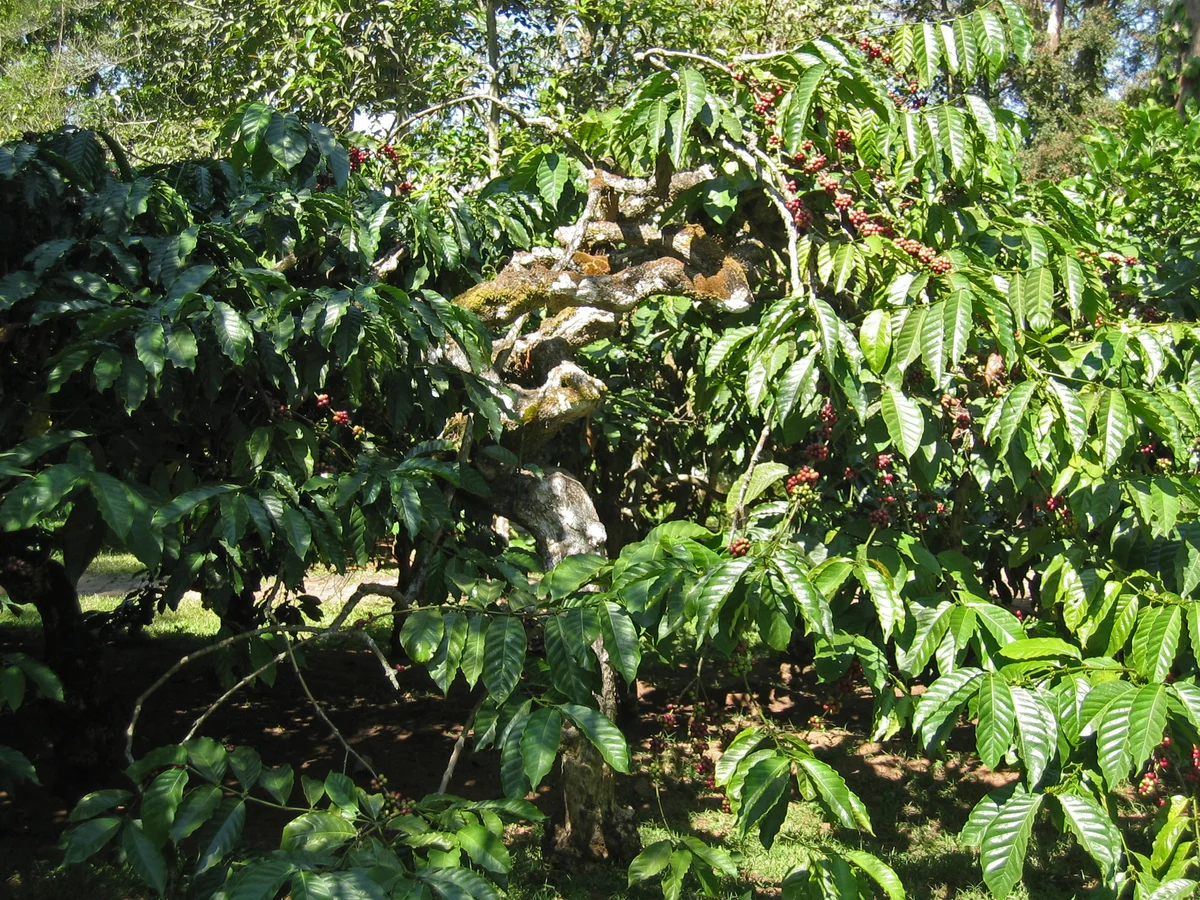
Where Indian coffee grows
India’s traditional coffee belt runs through the Western Ghats in Karnataka, Kerala and Tamil Nadu, and the Coffee Board also profiles growing areas in the Eastern Ghats and Northeast. To choose a coffee by origin, use the region to locate where it grew, then check the species, processing and roast on the specific bag.
Start with Kodagu or Chikkamagaluru if you want to explore Karnataka’s two largest producing districts in the 2025–26 final estimate. Look for Wayanad if your starting point is a major Robusta-growing district. For an explicitly high-grown Arabica example, look to Anamalais in Tamil Nadu. Araku gives you an Eastern Ghats origin to explore and belongs on a different geographical footing from a figure for all of Andhra Pradesh.
A café menu may identify a drink by its preparation, while a retail listing can lead with the brand or roaster. For a question about where the coffee grew, look for the origin attached to the beans in the product description or ask which coffee the café is serving. If the only origin given is India, the country is the finest geographical detail the description provides.
The Coffee Board groups areas as traditional and non-traditional in its regional profiles. Read those terms as growing geography. They can help you locate a name you have seen on a bag, while the profile’s elevation and main coffee type give you a starting point for understanding the growing area.
Compare origins at the right scale
Karnataka accounted for roughly 68.8% of India’s 2025–26 final production estimate. Within the state, Kodagu was the largest of the three reported districts at 121,185 tonnes, followed by Chikkamagaluru at 94,760 and Hassan at 40,750. Those district rows help orient you when you encounter the names on coffee bags. Each district figure adds up the coffee reported across that district.
In Kerala, the Board’s final estimate lists 68,800 tonnes for Wayanad, all in the Robusta column. Tamil Nadu’s regional figures put the Pulneys and Nilgiris ahead of the Shevorys and Anamalais by volume. Anamalais is the smallest of the four listed Tamil Nadu regions by that measure, and its Coffee Board profile gives it a useful distinction for shoppers looking for high-grown Arabica.
The numbers below describe production for the named unit at one reporting stage. Pay attention to the type of place in the first column. A district figure can give scale to a district name encountered on a bag. A state figure can put that state in national context, and a producer’s own details can narrow the location further. Read across the row before using a number to describe a coffee.
| Name | Geographical scope | Production and growing context |
|---|---|---|
| Kodagu / Coorg | District in Karnataka | 121,185 tonnes |
| Chikkamagaluru / Chikmagalur | District in Karnataka | 94,760 tonnes |
| Hassan | District in Karnataka | 40,750 tonnes |
| Wayanad | District in Kerala | 68,800 tonnes, all recorded as Robusta |
| Pulneys | Growing region in Tamil Nadu | 8,235 tonnes |
| Nilgiris | Growing region in Tamil Nadu | 6,335 tonnes |
| Shevorys | Growing region in Tamil Nadu | 4,025 tonnes |
| Anamalais | Growing region in Tamil Nadu | 1,380 tonnes. The Board profiles it as high-grown Arabica country. |
| Araku | Eastern Ghats growing area in Andhra Pradesh | The Andhra Pradesh state total is 15,290 tonnes. An Araku figure requires an area-level source. |
Coorg travel guide: Madikeri, Kushalnagar and day tripsOoty itinerary: Nilgiri Mountain Railway, gardens and the lake
Read the place names on a bag
Kodagu and Coorg are names for the same Karnataka district. Chikkamagaluru and Chikmagalur are alternate English spellings. Use both forms when searching for coffee from either district. The label may use a spelling that differs from the one on a Coffee Board page, so the state and any estate details can help you match the product to the region you are looking for.
Read a label from the broad origin down to the most specific named place. India identifies the country. Karnataka identifies a state, and Kodagu narrows that to a district. An estate name, when supplied, gives you a producer-level detail to check on the product listing. Species and variety answer separate questions about the coffee itself. If the bag gives a species and stops there, the variety remains unspecified.
Suppose you are choosing between one bag marked “Coorg” and another marked “Kodagu” with a named estate. Both take you to the same district, so a purchase of both would compare two offerings from that district. The estate detail makes the second coffee easier to trace to a specific producer. For a comparison between growing areas, pair one of the Kodagu coffees with a bag that names a different area, while checking how much detail each seller gives about its coffee.
Use species and harvest details to narrow your choice
Arabica and Robusta are both part of Indian coffee production. Of the 373,000 tonnes in the 2025–26 final estimate, 111,000 were Arabica and 262,000 were Robusta. Robusta therefore represented just over 70% of the national estimate. That gives useful context for a country label. When a seller names an individual coffee, its species or declared blend tells you what that particular product contains.
For an Arabica search by growing area, Anamalais gives you a Board-profiled high-grown example. For a Robusta search, Wayanad gives you a district whose reported final production was entirely in that species. In either case, check the product description to see how specifically the seller connects the coffee to the region. A bag naming several origins gives you a different comparison from one whose entire origin is a single named district or estate.
The Coffee Board publishes a general harvest season of November to January for Arabica and December to February for Robusta. The windows overlap in December and January. Use those months to understand the general seasonal pattern, and ask the seller for a harvest date or crop year if timing matters for a particular lot. The roast date on a bag answers a separate question about when the beans were roasted.
Compare flavour using the actual coffees
Read tasting notes as a description of the specific offering. A region profile can tell you about elevation and main coffee type. A producer or roaster description for the lot can tell you how that coffee was processed and what flavours the seller reports. A production figure tells you the scale of the harvest.
Keep processing, roasting and brewing separate as you read a listing. Processing describes what happens to the coffee after harvest. Roast describes a later transformation of the beans. Filter brewing describes how the drink is prepared. When a café lists a filter coffee and you want to identify the origin, ask for the beans or blend used in that preparation. When buying a bag to brew at home, look at the origin and roast details for the coffee itself.
If you are choosing two coffees to see how their origins show up in the cup, start with bags that give comparable detail. For example, two Arabicas with the same declared processing method and a similar roast description give you a clearer comparison than two bags that differ on all those details. Brew them with the same recipe and compare what you notice about aroma, acidity, body and finish. Your observations apply to those two coffees as brewed. Use them to decide which one you would buy again or which details you want to explore in your next comparison.
Monsooned Malabar is an example of a processing description that also has a geographical context. The Coffee Board describes exposing selected dry-processed Arabica or Robusta coffee to moist monsoon air at curing works on the southwest coast. Check the exact coffee description for species as well as process. The term can appear on a green-coffee or roasted-coffee listing, and neither use tells you how a café will brew the drink.
Check elevation and shade claims
The Coffee Board’s regional profiles list elevation and main coffee type. Use those profiles when you want to know what a regional name implies about growing conditions, or when a seller describes an origin as high-grown. For a numerical elevation, check whether the figure refers to a growing area, an estate, or the plot associated with the lot. Those scopes matter when you are comparing otherwise similar labels.
Shade-grown cultivation is a recognised practice in Indian coffee. A product description may use the term as a statement about how a particular coffee was grown. To understand the scope of the claim, look for the farm or lot it applies to and any details the producer supplies about cultivation. If the seller explicitly claims certification, look for the named certification and documentation that identifies the producer or coffee it covers.
If one Anamalais listing gives only the region and another gives the estate and a specific elevation, the Board profile gives you a shared regional reference. The second listing offers a more specific claim to verify with the producer. This distinction helps when merchants use elevation as part of the description. You can use the first listing to choose an origin confidently at the regional level and use the second to investigate how closely the stated conditions describe the coffee you would actually buy.
Araku and India’s registered coffee names
Araku is a growing area in Andhra Pradesh’s part of the Eastern Ghats. It is a useful name to search when you want an origin beyond the traditional Western Ghats belt. A seller naming Araku has supplied a more specific origin than a seller who gives only Andhra Pradesh. Look for an estate, producer group or other information about where the coffee was grown if you need the location narrowed further.
The Board’s Andhra Pradesh row gives 15,290 tonnes in the 2025–26 final estimate and 19,650 tonnes in the 2026–27 post-blossom projection. Both are state figures. To describe the size of Araku’s own harvest or compare it with a district such as Kodagu, you need an Araku-specific production figure with its reporting area, crop year and estimate stage identified.
Odisha appears separately in the same production data at 470 tonnes in the 2025–26 final estimate, while the Northeast is reported as a group at 220 tonnes. The Northeast figure describes the combined reporting group. If a shop names an individual northeastern origin, use the Board’s regional profile and the seller’s producer details to interpret it. A buyer can learn where a coffee grew from those details even when the production table groups the area into a broader row.
India’s Geographical Indications Registry has separate entries for Araku Valley Arabica Coffee, Coorg Arabica Coffee and Chikmagalur Arabica Coffee. Those registered names are more specific than a state or district on a front label. Check the full name and producer details when a seller claims the GI. For Chikmagalur Arabica Coffee, the public record identifies registration certificate 333, dated 1 March 2019, and lists the authorised user entries separately.
Verify current production figures
Open the Coffee Board’s production table and record the crop year, estimate stage and unit. The Board’s 2025–26 final estimate is 373,000 tonnes. Its published 2026–27 post-blossom estimate is 404,000 tonnes, about 8.3% above the preceding final estimate. The 8.3% compares two published stages. In an interview published on 4 November 2026, the Board’s later expectation was reported around 380,000 tonnes. The table still showed its earlier post-blossom stage when checked on 26 November.
| Reporting area | 2025–26 final estimate, tonnes | 2026–27 post-blossom estimate, tonnes |
|---|---|---|
| Karnataka | 256,695 | 279,275 |
| Kerala | 80,350 | 84,570 |
| Tamil Nadu | 19,975 | 19,720 |
| Andhra Pradesh | 15,290 | 19,650 |
| Odisha | 470 | 550 |
| Northeast region | 220 | 235 |
| India | 373,000 | 404,000 |
For a state comparison, the same two columns show Karnataka moving from 256,695 to 279,275 tonnes, Kerala from 80,350 to 84,570 tonnes, and Tamil Nadu from 19,975 to 19,720 tonnes. These are statewide totals across the two stages. If a species or subregion row displays an unclear value, use the verified total for statements about overall production and look for a legible Board release before quoting the more detailed breakdown.
A search for the 2025–26 crop year can also surface its earlier post-blossom estimate of about 403,000 tonnes. The final estimate superseded that figure. Check the crop year and the stage printed next to the number, especially in older Board magazines or annual reports that cover their own reference periods. In a note or spreadsheet, save the place, crop year, estimate stage and unit alongside each figure. When the Board publishes a revision, those details let you identify which column has changed and update any percentage calculated from it.
The USDA Foreign Agricultural Service’s New Delhi post issued its own forecast on 17 November 2026. It projected 6.17 million bags of 60 kg for its 2026–27 marketing year, equivalent to 370,200 metric tonnes. Keep the USDA marketing-year forecast, the Coffee Board’s dated interview and the Board’s published district table attached to their individual sources. The later forecasts give national context. The table supplies the comparable state rows within a single publication.
- Arabica
- 111 thousand tonnes
- Robusta
- 262 thousand tonnes
- Coffee Board of India: Coffee Statistics
- Coffee Board of India, current indexed production estimates
- Coffee Board 2024–25 annual report
- Coffee Board magazine from October to December 2025
- USDA Foreign Agricultural Service, India coffee semi-annual, 17 November 2026
- Bloomberg original interview with Coffee Board officials, 4 November 2026
Sources
- Coffee Board of India: Coffee Regions
- Coffee Board of India: Coffee Statistics
- Coffee Board of India, current indexed production estimates
- Coffee Board of India, species and harvest profiles
- Coffee Board 2024–25 annual report
- Coffee Board magazine from October to December 2025
- Intellectual Property India, Chikmagalur Arabica Coffee registration
- Intellectual Property India, Coorg Arabica Coffee registration
- Intellectual Property India, Araku Valley Arabica Coffee registration
- Coffee Board, how Monsooned Malabar is prepared
- USDA Foreign Agricultural Service, India coffee semi-annual, 17 November 2026
- Bloomberg original interview with Coffee Board officials, 4 November 2026