Choose a figure for worship, display or gifting
For a modern Hanuman statue to buy in India, start with Poompuhar, the Tamil Nadu state handicrafts retailer, and compare the figure’s pose, material and base dimensions before ordering. For the landmark in Shimla, look up the 108-foot Hanuman statue at Jakhu Temple on Jakhu Hill through India’s official tourism site.
Hanuman is a Hindu deity, and the intended setting should shape the purchase. For a home shrine or a devotional gift, ask the person who will use the figure whether they already have a preference for pose, size or where it will sit. If the figure is for a shared space, agree on its placement with the people who use it. That conversation can settle choices a product photograph leaves open.
For display, look at how the figure reads from the usual viewing position and whether it has space around it. Use the deity’s name when describing the piece, especially when giving it as a gift or displaying it with a label. You may also see Anjaneyar in searches or on shop labels. Poompuhar’s Wood Anjaneyar listing identifies the figure as Hanuman, so both names are useful when looking for that particular carving.
If a search began with a photograph of a monumental statue and ended with an interest in buying a small figure, decide which features you want to carry over. Ask for a clear front and side view if the pose or silhouette matters to you. A retail listing titled simply Hanuman gives you the subject. You’ll need the images and description to see whether the figure has the features you were looking for.
Compare four Poompuhar listings
Poompuhar lists three bronze figures across a wide span of sizes, along with a taller natural-wood carving. The two compact bronzes show why it pays to compare specific figures. The seated one is an inch shorter and has the same listed width and length as the standing one. It weighs 0.3 kg, compared with 0.2 kg for the standing figure, and costs ₹1,162 more at the listed prices. If both fit, the view you prefer and your budget can settle the choice.
| Figure and item code | Listed material | Height | Width × length | Object weight | Displayed price |
|---|---|---|---|---|---|
| Standing Hanuman, CMB 04 | Bronze | 4 in | 2 × 2 in | 0.2 kg | ₹3,488 |
| Seated Hanuman, CMB 20 | Bronze | 3 in | 2 × 2 in | 0.3 kg | ₹4,650 |
| Hanuman, CMB 78 | Bronze | 13 in | 5 × 5 in | 3.9 kg | ₹23,250 |
| Wood Anjaneyar, THAM 24 | Natural wood | 24 in | Width unconfirmed × 12 in | 4 kg | ₹27,900 |
The 13-inch bronze and 24-inch wood figure are close in listed weight, at 3.9 kg and 4 kg. The wood figure needs another 11 inches of vertical space and has a much longer listed dimension. Its width field reads zero, so get the actual width before comparing how much room each piece will occupy. Ask about the wood species or finish directly if either will influence your choice. The listing describes the material as natural wood.
Use the item code when calling a showroom or checking an order. Two listings can use nearly identical names while referring to different poses or sizes. The code CMB 20 identifies the short seated bronze in this comparison, while CMB 78 identifies the 13-inch figure. For a gift with a fixed budget, compare the final totals for the intended delivery PIN. The displayed product price is only one part of that comparison.
Measure the base and the full figure
Measure the space with the figure facing the way you intend to display it. Write down the usable height, side-to-side width and front-to-back depth. A cabinet may have room inside while its opening gives you less clearance. On a shelf, measure any raised front edge or back panel that reduces the flat area available. Use the seller’s measurements as a starting point and confirm how its width and length correspond to your space.
Ask for both the base dimensions and the maximum dimensions of the sculpture, including any parts that project beyond the base. The entire base should rest on the surface, and the outer profile needs clearance from nearby objects or cabinet doors. For the larger figures, use the listed object weight when checking the shelf or stand’s rated load. If you’ll collect the figure yourself, request packed dimensions and weight separately so you can plan for the actual parcel.
Suppose you have a niche with exactly 13 inches of clear height and are considering CMB 78. The stated height uses the entire opening. Ask the seller to measure from the underside of the base to the highest point on the actual piece, then check the room you need to lift and position it. A shorter figure or an open shelf gives you clearance if the final measurement leaves too little room.
For Wood Anjaneyar, ask the seller to photograph a tape measure across the base and identify which axis the listed 12 inches refers to. Get the maximum width as well, since the carving could extend beyond the base. If the figure will sit against a wall, a side view also helps you judge how far it projects into the room. Make the purchase decision once you have dimensions you can match to the actual spot.
Check the material and the craft attribution
Check that the description, material field and invoice agree before paying a premium for a material. Poompuhar’s Sitting Hanuman COM 155 illustrates the problem. Its material field says bronze and its description says resin. Its listed dimensions and weight resemble those of the compact seated bronze, which makes the product number especially important when asking about it. Request written confirmation of what the figure is made of and whether the supplier describes any surface coating separately.
Poompuhar belongs to the Tamil Nadu Handicrafts Development Corporation, which the state government established in 1973. The corporation identifies Swamimalai for bronze icons, Kallakurichi for wood carving and Mamallapuram for stone carving among its production centres. Those names are useful when asking about a particular craft. For a figure sold through the corporation, ask which workshop or supplier made the item and where that work took place.
Intellectual Property India identifies Swamimalai Bronze Icons under application 64 and records certificate 67, issued on 22 April 2008. The application records list TNHDC as an authorised user. If a retailer attaches a general GI Crafts tag to a figure, ask for documentation that connects that exact item to the claimed origin. For current registration status, consult the latest state-wise register alongside the application details, which retain an older valid-through date.
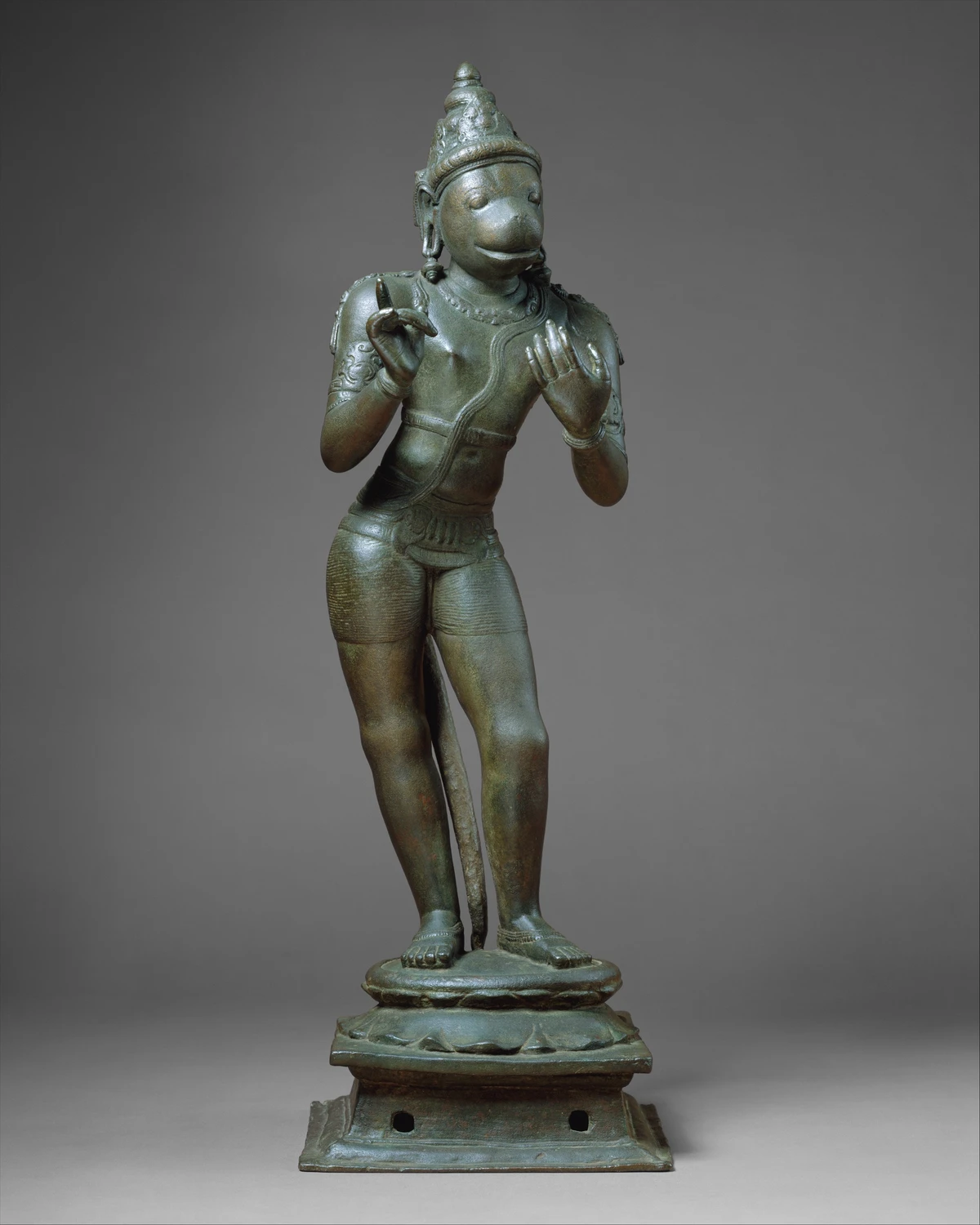
For historical context, the Metropolitan Museum of Art catalogues an 11th-century Chola-period copper-alloy sculpture from Tamil Nadu called Hanuman Conversing, object 1982.220.9. Its catalogue gives you a named historic figure to look at when considering how a contemporary standing figure is depicted. If a seller uses similar stylistic language, keep the style description separate on your notes from the maker, material and production date confirmed for the piece you are buying.
| What you are looking for | Source example | What the source can establish |
|---|---|---|
| Current shelf figure | Poompuhar retail product | Listed dimensions, material and seller terms for a specific item |
| Documented sculpture | The Met object 1982.220.9 | Museum curatorial dating, region, material and museum image rights |
| Statue at a public destination | Ministry of Tourism Jakhu visitor page | Travel context for the site and named public monument |
| An older item described as an antiquity | India Code | Statutory definitions and applicable provisions for specialist verification |
Dioses de la India, mitología hindú, arte y celebracionesJuggernaut and Jagannath, the word, the festival and the sources
- Poompuhar Tamil Nadu Handicrafts Development Corporation
- Poompuhar Sitting Hanuman ambiguous material record, TNHDC COM 155
- Swamimalai Bronze Icons registry, Intellectual Property India
- The Met Open Access Chola sculpture Hanuman Conversing, object 1982.220.9
- Tamil Nadu Handicrafts Development Corporation Poompuhar
Verify availability, delivery and returns
You can buy through Poompuhar’s online shop or use the corporation’s showroom directory to find a location to contact. For an in-person purchase, ask the showroom whether it has the exact item and whether you can inspect the figure before paying. In the shop, you can see how the finish looks under ordinary lighting and check whether the figure sits evenly. Ask whether the displayed figure is the one you would take home.
The product listings showed stock, and the retail site uses a separate delivery PIN check. Enter the final delivery PIN for the chosen item and confirm the total and estimated delivery at checkout. If the figure is a gift for a particular date, use the recipient’s PIN and check the delivery window before placing the order. If delivery information is incomplete, ask the retailer about that item and destination rather than relying on the stock label.
Poompuhar’s direct online terms allow cancellation before dispatch and describe refunds for damaged or defective products on domestic orders subject to verification. The terms distinguish natural handcrafted variation from defects. Read the detailed policy when you encounter a seven-day return reference on a product card. If finish, colour or carving detail matters to you, ask what the seller considers normal variation and whether it can share current photos of the available piece.
Keep the item code, order confirmation and any written answers about the figure or delivery. If the parcel arrives damaged or contains a different item, retain the packaging and follow the retailer’s current reporting instructions. Clear photographs of the parcel, the figure and the issue can help the merchant review what happened. Check the applicable terms separately if you buy in a showroom, where the transaction takes place under the shop’s own conditions.
- Poompuhar Tamil Nadu Handicrafts Development Corporation
- Poompuhar Bronze Standing Hanuman 4 in, TNHDC CMB 04
- Poompuhar seated Bronze Hanuman 3 in, TNHDC CMB 20
- Poompuhar Bronze Hanuman 13 in, TNHDC CMB 78
- Poompuhar Wood Anjaneyar, TNHDC THAM 24
- Poompuhar direct online order and returns conditions
- Tamil Nadu Handicrafts Development Corporation Poompuhar
Verify age before buying an older figure or taking it abroad
For a modern figure, ask for an invoice that identifies the seller or maker, describes the item and material, and records contemporary manufacture where the supplier can substantiate it. The sale date records when you bought the figure. A separate manufacturing statement helps establish when it was made. If a seller calls the object an antique or gives it a historical attribution, ask what records support the age and what they show about the object’s ownership or origin.
India’s Antiquities and Art Treasures Act, 1972 sets an age threshold of at least 100 years for defined categories that include sculpture. Section 2 gives the definitions, and Section 3 generally prohibits export of covered antiquities and art treasures by anyone other than the Central Government or an authorised authority or agency. Consult the current text on India Code and the Archaeological Survey of India for official guidance when the age is unclear or a figure may be taken outside India.
An aged finish can be part of a contemporary product description. If a seller describes a figure as both newly made and antique-finished, ask for the manufacture claim to appear on the invoice and retain any maker identification. If the seller gives conflicting accounts of the age or offers only a verbal assurance about international carriage, resolve the uncertainty before committing to a purchase for travel. Base that decision on the records for the specific figure and the applicable official guidance.
Sources
- Poompuhar Tamil Nadu Handicrafts Development Corporation
- Poompuhar Bronze Standing Hanuman 4 in, TNHDC CMB 04
- Poompuhar seated Bronze Hanuman 3 in, TNHDC CMB 20
- Poompuhar Bronze Hanuman 13 in, TNHDC CMB 78
- Poompuhar Wood Anjaneyar, TNHDC THAM 24
- Poompuhar Sitting Hanuman ambiguous material record, TNHDC COM 155
- Poompuhar direct online order and returns conditions
- Swamimalai Bronze Icons registry, Intellectual Property India
- Ministry of Tourism's Shimla visitor route, Jakhu
- India Code Antiquities and Art Treasures Act, 1972
- The Met Open Access Chola sculpture Hanuman Conversing, object 1982.220.9
- Tamil Nadu Handicrafts Development Corporation Poompuhar
- Science Museum Group Hanuman statue record
- India Code Antiquities and Art Treasures Act