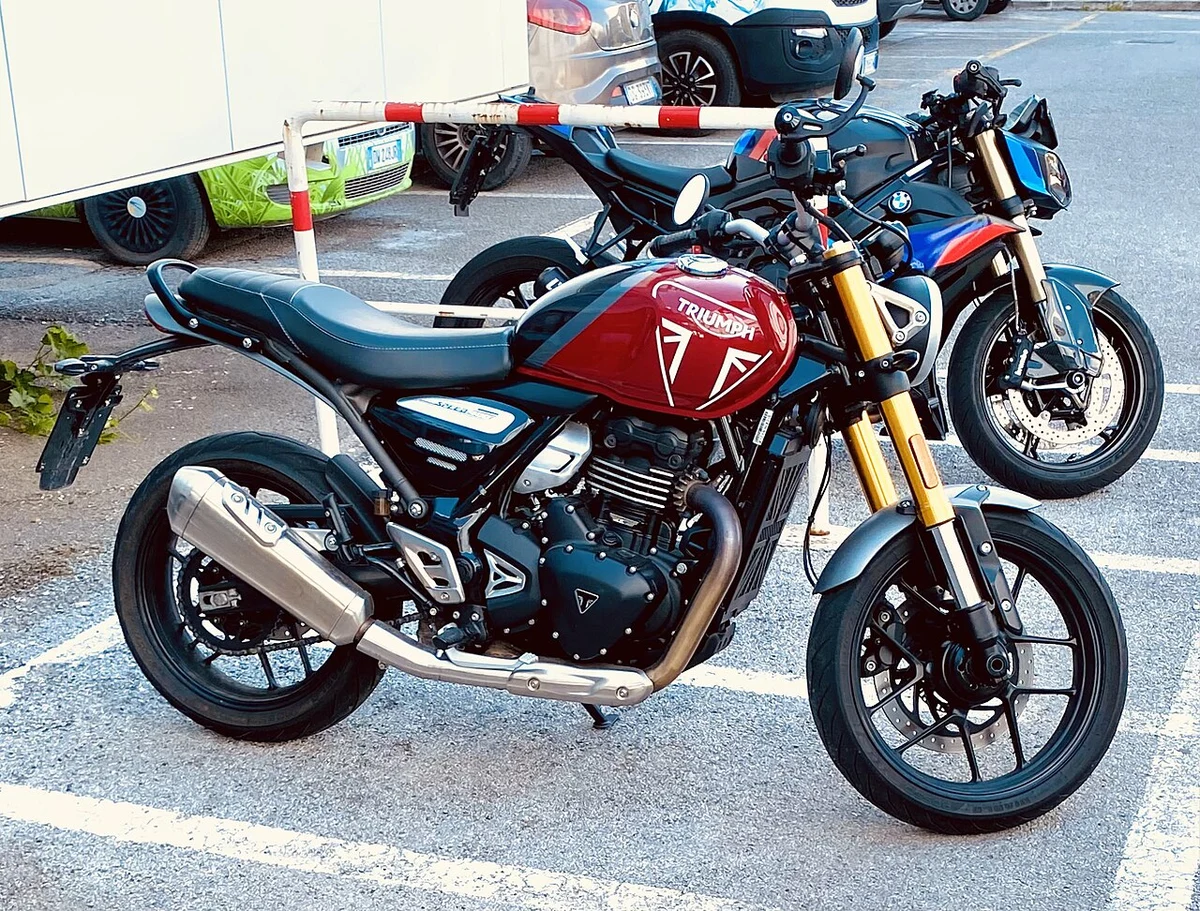
Triumph India models and published starting prices
The Speed T4 has the lowest published starting price among the Triumph India modern classics covered here, at ₹2,08,971, followed by the Speed 400 at ₹2,34,140 and Tracker 400 at ₹2,41,882. The Scrambler 400 X, Thruxton 400 and Scrambler 400 XC extend that selection, and Triumph’s India listings put several bikes with 400 in their names in the 350 cc class.
The figures below are tied to specific India catalogue pages. Use them to order a shortlist by published starting price and identify the page to take to a dealer. Stock and on-road prices depend on the city and the exact motorcycle quoted. A family card can also show a different figure from the page dedicated to the same bike, as the Scrambler 400 X illustrates.
| Model | Published starting price | Listing and availability detail |
|---|---|---|
| Speed T4 | ₹2,08,971 | Modern Classics family card. Confirm city stock and model year. |
| Speed 400 | ₹2,34,140 | Modern Classics family card. Confirm the local price and applicable specification. |
| Tracker 400 | ₹2,41,882 | Dedicated model page with a city on-road price option. Confirm stock separately. |
| Scrambler 400 X | ₹2,64,978 family card / ₹2,66,166 model page | Both figures are published. Ask the dealer which figure applies to the quoted bike. |
| Thruxton 400 | ₹2,75,335 | Family card and dedicated model page. Confirm city stock. |
| Scrambler 400 XC | ₹2,99,333 | Separate Modern Classics family listing. Confirm city stock and exact equipment. |
The family cards put the Speed 400 ₹25,169 above the Speed T4 and the Scrambler 400 XC ₹34,355 above the Scrambler 400 X. Those differences give you a starting point for deciding which pairs to inspect. Ask what changes on the motorcycles actually available to you before assigning any of the difference to equipment. The catalogue identifies the T4 and the two Scramblers as separate models, so their prices belong on separate quote lines.
What the 400 badge means when you check a listing
Search results can combine different generations under familiar names. Bajaj Auto dates the start of the India collaboration to 2023. Its September 2025 statement discussed the ex-showroom prices of the Speed 400, Speed T4, Scrambler 400 X and Thruxton 400 in the context of the then-current 400 cc range. Triumph’s India Modern Classics catalogue subsequently grouped those names, along with the Scrambler 400 XC, under 350 cc.
For an exact capacity, read the technical specification for the individual India model. Triumph gives 349.0 cc for the Speed 400 and Tracker 400, and 349 cc for the Scrambler 400 X. The family label gives you the capacity class. The model specification gives you the figure to compare with a dealer’s paperwork or a used listing. Even an official web address can contain an older model-year label while displaying updated specifications, so use the page content and the bike’s documents together.
Suppose a dealer advertises a Speed 400 under the same name as a used bike you have found. Ask the dealer for the model year and capacity of the unit on offer, and ask the used seller for the corresponding details from the bike’s documents. That lets you decide whether you are comparing two examples of the same generation or two bikes that share a badge. It also tells you which specification sheet to use when comparing output.
- Triumph India Modern Classics family and published starting prices
- Triumph India Scrambler 400 X product
- Triumph India Tracker 400 specifications and price
- Bajaj Auto historic Triumph 400cc India manufacturer statement
- Triumph India technical specifications, Speed 400
- Triumph India official dealer search
Choosing between the Speed T4, Speed 400 and Tracker 400
Start with the Speed T4 if the published entry price puts it within reach, and ask to see it alongside the Speed 400 if both are available. The confirmed family-card price difference makes this a useful pairing for a showroom visit. Have the dealer identify the equipment and specification differences on the two units in front of you. The Speed 400 figures below apply to its own specification sheet, while the T4 has a separate catalogue listing.
The Speed 400 and Tracker 400 both have published 349.0 cc specifications, with different output figures. Triumph lists the Speed 400 at 37 PS at 8,500 rpm and 32 Nm at 7,000 rpm. The Tracker is rated at 40 PS at 8,750 rpm and 32 Nm at 7,500 rpm. The Tracker’s listed peak power is 3 PS higher. Both reach the same listed peak torque, with the Speed reaching that figure 500 rpm earlier. Those peaks describe specific points in the rev range. Everyday response depends on what the engines deliver between those points and how the bikes are geared.
The Tracker is a flat-track-styled road motorcycle with 17-inch cast wheels at both ends and a published 805 mm seat height. If your daily parking space requires backing the bike across a slight incline, use a showroom sit and, where the dealer permits, a low-speed test to judge reach and balance. Seat height gives you a dimension to compare. Seat shape, the width between your legs and how easily you can plant one foot will help you decide which bike you can handle in that space.
Scrambler 400 X and XC for your actual riding
Treat the Scrambler 400 X and XC as separate shortlist entries and ask for the equipment sheet for each. Triumph’s dedicated X page specifies 349 cc and 32 Nm peak torque. The family page supplies a distinct starting price for the XC. If the XC is within your budget, identify the differences in wheels and tyres, protection and any accessories fitted to the displayed motorcycle. Confirm which items come with the quoted model and which the dealer has priced separately.
The Scrambler 400 X also shows why the page behind a price matters. Its family card lists ₹2,64,978 and its dedicated product page lists ₹2,66,166, a difference of ₹1,188. The available evidence leaves the reason unresolved. If you use either number in a conversation with a dealer, identify the page it came from and ask which ex-showroom figure applies to the chosen city and model year.
If most of your riding is on tarmac with a short stretch of broken surface on the way home, ask to inspect both bikes with their quoted tyres fitted. Think about the surfaces you regularly cross and the pace you ride them at. Then judge whether the equipment difference addresses something you deal with often enough to justify the price gap. Include tyre replacement in that comparison by asking for the fitted sizes and checking local supply for those exact sizes.
Thruxton 400 riding position and model history
The Thruxton 400 makes the clearest case for choosing by riding position. Triumph describes a small café racer with clip-on handlebars, a half fairing and a bullet-style seat cowl. Check your reach to the bars with your hands resting lightly on the grips. If the dealer offers a ride, pay attention to how your wrists and neck feel in slow traffic as well as on a clear stretch. Ask how the quoted bike is configured for carrying a passenger if that forms part of your regular use.
Triumph announced the Thruxton 400 in India on 6 August 2025, adapting an existing racing name for its smaller modern classics. Use the full model name when looking up specifications, listings or parts because the Thruxton name also appears on the older 1200. The launch date establishes when Triumph announced the smaller bike. For a purchase comparison, the dedicated India product page and family card both publish a starting figure of ₹2,75,335.
An embedded card in a separate snapshot of the launch article displays ₹2,76,552. Web pages can combine dated editorial text with product cards that change independently. The presence of that card in a launch story leaves the original launch price unverified. If you are comparing a used asking price against what a particular bike cost new, the original invoice for that unit is a better record of the transaction.
Getting a dealer quote you can compare
Use Triumph’s dealer search to find a dealer serving the city where you plan to register the bike. Request an itemised written quote that identifies the model, capacity, model year and colour. Ask whether the quote covers a unit in stock or a motorcycle the dealer expects to obtain. If the bike shown on a visit is a demonstrator, ask whether the quoted sale unit matches its specification and equipment.
Get the ex-showroom amount, local registration, insurance and optional extras on separate lines. The Tracker page offers a city on-road price option, which gives you a local reference to compare with the dealer’s breakdown. Ask for the insurance coverage details and which accessories are included in the total. Those details matter when two dealers appear to offer the same model at different prices.
Suppose one dealer quotes a lower total for a Scrambler 400 X and the other includes an accessory package. Ask both to reissue their totals for the same model year, equivalent insurance coverage and the accessories you would actually buy. Then check which dealer has the colour you want and when the quoted unit can be delivered. With the quote items aligned, you can see how much of the apparent price difference comes from the bike and how much comes from the package.
- Ask which quoted lines are optional and request a revised total with your selections.
- Confirm whether the stated delivery window refers to the specific colour and model year.
- Ask how long the written price applies and which charges could change before delivery.
Kawasaki India motorcycle prices by model year and road useCarWale India prices, city comparisons and dealer quote calculator
Service terms and previous model-year listings
Triumph’s Tracker 400 page lists a two-year unlimited-mileage warranty and a service interval of 12 months or 16,000 km, whichever comes first. For a lightly used Tracker the time limit may come up first, while a high-mileage rider may reach the distance threshold earlier. Ask the service department for the schedule applicable to the exact bike, including when the first visit falls and what work each scheduled visit includes. That gives you a basis for estimating how often you will need to reach the workshop.
If you are considering a larger Triumph, the Trident 660 illustrates how to read a historical listing. Triumph India explicitly files the 2025 Trident 660 under previous model year and shows an ex-showroom starting figure of ₹8,99,000. Use that figure as a reference for that archived variant. If a dealer offers a Trident 660, ask for the year and specification on the quote and use that information to find the matching India model page. For an internationally announced successor, verify the India listing and local availability separately.
For a previous model-year bike described as new stock, ask the dealer to identify the specific unit and document its registration status, whether it has been used for demonstrations and when warranty coverage starts. On a used bike, look at the dated service records alongside the odometer reading. Together they help you work out what service is due and which costs to include when comparing the asking price with a current dealer quote.
| Model | Advertised amount | Source scope |
|---|---|---|
| Speed Twin 900 | ₹9,71,300 | Official model overview |
| Tiger 900 GT | ₹14,40,000 | Current Tiger 900 India model reference |
| Tiger 900 Rally Pro | ₹16,15,000 | Current Tiger 900 India model reference |
| Speed Triple 1200 RS | ₹21,75,900 | Current configurator display |
| Speed Triple 1200 RX Limited | ₹23,06,900 | Limited model entry in configurator |
| Trident 660 previous model page | ₹8,99,000 | Prior model-year display, not a checked current offer |
Sources
- Triumph India Modern Classics family and published starting prices
- Triumph India Scrambler 400 X product
- Triumph India Tracker 400 specifications and price
- Triumph Thruxton 400 current India product page
- Triumph India Thruxton 400 launch announcement
- Bajaj Auto historic Triumph 400cc India manufacturer statement
- Triumph India technical specifications, Speed 400
- Triumph India prior model-year Trident 660 page
- Triumph India official dealer search
- Existing credited site asset, Triumph Speed 400
- Triumph India Speed 400 model and price page
- Triumph India Tiger 900 GT and Rally Pro range
- Triumph India Speed Triple 1200 configurator
- Triumph India Speed Twin 900 overview
