Get the right driving documents before travel
To drive in India as a visitor under the Ministry of Road Transport and Highways’ published guidance, carry your original home driving licence and a valid International Driving Permit issued by your own country if it is party to the 1949 Geneva Convention, and check that both cover the vehicle you plan to drive. Before paying for a self-drive rental, confirm that the exact pickup operator accepts those documents and that the rental agreement and insurance authorize you to drive.
An ordinary U.S. driving licence alone is insufficient. The U.S. State Department lists AAA and the American Automobile Touring Alliance as U.S. IDP issuers and advises getting the permit before travel. If your licence was issued elsewhere, consult the relevant authority for the issuing country. India’s Form 4A and the associated Parivahan application are for holders of Indian driving licences seeking a permit to drive abroad.
Check the class printed on the permit and the dates it covers against the full period you expect to drive. Section 3 of India’s Motor Vehicles Act requires a licence effective for the vehicle being driven in a public place. Make the category check again if the booking changes from a car to a scooter or motorcycle. A permit that covers a car gives you no basis to assume it covers a two-wheeler.
For a U.S. visitor planning to rent a car and later hire a scooter, the practical decision starts at home. Check the U.S. licence and IDP for the two-wheeler class before making either booking. If the documents cover only the car, keep the car portion subject to the operator’s approval and arrange other transport for the scooter leg. Apply the same document check to anyone who may share the driving.
Confirm the pickup location accepts your licence and permit
Read the eligibility terms for the city, provider and booking type you intend to use. Zoomcar’s Bengaluru guest policy requires a valid driving licence issued by an appropriate Government of India authority. A visitor relying on a foreign licence and IDP can satisfy the Ministry’s published licensing guidance and still fail that written eligibility requirement. Zoomcar also distinguishes host car-sharing agreements from fleet self-drive rental agreements, so identify which agreement governs the car you are considering.
When a general booking page mentions foreign documents but the local terms are narrower, ask the pickup operator to resolve the discrepancy in writing before paying. Give the issuing country, vehicle class, pickup location and intended dates. Ask which original documents staff will inspect and whether the answer also applies to any additional driver. Keep the reply with your reservation so you can refer to it at handover.
Suppose a visitor finds a prepaid Bengaluru listing on a platform whose general information says foreign documents may be verified. If the listing falls under terms requiring a licence issued by an Indian authority, the visitor should resolve eligibility before committing. If the operator cannot confirm an eligible booking, an official airport taxi can cover the initial transfer. A booked car with a driver can cover an itinerary with several stops.
| Permission to drive | Acceptance at pickup | Authorization under the contract and insurance |
|---|---|---|
| Check the issuing country, original licence, IDP validity and vehicle class. | Check the written terms for the exact station, vehicle and booking type. | Check that the main driver and any co-driver are authorized. |
| If the class is unclear, resolve it before choosing the vehicle. | If national and local booking pages differ, get written confirmation from the pickup operator. | Check where you may drive, what damage is covered and what you could owe. |
Avis India chauffeur hire, airport pickup and self-drive checks
Read the insurance and check the car at handover
Section 146 of the Motor Vehicles Act requires applicable third-party insurance for road use, subject to statutory exceptions. To understand your own exposure, read the rental terms for damage to the hired car, theft, passenger cover, roadside assistance and any loss-of-use charge. Ask whether a damage waiver applies, what it excludes and how the contract calculates the excess you could owe. Confirm the deposit and its release terms separately.
Check the authorized-driver list on the agreement you will actually sign. A second traveler with suitable documents still needs to meet the provider’s rules and be authorized under the agreement and insurance. If you are counting on alternating drivers for a long day, settle that point before pickup. Ask the provider to confirm any restrictions affecting the states, hill roads or other parts of the itinerary you intend to use.
At handover, match the vehicle to the booking and review its current registration, insurance and any applicable pollution certificate or hired-vehicle permissions. Record existing damage with the operator and confirm the fuel level, return requirements and method for settling tolls. Keep the agreement and assistance number available offline. If the supplied car differs from the one you booked, check that the paperwork, vehicle category and agreed itinerary still line up before departure.
If the provider offers a lower excess for an extra charge, compare the written terms against the liability you would actually retain. A change to the excess may leave exclusions and other charges in place. Ask how the agreement treats a charge for time the car is unavailable after damage and what roadside help includes on your route. Those details can affect whether a self-drive booking suits the trip.
Drive on the left and adjust to the road in front of you
India’s Motor Vehicles (Driving) Regulations, 2017 require left-side carriageway use unless police or appropriate signs direct otherwise. Keep left so opposing traffic passes on your right. If you usually drive on the right, pay particular attention when you rejoin a road after a stop and when you finish a turn. Read the lane markings and signs before committing to a junction, especially where the approach has separate lanes for different movements.
Regulations 7 through 9 cover marked priorities, turns and junction precautions. Give way at designated crossings as required and allow enough time to read unfamiliar markings. Arrange navigation before moving and pull over somewhere suitable if you need to handle a device. Sections 129 and 194B of the Motor Vehicles Act address protective headgear and seat belts, with qualifications in the Act. Check that everyone in the car has a usable restraint before setting off.
Regulation 16 requires drivers to adapt their speed to visibility, traffic and weather while observing posted rules for their vehicle category. Regulation 17 requires a safe following distance and more space in adverse conditions. Read the applicable limit on the road you are using. In a downpour, the visible road ahead and the gap to the vehicle in front may require you to slow well below that limit.
Consider a first drive from an airport rental pickup into a busy city. Ask the operator how to leave the pickup area and identify the first major turn while the car is parked. If the approach to that turn becomes confusing, continue in a permitted direction and let the route recalculate. That gives you time to read the next set of signs and approach in the proper lane.
Verify tolls, parking and road access for your route
Use the National Highways Authority of India’s Rajmargyatra service to look up national highway toll plazas, applicable user fees and facilities. Search the route you will actually take using the vehicle class you will drive. Compare the result with the rental’s toll arrangements, including who handles any recharge and how charges are settled after return. If you change your route or receive a different vehicle class, run the lookup again.
NHAI’s separate annual pass applies to eligible registered non-commercial vehicles at covered plazas, subject to limits and exemptions. Ask the provider whether it applies to your specific car and journey before counting it in your budget. A quote for the rental can still leave route costs unresolved. Use plaza fees for the highway portion and get parking and pickup details independently for the places where you will stop.
For an airport pickup, check current access instructions from the airport or pickup operator and match them to the terminal and collection point on the reservation. For city stops, verify parking with the destination or parking operator. On a mountain leg, check the latest bulletin from the district administration or another responsible local authority. Read the bulletin’s publication time, the road segment it names and any restrictions on direction or vehicle class.
For a trip into Lahaul-Spiti, an older district road table can help identify the segment to ask about. Use a current local bulletin or direct confirmation from the responsible authority to decide whether you can drive it on your travel day. Verify the same segment with the rental provider if the agreement limits hill-road use. Build the decision around both checks before committing to a handover or return time tied to that route.
Know who to call after a breakdown or crash
Save 112 for immediate police, medical or fire emergencies and 1033 for National Highway assistance through NHAI. Save the rental company’s roadside number as well. It can confirm what support the contract provides and how to arrange recovery of the hired vehicle. The appropriate calls depend on where the incident occurred, whether anyone needs immediate help and what assistance the vehicle requires.
Section 134 of the Motor Vehicles Act sets out duties for a driver involved in an accident causing injury or third-party property damage, including reporting and giving information. The Act separately addresses voluntary Good Samaritans in section 134A. Keep the rental provider’s reporting instructions available so you can meet the agreement’s requirements as well. When contacting help, give the location as precisely as you can from a safe position.
For a mechanical breakdown on a national highway, 1033 is the highway assistance contact and the rental company can explain the arrangements for the car. If the incident involves an immediate threat to life or safety, call 112 for emergency dispatch. A route name, direction of travel and a nearby landmark you can identify safely can help responders locate you and distinguish your position from the opposite carriageway.
| Check or contact | When it applies | Where to verify |
|---|---|---|
| Original driving licence and 1949 convention IDP | Foreign visitor checking authority for the vehicle class | Indian road ministry guidance |
| Pickup policy for Bengaluru | Vehicle booked through the named self-drive marketplace | Local vehicle guest eligibility |
| Third-party insurance and authorised drivers | Read with the written assignment at handover | Motor Vehicles Act and the rental agreement |
| 112 | Urgent emergency assistance for police, fire or medical help | Emergency Response Support System |
| 1033 | National Highway incident or mechanical assistance | NHAI road assistance |
| Rental desk emergency number | Rental recovery procedures or approval for repairs | Vehicle agreement and handover sheet |
Sources
- India Ministry of Road Transport and Highways — incoming IDP licensing answer
- U.S. Department of State — India country information and U.S. IDP issuers
- Motor Vehicles Act consolidated text — driver, vehicle and insurance provisions
- Motor Vehicles (Driving) Regulations, 2017 — central Gazette
- Zoomcar Bengaluru official platform and local guest terms
- NHAI Rajmargyatra — national highway route, toll and assistance lookup
- NHAI and Ministry of Home Affairs highway support channels
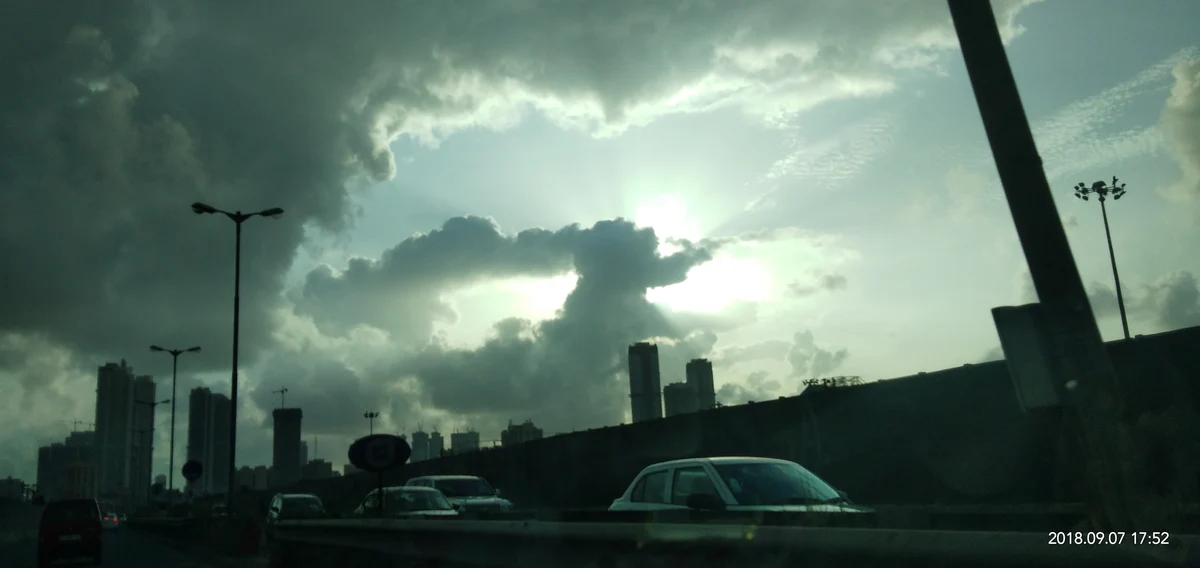
- Credited photograph — Mumbai Eastern Freeway in monsoon weather
- UK FCDO | India road safety and driving
- India Code | Motor Vehicles Act
- Emergency Response Support System, national 112 service
