Add up your dealer quote
Enter amounts from the quote using rupees. Leave a field blank when the dealer includes it elsewhere. The calculator totals your entries and runs on this device.
Buying guide + model table
Find the CarWale on-road estimate for your exact variant and city, then check what a dealer quote or used-car asking price actually includes.
Read CarWale’s public platform informationEnter amounts from the quote using rupees. Leave a field blank when the dealer includes it elsewhere. The calculator totals your entries and runs on this device.
On CarWale, select your city and exact variant, then open the on-road price breakdown and check which charges it includes. Use the total to budget, then ask a dealer for a dated, itemised quote for that same configuration before you book.
Start on the model page and check the generation, variant name, fuel and transmission before recording a number. A model’s starting price usually answers what the cheapest listed configuration costs on the stated basis. It tells you little about the automatic or higher trim you may have selected in a comparison. Open the price details for the actual version and check that the city shown there is the one where you plan to register the car.
Keep the full configuration beside each saved amount. A screenshot of a headline price can lose its meaning when you return to it later, especially if the page also shows a range, another generation or a finance illustration. Record the colour when the page makes it selectable, the displayed registration basis and the date you viewed the breakdown. With those details, you can reopen the same selection and identify where a price moved.
CarWale, part of CarTrade Tech, provides new-car research and a marketplace for used listings. Its comparison features can help you narrow a shortlist, while a city price breakdown gives you the component figures you can take to a dealer. A displayed price leaves stock, allocation and transaction terms to be confirmed with the seller.
Maruti Suzuki Arena listed the Swift LXi MT petrol from ₹5,83,900. CarWale displayed the same ex-showroom amount for the Swift LXi Petrol Manual in Delhi, Mumbai and Bengaluru. The table uses the default individual-registration selection in each city. It gives you a way to compare the published component estimates while holding the version and the ex-showroom amount constant.
Mumbai’s total was ₹38,257 above Delhi’s. The registration line accounts for that entire difference because the other three lines match. Bengaluru was ₹54,935 above Delhi and ₹16,678 above Mumbai. Against Mumbai, Bengaluru’s registration estimate was ₹23,987 higher, its insurance estimate was ₹7,509 lower and its other charges were ₹200 higher. Those three changes together explain the difference in the totals.
If you are budgeting for the Swift in Bengaluru, the ₹7,07,203 row gives you the matching city estimate to take into the conversation. CarWale calls the city Bangalore on the source page, so look for that name if you are trying to reproduce the selection. Keep the registration category visible when you refresh the figure. The gaps in this table describe these particular estimates, and the figures alone give no indication of how much a dealer could discount the car or when a unit could be delivered.
Ex-showroom is the starting line in the breakdown. The on-road estimate adds the displayed registration, insurance and other applicable charges for the selected city and configuration. Open the component view before comparing totals. Two figures can cover different things if one includes an accessory package, a different insurance selection or a charge tied to financing. For the current basis of a registration charge, check the relevant registration authority. CarWale’s general FAQ explains the price categories and includes older tax terminology.
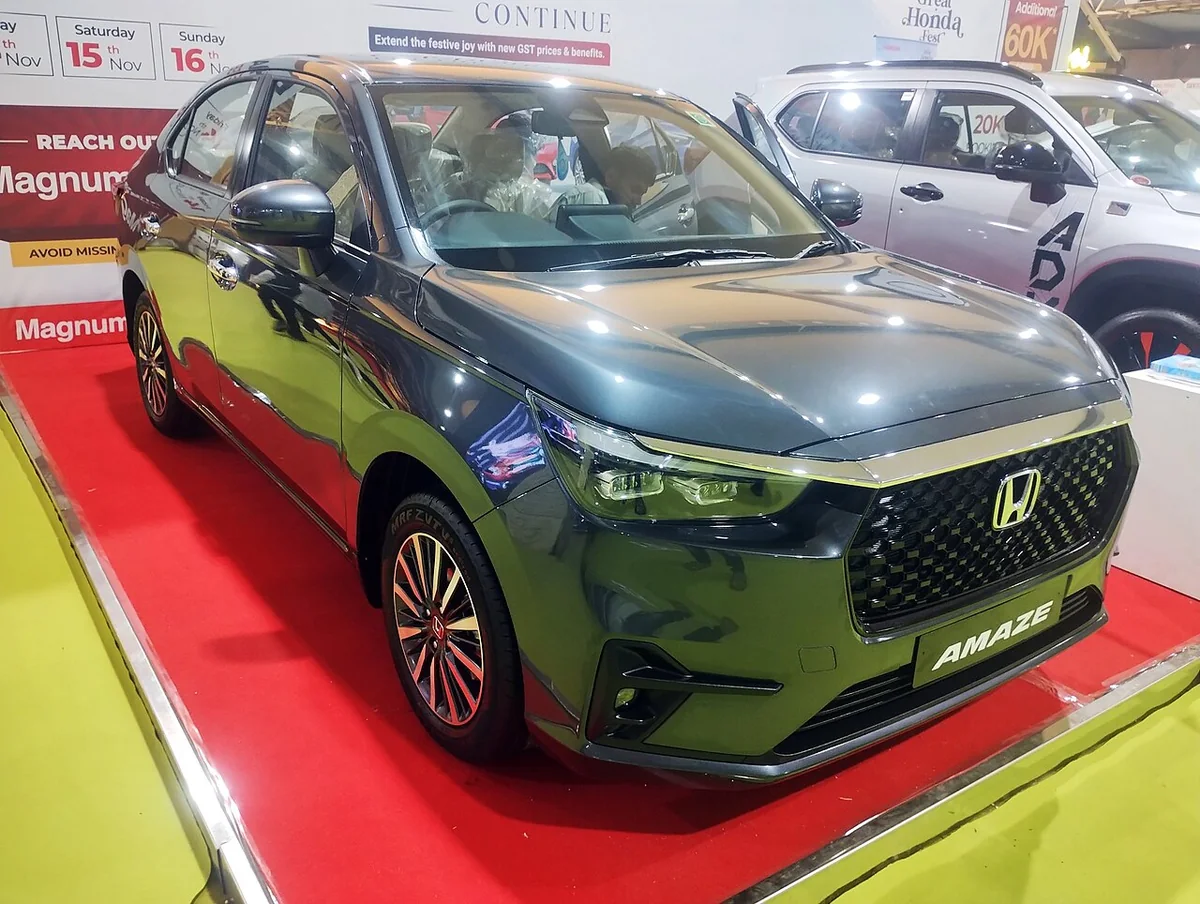
The Mumbai Honda Amaze shows how much the selection matters. With the current-generation V Petrol Manual and Solid Metallic selected, CarWale displayed ₹7,73,660 ex-showroom, ₹90,175 for individual registration, ₹42,496 for insurance and ₹500 in other charges. Those figures add to the displayed default on-road amount of ₹9,06,831. A second-generation Amaze appears separately, so confirm the listing before carrying that total into a comparison.
The same page separately showed optional hypothecation of ₹1,500. If that were the only addition to the displayed default, the arithmetic would give ₹9,08,331. Ask whether it applies to the proposed transaction and check where it appears on the dealer’s quote. The page also has a sample insurance widget with its own scope. Use the insurance figure in the selected price breakdown to reproduce the default total. The FAQ repeats figures for different colour and registration combinations, so read the row for your selection and leave the other combinations out of the calculation.
Ask the dealer to identify the variant, powertrain, colour, model year and registration city on the written quote. Compare the ex-showroom line first, then registration, insurance and each additional charge. Where the dealer bundles items, ask for the amounts separately so you can see which part of the total changed. Check the manufacturer’s page for the applicable starting figure and read its pricing conditions. Maruti Suzuki says the scheme and price applicable at invoicing prevail, which matters when a booking and invoice fall under different price or offer periods.
Suppose two dealers quote the same ex-showroom amount but one has a higher on-road total. If most of the difference sits on the insurance line, put the two insurance proposals side by side and check the insured value, coverage and add-ons before deciding which quote is cheaper for what you want. If the difference sits under other charges, ask the dealer to name the items and show any removable products separately. For a disputed registration figure, ask which registration category it assumes and verify the basis with the authority for that location.
Record when each dealer issued its quote, when it expires and which amount depends on the invoice date. For a specific car, ask the dealer to confirm stock or allocation and the expected delivery timing in writing. That gives you something concrete to refer to if the configuration, timing or total changes between the initial discussion and the booking.
To check the Mumbai calculation, enter ₹5,83,900 for the vehicle, ₹70,613 for registration and applicable charges, ₹35,512 for insurance and ₹500 as other charges. The calculator gives ₹6,90,525, the platform’s published subtotal in this example. Use the dealer’s itemised quote when you have one and leave a charge out if the dealer already includes it in another line.
Kia Carnival India price, Limousine Plus features and on-road costsRenault India model prices, Kwid to Duster Hybrid, and warranty
The Delhi Swift page displayed possible November offers and optional packages separately from its default estimate. Treat an advertised offer as something to confirm for your selected car and transaction. Ask for the amount the dealer will apply, the eligibility conditions and when they must be met. Once the dealer confirms them, record the discount against the same itemised quote. This keeps you from deducting an offer that the dealer has already included in the amount payable.
A finance illustration answers a monthly payment question under a set of assumptions. To compare two illustrations, write down the vehicle price used, down payment, amount financed, loan term, interest rate and any fees. Check whether the illustration leaves anything payable upfront or includes products you have yet to select. If an offer depends on using a particular lender, ask to see the resulting vehicle price and the financing terms together so you can account for both effects.
If one dealer shows a lower EMI over a longer term, put both proposals on the same down payment and term before using the monthly figures to choose between them. Where the terms differ, compare what you would pay upfront and over the full schedule, including any separately quoted fees. Keep the vehicle price visible throughout. That helps you tell whether the smaller monthly payment comes from a lower purchase price, a different loan amount or more time to repay.
Check the model status before interpreting any prominent price or shopping button. CarWale marks the Honda CR-V’s India new-car listing as discontinued and labels its figure Last Recorded Price. Comparison and offer controls can still appear on the page. The header and FAQ also show differing figures, so the first amount you see may be a poor reference if you have yet to match it to the generation or version you are researching.
For the 2013–2018 CR-V, CarWale’s separate old-generation page gives ₹21.89–27.08 lakh as the Last Recorded Price in 2018. If you are researching an advertised 2017 CR-V, that range offers historical context for the generation. To assess today’s asking price, look for current used examples with the same version and similar mileage, condition and ownership history. A comparison with the historical range alone cannot account for those differences or show what buyers recently paid.
The generation check also matters when the nameplate is still used on a newer car. A search for the Honda Amaze can lead to the separate second-generation entry while you are researching the current generation. Open the model page and confirm the generation before using its price or specifications. When a dealer advertises a specific car under a familiar name, ask them to identify its model year and version on the quote. That detail is more useful for confirming the car on offer than the presence of a comparison button or a generic price range.
A used CarWale listing shows a seller’s asking price. Ask whether the advertised car is still available and what the seller currently expects you to pay, including any separately charged services. Match the advertisement to the physical vehicle and documentation before relying on its price. An older listing can remain visible after its status or terms have changed. Even among available listings, similar mileage and the same variant name leave plenty of room for differences in condition, service history and the work a car may need.
CarWale distinguishes ordinary marketplace listings from abSure and abSure4S vehicles. If a car is advertised with certification, read the specific report and the applicable terms. Check the inspection date and, where relevant, the stated warranty and return conditions. The general certification terms say inspectors do not authenticate the odometer reading. If mileage is important to your comparison, ask for the available service records and check how the recorded readings fit the history of that particular car.
Keep ownership transfer separate in your purchase records. For a normal used-vehicle sale, Parivahan identifies Form 29 for the seller’s notice and Form 30 for the buyer’s application, and distinguishes same-state from interstate cases. Use its state transport references to check the applicable documents, deadlines and official transfer status. A listing, inspection report or token receipt serves a different purpose from the registration authority’s ownership record.
