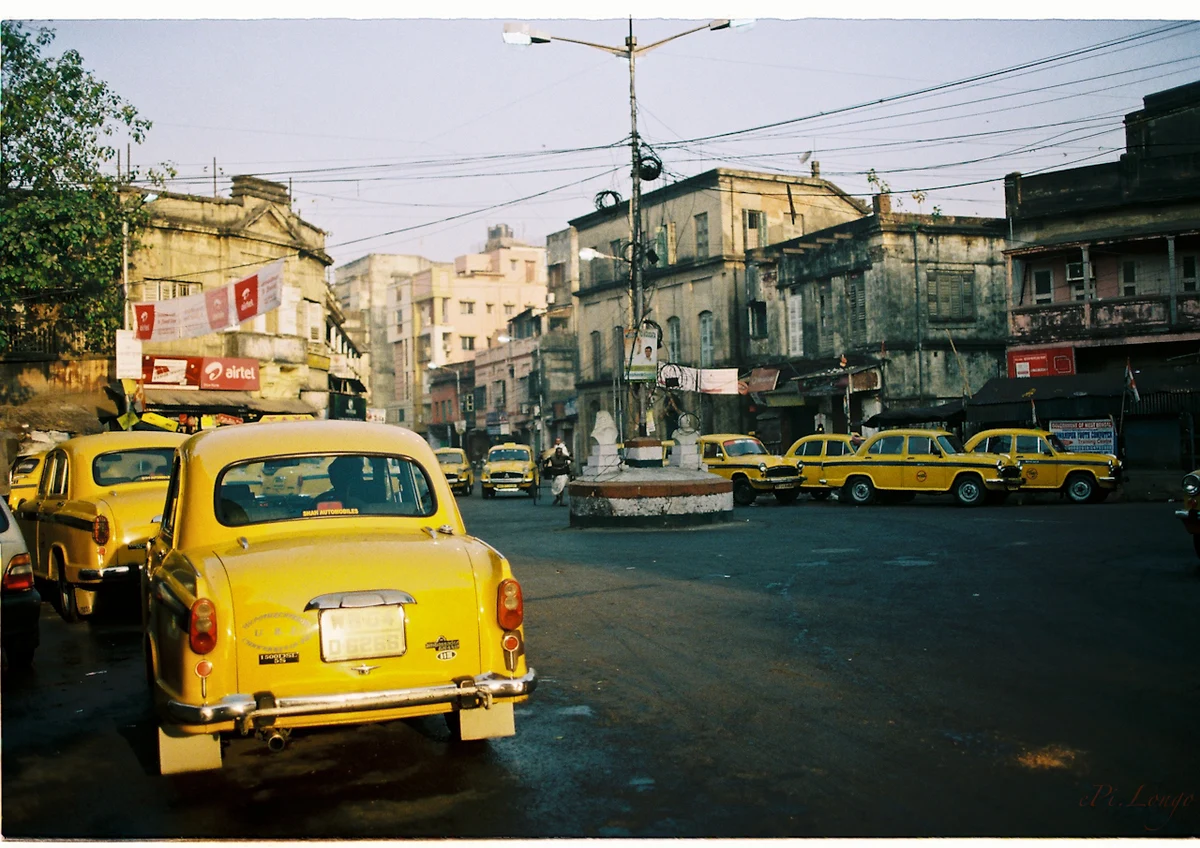
From Hindustan Motors to the 1957 Ambassador
Hindustan Motors launched the Ambassador in 1957 and suspended work at its Uttarpara plant on 24 May 2014. In India, the Ambassador is a discontinued car to look for on the used market, where the individual vehicle’s condition and registration matter more to a buying decision than its place in the model’s history.
The company predates the car by 15 years. NITI Aayog’s 2025 automotive industry study dates the establishment of Hindustan Motors to 1942 and identifies the Hindustan 10, based on the Morris Ten Series M, as an earlier model in the company’s development. The ICMR case study traces the Morris collaboration ahead of the Ambassador’s 1957 launch. The Morris Ten Series M connection in the NITI account belongs to the Hindustan 10. That distinction matters when a model history or seller description runs the early Hindustan cars together.
Hindustan Motors began in Port Okha, Gujarat, and moved operations in 1948 to Uttarpara in Hooghly district, West Bengal. Uttarpara is the plant associated with Ambassador production in the company’s historical account. For anyone dating a car or assembling its provenance, 1942 refers to the company, 1948 to the move, and 1957 to the model launch. The year of a particular car has to come from its own records, especially when an advertisement uses the model’s long history to describe a much later example.
What the Uttarpara suspension and Peugeot deal changed
The date Hindustan Motors gives for the Uttarpara work suspension is 24 May 2014. Its FY2023–24 annual report still describes the plant as under suspension since that date. The same report includes the Ambassador in a legacy product description alongside the Winner and auto components. Read the plant disclosure alongside that product description if you encounter the Ambassador name in a later company document. To establish when the last individual car was built, you would need a separate production record.
On 10 February 2017, Hindustan Motors entered into an agreement with Peugeot S.A. covering the Ambassador brand, specified trademarks and certain related rights. The agreed consideration was the foreign-currency equivalent of ₹8,000 lakh, or ₹80 crore, subject to the agreed terms. Hindustan Motors’ FY2017–18 accounts say the terms were fulfilled and payment was received during that financial year. The accounts report ₹7,897 lakh received after an exchange loss of ₹103 lakh. PSA’s own corporate filing also records the brand acquisition.
The dates answer different questions. The 2014 filing milestone concerns the factory, the February 2017 date concerns the signed agreement, and FY2017–18 is the period in which the company reports receipt of payment. For a prospective buyer, the trademark deal says who acquired the brand rights. Evidence of a new car on sale would need to establish a current manufacturer-backed offering in India. The available market and company records verify no such offering.
| Date or period | Event | Scope |
|---|---|---|
| 1957 | Ambassador launch in period government history | Vehicle model history |
| 1963 | Mark II recorded by the government publication | Separate predecessor and model reference |
| 24 May 2014 | Uttarpara plant suspension recorded in audited report | Production evidence, distinct from exact retail sale dates |
| 10 February 2017 | Ambassador trademark agreement recorded at ₹80 crore | Transfer of intellectual property, with subsequent receipt |
| 2017–18 financial year | Annual report records receipt under agreement | Accounting period for the brand deal |
Ambassador engine and fuel variants
The Hindustan Motors account hosted in its July 2011 roadshow archive lists two nominal diesel sizes, one petrol size, and CNG and LPG offerings under the Ambassador name. That dated snapshot is useful because a classified ad can use the same model name for cars that take different fuels and need different parts. The table gives the level of detail supported by the archive. It establishes which families appeared in that company overview, with individual availability today dependent on what turns up for sale.
| Variant family | What the archive records | What to verify on the individual car |
|---|---|---|
| 1500 diesel | 1500 cc diesel listed in July 2011 | Recorded fuel and engine particulars, plus parts availability for the fitted engine |
| 2000 diesel | 2000 cc diesel listed in July 2011 | Engine identity and any paperwork for a replacement |
| 1800 petrol | 1800 cc petrol listed in July 2011 | Recorded fuel, fitted engine and present fuel system |
| CNG | CNG listed in July 2011 | Registration details and documentation for the installed equipment |
| LPG | LPG listed in July 2011 | Registration details and documentation for the installed equipment |
Use the quoted capacities as nominal descriptions when searching. The archive does not supply the launch and withdrawal dates of each engine, exact displacement for every derivative, or a mapping from engine size to every generation and trim. When ordering a part, have a workshop confirm the fitted engine and identify the component from the car. A broad label such as diesel can narrow a search while still leaving too much uncertainty to place an order.
If an advertisement describes an Ambassador as CNG and the seller mentions a later conversion, ask for the registration particulars and installation paperwork before travelling. The 2011 archive supports the existence of a CNG offering. The records for that particular car are what let you assess the seller’s account and ask the registration authority how the installation affects transfer. You can also check whether a workshop convenient to you services that equipment before deciding that the fuel type suits your intended use.
What advertised prices can tell you
CarWale gives ₹4.21–6.40 lakh as the Ambassador’s last-recorded catalogue range and identifies the model as discontinued. Use the range as a historical catalogue reference. It carries no verified original invoice for a particular car, and it provides no current new-car price. A second-hand asking price can fall within the old bracket by coincidence. For a used purchase, the information that matters is what the seller is offering, in what condition, with what records, and how much work the car needs for your intended use.
Two public OLX advertisements illustrate the spread in seller expectations. In Thiruvathigai, a car described as a 2007 Ambassador with 100,000 km was advertised at ₹1,70,000. In Murlipura, a car described as a 1989 Ambassador with 89,000 km was advertised at ₹5,80,000. The older advertised car carried an asking price ₹4,10,000 higher. In both cases, the year, kilometres and price came from the seller, and the examples provide no confirmed sale, condition assessment or assurance that either car is still available.
If these were your two leads, the difference would justify asking the higher-priced seller what work, parts or documents support the premium before paying for an inspection. Ask the lower-priced seller what faults are known and whether the car can be inspected where it stands. The two ads leave originality, restoration quality and registration status unresolved. For a fresh comparison, rerun the search with a location range you can realistically visit, check that the seller still has the car, and compare examples with similar paperwork and levels of work required.
CarWale India prices, city comparisons and dealer quote calculatorFord in India, owner support, used models and Chennai plans
Inspect the body, mechanicals and restoration work
Start the inspection with the body and underside because the scope of metalwork can be hard to judge from listing photos. Ask a workshop familiar with older cars to check the floor, sills, jacking points and structural mounting areas. Look around door bottoms and window seals for corrosion or signs of water entry. Uneven gaps or a fresh finish over a rough repair give the inspector specific areas to examine. If the seller describes a restoration, ask for photographs taken during the work and invoices showing which sections were repaired or replaced.
Arrange to see the engine start cold, with the seller’s cooperation. Ask the mechanic to look for leaks, assess the cooling system and check the battery and charging system. Include tyres, steering, suspension and brakes in the inspection. Where registration, insurance and vehicle condition permit a road test, include low-speed manoeuvring and enough driving to observe how the engine behaves once warm. A short clip of the engine running can help decide whether to make the trip. It leaves the workshop with a separate job of assessing the car under ordinary use.
A buyer with space to store a project might consider a running car that needs interior work and can wait for trim pieces. A buyer who needs to use the car soon would have more reason to prioritise sound structure, a dependable cooling system and a workshop willing to maintain it. Ask the inspector to separate urgent safety work from jobs you can schedule later and price them independently. Compare the resulting scope with your intended use before treating the advertised price as the cost of putting the car into service.
Check registration and transfer before paying
For a normal used-vehicle sale, Parivahan identifies Form 29 for the seller’s notice and Form 30 for the buyer’s transfer application. It provides separate document lists for same-state and interstate cases, with registration and insurance among the core records. Start with the registration certificate and confirm who is recorded as the owner. Compare the vehicle particulars in the certificate with the car and ask about any missing documents or differences before agreeing to pay.
Transfer and road use are separate questions to verify for an old vehicle. Use the current Parivahan guidance and ask the relevant registration authority about the particular car, giving its registration details and where you intend to keep and drive it. Check the registration’s current status, the documents required for your case, and any restrictions that affect your intended use. A seller’s statement that the car runs or has been insured does not resolve those questions. If a document issue emerges, establish who can resolve it while the recorded owner is still involved in the sale.
If a car is registered in another state and the seller describes the handover as a simple local sale, check the interstate requirements with the authority where you plan to register it. Confirm which documents have to come from the seller and which steps you would have to take after purchase. Factor transport into the decision if you cannot confirm that you can drive it home. An otherwise suitable car can become a poor choice for regular use if the records needed to transfer it are unavailable.
Choose a car for regular use, preservation or restoration
For regular use, judge the car against the journeys you actually expect to make and the support you can reach. Ask a nearby workshop whether it will take on the fitted engine and fuel system and how it would source routine service parts. Check that the parking space suits the car and that you have a way to move it if it needs work. A mechanically sound example with a plain interior can make sense when your first priority is getting out in it regularly.
For preservation, decide whether you care most about period appearance, the car’s own history, or a particular configuration. A changed engine, an updated interior and a repaint have different implications for each of those aims. Ask a seller claiming original paint, trim or mechanical components what supports the claim. Old photographs and invoices can help establish when changes were made. If provenance matters to your purchase, record which details are documented and weigh uncertain claims accordingly when comparing cars.
For a restoration project, inventory the pieces included in the sale before pricing the job. A car sold partly dismantled may come with boxes of hardware, trim or other components that need identifying. Ask the workshop to separate work it can quote after inspection from work it can assess only after dismantling. That distinction lets you compare a cheaper incomplete car with a more expensive running example on the same basis, using the work and parts each would need to reach the condition you want.
Sources
- NITI Aayog automotive industry historical study
- Hindustan Motors 2011 roadshow archive and company history
- Hindustan Motors FY2016–17 annual report filed at BSE
- Hindustan Motors FY2017–18 annual report filed at BSE
- Hindustan Motors annual report, FY2023–24
- CarWale Ambassador historical product listing
- OLX India, public Ambassador advertisements
- Government of India Parivahan transfer of vehicle ownership
- Photo candidate, two yellow Ambassador taxis in Kolkata
- PSA Group registration document on Ambassador brand acquisition
- ICMR India Ambassador model history case study
