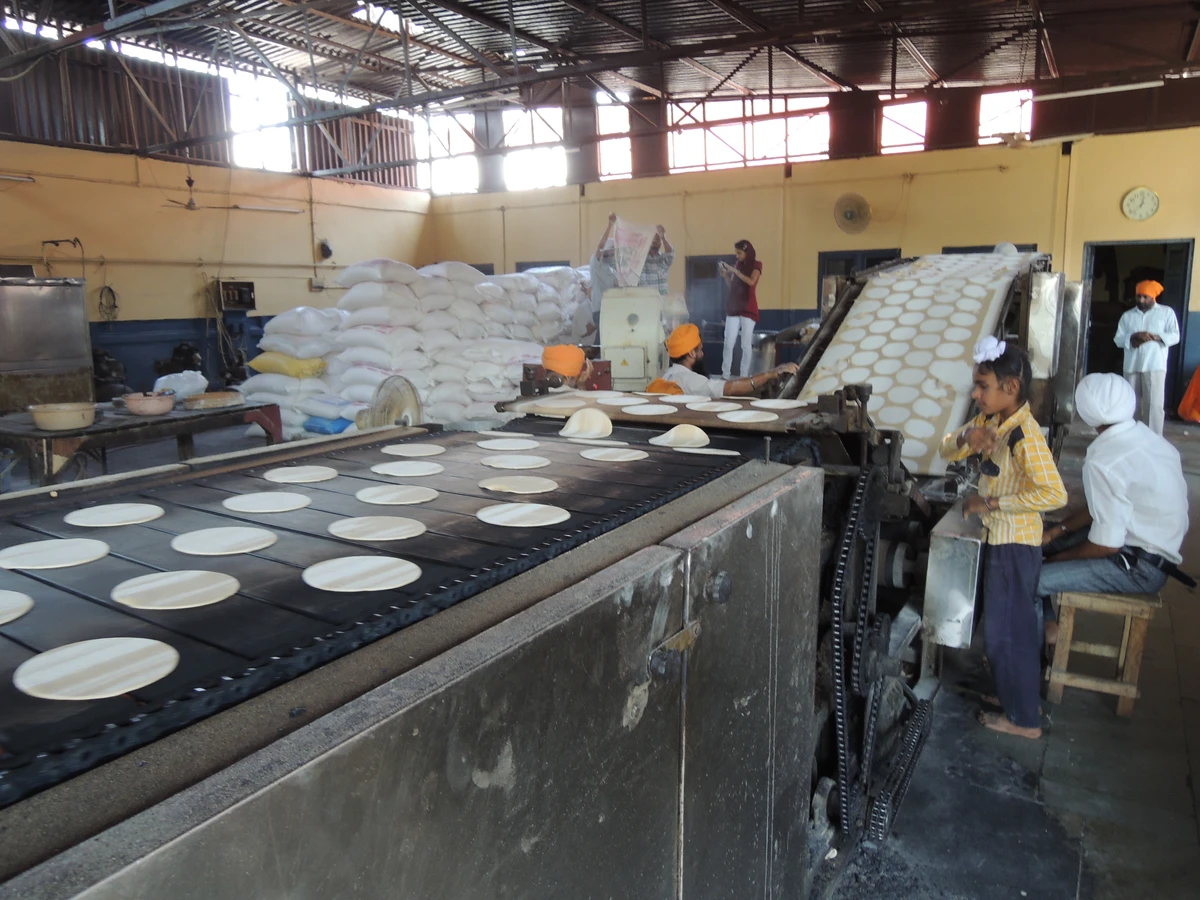
Choose how much of the work to automate
Choose a 900 W manual roti press if you already make dough and mainly want an appliance for flattening and cooking it. If you want the machine to start with flour and water and also knead, shape and cook the rotis, look at a fully automatic model such as the Wonderchef Roti Magic 2.0, listed at ₹79,999.
The manual group here includes the Prestige PRM 3.0, Prestige PRM 5.0 and BOSS Crisp B518. Each takes prepared dough and requires you to operate the press. The BOSS listing uses automatic language for its thermostat cut-off, so read that term alongside the list of jobs the appliance actually performs. A heat control may simplify one step while leaving dough preparation and portioning in your routine.
Think about where your roti-making routine slows down. If someone already kneads dough for dinner and shaping each portion is the bottleneck, a press addresses that stage at the lower listed prices in this comparison. If the household routinely skips rotis because nobody has time to start the dough, the automatic category addresses an earlier stage. Its value then depends on how much attention the complete cycle needs, including measuring ingredients, adjusting settings for the flour and cleaning up afterward.
Put your current routine on the same footing as the machine. Count the tasks you handle from taking out the atta to putting away the clean equipment. A feature matters more when it removes a task you do often. A machine that saves you time on shaping may still make sense if the meal already includes other work at the stove and you can handle the press alongside it.
- TTK Prestige PRM 3.0 manufacturer listing, SKU 41030
- TTK Prestige PRM 5.0 manufacturer listing, SKU 41034
- BOSS Crisp Roti Maker B518 official India product
- Wonderchef Renewed Roti-Magic 1900 W, SKU RNW04563
- Wonderchef Roti Magic 2.0 current India manufacturer page
- Rotimatic NEXT India manufacturer launch archive
Compare exact models and India listing prices
Among the three manual presses, the listed prices run from ₹2,580 for the Prestige PRM 3.0 to ₹3,195 for the PRM 5.0. Both Prestige product pages showed out of stock. The ₹2,840 BOSS Crisp B518 showed an add-to-cart button, with delivery still subject to postcode serviceability. Read the price and stock state together when deciding which models are real checkout options.
| Model | What you supply | Listed India price | Listing status |
|---|---|---|---|
| Prestige PRM 3.0, SKU 41030 | Prepared dough | ₹2,580 against ₹3,225 MRP | Out of stock on exact product page |
| Prestige PRM 5.0, SKU 41034 | Prepared dough | ₹3,195 against ₹3,995 MRP | Out of stock on exact product page |
| BOSS Crisp B518 | Prepared dough | ₹2,840 against ₹3,550 MRP | Add to cart displayed, postcode unverified |
| Wonderchef Renewed Roti-Magic, SKU RNW04563 | Flour, water and oil | ₹44,999 against ₹1,25,000 MRP | Renewed or open-box listing, stock unverified |
| Wonderchef Roti Magic 2.0 | Flour and water in dedicated compartments | ₹79,999 launch price against ₹99,999 MRP | Buy Now displayed, checkout and shipping unverified |
| Rotimatic NEXT | Flour, water and oil | ₹1,19,999 against ₹1,65,999 in India launch archive | Current India offer unverified |
The ₹44,999 Wonderchef figure belongs to the renewed Roti-Magic under SKU RNW04563. The seller says the unit may have slight cosmetic blemishes. The ₹79,999 launch price belongs to the newer Roti Magic 2.0. Comparing those figures as a simple discount would bundle a change in model with a change in condition. Get the exact model and condition in writing before evaluating whether the lower price is worth taking.
For a fresh price check, open the exact product page, match its model or SKU and enter your delivery postcode before comparing checkout totals. Prestige category copy can outlast a change on the product page. An earlier Wonderchef 2.0 page advertised preorder, while the later page showed Buy Now. Rotimatic's archived India sales and warranty routes were unavailable at verification, so its launch price belongs in the historical record and outside a current checkout comparison.
- TTK Prestige PRM 3.0 manufacturer listing, SKU 41030
- TTK Prestige PRM 5.0 manufacturer listing, SKU 41034
- BOSS Crisp Roti Maker B518 official India product
- Wonderchef Renewed Roti-Magic 1900 W, SKU RNW04563
- Wonderchef Roti Magic 2.0 current India manufacturer page
- Rotimatic NEXT India manufacturer launch archive
Compare plate shape, heat controls and usable size
The Prestige PRM 3.0 has a plain nonstick plate and a power indicator. The PRM 5.0 has a curved nonstick plate and a temperature-control knob documented in Prestige's range FAQ. BOSS lists an aluminium nonstick plate and a fixed thermostat cut-off for the Crisp B518. All three are rated at 900 W. Those specifications tell you which controls and surfaces you get. Puffing, browning and the effort required to press an even roti remain questions for a demonstration or a comparative trial.
The two Prestige listings give different appliance and packing measurements. The PRM 3.0 lists product dimensions of 28.5 × 28.5 × 20 cm and a pack of 31 × 22.5 × 22 cm. The PRM 5.0 lists product dimensions of 22.2 × 22.2 × 21 cm and a pack of 33 × 24 × 22.5 cm. Use the appliance dimensions as a starting point for storage and ask for the usable plate diameter separately. Check the space you need to lift the lid and use the handle where you plan to cook.
If the rotis you already make fit a particular plate or lunchbox, measure one and use that size when requesting a demonstration. Ask to see the cooked roti measured, since the diameter of the finished roti is what you will use at the table. For choosing between controls, look for how the operator sets or adjusts heat across successive rotis and whether the pace suits the amount you normally cook.
Read automatic output claims in terms of your meal
Wonderchef advertises up to 15 rotis in a 13-minute cycle for the renewed 1,900 W Roti-Magic. Its listing gives capacities of 340 g for flour, 240 mL for water and 35 mL for oil. Use those figures when looking at that exact renewed SKU. The current Roti Magic 2.0 page describes flour and water compartments and automatic kneading, shaping and roasting. Its own capacities and timing need model-specific confirmation.
In a one-week Mint trial of one Rotimatic NEXT, Tushar Kanwar reported that flour calibration affected the initial batches. He also observed that the poori setting dispensed an uncooked disc. Those observations give you two specific questions to ask in a demonstration. Find out what setup your usual atta needs and check whether each flatbread setting finishes the cooking or prepares a piece that needs another step.
If your household wants eight rotis ready together for dinner, a cycle claim expressed as a maximum batch size answers only part of the question. Ask to see eight acceptable rotis made from a cold start with your normal flour. Note when the first and eighth cooked rotis are ready, what the operator has to do during the run and whether any pieces were discarded. A demonstration framed around your meal gives you a basis for judging pace, consistency and how much active work the machine actually saves.
Check counter space, setup and electricity
The archived India specification for Rotimatic NEXT lists a cabinet 28 cm wide, 46.5 cm deep and 37 cm high, with a weight of 19 kg. Depth matters if the machine will share space with other appliances, and weight matters if you store it between meals. Factor in access above the cabinet for loading ingredients. For Roti Magic 2.0, get its own dimensions and the recommended operating clearances before allocating a counter or shelf.
The archived India NEXT specification lists a 220–240 V machine rated at 1.6–1.8 kW. It describes an app and internet connection for setup and updates, with routine roti operation available offline after setup. If you are considering a unit already in India, verify that the current app can set up that exact model and that you have the correct India electrical specification. Ask the seller to demonstrate initial setup when it matters to your purchase.
For a rough electricity comparison, a 900 W press continuously drawing rated power for 20 minutes would use 0.30 kWh. That is a rated-power ceiling for the example. Warm-up, thermostat cycling and session length affect actual consumption. Use the energy for a whole session, including warm-up, if you obtain a measured result. Comparing wattage alone leaves out how long each machine runs and how many rotis you get from the session. The renewed Wonderchef's 1,900 W figure applies to its exact model.
| Decision | What to verify in the exact model record | Where to start |
|---|---|---|
| Manual press | Dough workflow, plate dimensions and stated controls | Prestige India exact model or BOSS appliance page |
| Automatic machine | Ingredient inputs and stated output capacity | Wonderchef model listing |
| Renewed appliance | Condition, packing, current coverage and replacement scope | Wonderchef exact renewed listing |
| Published demonstration or trial | Observed recipe, conditions and tested sample | Named independent 2025 Rotimatic trial |
| Cleaning and electrical guidance | Model-specific manual and plate or compartment cleaning | Manufacturer operating documentation |
India plug types and voltage: C, D, M and 230 VCroma India, electronics prices, returns and warranty
- TTK Prestige PRM 3.0 manufacturer listing, SKU 41030
- TTK Prestige PRM 5.0 manufacturer listing, SKU 41034
- BOSS Crisp Roti Maker B518 official India product
- Wonderchef Renewed Roti-Magic 1900 W, SKU RNW04563
- Wonderchef Roti Magic 2.0 current India manufacturer page
- Rotimatic NEXT India manufacturer launch archive
- Rotomak Grande official household manual and cleaning safeguards
Account for cleaning and day-to-day handling
Prestige's range guidance says to let the plates cool completely, then wipe with a soft damp cloth and avoid abrasive tools. The Rotomak Grande household manual also gives basic precautions for its appliance, including using the intended handles, unplugging before cleaning and keeping the electrical unit out of water and the dishwasher. Use the manual for the model in front of you to establish which parts detach and how each part should be cleaned.
The Mint trial of the NEXT confirms that the tested unit had accessible ingredient containers on top and a removable kneading compartment. That gives you specific parts to ask about when assessing cleanup. Request a view of the machine after a batch, before anyone wipes it down. Ask which surfaces collect flour or dough, which parts need attention after each use and how the parts are put back. Confirm the routine in the manual for the unit you are buying.
How often you run the machine changes the importance of that routine. If you make a few rotis at lunch and another small batch at dinner, find out what cleanup is required between those runs and whether the manufacturer allows ingredients to stay loaded. A family that cooks one larger batch may care more about how quickly the parts can be washed and dried at the end of the day. Account for whichever pattern you actually follow when weighing convenience.
Verify delivery, replacement and repair before paying
The two Prestige listings give a one-year warranty, and BOSS lists 12 months for the B518. Prestige's direct-site policy calls for transit damage to be reported within 24 hours and accepted damaged or defective unused items to be returned within seven days in original packaging. BOSS's direct policy gives a seven-day complaint window for defective, damaged or incorrect products and asks for proof and original packaging for replacement. BOSS excludes preference returns. Check the merchant on your invoice because the applicable policy depends on where you buy.
For the renewed Wonderchef, ask the seller to confirm the exact unit's condition, included parts, warranty duration and on-site service coverage for your postcode. The product page advertises up to one year of on-site warranty. For Roti Magic 2.0, obtain its product-specific warranty and a delivery estimate from the actual seller. For Rotimatic NEXT, the archived one-year warranty establishes the historical offer. Get current written India service terms for the serial number and sales channel if you find a unit.
For a concrete purchase decision, suppose a seller can ship the BOSS B518 to your postcode and you need it by a specific day. The seller's general estimate of five to seven working days is subject to serviceability. Use the delivery estimate shown for your address or ask the merchant for written confirmation. Save the order details and keep the packaging through the complaint window so you can follow the merchant's process if the unit arrives damaged or the model differs from the invoice.
- Match the SKU, condition and included parts on the listing and order confirmation.
- Record the postcode-specific delivery estimate and the final amount before paying.
- Save the merchant's reporting deadline and instructions for damage, defects or a wrong item.
- Confirm who handles warranty claims and whether service at your address requires pickup, a visit or a trip to a service centre.
- TTK Prestige PRM 3.0 manufacturer listing, SKU 41030
- TTK Prestige PRM 5.0 manufacturer listing, SKU 41034
- BOSS Crisp Roti Maker B518 official India product
- Wonderchef Renewed Roti-Magic 1900 W, SKU RNW04563
- Wonderchef Roti Magic 2.0 current India manufacturer page
- Rotimatic NEXT India manufacturer launch archive
- TTK Prestige India's direct return terms
- BOSS India direct cancellation, return and replacement terms
Sources
- TTK Prestige PRM 3.0 manufacturer listing, SKU 41030
- TTK Prestige PRM 5.0 manufacturer listing, SKU 41034
- BOSS Crisp Roti Maker B518 official India product
- Wonderchef Renewed Roti-Magic 1900 W, SKU RNW04563
- Wonderchef Roti Magic 2.0 current India manufacturer page
- Rotimatic NEXT India manufacturer launch archive
- Mint independent firsthand Rotimatic NEXT trial by Tushar Kanwar, 1 November 2025
- Rotomak Grande official household manual and cleaning safeguards
- TTK Prestige India's direct return terms
- BOSS India direct cancellation, return and replacement terms
- Open documentary photograph of automatic chapati making at the Golden Temple
