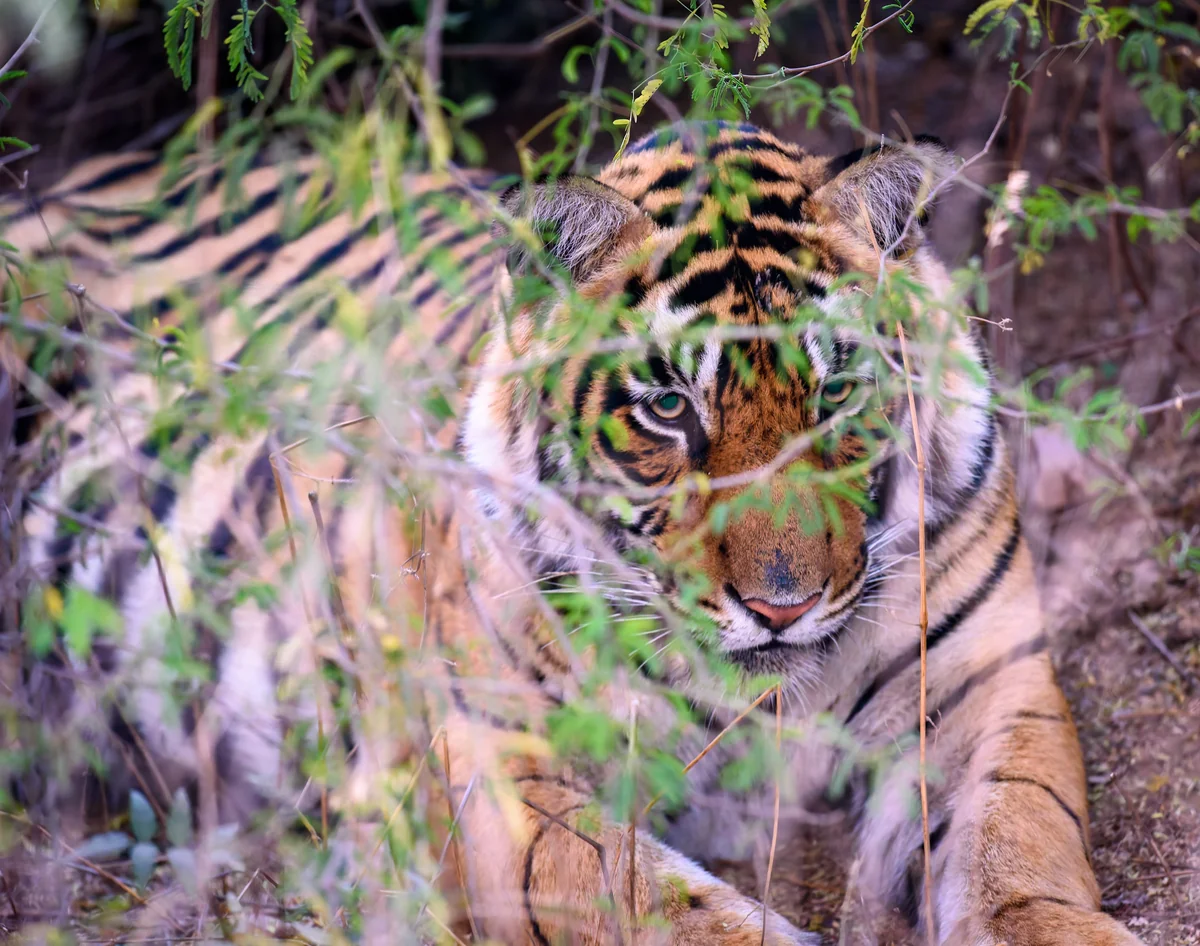
What is the national animal of India?
The tiger is the national animal of India. The Ministry of Environment and Forests re-notified the tiger and the peacock as India’s national animal and national bird respectively on 30 May 2011.
The primary record is notification F. No. 25-1/2008-WL-I. It explains why the ministry issued the designations again. The earlier notifications could no longer be located in ministry records. The date therefore identifies the available re-notification. The document leaves the original designation date unresolved, a point that matters if you are building a timeline or checking a quiz that asks when the tiger first received the title.
The notification calls the animal “Tiger” and gives no scientific name. The National Portal of India has a public reference that describes the animal in more detail. Use the notification for the designation and the portal for any descriptive wording you have checked there. A species or subspecies label in a wildlife caption needs its own source, particularly if the caption also identifies the animal in a specific photograph.
A quiz editor can answer “What is India’s national animal?” with “Tiger” and cite the 2011 notification in the answer key. If the question asks for a year, phrase it as “When did the ministry re-notify the tiger as India’s national animal?” That wording produces a definite answer and preserves the difference between the event recorded in the document and the earlier event it mentions.
National symbols at a glance
Use the category in the first column to match the question you have been asked. The word “national” appears in several titles, and the rest of the title often determines the answer. The tiger and the Ganges river dolphin have separate designations. Jana Gana Mana and Vande Mataram have separate titles. The flag and the State Emblem both draw on the Sarnath Lion Capital, which helps explain why references to Ashoka occur in descriptions of each.
| Category | Name or design | Record to check |
|---|---|---|
| National animal | Tiger | Environment ministry re-notification, 30 May 2011 |
| National bird | Peacock | Environment ministry re-notification, 30 May 2011 |
| National aquatic animal | Ganges river dolphin | Environment ministry notification, 10 May 2010 |
| National flag | Tricolour with the Ashoka Chakra | Embassy of India in Khartoum description and adoption date |
| State Emblem of India | Adaptation of Ashoka’s Lion Capital at Sarnath | Government of India National Emblem description |
| National anthem | Jana Gana Mana | Ministry of Home Affairs report on the 9 July 2026 consolidated order |
| National song | Vande Mataram | Ministry of Home Affairs report on the 9 July 2026 consolidated order |
The record column tells you where to check what each row claims. For the three animal entries, the environment ministry documents supply the designations directly. For the anthem and song, the Home Ministry’s report identifies the titles and summarizes part of the July 2026 order. A reference chart can use that report to identify both works. An event organizer needs the text of the order to settle questions about how it applies to a programme.
The lotus needs a qualified entry in a classroom handout or reference table. The Indian embassy in Khartoum presents it as a national symbol. A written Rajya Sabha reply dated 10 July 2019 says the environment ministry had issued no national flower notification as of that reply. Keeping both statements together gives the reader enough information to understand why public lists can differ and what to check if they need a current formal answer.
If you are preparing a set of national facts, compare the exact symbols with the relevant source rather than assuming that familiar claims all have the same status. The tiger, peacock and Ganges river dolphin each have central designation records. For a separate question about a national sport, read the published government answer on that category, which has its own evidence.
- Embassy of India in Khartoum: National Flag
- Government of India: National Emblem description
- Ministry of Home Affairs: Rajya Sabha Reply, 10 July 2019
- Ministry of Environment and Forests: Original Tiger and Peacock Re-notification, May 30, 2011
- Ministry of Home Affairs: July 2026 Report on Consolidated Anthem and Song Order
- Ministry of Environment and Forests: National Aquatic Animal Notification
- Rajya Sabha: July 10, 2019 Proceedings, Question 1942
The peacock and the Ganges river dolphin
The peacock shares the tiger’s 2011 re-notification. The document uses the common name “Peacock” for the national bird and supplies no scientific name. The Rajya Sabha reply from 2019 confirms that the ministry had notified both the peacock and the tiger on 30 May 2011. For the wording of the designations, the original document lets you check both entries in one place. The parliamentary reply supplies a later official account.
The Ganges river dolphin has a separate notification, dated 10 May 2010, designating it as the national aquatic animal. Keep the geographic part of the common name when writing the answer. “Dolphin” alone leaves the reader without the identifying detail supplied by the ministry. Keep “aquatic” in the title as well, because that word connects the answer to the correct designation and the correct document.
For a worksheet about the two animals, give each clue its category. “India’s national aquatic animal” asks for the Ganges river dolphin, while “India’s national animal” asks for the tiger. A clue asking which animal received a national designation in 2010 can also work if the expected answer includes its title. The two dates belong to distinct ministry actions, so their order on a timeline tells you which of those documents came first.
Why the lotus needs a dated answer
The embassy in Khartoum includes the lotus in its public account of India’s national symbols and describes its place in Indian art and mythology. That source supports statements about how an Indian diplomatic mission presents the lotus and the cultural associations it highlights. Cite the embassy for that description if the lotus appears in a display about Indian art or in a guide to symbols readers commonly encounter.
The answer to Rajya Sabha Question 1942 supplies the administrative detail. In the written reply of 10 July 2019, the Ministry of Home Affairs reported that the environment ministry had issued no corresponding notification naming a national flower. The parliamentary proceedings preserve the reply. Attribute the statement to that record and keep the date attached. The evidence establishes what the ministry reported in July 2019.
For an exhibition label headed “Lotus,” a sentence on the embassy’s description can sit beside a sentence giving the dated parliamentary position. A label headed “Officially notified national flower” would require the issuing authority, document date and designation wording. To check whether the position has changed since the reply, look for a later environment ministry notification or a Gazette entry and read the actual designation. Another public list may confirm that the association is widespread, but a designation requires evidence of the issuing act.
The flag, the Ashoka Chakra and the State Emblem
The Constituent Assembly adopted the current national flag design on 22 July 1947. The flag has three equal horizontal bands, with a navy-blue Ashoka Chakra centred in the white band. The wheel has 24 spokes. The flag’s width-to-length ratio is 2:3. A rectangle 20 centimetres in width and 30 centimetres in length has that proportion, and the three equal bands divide its width into thirds.
The flag’s wheel is based on one carved on the Sarnath Lion Capital. The State Emblem adapts the Lion Capital itself, which is preserved in the Sarnath Museum near Varanasi. The government’s description connects the emblem and the sculpture by explaining which figures appear in the official profile. The shared source gives a caption writer a specific connection to name when the flag and emblem appear together.
The official emblem depicts three of the capital’s four lions and carries the motto Satyameva Jayate in Devanagari. A count of three applies to the official view, and a count of four applies to the sculpture. Specify which object you mean when writing a caption or answering a question about the number of lions. A photograph of the museum object has its own viewpoint, so readers may see a particular grouping depending on where the camera was placed.
Use the name of the whole object and the name of the relevant feature together when the text needs both. “Ashoka Chakra on India’s national flag” identifies the wheel and its setting. “State Emblem of India, adapted from Ashoka’s Lion Capital” identifies the government design and its source. These descriptions also give a reader enough information to distinguish a picture of the flag, a reproduction of the emblem and a photograph of the sculpture.
Jana Gana Mana and Vande Mataram
Jana Gana Mana is India’s national anthem, and Vande Mataram is its national song. The Ministry of Home Affairs reports that a consolidated order issued on 9 July 2026 specifies both titles. The report also says the national song comes first when a programme is to feature both. Use the report to identify the order and check the full text for the occasions and performance guidance that apply.
The earlier anthem instructions describe a full version of approximately 52 seconds and a short version of approximately 20 seconds. The Home Ministry’s February 2026 issue on Vande Mataram publishes a six-stanza version and gives a performance time of approximately three minutes and ten seconds. Each duration belongs to a particular version described in a particular document. Keep that attribution in a reference entry, especially if the durations appear near the July order’s sequence.
The July report cites the sequence for programmes in which both are to be performed. It is possible to identify the two works and cite the date of the consolidated order from that report. A programme organiser needs the applicable version and occasion before setting timings. Check the current consolidated text or ministry guidance for those details.
How to check an entry before you cite it
Start with the exact claim you need to support. A designation calls for the document naming the symbol and its category. A question about what the government said on a particular date can be answered with a dated parliamentary reply. A physical description can come from a government reference page, provided that page describes the object or animal you mean. One entry may need two sources if it combines a formal title with descriptive detail.
Check the verb attached to every date. The tiger document says “re-notifies,” so write “re-notified” alongside 30 May 2011. The embassy gives 22 July 1947 as the date the Constituent Assembly adopted the flag design. The July 2019 date belongs to a parliamentary reply about the status the ministry reported at the time. Using the action alongside the date keeps a reader from mistaking a reply date for a designation date or a re-notification for an original decision.
For a detail that can change, search by the issuing ministry, the document date and the exact subject. Check for later orders or notifications on that subject and read the parts that apply to the claim. If your newest evidence is a ministry report describing an order, attribute the details it actually gives to the report and check the order itself for anything further. For a claim about the absence of a notification, state the date of the latest official record you can verify.
Does India have an official national sport?Facts about India, from geography to culture
- Embassy of India in Khartoum: National Flag
- Ministry of Home Affairs: Rajya Sabha Reply, 10 July 2019
- Ministry of Environment and Forests: Original Tiger and Peacock Re-notification, May 30, 2011
- Ministry of Home Affairs: July 2026 Report on Consolidated Anthem and Song Order
- Ministry of Home Affairs: February 2026 Orders Relating to Vande Mataram
- Rajya Sabha: July 10, 2019 Proceedings, Question 1942
- National Portal of India: National Animal Public Reference
Sources
- Embassy of India in Khartoum: National Flag
- Government of India: National Emblem description
- Ministry of Home Affairs: Rajya Sabha Reply, 10 July 2019
- Ministry of Environment and Forests: Original Tiger and Peacock Re-notification, May 30, 2011
- Ministry of Home Affairs: July 2026 Report on Consolidated Anthem and Song Order
- Ministry of Home Affairs: February 2026 Orders Relating to Vande Mataram
- Ministry of Home Affairs: Orders Relating to the National Anthem
- Ministry of Environment and Forests: National Aquatic Animal Notification
- Rajya Sabha: July 10, 2019 Proceedings, Question 1942
- National Portal of India: National Animal Public Reference