What racism can look like in India
Racism in India can include mistreatment based on perceived race, and it can overlap with discrimination tied to appearance, ancestry or regional origin. To understand an incident or find help, identify what happened, the grounds it appears to involve and the setting, because different constitutional protections and complaint routes cover different situations.
The experiences documented by the M. P. Bezbaruah Committee provide a specific starting point. It examined concerns affecting people from Northeast India, especially those living in metropolitan areas outside their home states. The region encompasses diverse states, communities and migration histories. A person can be targeted because someone assigns them a shared identity from their appearance or speech, even when that assumption tells you very little about their background.
The conduct matters alongside the words. Suppose a person at a public-facing counter says a customer looks foreign and refuses to serve them. The remark helps explain why the refusal may have occurred, while the denial of service makes access to the facility part of the question. If the same remark comes from a passer-by, the immediate issue is the interaction itself. The wording, the action that accompanied it and the identity of the person or institution responsible each answer a different question.
Race, caste, religion and regional origin can all be relevant to the same account. When describing an incident, keep the person's own account of their identity separate from what others appear to have assumed. That distinction preserves evidence of how the treatment arose without imposing an identity on the person affected.
How the Constitution treats equality and access
Article 14 guarantees equality before the law and equal protection of the laws to any person within India. Article 15(1) prohibits the State from discriminating against a citizen on grounds only of religion, race, caste, sex, place of birth or any of them. The wording matters when identifying who is protected, who took the decision and what ground the decision appears to involve. In particular, a reference to regional origin in an account calls for closer attention to the actual words or conduct before assigning a constitutional ground.
Article 15(2) concerns specified restrictions on citizens' access to places and facilities. Its text includes shops, public restaurants, hotels and places of public entertainment. It also covers the use of certain wells, tanks, bathing ghats, roads and places of public resort subject to conditions concerning public funding or dedication to public use. The kind of place and the nature of the restriction help determine whether this provision is relevant.
Article 16 addresses equality of opportunity in public employment and has its own terms and exceptions. In a hiring dispute, establish who the employer is and what decision is being challenged before drawing on the article. A public appointment and a private company's recruitment decision involve different institutional routes.
Article 17 abolishes untouchability and makes enforcement of a resulting disability punishable by law. Where an account describes exclusion connected to untouchability, retain the details that show that connection. The same account can include remarks about appearance or region, each of which may matter to a separate part of the inquiry.
When criminal provisions may be relevant
The Bharatiya Nyaya Sanhita contains provisions aimed at particular conduct. Section 196 concerns promotion of enmity or acts prejudicial to harmony on specified grounds, including race. Section 197 addresses specified assertions prejudicial to national integration. A description such as racist abuse may communicate the nature of an experience, while assessing whether either section applies requires the words or acts at issue, their context and the elements of the provision.
Consider a work group message urging colleagues to exclude people of a particular perceived race. The message may give the employer a concrete basis to review conduct inside the workplace. Any assessment under Section 196 would involve a separate question about what the message actually says and whether the conduct meets the provision's terms. Knowing how an employer can receive an internal grievance helps with one decision. Identifying the relevant enacted text helps with the other.
The Scheduled Castes and Scheduled Tribes (Prevention of Atrocities) Act has its own scope. Among the elements to check in Section 3(1)(r) and (s) is whether the conduct occurred in a place within public view. The provision's other conditions also matter. An account involving a caste reference and remarks about a person's regional background may require attention to both sets of facts, including exactly what was said and who could see or hear the conduct.
For a claim about what the law currently provides, start with the enacted text in an official legal source. The Bezbaruah report discussed additions to the former Indian Penal Code. Its proposed section numbers belong to that historical discussion and can lead readers to the wrong provision if treated as current law.
What the Bezbaruah Committee documented
The Home Ministry constituted the M. P. Bezbaruah Committee on 5 February 2014. It submitted its report on 11 July 2014. Its consultations brought together concerns affecting people from Northeast India, with particular attention to people living in metropolitan areas away from their home states. The resulting recommendations covered policing, possible legal changes and wider support. That mix helps explain why the official response later included several institutions with different responsibilities.
The consultations establish that people raised concerns and show how the committee understood them. To estimate how common similar experiences are today would require a defined population, a consistent definition of the conduct being measured and recent evidence collected in a way that supports that estimate. A tally of complaints would answer a narrower question about what reached a particular channel during a particular period. Who knows about that channel and which complaints it records can shape the tally.
For implementation, one checkpoint is the Home Ministry's written Lok Sabha answer of 14 December 2021. It described a monitoring committee, Delhi Police's Special Police Unit for North-Eastern Region, known as SPUNER, and nodal arrangements. It also listed the Delhi State Legal Services Authority's empanelment of lawyers and outreach in schools and colleges. The answer gives a dated account of the steps the ministry reported. For a reader seeking support today, the relevant agency's current contact details, geographic remit and intake process are the details to verify.
What the Supreme Court asked authorities to do
In Karma Dorjee v Union of India, decided on 14 December 2016, the Supreme Court directed the Home Ministry to establish a three-member monitoring mechanism. It specified the Joint Secretary for the North-East and two nominated persons. The functions included reviewing accepted recommendations, monitoring and addressing grievances, and referring complaints to the appropriate National Human Rights Commission, state commission or police station. A referral helps move a complaint toward the body responsible for handling it. What happens after that depends on the receiving body's remit and the facts.
In Alana Golmei v Union of India, the Court returned to the mechanism on 17 February 2026. It directed the committee to meet at least once every three months, and sooner if events require, in keeping with the functions set out in Karma Dorjee. It also sought a status report after a meeting scheduled for 15 March 2026. The meeting instruction concerns oversight by the committee. A person seeking immediate assistance should use the route responsible for responding to the incident.
A public reproduction of the 14 October 2026 order records that the committee held its 18th meeting on 8 September 2026. The order called for prompt collection of complaint details so authorities could follow up and directed the committee to examine and recommend suitable legal changes. It listed the matter for 18 December 2026. That date concerns the Court's schedule, which can change. Check the official case docket and latest order for the current listing, and check enacted legislation separately for any amendment.
| Date | Record | What the document did |
|---|---|---|
| 11 July 2014 | Bezbaruah Committee report | Submitted recommendations on issues affecting people from Northeast India, particularly outside their home states. |
| 14 December 2016 | Karma Dorjee Supreme Court judgment | Directed a monitoring mechanism with review and complaint referral functions. |
| 14 December 2021 | Home Ministry parliamentary reply | Reported specific police, legal-aid and outreach arrangements on that date. |
| 17 February 2026 | Alana Golmei Supreme Court order | Directed the monitoring committee to meet at least every three months or sooner when required. |
| 14 October 2026 | Alana Golmei follow-up order | Recorded September meeting, sought proposals and continued judicial monitoring. |
The October order also records the committee’s 18th meeting of 8 September 2026 and asked it to consider suitable legal changes. The Court listed 18 December for a further hearing. A public notice describing the hearing does not give anyone a new statutory remedy by itself. For a legal change, identify a published statute or instrument and check its effective date.
Where to turn for help or file a complaint
For immediate danger, use India's national emergency number, 112. For a police complaint after the immediate danger has passed, look up the official police route for the place where the incident occurred. Delhi Police lists 1093 for its special service for people from Northeast India. Its manual updated on 19 November 2025 describes the Delhi remit. If the incident occurred elsewhere, check the local police directory for that city's complaint process and for any designated contact it publishes.
The National Human Rights Commission identifies HRCNet as a way to lodge and track a complaint and lists 14433 for facilitation. Use the Commission's complaint instructions and FAQ to check the types of matters it can take up, and consult the relevant state commission's published remit where appropriate. A workplace, college or other institution may also have an internal grievance channel for conduct it can investigate or address within its own setting.
Say a student hears repeated remarks about their appearance during a college activity and wants the college to intervene. The college's grievance process is the place to check for who can act on conduct in that activity and how to report it privately. If there is immediate danger during an incident, emergency response takes priority. For any submission, describe the events in order and distinguish what you witnessed from what someone else reported. Use the receiving body's private channel for identifying details and keep any acknowledgement it provides.
| What you need | Where to start | What to verify |
|---|---|---|
| Immediate emergency response | 112 | Give responders the incident location and the immediate risk. |
| Local police response or complaint intake | Official police channel for the incident location | Check the station or intake channel and any designated local contact. |
| Specialist police contact in Delhi for people from Northeast India | Delhi Police's published 1093 service | Check the current number and Delhi remit in the official directory. |
| Human rights complaint or help with filing | NHRC's HRCNet and 14433 facilitation service, or the relevant state commission | Check the body's remit, filing instructions and tracking process. |
| Action within a workplace or college | The institution's designated grievance channel | Check who receives the complaint, how to submit it privately and how to follow up. |
Is India safe to visit? Travel advisories and local checksHuman trafficking in India, reporting, law and data
- Supreme Court of India, Karma Dorjee v Union of India, 14 December 2016
- Home Ministry parliamentary implementation response, Lok Sabha, 14 December 2021
- Delhi Police Citizen Charter and local Northeast helpline
- NHRC information, public complaint routing and facilitation help
- NHRC public facilitation and 14433 service
How to check a claim about racism in India
Start by asking what kind of claim the source can establish. A consultation report can document concerns raised by participants. A parliamentary answer can record measures a ministry described on a given date. A court order can show what an authority was directed to do. Each answers a different question. For claims about an individual case, read the order for what the court actually decided and look for later entries that change the procedural position.
Comparisons between places require particular care. Suppose one city's committee recorded more complaints than another city's police force. Before drawing a conclusion, check the time periods, which incidents qualified, whether both figures count the same unit and how people could report. One channel might accept referrals that another channel records in its own totals. Even where the records are internally accurate, a comparison of totals may describe the reporting systems more closely than the underlying risk.
For a claim that a proposed offence is now law, look for the provision in the current enacted text and check which version applies to the date being discussed. For a claim that a support service is operating, look for the current contact on the responsible agency's own site and confirm which locations and people it serves. If an older parliamentary answer and a newer directory describe different arrangements, keep the dates attached to both. That lets a reader distinguish the historical record from the information they need to act today.
- Ministry of Home Affairs: M. P. Bezbaruah Committee Report
- Home Ministry parliamentary implementation response, Lok Sabha, 14 December 2021
- Supreme Court of India, Alana Golmei v Union of India order of 17 February 2026
- Supreme Court, Alana Golmei further order of 14 October 2026, public judicial transcript
- Bharatiya Nyaya Sanhita and Scheduled Castes and Scheduled Tribes (Prevention of Atrocities) Act
- NHRC information, public complaint routing and facilitation help
Sources
- Legislative Department: Constitution of India, Articles 15 and 17
- Ministry of Home Affairs: M. P. Bezbaruah Committee Report
- Supreme Court of India, Karma Dorjee v Union of India, 14 December 2016
- Home Ministry parliamentary implementation response, Lok Sabha, 14 December 2021
- Supreme Court of India, Alana Golmei v Union of India order of 17 February 2026
- Supreme Court, Alana Golmei further order of 14 October 2026, public judicial transcript
- Bharatiya Nyaya Sanhita and Scheduled Castes and Scheduled Tribes (Prevention of Atrocities) Act
- Delhi Police Citizen Charter and local Northeast helpline
- NHRC information, public complaint routing and facilitation help
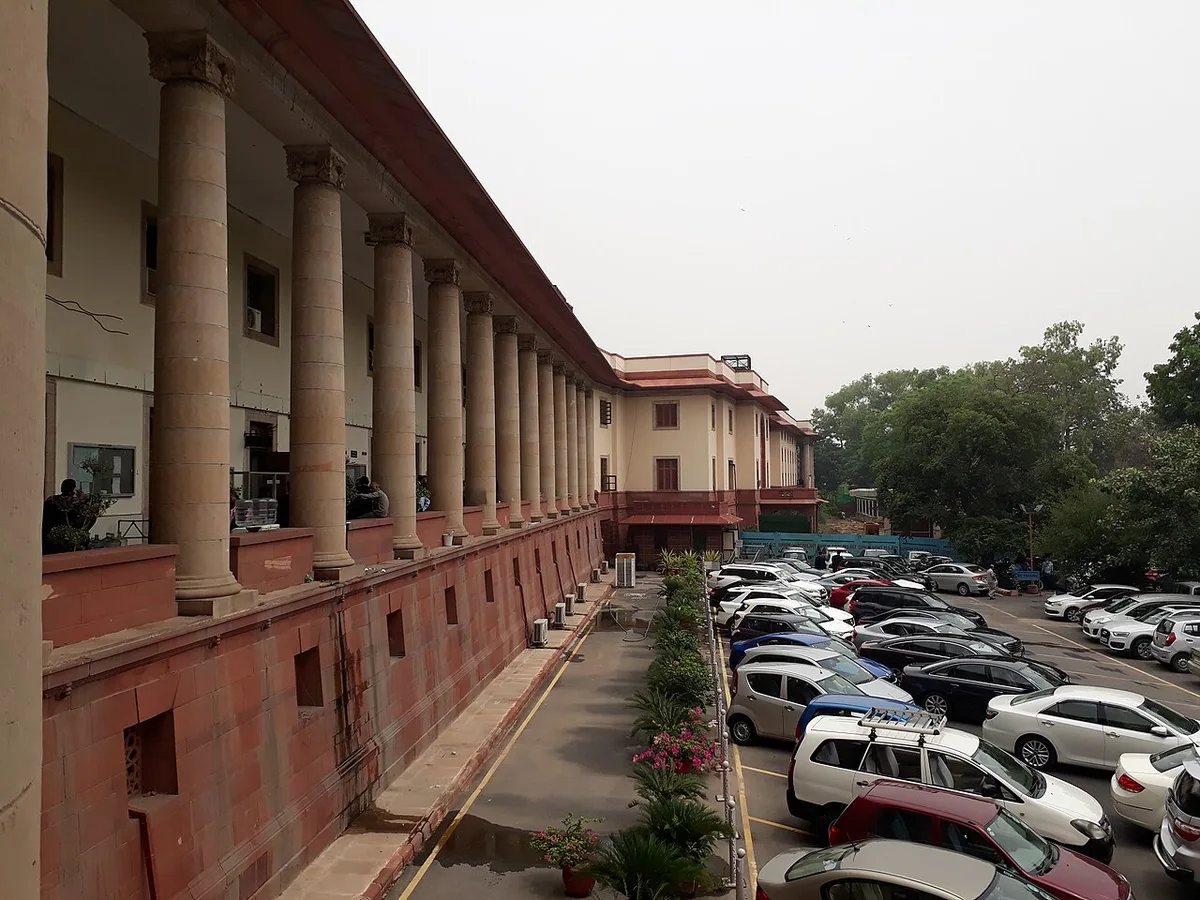
- Existing civic image: Supreme Court of India exterior
- NHRC public facilitation and 14433 service
