Find schemes that cover your state or Union Territory
Start with myScheme to find Indian government benefits by category or profile, then confirm the current rules with the department responsible for the scheme in your state or Union Territory. Use that department’s official route to apply, and keep the application reference so you can track the claim or raise a grievance through the service that received it.
myScheme covers central, state and Union Territory programmes. Category browsing helps when you know the kind of support you need and want to see what programmes exist. Profile filters help narrow a broad search. Open promising entries individually and read the description, eligibility criteria, document information and official application link. Record the exact programme name and responsible authority, especially if several results address the same need.
A directory match gives you a programme to investigate. The administering authority applies the scheme’s rules to your records and circumstances. An empty search leaves the question open, too. Try browsing the relevant category and checking the state department’s own catalogue, particularly when you know the service name or are looking for a particular state benefit. myScheme accepts feedback about missing or incorrect entries, while a claim generally belongs with the administering authority.
If you are looking for support for a parent who lives in another state, begin with the jurisdiction relevant to their claim. Then read the department’s rules to see how it defines residence and which office handles the application. Your own location may help you find a nearby office for general information, but the programme’s geographic rules determine which application route to check.
Check which rules apply before you apply
When a scheme looks relevant, read the latest notice or guidance from the administering department and find the corresponding instructions for the state or Union Territory. Check the geographic scope, whether an application window applies, and which records the current instructions require. Note the issuing authority and publication date. If the notice gives an effective date or names an earlier order it supersedes, keep that detail with your notes.
Different official publications answer different questions. A Cabinet announcement can establish that the government approved a change and describe its intended terms. Departmental guidelines can explain how to administer the scheme. A state instruction or service page can tell you how to use the programme locally. Read each document for what its issuing authority actually says, including any implementation steps the announcement places in the future.
Read any advertised amount alongside the age band, category, payment frequency and jurisdiction that qualify it. Where a source labels an amount as the central contribution, check separately whether the state or Union Territory publishes a supplement. Keep the central figure and any verified local figure attached to their respective sources so that you can tell which figure a form, notice or payment record refers to.
If a directory entry and a current form show different document lists, look for a dated instruction covering that exact service and jurisdiction. Ask the administering office which instruction it uses if the documents leave the issue unresolved. For a consequential decision that turns on how an eligibility rule applies to your circumstances, seek qualified independent review and bring the specific rule and any written departmental response.
Find the application and tracking service
Follow the application route named by the department or the government service catalogue. NIC’s ServicePlus offers public service discovery and a Track Application entry point for supported services. Search for the specific service and check the department and jurisdiction on its listing. Registration, documents, turnaround and grievance procedures vary by service. Save the issued reference and the name of the portal that accepted the submission so you can return to the correct tracking service.
Maharashtra’s Aaple Sarkar catalogue is one example of a state route. It identifies notified public services, the departments responsible and service details. The portal also provides tracking and links to appeals where applicable. If you need to check a deadline or formal appeal option in Maharashtra, start with the exact service listing and confirm the procedure against the current state Right to Public Services rules.
A missing tracking result can leave you unsure whether the department received the submission. Begin with the receipt or acknowledgement and use the reference through the original government service. If the status still does not appear, use the service’s own support or grievance route where available and identify the submission by its reference. Check the original submission before starting another application, especially if the portal already issued an acknowledgement.
| What you need to do | Official starting point |
|---|---|
| Find possible schemes | myScheme category browsing or profile filters |
| Check a rule or find the application | Administering department and its current instructions for your jurisdiction |
| Track a supported ServicePlus application | ServicePlus Track Application with the issued reference |
| Find a notified Maharashtra service | Aaple Sarkar public service catalogue |
| Report an inaccurate directory entry | myScheme feedback |
| Query a submitted claim or find an applicable appeal | The administering service’s grievance or formal review instructions |
Look up social assistance pensions under both names
On 14 October 2026, the Union Cabinet approved continuation of the National Social Assistance Programme, or NSAP, from FY 2026–27 through FY 2030–31 at a total outlay of ₹53,428 crore. It approved renaming the programme Pradhan Mantri Samajik Sahayata Yojana. Search both programme names and both names of the specific benefit. Older department pages and state listings may still display the earlier names.
| Earlier listing | Approved new name |
|---|---|
| Indira Gandhi National Old Age Pension Scheme (IGNOAPS) | PM Vridhavastha Pension Yojana |
| Indira Gandhi National Widow Pension Scheme (IGNWPS) | PM Vidhawa Pension Yojana |
| Indira Gandhi National Disability Pension Scheme (IGNDPS) | PM Divyangjan Pension Yojana |
| National Family Benefit Scheme | PM Parivar Labh Yojana |
Published central amounts for the continuing categories include ₹200 a month for old-age pension at ages 60–79 and ₹500 from age 80. For widow pension the published amounts are ₹300 a month at ages 40–79 and ₹500 from age 80. The family benefit is a one-time ₹20,000 for an eligible household following the death of a qualifying primary breadwinner aged 18–59. Check other conditions and any state supplement in the applicable local guidance.
For disability pension, the Cabinet approved eligibility from birth and a benchmark disability threshold of 40%, down from 80%. The announced central monthly amounts were ₹375 through age 79 and ₹625 from age 80. The notice said guidelines and implementation would follow within three months. Confirm the guideline and local implementation before using those figures or thresholds to interpret a pending claim or decide which application instructions to follow.
If a state page still uses IGNDPS and displays the earlier threshold, save the listing and look for a newer departmental guideline and state implementation notice that identify the rule in use. The older name alone leaves the status of the application route unresolved. If you already have a pending application, use its reference when asking the administering office whether it applies updated criteria to pending claims.
Compare any state supplement separately from the published central amounts. The October Cabinet approval names the new disability threshold and payments and calls for subsequent implementation. If a current district or state notice still uses the older scheme name, check the administering department’s effective date and application guidance before deciding which document or schedule applies.
Senior citizen cards and certificates by state in IndiaIndia’s healthcare system, Ayushman Bharat and spending
Find your state’s ration-card and food grievance routes
Start with the National Food Security Act portal’s ration-card directory and select your state or Union Territory. State and Union Territory administrations identify eligible households and manage card issuance. Look for state instructions on a new card, category or household membership separately from the route for a problem collecting grain. Even when those services appear on the same page, they can take you to different forms or grievance channels.
The Assam entry directs readers to its Ration Card Management System and its Public Distribution System grievance site. Assam’s department also publishes application guidance. The Goa entry points to Goa’s application and grievance options, and the state Civil Supplies department publishes its own FAQ. In either case, use the state directory to reach the relevant service and check that service’s current requirements before preparing documents.
Under central NFSA terms, the Antyodaya Anna Yojana allocation is 35 kg per eligible household per month. The Priority Household allocation is 5 kg per eligible person per month. A Priority Household with four eligible people therefore has a central monthly allocation of 20 kg. Check the recorded category and eligible members when a collection amount looks different. The calculation depends on the category and, for Priority Households, the eligible people counted.
One Nation One Ration Card provides portability for covered ration-card use. Check that route if you already have a covered card and need to collect away from the place where it was issued. Use the state issuance route when you need a new card. For grain quantities, consult the Department of Food and Public Distribution’s current PMGKAY explanation. It distinguishes the free-grain arrangement from the temporary pandemic-era additional allocation. The department’s draft National Food Security (Amendment) Bill 2026 was circulated for comment. Verify any later entitlement change in an operative rule or official implementation notice.
| NFSA category | Foodgrain allocation | Number applies to |
|---|---|---|
| Antyodaya Anna Yojana household | 35 kg each month | One eligible household |
| Priority Household member | 5 kg each month | Each eligible person in a covered household |
Check PM-KISAN registration, verification and status
PM-KISAN provides ₹6,000 annually in three instalments to eligible landholding farmer families, subject to exclusions and state verification. On 31 July 2026, the Cabinet approved continuation from FY 2026–27 through FY 2030–31 with an outlay of ₹3.15 lakh crore. Use the official PM-KISAN portal to check the current registration and verification instructions. A directory entry can lead you to the programme, while the claim itself proceeds through the official verification process.
The portal offers new farmer registration and a separate beneficiary status page, alongside a grievance query route. Choose the entry that matches what you need to establish. If you submitted a registration and expected an instalment, start with beneficiary status and check whether it shows a verification issue. Take an unresolved verification or payment query to the listed official channel and retain the wording shown on the status page for reference.
| What you need | Official portal destination |
|---|---|
| Programme and eligible new farmer registration | PM-KISAN home |
| Status for an existing registration | PM-KISAN Know Your Status |
| A programme grievance | PM-KISAN grievance query |
Work out who can review a delay or refusal
Establish what you need the authority to look at. An application that remains pending calls for a status check through the receiving service. A wrong entry in a government record may need that service’s correction process. For a disputed decision, look for a written reason and any review or appeal procedure that applies to that particular decision. Use the grievance channel for its stated purpose and check separately for any formal procedure and deadline.
Keep the application reference, submission date, latest status and any written decision together. In an official query, state which application or decision you are asking about and what remains unresolved. If the office cites an eligibility condition, ask which dated rule or order it applied. For a high-stakes refusal involving disputed facts or an unclear rule, take the written decision, relevant rule and supporting records to a qualified independent reviewer.
- Digital India Corporation myScheme FAQ and public discovery workflow
- NIC ServicePlus service delivery and tracking
- Government of Maharashtra Aaple Sarkar public service catalogue
- National Food Security Act public portal, state ration-card directory
- PM-KISAN continuation decision and public application/status routes
Sources
- Digital India Corporation myScheme FAQ and public discovery workflow
- NIC ServicePlus service delivery and tracking
- Government of Maharashtra Aaple Sarkar public service catalogue
- Union Cabinet continuation and renaming of NSAP, 14 October 2026
- Ministry official social-security backgrounder and programme guidance
- National Food Security Act public portal, state ration-card directory
- Department of Food and Public Distribution, PMGKAY and NFSA entitlements
- PM-KISAN continuation decision and public application/status routes
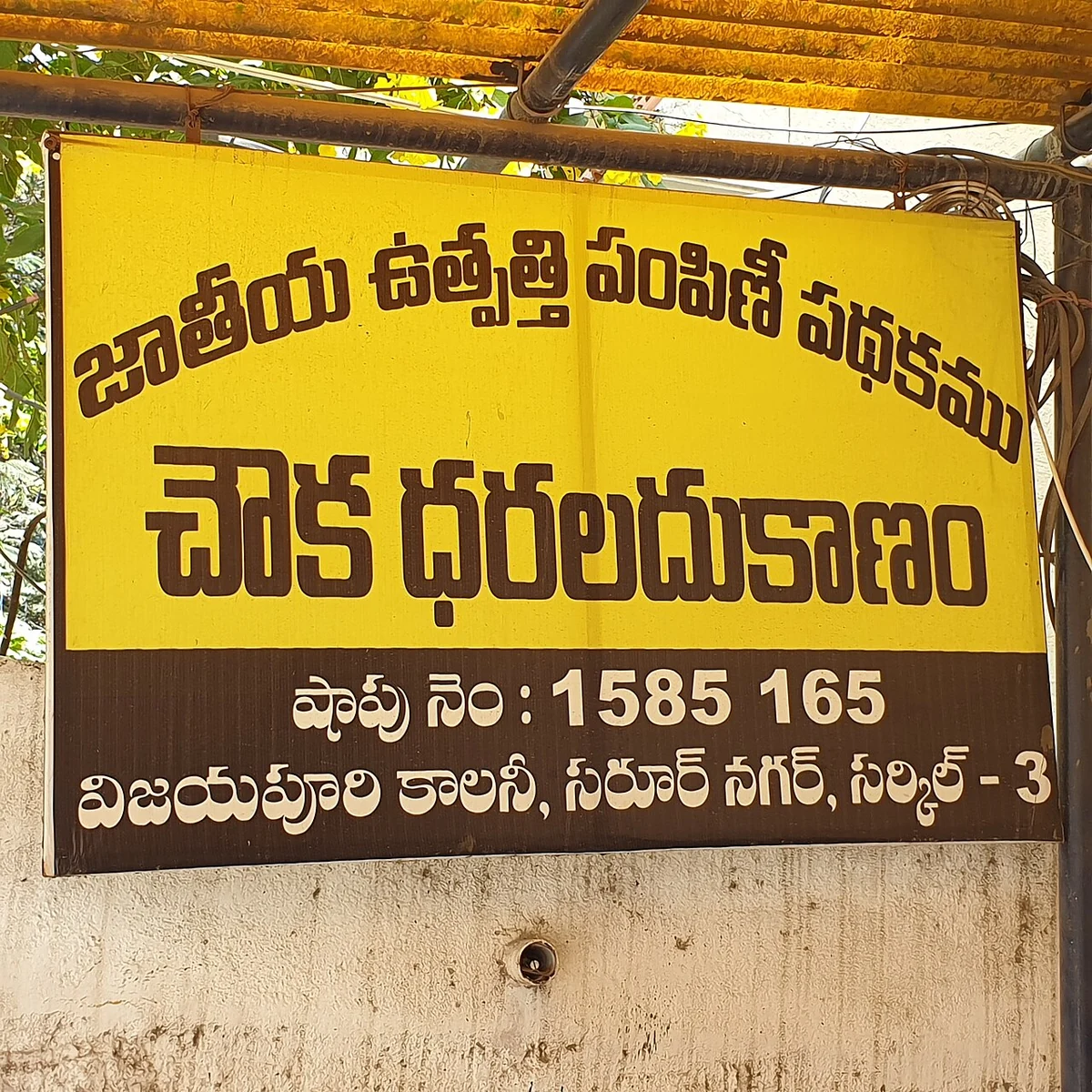
- Public Distribution System fair-price shop sign, photograph by Rajasekhar1961
- Government of India myScheme about information
- Official myScheme search and eligibility FAQ
- Official One Nation One Ration Card programme brief
